When discussing combat sports, the discussion between BJJ vs Boxing frequently comes up. Both are well-regarded and efficient martial arts. Yet they vary in tactics, techniques, and objectives. It’s important to understand the differences between the two martial arts. If you’re curious about which might be more appropriate for you, this article will elaborate on the details.
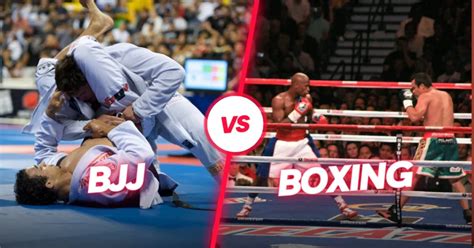
Brazilian Jiu-Jitsu (BJJ) is a grappling-based martial art that focuses on controlling an opponent through techniques such as joint locks, chokes, and positional dominance. BJJ teaches practitioners how to take a fight to the ground and use leverage and technique to overcome stronger opponents. Boxing is a striking-based combat sport that utilizes punches, defensive movements, and footwork. Boxing techniques and footwork emphasize speed, agility, and precision, making it a highly effective discipline for stand-up combat.
What is BJJ?
Brazilian Jiu-Jitsu (BJJ) is a martial art focused on grappling. It concentrates on ground combat and submission techniques. Practitioners strive to dominate and incapacitate their opponents using leverage and skill.
Key Features of BJJ:
- Focus on ground fighting.
- Involves chokes, joint locks, and submission maneuvers.
- Emphasis on skill rather than raw power.
- Practical for self-defense.
What is Boxing?
Boxing is a sport centered on striking. It focuses on punches, footwork, and defensive strategies. Boxers utilize their hands to strike while evading incoming attacks.
Key Features of Boxing:
- Concentration on punches and punch combinations.
- Focus on agility and head movement.
- Cardiovascular fitness is crucial.
- Excellent for fitness and self-defense.
BJJ vs Boxing: The Key Differences
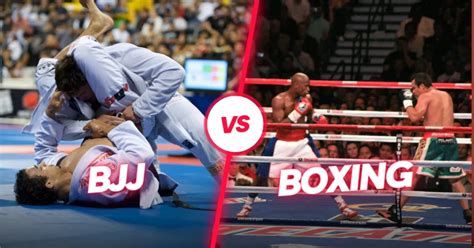
The biggest distinction between Boxing vs. BJJ is a striking art - Fighters use their hands to deliver powerful punches while relying on head movement, blocking, and footwork for both offense and defense. BJJ is a grappling art - Fighters engage in clinches, takedowns, and ground-based submissions to control and defeat opponents.
Read also: Delving into Cruiserweight Boxing
Which is Better for Self-Defense: Boxing or Brazilian Jiu-Jitsu?
1. Combat Style
- BJJ: Ground-oriented. Emphasizes opponent control.
- Boxing: Upright striking. Depends on punch techniques and foot movement.
2. Self-Defense
- BJJ: Suitable for individual encounters. Aids in overcoming larger assailants.
- Boxing: Useful in situations that demand quick attacks and movement.
3. Fitness Benefits
- BJJ: Develops strength, flexibility, and endurance.
- Boxing: Enhances cardiovascular fitness and agility.
4. Injury Risk
- BJJ: Increased chance of joint injuries from submissions.
- Boxing: Risks include head injuries and damage to the hands.
5. Learning Curve
- BJJ: Intricate techniques require time to master fully.
- Boxing: Simpler for beginners to learn essential skills.
Benefits of BJJ
BJJ prioritizes leverage, making it applicable to various body types. It prepares you to effectively manage real-life confrontations. BJJ fosters patience, problem-solving abilities, and resilience. It enhances flexibility, strength, and endurance.
- Focus on Technique: BJJ prioritizes leverage, making it applicable to various body types.
- Effective Self-Defense: It prepares you to effectively manage real-life confrontations.
- Mental Discipline: BJJ fosters patience, problem-solving abilities, and resilience.
- Full-Body Workout: It enhances flexibility, strength, and endurance.
Benefits of Boxing
Boxing instructs you on delivering powerful and precise punches. It boosts hand-eye coordination and response times. Boxing is superb for weight reduction and cardiovascular fitness. Acquiring effective striking skills can elevate self-esteem.
- Quick and Effective Striking: Boxing instructs you on delivering powerful and precise punches.
- Improved Reflexes: It boosts hand-eye coordination and response times.
- Cardio and Endurance: Boxing is superb for weight reduction and cardiovascular fitness.
- Confidence Boost: Acquiring effective striking skills can elevate self-esteem.
BJJ vs Boxing for Self-Defense
In evaluating BJJ against boxing for self-defense, the decision hinges on the situation:
- One-on-One Situations: BJJ shines in dominating opponents without inflicting injury.
- Multiple Attackers: Boxing facilitates rapid strikes and escape options.
Which is Better for Fitness?
Both BJJ and boxing provide notable fitness advantages.
Read also: Comparing UFC, Boxing, and Wrestling
- BJJ: Improves muscle strength, flexibility, and endurance.
- Boxing: Concentrates on cardiovascular fitness, fat loss, and agility.
If you prefer grappling and comprehensive movement, BJJ is a suitable choice. For a more intense workout, boxing may be more effective.
BJJ vs Boxing: Training Requirements
Time Commitment
- BJJ: Advancement necessitates consistent practice and commitment.
- Boxing: Fundamental skills can be acquired rapidly, though excellence requires years.
Equipment
- BJJ: Needs a gi (or no-gi outfit) and a training mat.
- Boxing: Essential items include gloves, wraps, and a punching bag.
Cost
The expenses for both martial arts are comparable, but boxing equipment may be less expensive.
Combining BJJ and Boxing
Why opt for one when you can practice both? Merging BJJ and boxing provides a comprehensive skill set.
- Striking and Grappling: You will learn to compete both standing and on the ground.
- Versatility: Prepares you for various combat situations.
- Increased Fitness: Reap the rewards of both workouts.
Numerous MMA fighters practice in both disciplines to thrive in mixed martial arts competitions.
BJJ vs Boxing: For Kids
Both are outstanding for children, but the decision relies on their interests and objectives.
Read also: Choosing Boxing Gloves
- BJJ: Instructs discipline, respect, and problem-solving.
- Boxing: Enhances confidence, coordination, and physical fitness.
Common Questions
Is BJJ Harder to Learn Than Boxing?
Yes, BJJ presents a steeper learning curve due to its intricate techniques. The basics of boxing are simpler to understand.
Can BJJ Beat Boxing in a Fight?
In one-on-one situations, BJJ frequently has the advantage due to its grappling techniques. Nevertheless, boxing is more effective in multiple-attacker scenarios.
Which Is Safer, BJJ or Boxing?
BJJ is typically safer as it avoids head injuries. Boxing has a higher potential for concussions and long-term brain damage.
Martial Arts Comparison: Other Key Differences
Brazilian Jiu-Jitsu and Boxing can share more similarities than you expect. Both fall under competitive sports that offer an adrenaline rush and demand strict training regimens. Martial arts athletes who train in boxing or Brazilian Jiu-Jitsu encounter strict discipline and intense dedication. Both emphasize the fighting philosophy of using an opponent’s strength against them. Similarly, boxing employs strategies like slipping a punch to create an opening for a counterattack.
Here’s a table summarizing the key differences between BJJ and Boxing:
| Feature | Brazilian Jiu-Jitsu (BJJ) | Boxing |
|---|---|---|
| Combat Style | Ground-oriented, grappling | Upright, striking |
| Focus | Control and submission | Punches and footwork |
| Self-Defense | Effective in one-on-one situations | Useful in quick attacks and escapes |
| Fitness Benefits | Strength, flexibility, endurance | Cardiovascular fitness, agility |
| Injury Risk | Joint injuries | Head injuries, hand damage |
| Learning Curve | Steeper, intricate techniques | Simpler, fundamental skills |
| Basic Drills | Dynamic groundwork and grappling techniques | Shadowboxing, cardiovascular exercises, and extensive sparring with a heavy bag |
| Fighting Stance | Diverse stances, ground fighting | Dominant fist up and forward |
| Offense | Grappling, submissions | Punches, strikes |
| Defense | Positioning, escapes | Dodging, blocking |
| Winning | Submission, control | Knockout, points |