Brazilian Jiu-Jitsu (BJJ) is more than just a martial art; it's a comprehensive philosophy that instills a code of life. Practitioners cultivate humility, command, strength, and perseverance through its profound principles. BJJ is rooted in the 80/20 ratio, emphasizing concepts and comprehensibility, making it suitable for all age groups.
The art of Brazilian Jiu-Jitsu is based on the principle of dominance, which is based on hand-to-hand theory.
This article explores the foundational concepts of BJJ, enhancing a practitioner's effectiveness.
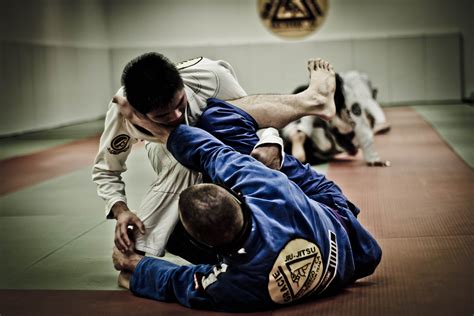
Understanding the Fundamentals
New students often struggle with grasping an initial understanding, so BJJ terms for beginners are fundamentally important for building a good learning pathway. Once a student learns all the relevant principles involved with BJJ, they will begin to see Jiu Jitsu through a different scope. Techniques become easier to learn, and the application of those techniques becomes more natural as a student builds up muscle memory. This learning process also gives a student a greater sense of how to improvise more effectively.
At higher levels of BJJ, it becomes more about adapting one's game style to different game styles encountered.
Read also: Training at Alliance Chula Vista
If you've ever wondered why Brazilian Jiu-Jitsu is so effective, it's because the art has a series of high-percentage movements involved.
Key Concepts in BJJ
Positional Hierarchy
The theory of positional dominance or positional hierarchy is at the core of what we do in BJJ.
The Importance of Guard
Guard is a special kind of position that few other martial arts spend as much time on as we do in BJJ. Unlike most other positions where you’re on the bottom, from guard you can have more submissions than the top fighter and potentially more ways to end the fight. You can control the distance between yourself and your opponent using your legs, and you can use guard to sweep them over or to get back to your feet.
"Position Before Submission"
The mantra of old school BJJ is “position before submission”. This means that recognizing your current situation per the positional hierarchy and establishing safe and secure positions is more important than going for submissions that disregard your positioning or risk losing it. For example, you do not try to do submissions from under bad positions or inside someone’s guard, and you do not jump or fall into armbars that have a good chance of failing and putting you underneath someone.
This “rule” becomes more flexible as you get more skilled, because you may be sure of your defenses and escapes so that even if your submission attempt fails, you are confident you can recover and try again or go for something else.
Read also: New Jujutsu Odyssey Codes
Efficiency and Minimal Effort
Borrowing from judo (the granddad of BJJ), we get the principle of “maximum efficiency with minimal effort". This is also stated as “maximum result with minimal effort”. In the ideal world, the smallest amount of strength and energy would be exerted to achieve a desired result. When we say “use technique”, this is what we mean.
Think as though you lost beneficial physical attributes -- all your strength, size, weight, speed, flexibility, etc. -- and still had to win a fight. How would you do it? You would need to find a way to redirect forces without completely stopping or opposing them. You would need to prevent or avoid major threats before they become unstoppable.
When you learn techniques, you understand jiu-jitsu; when you learn principles, you become jiu-jitsu.
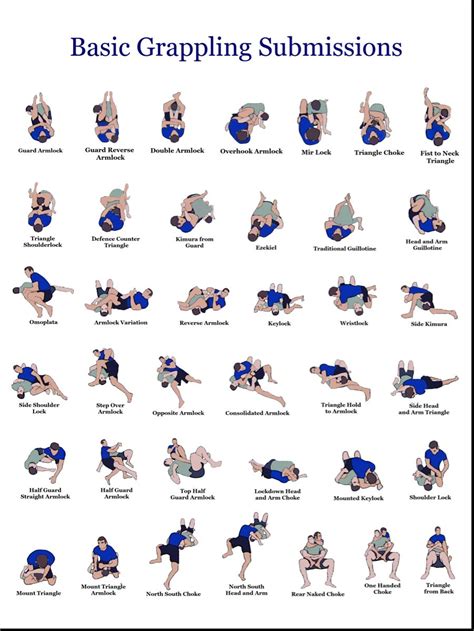
Core Principles Explained
Here are some core principles that all practitioners need to master:
- Posture: Maintaining a strong, uncompromised position to achieve certain moves. Keeping the head in line with the spine and the back straight makes it exceedingly hard for an opponent to gain control.
- Framing: Conserving energy and increasing leverage by using the body’s frame system rather than muscles. Practitioners use forearms, elbows, shins, and knees to create space out of an uncomfortable position.
- Isolation: Securing a specific body part of an opponent to achieve a submission.
- Centreline: Taking control of an opponent's centreline to stay safe from submission and subdue them more easily.
- Head Control: Controlling an opponent's head, as the body follows where the head goes.
- Redirection: Catching an incoming force and using redirection to change the trajectory of the attack.
- Changing Angles: Maneuvering the body to increase the chances of achieving a goal.
- Accepting the Outcome: Knowing when you are losing the battle in the moment, so you can alter your movements to regain control.
- The Bait: Using traps to secure a submission or sweep by tricking an opponent into defending a certain way or moving into a certain position.
- Falsely Surrendering: Pretending to give up to give an attacker a false sense of security, opening up the opportunity for a counter-attack.
- Momentum: Using momentum to execute maneuvers like a pendulum sweep.
- Disengagement: Knowing when to disengage from an opponent.
- Breaking the Balance: Disrupting an opponent's balance to execute sweeps or submissions more easily.
- Using Anchors: Stapling an opponent to the mat to grind through the guard.
- Mobility: If struggling to move an opponent, moving oneself instead.
- Sacrifice: Giving up a certain position to try to advance in another.
- Take Away Their Energy: Using heavy pressure or fast transitions to wear down an opponent.
There are a number of other principles in BJJ that have significant importance, as the Gracie clan use a 32 principle guideline in their teachings. All academies have different standards and philosophies, but in essence they all have the same ideology.
Read also: Benefits of Jiu Jitsu
The Gracie Triangle
The Gracie Triangle, the widely recognized symbol of the Gracie University, has evolved over the years. Today, it appears on the storefront of every martial arts school that is committed to teaching the techniques and philosophy of Gracie Jiu-Jitsu in its purest form. The triangle represents the stable base possessed by a Gracie Jiu-jitsu master. Regardless of which side it rests on, the Gracie Triangle always has a strong base. The three sides represent the mind, body, and spirit - the three components of Gracie Jiu-Jitsu mastery. The slight inclination near the top of the triangle forms the letter “G” for Gracie.
Training Balance and Maximization
Finding the right mix of training balance becomes significantly more important as a practitioner rises through the ranks. The average hobbyist can basically just float in and out of an academy as they slowly chip away at their progression. A higher-level athlete or just a more serious competitor needs to find the right balance in their training, otherwise, they can burn out quite easily.
Maximising training is extremely important and comes down to a few aspects:
- Gi and No Gi: It is extremely important to train in both disciplines of BJJ, as there are benefits from both sides of the art. These benefits are seen not only in a sporting sense but from a real-life self-defense situation.
- Left and Right: Always practice movements and techniques on both sides of your body, otherwise, a practitioner will become one-dimensional. A student that can utilise techniques from both their dominant and non-dominant sides will have a considerable advantage over an opponent that doesn't.
- Don't Waste Time: Make sure to use all your minutes on the mat wisely, as every time you practise a technique a practitioner will get closer to mastering it.
- Don't be Shy: When it comes time to roll, don't sit on the sidelines watching everyone else sparring, get involved and ask members to roll. The rolling time is when a practitioner will battle test all their techniques they are learning, this is vital to understanding how to incorporate technical movements into real-life scenarios.
- Roll with a Purpose: It can be a good idea to set goals when a practitioner dives into the rolling sessions. Rolling to submission is not always the best use of a student's time. Take the opportunity to practise guard retention, positional escapes, guard passing or many of the other aspects in BJJ.
- Ask Questions: It is imperative that a practitioner ask questions, don't be that student that is too scared to put their hand up and question their coach. All coaches are happy to answer questions and considering how complex the art is, students need to find out information that is relevant to their game style. Coaches can't always cover every aspect within a technique, it is just not possible because of the vast amount of variables within each movement.
- Focus: Above all else, a student needs to focus. Learning BJJ takes a considerable amount of hard work and continuity.
Applying Principles to Your Game
Learning the art of applying principles to a practitioner's game comes by continuity in their training. First of all, a student must understand what their strengths are, and then start to build a game plan. It is important to enter competition with a game plan and contingency plans. Usually, a student will weigh up whether they like utilising the guard or staying on top. Once a student can work out which game plan suits them better they can begin to add concepts to the mix.
It is quite common to see practitioners learn principles one at a time, as they will need time to master each aspect. Once a student begins to advance their Jiu Jitsu with a series of relevant principles, they will be able to evolve their game styles beyond their initial training. BJJ in essence is a concept, which means a practitioner can evolve their own game styles using their own creativity.
Ranges of Combat
This is a primer in the fundamental theories that BJJ is built on.
- Standing: How most fights or matches start. When combatants can throw punches and kicks, this is also called the striking range.
- The Clinch: When the combatants are grabbing and holding on to each other while still standing. You could also call this standing grappling.
- Ground Fighting: When one or both combatants are no longer standing (usually both).
Fights that go on longer than a few moments often naturally go into the clinch, and from there, many end up on the ground, whether intentionally or not.
Additional BJJ Concepts
- Attacking and Defending: Defending requires a lot of space, while attacking requires less or no space.
- Misaligning Your Opponent: Jiu-jitsu is dependent on misaligning your opponent.
- Grips: Grips are considered one of the most critical factors that help execute the submission method.
- Escaping: For the novice, escaping is the most important point to learn. It is a comparatively complex task that requires proper execution. You are in the defensive position when you get pinned in a place.
- Takedowns: Takedowns give you maximum opportunities to stay in the game.
Tips for Effective BJJ Practice
- Give adequate attention to each submission method.
- Use the technique of deep breathing.
- Do the warmup at the start and the end of the jiu-jitsu training.
- Don’t judge any practitioner based on their size and weight.
- Don’t be afraid to go for a tap.
- You can take control of the leverage.
- Do not take shoes on the mat.
Common Positions in BJJ
- Side Control: The heavyweight grapplers use the position of side control. The fighter takes control over the torso by applying pressure from the side.
- Guard: Guard is the position where the fighter can use the body to protect against submissions. This position is crucial for controlling the opponent. It is the most favorable position to implement the sweeps, and it also helps in the escape.
- Full Mount: The full mount is considered the most dominant position. In this case, the practitioner is at the top of the opponent. Once you get to the top position, you can control the upper body as well as the lower body of the opponent. It is used to restrict the movement of the fighter.
- Turtle Position: The turtle position is used in the defensive mode when a fighter fears being controlled from the back. At that point, the fighter must act like a turtle and keep the head, arms, and legs stiff.
Gracie Jiu-Jitsu
The application of traditional Gracie Jiu-Jitsu® transcends the application of chokes, joint locks, immobilizations, throws, and strikes. Gracie Jiu-Jitsu is a way of life. Beyond the mat, members of the Gracie family live balanced, healthy lives based on the same philosophy that governs their unique self-defense system. Grand Masters Carlos and Helio Gracie believed that the principles of efficiency, patience, and control held the key to success in all aspects of life.
Efficiency
Efficiency, the ability to achieve maximum output with minimum input, is a core principle of Gracie Jiu-Jitsu. At the Gracie University®, we assume that your attacker will always be larger and more athletic than you. Our students quickly learn that the only reliable way to succeed is to exhaust your attacker while conserving your own energy through the use of leverage-based techniques and natural body movements. In life, as in a fight, a student who learns to expend energy efficiently will achieve maximum results with minimal effort. All of these are examples of ways to achieve maximum results with minimum effort.
Control
The final objective in a fight is to impose your will on your opponent. Nothing achieves this more quickly than physical domination after which surrender usually follows. Physical domination means controlling your opponent. Without control, you risk losing the fight. In life, control applies not only to a simple contest between you and an opponent, but also to the struggle within yourself. Self-control reflects your personal discipline and is the foundation for every decision you make in life.
Patience
Patience is often the key to success in a struggle against a larger opponent. Usually, it is not the person who attacks the most, but the one who exhausts the least who will win. Acting impulsively, aggressively, or without focus wastes energy. Patience also applies to timing. Even a perfectly executed technique will fail if attempted at the wrong time. Patience and timing allow you to know when to commit while efficiency ensures that you have sufficient energy to achieve your objective when the time is right for action.
The Principles of Gracie Jiu-Jitsu with Rener Gracie
The Prevention Principle
The Prevention Principle is a core tenet of self-defense because it disrupts your opponent’s ability to achieve their objective. It applies to offensive, and defensive positions.
The Fork Principle
The Fork Principle forces your opponent to choose between a submission, sweep, takedown, pass, reversal, positional advancement, or any combination thereof.
Neutralizing Techniques
Neutralizing a technique by disrupting the optimal posture from which it is applied. Whether standing or on the ground, on top or on bottom, on offense or on defense, there is always an optimal body position from which to initiate a particular technique.
The Gracie Family Legacy
Ryron and Rener Gracie are the eldest grandsons of Grand Master Helio Gracie, the creator of Gracie Jiu-Jitsu. Their father is Rorion Gracie, one of the world’s foremost experts in self-defense. In 1993, Rorion created the Ultimate Fighting Championship to showcase the supremacy of the family’s self-defense system in a realistic “no holds barred” confrontation against all comers. Rorion’s younger brother, Royce, won 3 of the first 4 UFC tournaments proving that the leverage-based techniques of Gracie Jiu-Jitsu provided the most reliable way to defeat a larger, more athletic opponent.
Rorion introduced his sons to the art as soon as they could walk. As children, they watched him teach private classes in their garage in Southern California. But, it wasn’t until they observed their father and uncles - Royce, Rickson, and Royler - easily winning challenge matches that they began to comprehend fully the effectiveness of Gracie Jiu-Jitsu. Even more important, Ryron and Rener recognized the profound impact the family’s art had on all who studied it. The life changing transformations of Gracie University students motivated the brothers to teach the art. While constantly perfecting their physical techniques, they worked equally hard to master the powerfully effective instruction methods developed by their forbearers.