Jim Hellwig, later known as the Ultimate Warrior, began his journey into the world of professional wrestling in November 1985. This is the story of his evolution from a bodybuilder to one of the most iconic figures in wrestling history. Before achieving international fame as The Ultimate Warrior, Jim Hellwig wrestled as the Dingo Warrior, a character that laid the foundation for his future success.
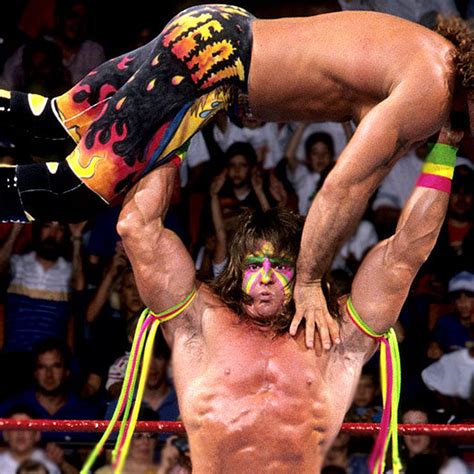
Before entering the ring, Hellwig was an amateur bodybuilder who competed in several NPC contests, winning the 1984 NPC Mr. Georgia crown. He began weight training at age 11, describing himself as "the small, insecure kid who wasn't into any sports".
After a career in bodybuilding, Warrior turned to professional wrestling. From 1985 to 1986, he was paired with fellow former bodybuilder Steve Borden, later known as Sting, as the Blade Runners. The two split when Warrior left to pursue a singles career in World Class Championship Wrestling (WCCW).
Early Career and the Formation of Powerteam USA
Hellwig started training with Ric Bassman for a spot as one of a quartet of bodybuilders known as Powerteam USA. The members of the team were Jim "Justice" Hellwig, Steve "Flash" Borden, Mark "Commando" Miller, and Garland "Glory" Donnoho. Hellwig and Borden decided to team up, sending flyers to every wrestling promotion in the country. Jerry Jarrett took a chance on the two stars in the making.
They wrestled in Memphis for Jerry Jarrett promotions as the Freedom Fighters. From there, they moved on to Bill Watts' UWF (Universal Wrestling Federation). There they turned heel and renamed themselves The Bladerunners in which Hellwig changed his name to Rock and Borden changed his name to the more familiar Sting.
Read also: A Guide to UW MMA Rules
After Rock left The Bladerunners his place was taken by Rick Steiner. Sting and Steiner went on to become UWF Champions.
Departure from UWF
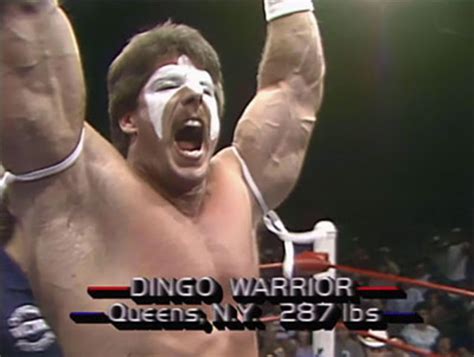
Hellwig left the promotion after a contract dispute and disagreements with Watts. He moved on to World Class Championship Wrestling and started wrestling as Dingo Warrior.
The Dingo Warrior in WCCW
Dingo Warrior was essentially a more rough-around-the-edges version of The Ultimate Warrior. He had the trademark face paint and arm-bands but still had some developing to do with the character. At first in WCCW Dingo was a heel managed by Gary Hart and then Percy Pringle III, better known as WWF's Paul Bearer. Warrior eventually turned on Pringle and became a face and would remain so for the rest of his wrestling career.
In WCCW he continued learning about the wrestling business and developing his skills and character and was rewarded on 17/11/86 when he won his first honors in the wrestling business when he and Lance Von Erich defeated Matt Borne and Master Gee in Fort Worth Texas for the WCCW World Tag Team Titles. They held the titles only until 01/12/86 when they were defeated by Al Mandril and Brian Adias.
On 02/02/87 Dingo Warrior won his first ever singles title when he became Texas Heavyweight Champion defeating Bob Bradley in Fort Worth, Tx. He held this title until 21/06/87 when he lost it to Al Perez in Puerto Rico.
Read also: Ultimate Warrior's Life and Legacy
Transition to WWF and the Birth of The Ultimate Warrior
Several promotions had taken notice of Dingo Warrior and approached Hellwig with offers. Antonio Inoki and New Japan Pro Wrestling outlined details of a new monster character they wanted Hellwig to portray in their promotion. In 1987 The Dingo Warrior made his debut in The World Wrestling Federation. He impressed on his television debut in a 20 man Battle Royal which was eventually won by Bam Bam Bigalow.
"Dingo" was soon dropped by Hellwig in favor of the more marketable "Ultimate" and he was given a guitar heavy entrance theme. His running entrance and the insane shaking of the ropes quickly made The Ultimate Warrior a crowd favorite and he took the WWF by storm.
Here's a breakdown of The Ultimate Warrior's championship wins in the WWF:
| Championship | Times Won | Date Won |
|---|---|---|
| WWF Intercontinental Championship | 2 | August 29, 1988, August 28, 1989 |
| WWF Championship | 1 | April 1, 1990 |
Ultimate Warrior | Best Moments
Feuds and Championship Success in WWF
After taking care of jobbers in his early days he began feuding with another powerfully built wrestler, Hercules Hernandez. The feud began when before a scheduled bout Hercules challenged Warrior to a tug of war. Warrior accepted and ended up pulling on the steel chain so hard that it snapped! Their feud ended at Wrestlemania IV with The Warrior emerging victorious in under 5 minutes.
The Warrior became WWF Intercontinental Champion on 29/08/1988 when as a stand in for the injured Brutus "The Barber" Beefcake, he disposed of The Honky Tonk Man in just 31 seconds, the shortest Intercontinental Title match in history. Warrior defeated all challengers for his title and began a feud with "Ravishing" Rick Rude. He took part in a posedown with Rude at the 1989 Royal Rumble. Rude attacked Warrior setting the stage for a title match at Wrestlemania V on 02/04/1989 in which Rude won the IC title with assistance from his manager Bobby "The Brain" Heenan. Rude's title reign was short lived though as The Warrior regained his title at that years Summerslam on 28/08/1989.
Read also: Steve Keirn: Wrestling Icon
He entered a feud with Andre the Giant, most of which went on at house shows. Warrior regularly beat the Giant in under a minute and sometimes in only 10 seconds! In the Royal Rumble of 1990 Warrior was eliminated by WWF World Champion Hulk Hogan. This set up their huge match at Wrestlemania VI on 01/04/1990. It was the first time the top two babyfaces had squared off against one another. Title vs Title. WWF World Champion vs WWF Intercontinental Champion. Hulk Hogan vs The Ultimate Warrior. Before 65,000 ecstatic fans in Toronto Ontario, Canada The Ultimate Warrior defeated The Hulkster and became WWF World Champion.
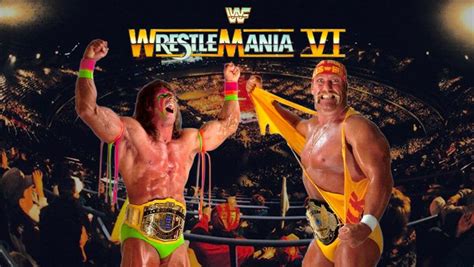
The rules in WWF at the time stated nobody could hold both titles at one time so Warrior had to give up his intercontinental title.
Controversies and Later Career
After teaming with Hulk Hogan to defeat the team of Sgt Slaughter, General Adnan and Colonel Mustafa at Summerslam 1991 The Warrior disappeared from the wrestling ring for a while.
The Warrior made his return to the WWF at Wrestlemania VIII, helping Hulk Hogan after his match against Sid Justice. Papa Shango came down to the ring and joined in with Sid beating on Hogan. Suddenly Warrior was there, running down the ramp and into the ring to a huge ovation from the fans. He and Hogan beat off the heels in one of the most memorable finishes to a Wrestlemania event. It was during this time however that Warrior and WWF began having difficulties.
There was an argument over who had creative rights to The Ultimate Warriors name as well as creative differences as to how The Warriors character should be used. During his time away from WWF Warrior made a single appearance for a small Las Vegas based promotion, The NWC. Here he met up with the Honky Tonk Man to renew their rivalry one last time. Warrior defeated HTM in a sold out small arena. The buzz at the time was that Warrior would help the NWC to get off the ground but unfortunately this never happened.
In 1993 Warrior took the role of The Swordsman in the straight to video movie "Firepower." Warrior's character was that of an evil crime boss who took part in underground cage death matches. Also in 1993 he legally changed his name from Jim Hellwig to Warrior.
Contrary to belief, the change had nothing to do with Warrior's wrestling aspirations. It came about because Warrior's father left home when Warrior was 12 leaving a wife and five kids behind him. Warrior had no reason to be proud of his family name and saw no reason to carry on it's legacy.
His final run in the WWF came in 1996. Warrior feuded with intercontinental champion, Goldust as well as Owen Hart and Vader. This run included an appearance at Wrestlemania XII in which The Warrior defeated Hunter Hearst Helmsley in under two minutes. This stint in WWF also lasted just a few months and ended after Warrior missed some house shows to spend some time with his father who was ill at the time. Warriors father sadly passed away shortly afterwards.
But difficulties with WWF had developed and after no-showing a house show in Detroit, Michigan. WWF announced Warrior would not appear again unless he signed an appearance bond. Warrior refused to sign so the WWF terminated his contract citing their differences in the past.
WCW and Final Years
In 1998 The Warrior entered World Championship Wrestling to a huge reaction from fans. He interrupted an in-ring promo by Hollywood Hulk Hogan, Eric Bischoff and the Disciple and announced a revolution. He started OWN (One Warrior Nation) and began feuding with Hogan's NWO. The two had a match scheduled for Halloween Havoc.
There was every indication that it would be as big as their match eight years previously at Wrestlemania VI. Disaster struck however when just six weeks before Halloween Havoc Warrior injured his arm at War Games. Despite being told not to work out and to take some time off to allow the injury to heal Warrior began rehabbing almost immediately with light workouts for a couple of hours a day.
The injury limited Warrior to doing promo's to hype the Halloween Havoc match but because he couldn't get involved in any physical in ring activities during this time the meeting of the two failed to generate the heat that it promised on Warriors initial return. Warrior still wasn't 100% by the time Halloween Havoc rolled around but the match went ahead regardless. In what is considered one of the worst matches in WCW history Warrior was defeated thanks to interference from Eric Bischoff and Horace Hogan hitting Warrior with a steel chair.
Warriors debut in WCW was held off until 17/08/98 because the WWF had a court case regarding trademark claims slated for 14/08. The WWF wanted to block Hellwig from appearing with the make-up, UW's look, and the Warrior name. The judge refused the WWF's request stating that Warrior had owned the look before he signed with WWF.
WCW was still wary though, issuing orders to everybody that they not use the word "ultimate" in the confrontation on Nitro as there was still a dispute over who exactly had suggested Warrior change his name from Dingo to Ultimate when he joined the WWF.
When Jim Hellwig was approached by New Japan in 1987 they outlined ideas for him to debut as a monster creation in their promotion. When Hellwig turned them down in favor of the WWF, New Japan turned to a little known AWA wrestler named Leon White. On his debut White pinned his opponent Antonio Inoki in less than three minutes at the Tokyo Sumo Hall. The name of the monster creation portrayed by White? Big Van Vader.
The Warrior, Hogan vs Slaughter, Adnan, Mustafa match at Summerslam '91 was refereed by Sid Justice in his first major appearance in the WWF. Justice was the man called in to replace The Warrior to face Owen Hart at a house show in Detroit, Michigan when the Warrior no-showed.
In early 2014, having apparently buried the hatchet with Warrior, WWE announced that he was being inducted into its Hall of Fame, the ceremony taking place the night before Wrestlemania 30 in New Orleans on April 6.
Warrior died on April 8, 2014, at the age of 54 in Scottsdale, Arizona.
Warrior's words on that night's RAW, in retrospect, read like a final farewell to his fans:Every man's heart one day beats its final beat, his lungs breath their final breath. And if what that man did in his life makes the blood pulse through the body of others and makes them bleed deeper than something that is larger than life, than his essence, his spirit will be immortalized.
The Blade Runners
The Blade Runners were a professional wrestling tag team consisting of future superstars Steve Borden and Jim Hellwig which existed in 1985 and 1986. Their look was from the new wave music scene with black eye paint and spiked hair with a rattail (Borden's bleached blonde and Hellwig's dyed black).
Steve Borden and Jim Hellwig originally teamed as part of Powerteam USA, a group of four wrestlers who debuted in 1985 after being trained by Red Bastien and Rick Bassman. In addition to Borden and Hellwig, the group consisted of Garland Donoho and Mark Miller. The team was managed by Bassman as they tried to break into the wrestling business.
Less than six months after arriving in Mid-South, Hellwig and Borden split up with Hellwig moving on to World Class Championship Wrestling, where he became known as The Dingo Warrior, later turning face and laying the foundation for his famous Ultimate Warrior gimmick in the WWF. Borden remained in the UWF and under the tutelage of Eddie Gilbert for a while before also turning face.
In 1990, the Warrior and Sting respectively won the WWF Championship from Hulk Hogan and the NWA World Heavyweight Championship from Ric Flair. For several months, the two former tag team partners sat atop the wrestling business as World champions of each of the two major league promotions before losing their titles eight days apart in January 1991. The two men reunited for one match on WCW Monday Nitro on October 12, 1998, against Hollywood Hogan and Bret Hart of nWo Hollywood. However, the Blade Runners name was not used for this appearance.