Jiu Jitsu's origins trace back to Japan around the first century, gaining prominence by 1460. The term "Jiu-Jitsu" was first recorded in 1532 by Hisamori Tenenuchi, who established the first school of Jiu-Jitsu in Japan. In the 17th century, "jūjutsu" became a general term for various grappling disciplines and techniques. During this era, Jiu Jitsu schools often engaged in challenge matches. Randori, or free training, was developed to allow practice without violating Japanese laws against fighting. By the 17th Century Jiu Jitsu has boomed in popularity.
In the early 1990’s Mixed Martial Arts saw a meteoric rise and commercial success in the combat sports arena. It has since produced media events and organizations such as the UFC (Ultimate Fighting Championship), Bellator, Pride, and others, each with their own ranking systems and fan base. The key driver to this success, and the common thread tying this together is the ascendancy of Brazilian Jiu Jitsu (BJJ) in martial arts.
MMA incorporates many arts such as western boxing, Tae Kwon Do, and Muay Thai, but training In Brazilian Jiu-Jitsu is the practice that most competitors find necessary for success. There is arguably no other family that has impacted a sport more deeply than the Gracies have for BJJ.
Brazilian Jiu-Jitsu (BJJ) is best described as a game of chess using one’s body. The object of BJJ is to use technique involving the use of leverage and positioning of one’s body to effectively control your opponent so that they cannot attack you, but you can attack them. The goal of Brazilian Jiu-Jitsu is to force your opponent to give up due to the application of a finishing hold also known as a submission.
Submissions, as they are commonly referred to in BJJ, are joint-locks (holds that threaten to hyper extend a joint), or chokes. When we spar and a submission hold is applied, the person caught in the submission signals that they give up by tapping their opponent’s body. It is through this system that we can train at full strength and speed without serious injury. It is also this ability to practice while going “all out” and “full contact” with a fully resisting opponent, that makes the training of Brazilian Jiu-Jitsu so realistic, effective, and rewarding.
Read also: Training at Alliance Chula Vista
BJJ promotes the concept that a smaller, weaker person can successfully defend against a bigger, stronger assailant by using leverage and proper technique, taking the fight to the ground - most notably by applying joint-locks and chokeholds to defeat the other person. BJJ training can be used for sport grappling tournaments (gi and no-gi) and mixed martial arts (MMA) competition or self-defense.
Sparring (commonly referred to as "rolling") and live drilling play a major role in training, and a premium is placed on performance, especially in competition, in relation to progress and ascension through its ranking system.
Since its inception in 1882, its parent art of Judo was separated from older systems of Japanese ju-jitsu by an important difference that was passed on to Brazilian jiu-jitsu: it is not solely a martial art: it is also a sport; a method for promoting physical fitness and building character in young people; and, ultimately, a way (Do) of life.
A BJJ enthusiast from the United Arab Emirates (U.A.E.), Sheik Tahnoon Bin Zayed Al Nahyan began training in BJJ in the United States while a student in the early 1990’s. Sheik Tahnoon was an eager proponent of no-gi grappling, and used his resources to further the sport by establishing the Abu Dhabi Combat Club (ADCC). 1998 marked the debut of The ADCC Submission Grappling Tournament, where the best grapplers from all over the world could compete for cash prizes. Many BJJ gyms teach classes in both traditional gi as well as no-gi.
The “Kung Fu Craze” of the 1970’s resulted in an explosion of martial arts schools. While many were legitimate schools with qualified instructors, there were also many schools with instructors of dubious or no qualifications. Schools often promoted students to higher belt levels based on financial considerations rather than actual skill or merit.
Read also: New Jujutsu Odyssey Codes
As with any legitimate competitive sport, there was a need for BJJ to have a governing body and a codified structure for instructors, rank and scoring. Carlos Gracie Jr. founded the International Brazilian Jiu-Jitsu Federation (IBJJF) in 1994. This provided a governing structure to regulate competitions and ranking. The first world championship tournament following IBJJF rules was held in 1996. The IBJJF standardized belt ranks, and established a clear rules and points system for scoring matches. While not all schools recognize this system, it serves as a guidepost for scoring and ranking.
The traditional “gi” (the easily-recognized martial arts uniform) is considered an integral part of the art itself, and many of the techniques are predicated on using the gi as gripping points for leverage. There is also a growing number of practitioners who prefer the “no-gi” uniform of a tightly-fitting shirt (or “rash guard”) and a pair of board shorts, greatly reducing the opportunity to use the uniform for grips.
Aamerican Colleges of Jiu-Jitsu and Karate currently has two instructors of WBJJA under the direction of Professor Thadeu Viera. This form of martial art is taught at the dojo on Monday and Wednesday evenings. Students of BJJ also compete in various tournaments in Richmond and in the Hampton Roads area.
Explore Brazilian Jiu-Jitsu for Kids in Hampton Roads VA with Breakaway Jiu Jitsu.
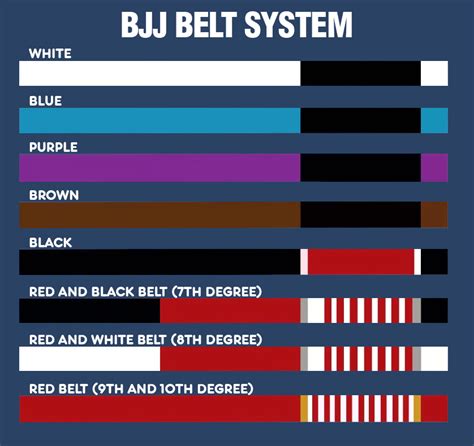
Belt Ranking System in Brazilian Jiu-Jitsu:
Read also: Benefits of Jiu Jitsu
| Belt Color | Description |
|---|---|
| White | Beginner level; focus on fundamental movements and basic techniques. |
| Blue | Intermediate level; developing a broader understanding of techniques and strategies. |
| Purple | Advanced level; refining techniques and developing a personal style. |
| Brown | Expert level; preparing for the black belt and focusing on teaching and leadership. |
| Black | Highest level; demonstrating mastery of Jiu-Jitsu and continuing to refine skills. |
Etiquette and Principles in Martial Arts
Etiquette plays a significant role in maintaining the integrity and tradition of martial arts. Martial arts etiquette is not merely about rules but about a mindset that fosters personal growth and mutual respect. From bowing to your instructor to respecting your peers, these customs are deeply rooted in the history and culture of martial arts disciplines.
Etiquette in martial arts serves multiple purposes. It ensures safety, promotes a respectful learning environment, and helps students develop discipline. By adhering to these guidelines, students learn to control their emotions, respect others, and cultivate a mindset that is conducive to both personal and communal growth. Understanding the varied traditions and expectations within different martial arts disciplines can help students adapt their behavior accordingly. Whether it’s karate, judo, taekwondo, or Brazilian jiu-jitsu, each martial art has unique customs that emphasize respect, focus, and discipline.
At the heart of martial arts etiquette are core principles that transcend specific styles or schools. These principles help students not only improve their martial arts skills but also their character. Respect is fundamental in martial arts. This begins with how students address their instructors, often using titles such as "Sensei" in Japanese martial arts or "Sifu" in Chinese martial arts, and extends to interactions with fellow students. Demonstrating respect includes actions like bowing, maintaining a polite demeanor, and actively listening during instruction.
Martial arts training emphasizes discipline and self-control, both physically and mentally. This includes being punctual, staying focused during classes, and maintaining composure even in challenging situations, such as sparring or when receiving critical feedback. Humility is essential in martial arts, as it allows students to learn from others and accept that there is always room for improvement. Being open-minded helps students embrace new techniques, corrections, and the diverse perspectives of their peers.
The dojo, or training hall, is a space of respect and discipline. Following dojo etiquette is crucial for maintaining a positive training atmosphere. Wearing the appropriate attire, such as a gi (uniform), and maintaining personal hygiene shows respect for the dojo and those you train with. A clean uniform, trimmed nails, and personal cleanliness help prevent injuries and maintain a respectful training environment.
Bowing is a fundamental aspect of martial arts etiquette. It symbolizes respect and is commonly performed when entering or leaving the dojo, starting or ending a class, and before and after sparring sessions. Understanding the meaning behind the bow and performing it with sincerity is important for beginners. Punctuality is a sign of respect in martial arts. Arriving on time shows that you value the instructor’s time and the training session. If you do arrive late, it’s customary to wait at the edge of the training area until the instructor acknowledges you, and then bow before joining the class.
How you interact with your instructors and peers can greatly impact your martial arts journey. Instructors should be addressed using the appropriate title and with a respectful tone. Avoid interrupting them or questioning their instructions in a confrontational manner. If you have questions, it’s best to wait until an appropriate time to ask, such as after a demonstration or at the end of the class. When sparring or practicing drills, always treat your partner with respect. This means controlling your techniques to avoid causing injury, thanking your partner after the session, and following the instructor’s guidelines on how to safely engage in practice.
The way you conduct yourself during classes reflects your commitment to the martial arts and respect for the dojo environment. Active listening is crucial in martial arts. It ensures that you understand the techniques being taught and reduces the risk of injury. Follow instructions carefully and avoid interrupting the instructor. Demonstrating focus during class is a key aspect of martial arts etiquette. Distractions, such as talking or looking around during class, can disrupt the learning environment. Stay engaged with the lesson, keep chatter to a minimum, and focus on your practice. This not only shows respect but also enhances your learning experience.
Mistakes are a natural part of learning martial arts. Accept corrections with a positive attitude and use them as opportunities to improve. Displaying humility when receiving feedback shows that you are open to learning and growing as a martial artist. Respecting the training environment goes beyond personal behavior; it includes taking care of the dojo and equipment. A clean dojo reflects the respect of its members. Help maintain the cleanliness of the training area by picking up after yourself, storing equipment properly, and participating in any dojo cleaning activities. Always handle dojo equipment with care, whether it’s mats, weapons, or protective gear. Use equipment only as instructed and report any damages to your instructor. Proper care of equipment helps ensure a safe and efficient training environment for everyone.
Martial arts are deeply rooted in cultural traditions that influence their etiquette and practices. Many martial arts include rituals, such as bowing to a shrine or reciting a creed, which reflect their cultural origins. Understanding and respecting these traditions is a key aspect of etiquette, as they connect students to the history and values of their martial art. Martial arts often attract students from diverse backgrounds. Showing respect for different cultural practices and being open to learning about them enriches the training experience and fosters a more inclusive environment.
Your conduct outside the dojo also reflects on your martial arts school. When representing your dojo at competitions or public demonstrations, maintain the same level of respect and discipline as you would in class. This includes following event rules, respecting opponents, and displaying good sportsmanship regardless of the outcome. With the rise of social media, your behavior online can also reflect on your dojo. Avoid posting disrespectful or negative content about other martial artists, schools, or competitions. Instead, use social media to positively share your journey and support the martial arts community.
Understanding common mistakes can help beginners navigate martial arts etiquette more smoothly. It’s important to recognize the boundaries set by your instructors and peers. Avoid overly familiar behavior, such as casual joking with instructors or being overly aggressive during sparring. Always err on the side of respect and professionalism. Personal etiquette, such as maintaining eye contact when being addressed, showing gratitude, and being mindful of your body language, plays a crucial role in how you are perceived in the dojo. Neglecting these aspects can unintentionally convey disrespect.
Martial arts etiquette is more than a set of rules; it’s a philosophy that shapes the martial artist's character both inside and outside the dojo. By embracing these principles, beginners not only improve their martial arts skills but also their personal development. Remember, the respect, discipline, and humility you cultivate in martial arts will have a lasting impact, helping you navigate life with confidence and integrity.
Common Questions on Martial Arts Etiquette:
- What Should I Do if I'm Late to Class? If you are late, wait respectfully at the edge of the training area until the instructor acknowledges you. Once acknowledged, bow and join the class quietly without disrupting the session.
- How Should I Address My Instructor? Always address your instructor with the appropriate title, such as “Sensei” or “Master,” followed by their last name. Avoid using their first name unless specifically invited to do so.
- Is Bowing Really Necessary? Yes, bowing is a fundamental aspect of martial arts etiquette. It shows respect to your instructors, peers, and the art itself. Bowing is a way to acknowledge the shared learning experience and the history of the discipline.
- What if I Make a Mistake During Sparring? Mistakes during sparring are common. If you make a mistake, acknowledge it, apologize if necessary, and continue with the exercise. Sparring is a learning experience, and making mistakes is part of the process.
- Can I Ask Questions During the Class? Yes, but timing is important. Ask questions when appropriate, such as after a demonstration or when the instructor invites questions. Avoid interrupting the flow of the class with frequent or irrelevant queries.
- How Should I Behave at a Martial Arts Competition? At competitions, maintain respect for your opponents, judges, and spectators.
Hampton Jiu-Jitsu: A Local Perspective
ALL THE MARTIAL ARTS TRAINING YOU WILL EVER NEED RIGHT HERE IN THE HAMPTONS! Get started today with our EXCLUSIVE offer! Request more information today to find out how you or your child can start training!
ANY OF THESE GOALS? Are you hoping to lose weight and tone your muscles? Are you looking to find a new sense of self-confidence? Unlock a new version of you! Are you ready to join a new community filled with supportive and friendly team-mates?
Discover our diverse range of Brazilian Jiu-Jitsu classes. From beginners to advanced, Gi to No-Gi we have a class for you. Our Fundamentals program is perfect for those looking to start their martial arts journey! Unlock Your Potential on the Mat.
Our Youth Martial Arts program is the largest in the Hamptons. Experience for yourself how our youth programs instill confidence and discipline in young minds. Explore our classes for kids and see how we can benefit your child on and off the mats.
Blending Traditions. Martial Arts Disciplines for all Practitioners. Our assortment of Mixed Martial Arts programs will satisfy all of your Martial Art needs. Hamptons JJ offers Muay Thai, Judo, Jiu-Jitsu and Wrestling classes. Join our training sessions at Hamptons JJ and indulge in the world of Martial Arts. Train for fitness, self-defense, competition ETC!
Hamptons Powered by TRX is a functional fitness program designed to complement the martial arts offerings at Hamptons Jiu-Jitsu. The TRX system employs adjustable straps and gravity to engage multiple muscle groups simultaneously, promoting functional movement patterns. Each session is led by certified instructors who focus on proper form and progression, ensuring a safe and effective workout. The classes are structured to include warm-ups, foundational movements, strength circuits, and cool-downs, providing a comprehensive fitness experience.
Your contribution will enable us to support our employees and continue operations. We are very grateful for your generosity. Through your generous donations, we provide scholarships for local kids in the area and link them with select businesses who provide high-end professional recreational services. These include but are not limited to: Martial Arts, Fitness, Self Defense/Protection, Motocross, Surfing, Boating, Yoga, Tennis, and many more!
Welcome to Hamptons Jiu-Jitsu, where the journey into the art and discipline of Jiu-Jitsu begins. Our academy offers a unique blend of traditional and modern Jiu-Jitsu, taught by seasoned instructors with a passion for martial arts.
WHY CHOOSE HAMPTONS JIU-JITSU? Discover why Hamptons Jiu-Jitsu stands out. Learn about our experienced instructors, diverse training styles, and the supportive community that makes our academy a premier destination for martial arts enthusiasts. Explore our range of programs tailored for different skill levels and age groups. From beginner courses to advanced training, find out how we cater to the needs of each student, fostering growth and excellence in Jiu-Jitsu. WHAT MAKES HAMPTONS JIU-JITSU UNIQUE? ACCESS OUR SCHEDULE & SPECIAL WEB OFFER!
Cheeseman Martial Arts is run by Rodney Cheeseman. Cheeseman is an old Marine Corps buddy of mine from 30+ years ago. Rodney Cheeseman is a 7th Degree Karate Black Belt (coral belt) and Eight Time National Karate Champion with over 40+ years of experience and 20+ years as a military combative expert.
Class began with a fast series of warm-up exercises. Cheeseman emphasized that his focus in BJJ was self-defense and the physical operations for a first-responder…made sense, he was an MP (military police…now you know why my brother/over-drinking buddy and I knew him). The class proceeded with his demonstration of standing and open guard attack simulations and the most sensible counters in self-defense and/or 1st responder situations.
I found it most impressionable that the friend, that accompanied me, reported enjoying the class and the other students that were assisting them. They found Cheeseman personable and the class movements provided a good workout. However, they found the focus on self-defense and 1st responder operations highly valuable for the reason of legal consequences people should be aware of when protecting themselves, especially in a world where everyone’s actions can be easily recorded.