Brazilian Jiu Jitsu can be an extremely rough combat sport, with its series of high impact maneuvers, and its ability to use heavy top game pressure on an opponent. With the intensity of the sport many athletes can find themselves stuck in a precarious position being grinded by their opponents. This rough style of grappling can cause some of the more common jiu jitsu injuries like the dreaded cauliflower ear.
Cauliflower ear, also known as "wrestler's ear" or "boxer's ear," is a common condition that can occur in various combat sports, including Brazilian Jiu-Jitsu (BJJ). It is actually disorganized regrowth of cartilage that occurs when a hematoma. If you know anything about grappling, then you have definitely heard about or seen cauliflower ear. Those who haven’t been involved in certain contact sports (e.g. wrestling, BJJ, rugby, etc) often have never heard of it. Interestingly, to the medical profession, it is deemed an uncommon malady.
For long a trademark of sorts of martial arts in general and grappling in particular, the so called ‘Cauliflower Ears’ have even developed a mystique of their own. Accounts and even monuments dating back to the ancient Greece and Rome prove that this is not something new. However, it has become a more visible aspect of our sport with the increase in practitioners in the past 30 years or so.
In BJJ, cauliflower ear typically occurs when there is repeated trauma or friction to the ear. Ears are often impacted while grappling, which is a fundamental part of sparring and competing. The term “cauliflower ear” comes from how the ear looks after the injury.
In the medical field, the deformation of the outer part of the ear is known as the ‘auricular hematoma’. the rapid hits on the outer side of the ear, cause it to swell. The drastic forces affect the veins inside the ear and as a result, it blocks the passage of the blood. It hardens the vessels, and the blood clot is made inside the ear, it appears as a swollen area on the ear.
Read also: Training at Alliance Chula Vista
This condition, known as cauliflower ear, is irreversible. Thus, cauliflower ear, in its chronic and untreated form, lasts indefinitely. The early symptoms of cauliflower ear such as swelling, redness, and pain can diminish with proper and prompt treatment. However, once the ear cartilage has been damaged and replaced by fibrous tissue - resulting in the distinctive deformity of cauliflower ear - the condition is irreversible without surgical intervention. The altered appearance of the ear, once it has formed into the 'cauliflower' shape, does not go away on its own. That's why early detection and treatment are vital to prevent the permanent changes associated with this condition.
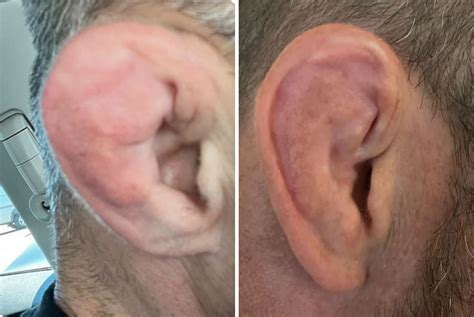
A well developed case of Cauliflower Ear
The Technical Aspects of Cauliflower Ear
The technical term for cauliflower ear is a perichondrial hematoma, and it can be quite deadly for an athlete if it is not treated quickly. The cauliflower ear is a direct result of a blunt force trauma to the ear from some kind of hard impact, or the result of a grinding pressure dragged across the ear cartilage, causing the ear to swell up, and fill with blood. Many other combat sports like Wrestling, Judo, Sambo, Mixed Martial Arts, Muay Thai, and Kickboxing also have significant problems with athletes suffering from the cauliflower ear. Most hematomas to the ear happen after a hard blow like a punch, kick, or a take down.
The cauliflower ear, or otherwise known as a perichondrial hematoma is a condition that affects the ear. Once an athlete suffers from a blunt force trauma to the ear region, the ear can start to develop a fluid buildup, or blood clotting right up under the perichondrium. This process can cause a debilitating issue, as the separation of the perichondrium, and the cartilage will cause significant duress for an athlete. The overlying skin of the ear will then swell instantly after impact, as a result of fibrous tissue degeneration, and this will cause the deformity known as the cauliflower ear.
The visible external ear is mostly a cartilaginous structure with skin overlying it. The blood supply for the cartilage comes from a covering layer of tissue that lies between it and the overlying skin (a.k.a. perichondrium). If that blood supply is interrupted, then the affected cartilage will die, a process in medicine we call necrosis. It will then have a disorganized repair leading to scarring which is termed cauliflower ear.
Read also: New Jujutsu Odyssey Codes
The skin that covers the ear is quite thin, and there are no deeper layers of tissue that can sustain a heavy impact. This can leave the ear extremely exposed to trauma, as the blood will accumulate between the perichondrium, and the cartilage of the ear. This will create a problem, as the blood flow will be obstructed from the perichondrium to the avascular cartilage. As there is no blood flow this can put the cartilage at an extremely dangerous risk of becoming infected, or dying.
Cauliflower ear is a consequence of trauma to the ear, which is common in combat sports like Brazilian Jiu Jitsu, Wrestling, Judo, and others. When the ear is subjected to a blunt force impact or grinding pressure, it can cause blood to accumulate under the skin, separating the skin from the cartilage, which in turn leads to a perichondrial hematoma. This hematoma is the body's response to injury, where it collects blood and fluids in an attempt to heal.
The sustained pressure from this fluid buildup causes the cartilage - which gets its nutrients from the overlying skin - to die off and subsequently be replaced by fibrous tissue.
How Athletes Sustain Cauliflower Ear
Sustaining a cauliflower ear to some athletes is seen as a Brazilian Jiu Jitsu badge of honour, to others it can be quite painful, and embarrassing. There are multiple ways an athlete can sustain a perichondrial hematoma, and most commonly it is from a blunt force trauma to the ear region. Athletes can suffer from cauliflower ears after striking training, where they may receive blows to the head. In Brazilian Jiu Jitsu the trauma can come from a few different scenarios.
Takedowns are always a concern, because an athlete can land on their ear during a fall. After a takedown an athlete will scramble to gain a significant control position, and during this period they can land heavily on their opponent forcing an injury to the ear. Another common way for an athlete to suffer from the dreaded cauliflower ear, is during the transition process.
Read also: Benefits of Jiu Jitsu
A top game player will focus on heavy pressure to control their opponent, and this can be the catalyst for the necessity of the bjj recovery process, regarding an athlete's ear. Transitioning from one control position to the next, can bring about an athlete grinding their shin, or their forearms across their opponent's ear. This is one of the most common ways that an ear will blow up, and fill full of blood.
There are many different maneuvers that can cause heavy grinding across an opponent's ear like the kimura setup, an arm bar setup, or even chokes like the guillotine, the rear naked choke, the darce choke, and the head arm choke, and all of these can cause significant damage to an ear if an athlete does not defend well. After a significant impact, an ear hematoma can be extremely deadly, and can swell up really quickly.
There are always unintentional accidents in Brazilian Jiu Jitsu, and newcomers to the art are usually erratic, clumsy, and unbalanced. The result of this is accidental knees, or elbows to the head. There can also be an unintentional pressure on an opponent during a transition, all of these aspects can cause an athlete to incur a cauliflower ear.
A more experienced grappler can always move from one position to the next without injuring their opponent, as they have a deeper understanding of how to shift their body pressure during the transition process. Escaping from certain submissions can also cause a hematoma to the ear, and this is because a student will recklessly drag their head out of the position.
Training in an art like Brazilian Jiu Jitsu can be extremely grueling, as the intensity of the sport can be brutal. BJJ competitors can often have five to ten matches in one division with little rest periods in between. Considering all of the rough play involved in Brazilian Jiu Jitsu, along with the extremely brutal impacts from the standing game, and all of the submission ferocity, it's no wonder athletes do get injured.
BJJ athletes show very little concern for the safety of their head, and neck area, as they often will not tap out when they are stuck in choke holds. Some athletes will go as far as to let themselves be choked unconscious during competitive matches. Even though this may be brave, and does embody the spirit of a warrior, it also leaves the door open for significant injuries like a perichondrial hematoma. In some cases suffering from a cauliflower ear can happen in seconds after an impact, as all it takes is one hard blow, and the ear can swell up. The skin on the ear is quite thin, with no underlying deep tissue, meaning any forceful impact can cause significant trauma to the ear region.
Symptoms of Cauliflower Ear
The sudden and extreme pressure can cause redness to the outer part of the ear. The fighter can feel the ringing effect in the ears. It can cause redness and severe headaches. The fighter can feel the swelling effect on the face as well. The ringing sensation is heard within the ear, it is also known as the tinnitus.
Let us discover the effects that occur after the subperichondrial hematoma. It is not only the deformation in the appearance of the ear but also causes inner defects.
- Pain and Sensitivity: When the ear gets hit it gets the most sensitive part and becomes comparatively soft with the increased sensitivity.
- Hearing Loss: When the outer area of the ear is damaged then it also disrupts the soundwave passage.
- Severe Headaches and Dizziness: The contender might face the most severe cases after being traumatized by the ear hit. It can lead to severe headaches, they might feel a ringing sensation in the ear. The fighter might feel dizzy, with blurred vision.
After a significant impact, an ear hematoma can be extremely deadly, and can swell up really quickly.
Treatment for Cauliflower Ear
Immediate medical attention is crucial when you suspect a cauliflower ear. The first step is often to drain the accumulated blood from the hematoma using a needle and syringe. This procedure is typically performed in a sterile medical setting to prevent infection. After drainage, it's important to apply pressure to the area to prevent further fluid buildup. This can be done using compression bandages or splints.
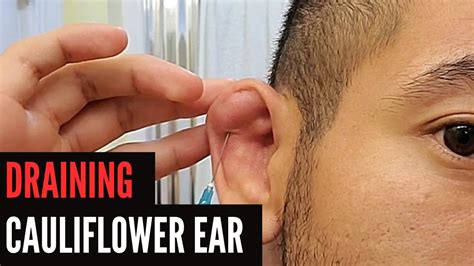
Draining of the ear
If there's a significant deformity or if the cauliflower ear is chronic (fully formed), surgical intervention may be necessary. Dealing with a cauliflower ear can be quite tricky, as there is no definitive treatment method that stands out above the rest. There have been a lot of studies into how to cure a perichondrial hematoma, with very little success. There are several other ways for an athlete to drain the blood out of their ear. Other than using a syringe, athletes can use other suction devices, or using a wick which is placed inside the ear to help drain the blood, or a doctor can even make an incision which can help to relieve the swelling. All of these ways have had success for different athletes, and it really comes down to which one suits.
Once the ear has been drained the huge problem will always be the recurring swelling, as athletes have been known to drain their ears numerous times, which can be quite troublesome. These kinds of problems can hinder an athlete's training, and may even force them to stop entirely, or for several weeks, as they try to let the swelling come down. Athletes will need to learn how to tape their ears with compression bandages, as this is a good way to stop the bleeding, and possibly even prevent the swelling. There are other pieces of equipment that can work well for athletes like direct pressure dressings, in and out mattress sutures, thermoplastic splints, sutured cotton balls, and absorbable mattress sutures.
One of the most important aspects of treating a perichondrial haematoma is to drain it rather quickly after impact. If an athlete waits too long then this can cause significant damage, and deformity of the ear. In some cases athletes will need cosmetic surgery to help repair the damaged cartilage, and the perichondrium.
The most reliable information in the world comes from a doctor, who says to use a needle to drain the blood from the hematoma. This is usually done at a doctor's surgery, and with a syringe, but once a student has had significant experience with this injury it can be syringed from their own home.
Once the ear has been drained the huge problem will always be the recurring swelling, as athletes have been known to drain their ears numerous times, which can be quite troublesome.
Here are some recovery options:
- Ice Treatment: Apply ice over the swollen part of the ear to reduce pain and sensation.
- Incision and Draining: A medical team will cure the pain with the treatment of the incision and draining.
- Ear Splintz: The magnets are molded and turned according to the shape of the ear and applied to it.
- Caulicure Treatment: The caulicure treatment of the ear is done with the variation in the magnet sizes that can be changed accordingly.
- Silicone Magnets: The treatment with the magnets is the most effective method.
- Cosmetic Surgery: If the ear is deformed completely then the last option is to get the treatment of the cosmetic surgery.
The duration of cauliflower ear varies greatly, and it largely depends on the severity of the injury and the effectiveness of the treatment applied. With quick and appropriate treatment, which often includes draining the blood from the hematoma and applying pressure to prevent re-filling, symptoms can start to subside within a few days to a week. However, if left untreated, the blood in the ear will eventually clot, and the resultant fibrous tissue that forms can cause permanent changes to the shape and structure of the ear.
Prevention Strategies
Learning how to prevent cauliflower ear bjj can be extremely hard, as most preventative measures that work for training are illegal in competition BJJ. Athletes will wear ear guards, or head protection, as a way to stop their training partner's from applying significant pressure to their ears. The IBJJF does not allow this kind of head, or ear protection in their competitions, and for good reason. This means that athletes will have to rely upon taping their ears, or avoiding impact all together. Athletes that develop their game style, and use really good framing, will find it is an easy way to avoid forceful pressure to the head region.
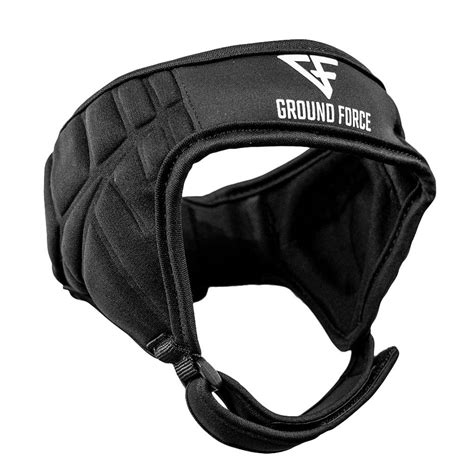
Ear Guard
Athletes must learn how to use technical escapes out of all positions, and submissions. Using strength is not an escape, as this can leave an athlete vulnerable to grinding pressure across their ear. There are many athletes that are extremely strong that think they can just muscle their way out of any position, and yes this can work, but after they escape they are going to wind up with cauliflower ears. Athletes should not use strength to drag their head out of bad positions, instead using technical escaping methods almost always work to avoid significant trauma to their ears.
Here are a few tips to help prevent cauliflower ear
- Wear Protective Gear: The most effective way to prevent cauliflower ear is to wear protection such as ear guards or headgear.
- Practice Escape Techniques: Practicing escape techniques can help prevent cauliflower ear by minimizing the likelihood of prolonged and intense friction or trauma to the ears.
- Develop Strong Defensive Skills: Strong defensive skills are also critical because they prevent opponents from securing dominant positions that could lead to cauliflower ear.
- Communicate with Training Partners: BJJ is a high-contact sport and communication and education is essential to promote a safe training environment.
Cauliflower Ear: A Badge of Honor or a Health Risk?
An athlete is divided 50/50 when it comes to suffering from the cauliflower ear. Some athletes can see the seriousness of this condition, while others love the fact that their ears are mangled up like many high level Brazilian athletes. Sustaining a cauliflower ear to some athletes is seen as a Brazilian Jiu Jitsu badge of honour, to others it can be quite painful, and embarrassing.
The cauliflower ear is considered as the benchmark or a badge of honor for the grapplers and the fighters. It is also known wrestler’s ear, it is taken as a most desirable appearance for the top contender. But in reality, the cauliflower ear can be made in a night with the hacks and the techniques. If the ear trauma is not treated on time then it might take the worst shape and lead to hearing loss, as it blocks the way of the ear canal.
For some, it's a badge of honor; a visible mark of dedication and experience in the sport. To them, it symbolizes resilience, toughness, and commitment to training. Athletes with cauliflower ear are regarded with respect, as their appearance suggests they've endured the rigors of intense training and competition. This kind of view has infiltrated the general public, as many MMA fans might see cauliflower ear and instantly fanboy.
On the flip side, cauliflower ear has its disadvantages. When it’s fresh, it HURTS. It hurts to sleep, it hurts to train, and if you do want to train, you end up having to wear silly, wrestling headgear that leaves you vulnerable to guillotines and other chokes. It can also affect your hearing, depending on where it’s located. If it’s toward the inner part of the ear, it can block sound waves from entering the ear canal. Even cauliflower ear that’s on the outer shell of the ear can affect the natural acoustic properties of the shape of the ear. Then there are aesthetic concerns. Not everyone will see it as a result of hard martial arts training.
Whether you consider cauliflower ear to be a terrifying BJJ ailment, or a badge of honor, what you should always remember is that it doesn’t make the grappler, or the person. Train hard, respect everyone, take care of yourself as best as you can, and live your best jiu-jitsu journey.
Disclaimer: This article does not intend to be a medical journal or a technical manual of how to take care of your body and avoid injuries. It is intended to be a layman’s guide to understand a little more about what happens with your body and how to take better care of yourself. Always consult with a healthcare professional for medical advice and treatment.