Jiu-Jitsu is more than a martial art; it’s a lifelong journey of self-discovery - physically, mentally, and emotionally. Whether to explore ideas, process emotions, or track progress, high performers use pen and paper as tools for growth. Keeping a martial arts training journal, in which you keep notes of everything you need to do better, your mistakes, and things you are doing well have to write.
The struggle to get and achieve something never ends, even for people who meet their dreams, as they are always looking for even bigger things to achieve. Some of us get to see our dreams and goals turning into reality, but all of us cannot. Well, the reasons can be many. But the one thing that the people are definitely lacking is keeping track of their progress towards something they are trying to achieve.
Here's why journaling can be a game-changer for your BJJ journey:
Why Keep a BJJ Journal?
Keeping a BJJ journal offers numerous benefits:
- Improved technique retention and understanding
- Ability to track patterns in your game (strengths and weaknesses)
- Documentation of injuries and recovery
- Progress tracking over time
- Mental processing of techniques through writing
- Building a personalized reference guide for techniques
- Setting and monitoring specific training goals
A BJJ journal is one of the most powerful tools for accelerating your growth on the mats.
Read also: Training at Alliance Chula Vista
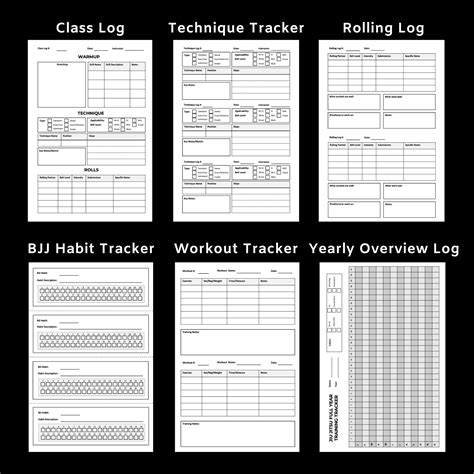
Key Benefits of Journaling for Jiu-Jitsu
Here are some specific ways a training journal can enhance your BJJ experience:
- Enhanced Memory: Every class teaches something new - a sweep, a detail, a mindset shift. You might think you’ll remember that new pass, but by tomorrow, it’s gone. Journaling helps solidify these lessons.
- Pattern Recognition: Jiu-Jitsu isn’t linear. Some days you feel unstoppable; other days, not so much. Over time, you’ll notice trends. Perhaps you always struggle with half guard after a long workday, or you perform better when you drill before class.
- Emotional Processing: BJJ can be humbling. You will tap. You will plateau. Journaling gives you a healthy outlet to process frustration without quitting. Instead of thinking, “I suck,” your journal helps you reframe with, “I struggled with X today. I will focus on improving X tomorrow”.
- Mindful Connection: Brazilian Jiu-Jitsu is often described as physical chess or movement meditation. Journaling after class helps you reconnect with what you felt - not just what you did.
- Stress Reduction: Jiu-Jitsu already reduces stress through movement, challenge, and human connection. Journaling amplifies this effect by providing a space for reflection and emotional release.
- Goal Setting and Achievement: Want to improve your open guard or get your first stripe? Setting clear goals in your journal (and tracking them weekly or monthly) helps you take ownership of your progress. BJJ is a puzzle.
- Self-Discovery: Jiu-Jitsu reveals who you are. Journaling helps you understand what made sense, what didn't, and how you're evolving.
Jiu-Jitsu is a lifelong journey - full of lessons, challenges, victories, and growth. Journaling doesn’t have to be fancy.
Step by Step System to Learn Jiu Jitsu FAST
What to Include in Your BJJ Journal
An effective BJJ journal should include several key components:
- Training Session Details
- Date and time of training
- Class type (fundamentals, advanced, competition, open mat)
- Instructor name
- Your energy level and physical condition
- Duration of training
- Technique Notes
- Techniques taught in class with key details
- Personal insights or modifications
- Common mistakes to avoid
- Connections to other techniques
- Rolling/Sparring Notes
- Training partners (especially noting size, strength, and skill level)
- Successful techniques you applied
- Techniques used against you successfully
- Positions you struggled with
- Mental state during rolls
- Questions and Areas for Improvement
- Questions to ask your instructor
- Techniques you want to explore further
- Specific positions to work on
- Goals Section
- Short-term goals (techniques to master this month)
- Long-term goals (competition plans, belt promotion requirements)
- Progress updates on previous goals
How to Format Your BJJ Journal
There are several effective formats for organizing your BJJ journal:
- Chronological Format: The simplest approach is to organize entries by date. Each training session gets a new entry with all relevant details. This works well for tracking your overall journey but can make it harder to find specific techniques later.
- Technique-Based Format: Organize your journal by technique categories (guard passes, submissions, escapes). This makes it easy to reference techniques but can fragment your overall training narrative.
- Hybrid Approach: Many practitioners prefer a hybrid approach: chronological daily entries with a separate section for detailed technique notes organized by category. This gives you the best of both worlds.
Digital Format Benefits
Digital BJJ journal apps offer significant advantages:
Read also: New Jujutsu Odyssey Codes
- Searchability - find any technique or entry instantly
- Media integration - add photos and videos of techniques
- Tags and categories - organize entries in multiple ways simultaneously
- Backup - never lose your valuable training data
- Cross-device access - update from phone, tablet, or computer
BJJ Journal Template Examples
Technique Study Template
- Technique: [Name]
- Category: [Guard pass/Submission/Sweep/etc.]
- Position: [Starting position]
- Step-by-Step:
- [Detailed step]
- [Detailed step]
- [Detailed step]
- Key Details: [Critical details that make the technique work]
- Common Mistakes: [List of mistakes to avoid]
- Counters/Responses: [How opponents might counter and your recounters]
- Related Techniques: [Techniques that chain well with this one]
Tips for Maintaining Your BJJ Journal
To make the most of your BJJ journal, consider these tips:
- Be consistent: Update your journal after every session while details are fresh.
- Keep it accessible: Use a format that's easy to update anywhere (digital is ideal).
- Use visuals: Simple diagrams or photos can clarify complex techniques.
- Review regularly: Schedule time each week to review past entries.
- Focus on quality: A few detailed notes are better than many vague ones.
- Track emotions: Note your mental state during training - it affects performance.
- Be specific: "Triangle from guard" is less useful than "Triangle setup when opponent postures with right arm inside."
The Digital Advantage: BJJ Notes App
While paper journals have their charm, a dedicated BJJ journal app like BJJ Notes takes your training documentation to the next level.
With BJJ Notes, you get:
- Perfect balance of structure and freedom - track specific metrics while adding freeform thoughts
- Comprehensive submission, sweep, escape and takedown tracking
- Round-by-round endurance tracking with rest periods and ratings
- Separate sections for techniques, successes and areas for improvement
- Photo and video integration for visual technique reference
- Search functionality to instantly find any technique or entry
- Progress tracking with visual analytics
- Cloud backup to protect your valuable training history
Journaling for Mindset Improvement
Journaling has been scientifically proven to offer various benefits for improving mindset, which can be particularly valuable in the context of combat sports. Here are five ways that journaling can help individuals cultivate a more positive and resilient mindset:
- Emotional Processing and Regulation: Studies have demonstrated that expressive writing, such as journaling, can help individuals process and regulate their emotions more effectively. In combat sports, where emotions can run high during training and competitions, journaling can provide an outlet for athletes to reflect on their experiences, manage stress, and maintain emotional balance.
- Increased Self-Awareness: Journaling encourages introspection and self-reflection, leading to greater self-awareness. By examining their thoughts, emotions, and behaviors, combat sports practitioners can gain a deeper understanding of their motivations, strengths, and areas for improvement. This heightened self-awareness can facilitate personal growth and better decision-making on and off the mat or ring.
- Cognitive Restructuring: Research has shown that journaling can help individuals identify and challenge negative thought patterns or irrational beliefs. In combat sports, where self-doubt, anxiety, and negative self-talk can hinder performance, journaling can be a powerful tool for cognitive restructuring. Athletes can reframe their mindset, cultivate a more positive inner dialogue, and develop a growth mindset.
- Improved Goal-Setting and Achievement: Journaling can support the process of setting and achieving goals. By regularly reflecting on their progress, challenges, and strategies, combat sports athletes can track their development, identify areas for improvement, and make necessary adjustments to their training and mindset. This can lead to increased motivation, focus, and a greater sense of accountability.
- Stress Reduction and Resilience: Numerous studies have highlighted the stress-reducing effects of journaling. By expressing their thoughts and emotions on paper, individuals can gain perspective and cope more effectively with stressful situations. In the demanding world of combat sports, where athletes face physical and mental challenges, journaling can serve as a valuable tool for stress management and building resilience.
By incorporating journaling into their training routines, athletes can develop greater self-awareness, emotional regulation, cognitive restructuring, goal-setting abilities, and stress management skills, ultimately enhancing their overall performance and well-being.
Read also: Benefits of Jiu Jitsu
Journaling for martial arts means that you are tracking your complete progress in a martial art.
By writing a martial arts training journal, you know what you are lacking in your training and martial arts. You know where you have to train more and which things you need to be careful of. This increases your focus.
Keeping a martial arts training journal always helps to stay motivated. You can see your progress anytime. You know how far you are from your ultimate goal.
Make your complete martial arts training notes so that you can revise each and everything that you have learned so far.
Shift all your focus on your lecturer or training while taking lectures.
One of the many things you have to do to be successful in martial arts, such as Brazilian Jiu-Jitsu, is to hold yourself accountable. And the only way to make yourself accountable and answerable for all your work and struggle toward achieving your goals is to write it down.
Journaling for martial arts may feel tiring for you at the start, but it will help you a lot in your martial arts journey. You will have a roadmap for looking at your journey.
The extent of discipline and effort you put into your journal is pivotal to your return rate of growth.