In the annals of history, few figures stand as tall and inspiring as Khutulun, the Mongolian princess who defied societal norms and carved her own path as a warrior and wrestler. Born around 1260, Khutulun was not just a noblewoman; she was a force to be reckoned with, a symbol of strength, independence, and empowerment in a world dominated by men.
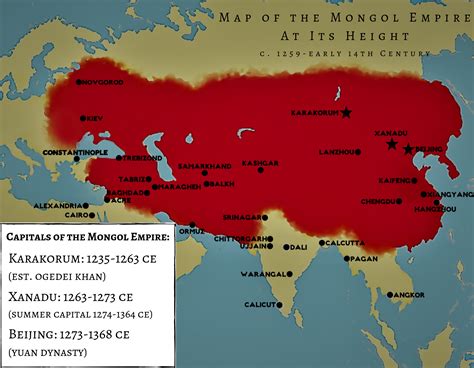
The Mongol Empire at its greatest extent.
A Lineage of Warriors
Khutulun's lineage was steeped in power and conquest. She was the great-great-granddaughter of the fearsome Genghis Khan, the founder of the Mongol Empire, and niece to Kublai Khan. Growing up in a nomadic Mongolian household, she was surrounded by 14 brothers and immersed in a culture that valued strength, horsemanship, and martial prowess. Preparing to become a warrior came naturally to her.
From a young age, Khutulun mastered archery and horsemanship, skills that were crucial for survival and success on the vast Mongolian steppes. She was trained in shooting, wrestling and riding since her childhood. By the time she was grown she became used to bravely riding into battle with her father.
She would excel at wrestling, archery, and horseback riding. Though her mother urged her to study military strategy and languages, she had the heart of a fighter. She could do everything that her fourteen older brothers in her tribe could do and better.
Read also: Discover the story of Casey Swiderski
An Undefeated Wrestler
Khutulun's prowess in wrestling became legendary. Unlike typical princesses, Khutulun refused to marry any man who couldn't defeat her in a wrestling match. Her skill was so great that she used it as a way of determining worthy suitors from those who were not. The princess, however, refused to marry any of them unless they managed to beat her in a wrestling match, stipulating that any loser would have to gift her anywhere between 10 to 100 horses.
The Mongols of Kaidu Khan’s clan valued physical ability above all things. They bet on matches constantly, and if you won, people thought you were literally gifted by the gods. Now, these weren’t your modern day matches, separated out by things like weight class and gender - anyone could and did wrestle anyone else, and they’d keep going until one of them hit the floor. This was the environment in which Khutulun competed. Against men.
Let’s just put it this way: Khutulun came home with a lot of prize horses. (Some accounts say 10,000-enough to make even the emperor a little jealous.) As author Hannah Jewell writes in her book She Caused a Riot, “The Mongolian steppes were littered with the debris of shattered male egos.”
Let's examine the conditions of the wrestling matches in more detail:
- Open to All: Anyone could challenge Khutulun, regardless of age, weight, or size.
- No Restrictions: There were no weight categories or gender restrictions.
- High Stakes: Losers had to gift Khutulun between 10 to 100 horses.
Over her lifetime, Khutulun is said to have amassed a herd of 10,000 horses from her defeated suitors. The Mongolian steppes were littered with the debris of shattered male egos.
Read also: Sectional Wrestling Tournament Details
The Untold Legend: Khutulun, The Mongolian Warrior Princess
A Warrior on the Battlefield
Khutulun was not just a wrestler; she was a fearless warrior who fought alongside her father, Kaidu, in numerous battles. Whenever her father, Kaidu-the leader of the Chagatai Khanate-went to battle, he usually turned to Khutulun (and not his 14 sons) for help. Nothing scared her.
Not only did Khutulun ride by her father’s side into battle, she’d regularly charge headfirst into enemy lines to make “a dash at the host of the enemy, and seize some man thereout, as deftly as a hawk pounces on a bird, and carry him to her father,” Marco Polo wrote. The 13th- and 14th-century historian Rashid al-Din was more direct, writing that she "often went on military campaigns, where she performed valiant deeds.”
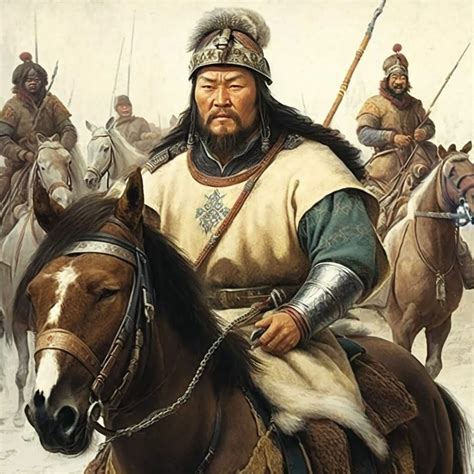
Mongol warriors in battle.
Political Influence and Family Dynamics
Khutulun's influence extended beyond the battlefield. Her father valued her support above all others, fighting against other Mongolian tribes. Throughout this time, Kaidu did not turn to his 14 sons; instead he sought the advice and military expertise of his daughter. Of all Kaidu's children, Khutulun was the favorite, and the one from whom he most often sought advice and political support.
Near the end of his life, Kaidu attempted to install Khutulun as the next Khan leader, only to meet stiff resistance from others - particularly Khutulun’s many brothers. According to some accounts, he tried to name her as his successor to the khanate before he died in 1301. However, his choice was refused as she had male relatives.
Read also: The story of Angelo Posada
When Kaidu died, Khutulun guarded his tomb with the assistance of her brother Orus. Although Khutulun couldn’t succeed to the throne, she did remain involved in politics after her father’s death by serving as an advisor and general to her brother Orus.
Khutulun in Western Culture: The Tale of Turandot
Centuries later, Khutulun’s story inspired François Pétis de La Croi to write the tale of Turandot, which eventually became a famed opera by the composer Giacomo Puccini. In historical chronicles, Khutulun was described as a strong warrior princess who participated in the Mongol military campaigns in Central Asia.
Khutulun is thought to be the basis for the character of Turandot, who has been the subject of a number of Western works. Carlo Gozzi wrote his own version 50 years later, a stage play in which she was a "tigerish woman" of "unrelenting pride".
Legacy
Khutulun would remain undefeated for life. According to legend, she eventually picked a husband on her own terms, settling for a man she never even wrestled. Khutulun’s legacy stills lives on in the Mongolian wrestling tradition - the outfit they traditionally wear is open-chested - the reason being to show that the wrestler is not a woman, paying respect to the undefeated Khutulun.
Five years after Kaidu’s death, Khutulun died under unknown circumstances, at the age of forty-six. Khutulun, Princess of Mongolia was born to be a great leader. Under an ancient moon, in the arms of a khan ruler of Central Asia, she was ordained among her siblings to reach her fullest potential.