When it comes to getting in a great cardio workout at home, many think about stationary bikes, rowers, treadmills, or a run outside. However, throwing punches, kicks, elbows, and knees at a punching bag has plenty of benefits, even if you’re not involved in professional combat sports. A 2023 study published in the American Journal of Lifestyle Medicine found that non-contact boxing was a powerful tool to improve mental health. The authors said, “Non-contact boxing exercises, usually in a high-intensity interval training group setting, provided a significant reduction in symptoms of anxiety, depression, PTSD, and negative symptoms of schizophrenia."
Choosing a punching bag may seem simple, but the wide range of shapes, styles, and weights available can make finding the perfect bag feel confusing. If you’re feeling confused, we’re here to help. This guide will show you how to choose the right punching bag for your needs and set it up properly for optimal training results.
When you start boxing training, a punching bag is an essential tool that imitates the resistance and impact of a real opponent. These bags are not only for boxers but also provide a complete workout, improving cardiovascular fitness, strength, and coordination. However, to get the most out of this training, you need to select the right bag and set it up correctly.
Choosing the perfect punching bag for your routine involves more than just randomly picking one. You need to carefully think about various factors such as size, weight, material, and the type of training you plan to do. For example, if you prefer powerful strikes and kicks in a more stationary setup, a heavy punch bag with stand might be ideal.
Similarly, how you install your boxing punch bag can make a big difference in your workout quality. A stable and secure setup ensures safety during intense sessions and allows you to train with confidence. Whether you go for a hanging punching bag or a freestanding option like a kick bag filled with resilient material, proper installation at home is crucial for effective exercise.
Read also: The Benefits of Kickboxing for Women
1. Punching Bags: Styles, Sizes, and Materials
When you start boxing training, you'll come across different types of punching bags, each serving a specific purpose in your workouts.
- Heavy Bags: Designed to build power and improve punching technique, heavy bags are a popular choice.
- Speed Bags: If you want to work on your timing and rhythm, speed bags are perfect.
- Freestanding Bags: For individuals who can't hang a bag, freestanding bags are the solution.
- Double-end Bags: Double-end bags offer a moving target for practicing precision striking. They are attached at both ends with elastic cords to the floor and ceiling.
Choosing the right punching bag size is crucial for effective training. Leather bags age well and retain their looks but require maintenance. Vinyl provides a middle ground with good durability without the high price tag. Canvas might feel rougher on the hands and wear out faster than other materials.
Understanding these details brings you closer to finding the perfect boxing companion - one that suits your style, fits your space, and aligns with your boxing goals. Whether you're thinking of getting a hanging punching bag or a heavy punch bag with stand, remember that each type offers unique advantages to enhance your training.
What Types of Heavy Punching Bags Are There?
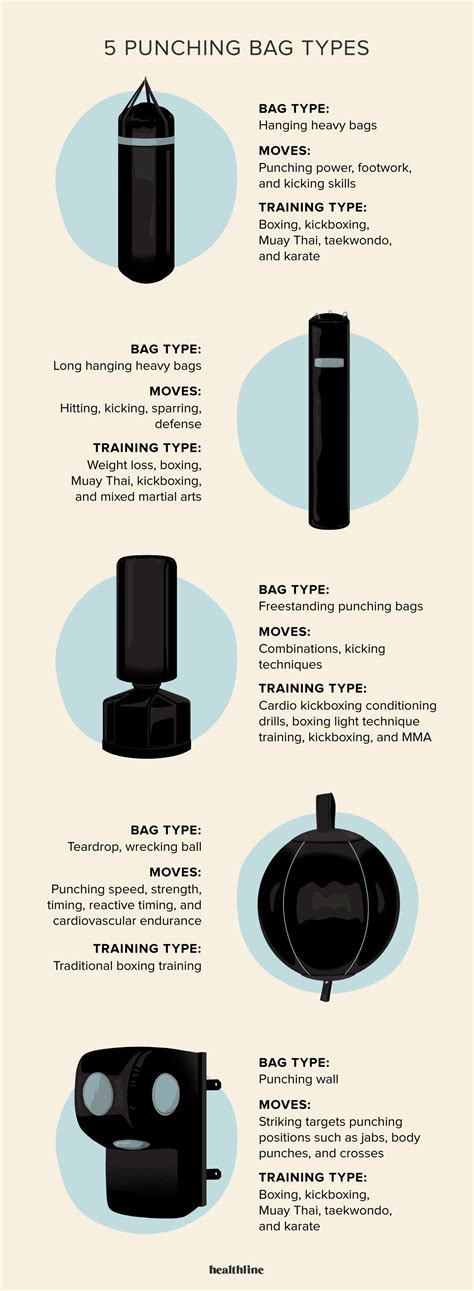
Heavy bags-like the name implies-are punching bags generally weighing up to 200 pounds. There are two types of heavy punching bags you can use:
Read also: Kickboxing in Buckhead
- Traditional hanging bags
- Free-standing punching bags
Traditional hanging punching bags are usually attached to the ceiling or a stand and swing when kicked or punched. Free-standing punching bags are fitted onto a base that provides a stable foundation.
Generally, heavy bags are used to improve punching and kicking skills. Heavy bags may be used in a number of different combat sports including boxing, kickboxing, Muay Thai, taekwondo, and karate.
How To Pick The Right Size Heavy Punching Bag?
If you’re wondering what weight and size of heavy punching bag is best for you, the general rule is that heavy bags should be approximately half your body weight. A 200 pound person may find a 100 pound bag suitable for use. For most adults, hanging bags should be at least 80 pounds to provide a good experience.
Here are some basic guidelines regarding various punching bag weights:
Read also: Understanding Muay Thai and Kickboxing
- 40 pounds: optimal for youth boxers and young beginners
- 70 pounds: designed for teenagers and beginners
- 100 pounds: suitable for intermediate boxers
- 200 pounds: designed for heavyweight boxers
Heavy bags are versatile enough to fit within all different types of fighting and boxing training styles.
Freestanding Bag Vs. Hanging Bag Vs. Metal Stand | Which Boxing Bag is Right For Your Home
2. Considerations for Choosing the Right Punching Bag
When choosing the perfect boxing punch bag, it's important to match your equipment with your training goals and skill level.
- Cardio Fitness Enthusiasts: If you're mainly focused on improving your cardio fitness, speed bags or lighter hanging punching bags are great options. These bags bounce back quickly, allowing you to throw fast punches one after the other and get your heart rate up.
- Professional Boxing Practice: If you're a serious boxer or want to work on building power in your punches, a heavy punch bag with a stand is the way to go.
- Small Apartments: If you live in a small apartment, go for a freestanding bag or a doorway-mounted option.
- Feel (Softness vs. Firmness): Some people prefer a softer bag that's easier on their hands and wrists, while others like the challenge of hitting a firmer bag that mimics an actual opponent.
- Visual Design: The appearance of your boxing bag matters too!
- Supports your training routine and goals
- Fits well in your available space
- Matches your personal preferences
Keep these tips in mind as you shop for a punching bag, and you'll be on your way to an effective and enjoyable workout experience.
When Should You Use a Free-Standing Punching Bag?
Free-standing bags are punching bags that do not require mounting. These bags are typically attached to heavy bases weighted down with sand or water.
Free-standing punching bags are great for practicing various kicking techniques, or for use in rooms with limited wall installation options. These types of heavy punching bags are portable and can be placed in living rooms or bedrooms for easy accessibility and storage. They don’t require professional installation which can save on setup costs as well.
A drawback with most free-standing bags is that they can move around a lot when hit hard and even tip over. This is especially the case with a lot of the smaller, less expensive models, so what you save on in cost, you may pay for in a worse training experience.
When Should You Use a Speed Bag?
Speed bags are much smaller than their other punching bag counterparts. They help athletes improve punching speed while simultaneously enhancing strength, timing, and cardiovascular endurance. Unlike other types of punching bags, speed bags are filled with air and are often suspended from ceilings or walls.
Speed bags tend to have a teardrop shape and are commonly used for traditional boxing training.
When Should You Use a Hanging Bag?
Traditional hanging bags can be a great, cost-effective option for the right person. These types of punching bags are usually hung from ceilings. With traditional hanging bags, the main thing to consider is whether you’re willing and able to anchor the bag permanently into your wall or ceiling.
They will take a lot of abuse and will swing around freely, so they will need to be properly installed by a professional. Hanging your punching bag from a metal stand that sits on the floor is also an option but these metal stands are often very clunky, cause a lot of noise, take up a lot of space, and can ruin floor surfaces as they shift around a lot with impact.
3. Testing Out Fill Materials: Finding Your Ideal Punch
The fill material of a punching bag significantly influences its responsiveness and the overall training experience. When you strike a bag, the filling determines not only how it feels but also how much it absorbs the impact.
- Traditional Sand Filling: Sand provides a high level of resistance and is excellent for building power. However, it can settle at the bottom over time, creating an uneven surface that may be harder on the hands.
- Fiber Fills: Many modern punching bags use a blend of fibers that offer consistent texture and resistance. This type of punching bag filling tends to maintain its shape better than sand and provides a realistic feel when struck.
- Foam Layers: Foam-layered bags are designed to absorb shock, protecting your joints during heavy strikes. These are particularly suitable for kick bag filling, as they reduce the risk of injury from powerful kicks.
- Water Cores: Some punching bags feature water cores surrounded by foam or other materials, which provide a unique striking experience mimicking the human body's resistance.
Selecting the right fill material is crucial as it can affect both your performance and comfort. You should consider trying out different types at a local gym or store to find your ideal punch. This hands-on approach ensures that you choose a bag that suits your personal preference in terms of hardness and impact absorption.
Some bags ship pre-filled and have a fixed weight. For example, we filled an empty bag with foam padding material instead of the recommended sand. This resulted in a cushioned feel, and the bag was significantly lighter as it wasn’t packed with sand.
4. Hanging a Punching Bag: Safety and Performance Tips
When it comes to setting up a boxing bag at home, how you hang it is crucial for both safety and performance. There are different methods available, but choosing the right one depends on factors such as your available space, the structure of your home, and the type of training you intend to do.
Method 1: Ceiling Mount
The traditional method involves securing the bag to a ceiling beam or joist. This provides excellent stability but requires you to verify the strength of the support structure.
Step-by-Step Ceiling Mount Installation:
- Identify a Support Beam: Use a stud finder to locate a solid beam in your ceiling.
- Mark Drill Points: Once you find a beam, mark the drill points ensuring they align with the mounting bracket holes.
- Pre-drill Holes: Pre-drill holes into the marked points to make installing the bolts easier.
- Attach Mounting Bracket: Secure the bracket with heavy-duty bolts that can handle both the weight of the bag and dynamic force from its use.
- Hang Your Punching Bag: Use a strong chain or strap to hang your bag from the bracket. Confirm that it's secure before beginning training.
Method 2: Wall Mount
If ceiling mounting isn't an option, consider a wall mount.
For general use, hang heavy punch bags so their bottom ends are just above waist level. Speed bags should align with your face or slightly lower for optimal performance.
Always consider your boxing techniques when determining height; those focusing on uppercuts may prefer a lower placement while high kick practitioners need clearance to avoid striking ceilings or fixtures.
Assess Ceiling Strength: Before installation, ensure that your ceiling can bear not only the weight of your punching bag but also the additional force applied during workouts. Consult with professionals if uncertain about structural integrity.
With this knowledge, you're ready to mount your boxing punch bag securely at home, setting you up for countless hours of productive training sessions ahead.
5. Recommended Specialist Suppliers for High-Quality Punching Bags
When you're serious about your boxing training, choosing a punching bag from a specialist boxing supplier is essential.
- Everlast: Renowned for their heavy bags, Everlast offers options that cater to all skill levels.
- Title Boxing: Title provides a range of heavy punch bags with stands, catering to users who prefer freestanding setups.
- Fairtex: Ideal for Muay Thai practitioners, Fairtex heavy bags are designed to withstand kicks and punches from all angles.
Before making a choice, assess your space and ensure the selected bag will complement your intended workout routines. Whether you're opting for a hanging punching bag or a heavy punch bag with stand, remember that the quality of the fill material and exterior will influence both the lifespan of the bag and the effectiveness of your training.
When setting up your boxing bag at home, it's also vital to think about the entire ecosystem of equipment you'll need. By selecting gear from specialist suppliers, you align yourself with brands that understand the nuances of boxing training, ensuring that every punch thrown contributes to your growth as a boxer.
Punching Bag Recommendations
Our team spent time testing a variety of punching bags, using our equipment testing methodology to assign a final score to each bag.
- Everlast 1910 100lbs Brown Heavy Bag: The Everlast 1910 100lbs Brown Heavy Bag is an old-school, durable punching bag made of genuine full-grain leather. At $399, this is the most expensive bag on our list but also the nicest one we tested.
- Hayabusa Heavy Bag: If you’re just getting into boxing and aren’t quite ready to spend nearly $400 on a heavy bag, the Hayabusa Heavy Bag is a fantastic budget-friendly option.
- Fairtex Banana Bag: The Fairtex Banana Bag is a durable, versatile bag that’s affordable.
- MaxxMMA Speed Bag Platform: The MaxxMMA Speed Bag Platform provides almost everything you need to start incorporating a speed bag into your workout.
- FITVEN Freestanding Punching Bag: One of the biggest drawbacks of using a punching bag at home is the mounting and installation. However, for those with limited space who don’t want to permanently hang a heavy punching bag from their ceiling, a freestanding heavy bag is the best option.
- Outslayer Filled Punching Bag: The Outslayer Filled Punching Bag is a durable, versatile bag that can be used for a variety of purposes.
Comparison of Punching Bags
Here is a comparison of different types of punching bags to help you make an informed decision:
| Type of Bag | Pros | Cons | Best For |
|---|---|---|---|
| Free-Standing Punching Bag | Portable, easily moved, good for kicking, doesn't require permanent installation | Can move around, can tip over | Limited space, varied techniques |
| Speed Bag | Good for technique training and speed, small, compact design | Needs to be permanently installed to the ceiling | Technique and speed training |
| Hanging Punching Bag | Cost-effective, effective for training (when attached), simulates real fighting, won't tip over | Needs to be professionally installed, usually permanent, stand options are noisy, large, and move around | Serious training, realistic simulation |
How Can You Determine The Quality of a Punching Bag?
It can be difficult to determine the quality of a punching bag just by looking at pictures. You will want to evaluate punching bags based on safety and durability. Safety is key. A quality punching bag will have good resistance but not be packed too hard. Some punching bags tend to be packed too hard and can hurt or injure your hand.
You also want to consider durability. You’re going to be hitting it over and over and you want it to last through your training. This is where craftsmanship comes into play. Typically punching bags made in the USA are of higher quality and tend to last longer.
The best way to find a quality punching bag is to do your research, ask people you trust, and read reviews.
How Much Can You Expect To Pay For a Punching Bag?
The price range for a good hanging bag is often less than a good free-standing bag and can run you anywhere from $100 - $250, however, you also have to consider how it will be mounted. Depending on your setup, professional installation can end up costing you more.
On the other hand, a free-standing bag can cost anywhere between $150 - $500, but it won’t require professional installation and mounting. Keep in mind, if you want a free-standing punching bag that is high quality and that will last, expect to spend on the higher end of that range.
tags: #kickboxing #bags #for #home