In the world of boxing, few names resonate with as much power and ferocity as Iron Mike Tyson. The youngest heavyweight champion in history, Tyson’s rise to stardom was not a solo journey. Behind the scenes, a series of coaches played crucial roles in shaping his career, navigating the highs and lows, and contributing to the Tyson legend.
This is a deep dive into the history of Mike Tyson’s coaches, a rollercoaster ride of triumphs, controversies, and strategic moves that left an indelible mark on the sport.
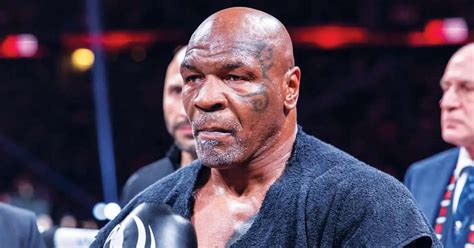
Mike Tyson Through the Ages
Cus D’Amato: The Architect of Iron Mike’s Ascent
Mike Tyson’s journey began under the watchful eye and mentorship of Constantine "Cus" D’Amato. Cus was born into an Italian-American family in the New York City borough of the Bronx on January 17, 1908. Both his parents were from Toritto, province of Bari, Southern Italy, Region Puglia. He had a brief career as an amateur boxer, fighting as a featherweight and lightweight, but was unable to get a professional license because of an eye injury he had suffered in a street fight.
Cus was a legendary boxing trainer and manager. He had previously guided Floyd Patterson to become the youngest heavyweight champion, a feat Tyson would later surpass. Under D'Amato's tutelage, Floyd Patterson captured the Olympic middleweight gold medal in the 1952 Helsinki games. D'Amato then guided Patterson through the professional ranks, maneuvering Patterson into fighting for the title vacated by Rocky Marciano. After beating Tommy "Hurricane" Jackson in an elimination fight, Patterson faced Light Heavyweight Champion Archie Moore on November 30, 1956, for the World Heavyweight Championship. He beat Moore by a knockout in five rounds and became the youngest World Heavyweight Champion in history at the time, at the age of 21 years, 10 months, three weeks and five days.
Read also: Mike Tyson vs. Brock Lesnar?
D’Amato saw something special in Tyson from an early age, a raw, unbridled talent that needed nurturing. He took Tyson under his wing, not just as a fighter but as a son. He adopted Tyson after Tyson's mother died. D’Amato trained him over the next few years, encouraging the use of peek-a-boo style boxing, with the hands in front of the face for more protection. Bobby Stewart introduced Mike Tyson to D'Amato when Tyson was around 12 or 13 years old, after Stewart stated he had taught Tyson all he could about boxing technique and skill. Under D’Amato’s tutelage, Tyson honed his skills, developed his ferocious style, and absorbed the wisdom of a man who understood the intricacies of the sweet science.
Tragically, D’Amato died of pneumonia at Mount Sinai Hospital in Manhattan on November 4, 1985, a little over a year before Tyson became the youngest world heavyweight titleholder in history at the age of 20 years four months, thus supplanting Patterson's record. D’Amato’s death left a void that would prove challenging to fill. The man who had shaped Tyson into a fearsome force in the ring was gone, but his influence would continue to resonate throughout Tyson’s career.
“Iron Mike” recently spoke to Dan Rafael on a Big Fight Weekend/Fight Freaks Unite podcast about how Cus would feel about Tyson taking on Paul at 58 years old and Mike said: “He would love it because he thought that fighting was psychological more than physical, and if a fighter stayed in shape and stayed active, he could still be successful at an older age.”
Cus D'Amato and Camille Ewald (1905-2001) met in the 1940s and entered into a common-law relationship. Ewald supported D'Amato in his dedication to training socially challenged youths, and she allowed her home to function as a halfway house for D'Amato's pupils, often fulfilling the role of a mother figure to them. Most notably, D'Amato and Ewald, in anticipation of Mike Tyson's future athletic success, established legal guardianship over the young man in an effort to protect him both personally and financially from the cutthroat boxing establishment.
Cus D’Amato Memorial Award was established by the Boxing Writers Association of America.
Read also: Mike Tyson vs. Jake Paul
From October 26, 2017, through November 4, 2017, an international, online "Science of Victory" marathon was dedicated to the memory of Cus D'Amato. took part in this project, including Silvio Branco, Patrizio Oliva, Dr. Antonio Graceffo, Avi Nardia, and Gordon Marino.
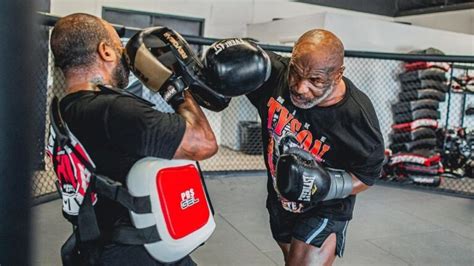
Peek-a-boo boxing style
Kevin Rooney
Kevin Rooney also trained Tyson. Rooney would guide Tyson to the heavyweight championship twelve months after D'Amato's death. After Atlas was fired being named head trainer after those two around about 87.
Teddy Atlas
He was occasionally assisted by Teddy Atlas, although Atlas was dismissed by D'Amato when Tyson was 15.
Jim Jacobs and Bill Cayton: Stewards of the Iron Empire
Following the passing of Cus D’Amato, Jim Jacobs and Bill Cayton stepped into the managerial role for Tyson. Jacobs and Cayton were longtime associates of D’Amato and had been instrumental in Tyson’s early career.
Read also: The Legend of Iron Mike
Jacobs, known for his keen eye for talent, and Cayton, a shrewd businessman, together formed a managerial partnership that navigated Tyson through his meteoric rise. They secured Tyson’s contract, managed negotiations, and strategically selected opponents to elevate Tyson’s profile.
Under their guidance, Tyson became the undisputed heavyweight champion by unifying the WBC, WBA, and IBF titles in 1987. The dynamic duo successfully navigated Tyson through the world of boxing politics, ensuring that he remained a dominant force and a lucrative draw for the sport.
However, their tenure wasn’t without controversy. Disputes arose over financial matters and the control of Tyson’s career, leading to a legal battle between Tyson and his managers. The rift eventually led to a separation, with Tyson moving on to new management.
Don King: The Flamboyant Promoter and Manager
In the tumultuous world of boxing, one name stands out for its flamboyance, controversy, and undeniable impact - Don King. After parting ways with Jacobs and Cayton, Tyson entered into a partnership with King in 1988.
King, known for his wild hairstyles, bombastic personality, and promotional prowess, was a polarizing figure in the boxing world. Despite his notoriety, King played a significant role in Tyson’s career. Under King’s management, Tyson continued to dominate the heavyweight division, and their partnership led to some of the most lucrative fights in boxing history.
The Tyson-King alliance reached its pinnacle with the infamous bout against Michael Spinks in 1988. The fight generated record-breaking pay-per-view numbers and solidified Tyson’s status as a global superstar. However, as the saying goes, “all that glitters is not gold.”
The relationship between Tyson and King eventually soured, marked by legal battles and accusations of financial mismanagement. In 1992, Tyson severed ties with King, marking the end of a tumultuous but highly successful chapter in Tyson’s career.
John Horne: The Bridge to Redemption
After the turbulent period with Don King, Mike Tyson sought stability and redemption in his career. Enter John Horne, a seasoned boxing manager who took on the challenge of guiding Tyson through the latter part of the 1990s.
Horne focused on rebuilding Tyson’s image, both inside and outside the ring. He navigated Tyson through legal troubles, including a highly publicized prison sentence for a 1992 rape conviction.
Under Horne’s management, Tyson returned to the ring in 1995 and quickly regained the WBC and WBA titles. However, the partnership with Horne was short-lived, as Tyson’s personal and legal issues continued to haunt him. The mid-90s saw Tyson’s career take a downturn, with notable losses and controversies overshadowing his once-unstoppable aura.
Shelly Finkel: The Comeback Architect
As Tyson faced suspension and struggled to regain his footing in the late 1990s, another figure emerged to guide him back to the pinnacle of the sport - Shelly Finkel. Finkel, a veteran boxing manager with a storied career, took on the challenge of resurrecting Tyson’s career.
Finkel played a crucial role in orchestrating Tyson’s comeback, securing high-profile fights that recaptured the public’s attention. Tyson’s victory over Frank Bruno in 1996 marked a resurgence, and under Finkel’s management, Tyson aimed to reclaim the heavyweight throne.
Despite some setbacks, including a shocking loss to Evander Holyfield in 1996, Finkel remained a stabilizing force in Tyson’s corner. Their collaboration showcased Tyson’s ability to bounce back from adversity and provided a glimpse of the fighter he once was.
Richie Giachetti was there for Tillman Stewart and the second Ruddock fight and Holyfield 2 ,Rich Holmes former trainer. Ronnie shields was Tysons head trainer for Lewis ,not sure why? Tyson changed trainers like he changed moods. Hilariously enough Roach actually had an ancient Tyson looking pretty good in his penultimate fight until Mike's knee gave out. obviously no stamina for a full 12 but for a few rounds he looked better than he had done in years. he seemed energized and willing to make a bit of effort with Roach but it was all too late, his body was gone by then.
Mike Tyson's Professional Career Highlights
Michael Gerard Tyson (born June 30, 1966) is an American former professional boxer who competed between 1985 and 2024. Tyson won his first 19 professional fights by knockout, 12 of them in the first round. Claiming his first belt at the age of 20, Tyson holds the record as the youngest boxer ever to win a heavyweight title. He was the first heavyweight boxer to simultaneously hold the World Boxing Association (WBA), World Boxing Council (WBC), and International Boxing Federation (IBF) titles, as well as the only heavyweight to unify them in succession.
| Year | Event | Opponent | Result |
|---|---|---|---|
| 1986 | WBC Heavyweight Championship | Trevor Berbick | Won by TKO |
| 1987 | WBA and IBF Titles | James Smith, Tony Tucker | Won |
| 1988 | Fight | Michael Spinks | Won by KO |
| 1990 | Undisputed Championship | Buster Douglas | Lost |
| 1996 | WBC Title | Frank Bruno | Won by TKO |
| 1996 | WBA Title | Bruce Seldon | Won |
| 1996 | WBA Title Defense | Evander Holyfield | Lost by TKO |
| 1997 | Rematch | Evander Holyfield | Lost by Disqualification |