Mixed martial arts (MMA) is a combination of combat sports that includes both striking and grappling, in a competitive format. The phrase mixed martial arts (MMA) is a title that was originally coined in 1993 when describing the Ultimate Fighting Championship (UFC)’s first major event (UFC 1). However, the martial arts have been practiced in some capacity for thousands of years. While each of these sports were once considered niche, their summation has grown to a global phenomenon attracting a diverse profile of fans from across the world.
As combat sport participants, fans, and caregivers prepare for this summer’s competition in Paris, it gives us an opportunity to acknowledge the massive growth in the sport’s popularity, as well as some current-and sometimes surprising-trends. This growth in popularity has been exemplified by the UFC bringing championship events across the world to Europe, Africa, Australia, the Middle East and by opening training facilities in numerous countries. Are MMA athletes on a certain road to submission by injury, or should these rumors be knocked out? We will delve into the most common injuries observed in these athletes and ways to prevent them, while providing data that may dispel some common misconceptions.
The origins of the martial arts disciplines have international roots. Among many other ancient art forms, Wrestling is said to date back to the Han Dynasty in China, Boxing to the 1st century BC in ancient Greece, and Brazilian Ju-Jitsu to 1925. In contemporary times, international audiences have provided many of the largest crowds in MMA history, including events such as UFC 243 in Melbourne Australia and the PRIDE event in Tokyo Japan which had 91,000 people in attendance.
Additionally, there are often millions of people paying to view these events on television (Max: 2.4 Million pay-per-view buys for UFC 229; 1.1 Billion social media views for UFC 300). Furthermore, as social media booms at an exponential rate, highlight reel knockouts and/or dramatic submissions have drawn the eyes of a host of new ravenous fans hoping to engage in competitions like these.
Historically, MMA events were dominated by men. In recent years women’s participation in these sports has gained traction, accelerated by several key events, including women’s Judo being awarded medals in the summer Olympics in 1992, the first ever women’s MMA tournament in Japan in 1995, women’s freestyle wrestling entering the Olympics in 2004, and more recently, Rhonda Rousie’s rise in the UFC in 2011 and women’s boxing entering the Olympics in 2012. According to a study from 2009, only 2% of media attention related to MMA was directed towards women. Within only the past 10 years this number has grown. A 2023 study from Statista reported that 6% of women were avid MMA fans and 18% were casual fans (23% of men reported being avid fans and 30% reported being casual fans). Women are now headlining televised pay-per-view events and serving as a main attraction in other professional events which is demonstrating to younger girls that MMA participation is a viable option.
Read also: The Appeal of Mixed Pantyhose Wrestling
Mixed martial arts, also known as MMA, is a term for the combat sport in which two competitors attempt to achieve dominance over one another by utilizing three general tactics: striking, finishing holds, and control. The rules allow the combatants to use a variety of martial arts techniques including punches, kicks, joint-locks, chokes, takedowns, and throws. Victory is normally gained through knockout, submission (one fighter concedes victory to the other by tapping the mat or his opponent with his hand), or stoppage by the referee, the fight doctor, or a competitor’s cornerman.
MMA is also alternatively called NHB (for No Holds Barred), but this term is mostly retired. It is no longer an accurate description of the modern competitions which utilize many more rules than before. The first Ultimate Fighting Championship’s only rules were against eye-gouging, fish-hooking, and biting. It was not unusual to see hair-pulling, toe-stomping, and people being choked with the lapels of their clothing. One infamous early match even featured one combatant repeatedly striking his opponent in the groin. Currently, all of the major promotions have a list of rules and banned techniques.
MMA is also used to describe any modern style of martial arts which incorporate techniques and theories from several sportive martial arts. This especially applies to MMA styles which incorporate a mixture of ground fighting, stand-up striking, and takedowns in their training. As a result of these sporting events, martial arts training and the understanding of the combat effectiveness of various strategies have changed dramatically over the last ten years. While the early years included the widest possible variety of styles (everything from Sumo to Karate), modern fighters often train in a mixture of only three styles: Amateur Wrestling (focusing on clinches and takedowns), Submission Wrestling (focusing on submissions and positioning on the ground), and Kickboxing (usually Muay Thai) (focusing on striking).
These three distinct styles coincide with the “phases of combat” theory, which suggests that fights can be broken into three distinct phases, each requiring completely different skill sets: stand-up fighting, clinch fighting, and ground fighting. According to the theory, a fighter’s best strategy is to determine the phase in which he has the greatest advantage over his opponent and then to force the fight to take place in that phase. It currently appears that this is mainly correct, in the sense that if you are equally skilled in all phases of combat, you are prepared to take advantage of any weaknesses in your opponent.
Modern MMA training incorporates a holistic approach to physical conditioning, incorporating elements such as strength and conditioning, cardiovascular training, and flexibility exercises. Fighters need to be in peak physical condition to compete at the highest levels, and this requires a rigorous and disciplined training regimen. Additionally, mental toughness and psychological preparation are critical components of a fighter’s training. The ability to stay calm under pressure, maintain focus, and execute a game plan are all essential to success in the cage. Many fighters work with sports psychologists to develop these mental skills, ensuring they are as prepared mentally as they are physically.
Read also: Tia's Mixed Wrestling Career
Prominent examples of MMA organizations are the Ultimate Fighting Championship (UFC) and Pride Fighting Championships. The UFC, in particular, has played a significant role in popularizing the sport and setting the standard for modern MMA competitions. For more information about MMA’s evolution over time, see our history of mixed martial arts.
The Science of a Knockout
A heavy blow to the head is a frequent cause of a knockout. A knockout (abbreviated to KO or K.O.) is a fight-ending, winning criterion in several full-contact combat sports, such as boxing, kickboxing, Muay Thai, mixed martial arts, karate, some forms of taekwondo and other sports involving striking, as well as fighting-based video games. The term is often associated with a sudden traumatic loss of consciousness caused by a physical blow. Single powerful blows to the head (particularly the jawline and temple) can produce a cerebral concussion or a carotid sinus reflex with syncope and cause a sudden, dramatic KO.
In boxing and kickboxing, a knockout is usually awarded when one participant falls to the canvas and is unable to rise to their feet within a specified period of time, typically because of exhaustion, pain, disorientation, or unconsciousness. In mixed martial arts (MMA) competitions, no time count is given after a knockdown, as the sport allows submission grappling as well as ground and pound. If a fighter loses consciousness ("goes limp") as a result of legal strikes, it is declared a KO.[1] Even if the fighter loses consciousness for a brief moment and wakes up again to continue to fight, the fight may be stopped and a KO declared.
As many MMA fights can take place on the mat rather than standing, it is possible to score a KO via ground and pound, a common victory for grapplers. In fighting games such as Street Fighter and Tekken, a player scores a knockout by fully depleting the opponent's health bar, with the victor being awarded the round. The player who wins the most rounds, either by scoring the most knockouts or by having more vitality remaining when time expires during each round, wins the match. In some fighting games like Soul Calibur as well as platform fighters like Super Smash Bros, the player can also score a KO when the opponent falls off the fighting area. This differs from combat sports in reality, where a knockout ends the match immediately.
A technical knockout (TKO or T.K.O.), stoppage, or referee stopped contest (RSC) is declared when the referee decides during a round that a fighter cannot safely continue the match for any reason. Certain sanctioning bodies also allow the official attending physician at ringside to stop the fight as well. In amateur boxing, a double knockout result is determined based on the round of competition.
Read also: Exploring Bodyscissors in Mixed Wrestling
In all contests except the final, both fighters are declared to have lost the contest and are eliminated, since a boxer is suspended 30-540 days for a knockout under boxing regulations. In the final, where there must be a winner, the contest ends as if the bell sounded at the end of the final round, and the round is scored, with the winner determined by points.
Little is known as to what exactly causes one to be knocked unconscious, but many agree it is related to trauma to the brain stem. This usually happens when the head rotates sharply, often as a result of a strike. a "stunning", a "dazing" or a fighter being "out on his feet", when basic consciousness is maintained (and the fighter never leaves his feet) despite a general loss of awareness and extreme distortions in proprioception, balance, visual fields, and auditory processing. A basic principle of boxing and other combat sports is to defend against this vulnerability by keeping both hands raised about the face and the chin tucked in.
A fighter who becomes unconscious from a strike with sufficient knockout power is referred to as having been knocked out or KO'd (kay-ohd). Losing balance without losing consciousness is referred to as being knocked down ("down but not out"). Repeated blows to the head, regardless of whether they cause loss of consciousness, may in severe cases cause strokes or paralysis in the immediacy,[6] and over time have been linked to permanent neurodegenerative diseases such as chronic traumatic encephalopathy ("punch-drunk syndrome").
A knockdown occurs when a fighter touches the floor of the ring with any part of the body other than the feet following a hit, but is able to rise back up and continue fighting. The term is also used if the fighter is hanging on to the ropes, caught between the ropes, or is hanging over the ropes and is unable to fall to the floor and cannot protect himself.
In simple terms, a knockout is when your brain is rattled so hard that it shuts down.When a clean strike lands, punch, elbow, head kick, whatever - it whips the head around. The brain doesn’t move as fast as the skull. It hits hard against the walls of the skull. More like Jell-O smacking the side of a container but only it is not fun. It is pretty devastating actually. That sudden force messes with the brain’s communication system.That’s why fighters drop. Their body literally disconnects for a moment. The brainstem, the part that controls basic awareness, goes offline. It feels like a complete lights out. Sometimes it’s a few seconds. Sometimes longer. However long it is, it’s just very scary with serious repercussions.
The concerning part about knockouts are concussions. That means memory loss, slowed thinking, and grogginess. Fighters may not even remember the strike that ended it. One knockout might heal. It won’t be a big problem until you start getting it over and over again. The damage ruins slowly but permanently.The risk stacks up. Fighters who take repeated shots face long-term issues: memory loss, speech trouble, and mood swings. Worst case, conditions like CTE: Chronic Traumatic Encephalopathy. That’s irreversible.
So, what happens to your brain during a knockout is both simple and terrifying. It shuts down to protect itself. But that protection stops working when knockouts happen too many times. The brain loses the ability to protect itself against major blows and damage becomes a reality.
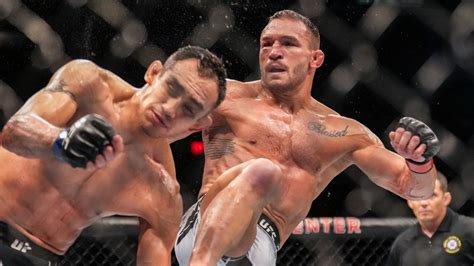
Here’s what fans don’t always see.
- Unconsciousness: Some fighters are out cold. Others blink back after a few seconds. No one really knows how long until it happens. It’s different every time.
- Confusion: Many don’t even realize the fight’s over. You’ll see them grab the referee, arguing to continue. Or they’ll look around like they just woke up in the wrong room.
- Aftermath: Grogginess, headache, nausea, and sometimes even vomiting. Fighters talk about “feeling off” for days.
So, what happens when you wake up from a knockout? You don’t come back feeling normal. You come back foggy, dizzy, sometimes even scared. Fighters need proper medical care afterwards.
This one always freaks people out. A fighter gets clipped and instead of collapsing, they freeze up. Body rigid. Arms locked. Almost statue-like. It’s called postural tone. When the brain is disrupted, the signals that keep muscles relaxed don’t get through. Instead of softening, the muscles tighten. That’s why fighters sometimes fall looking like they’ve been frozen mid-motion.
And then there’s the shaking. Little twitches. Jerky movements. Sometimes their legs kick. That’s the nervous system glitching as the brain tries to reset. Not usually a seizure though it looks like one. It’s brutal to see. But it’s not showboating. Not drama. It’s biology. The nervous system is fighting to get back online.
So the next time someone asks, “Why do fighters go stiff when knocked out or why do fighters shake after a knockout?” you’ve got the answer. Their bodies are just caught in a short circuit.
Can a Knockout Kill You in UFC?
Hard question. But it deserves an honest answer.
Yes, a knockout can be fatal. Not common. Not likely in the UFC. But possible.The knockout itself usually isn’t the killer. It’s what can happen after. Brain swelling and bleeding inside the skull can cause death. Severe concussion too. Those are the real threats.
Now, the UFC knows this. That’s why cageside doctors and medics are always ready. Fighters who get KO’d aren’t just left to walk it off. They’re tested immediately. Sometimes rushed to the hospital. And often suspended from fighting for weeks or even months.
Still, combat sports will always carry danger. You can’t erase that. You can only reduce it. So to the fan question, can being knocked out kill you in the UFC? Yes, but the protocols in place are designed to keep that nightmare from becoming reality.
How Knockouts Impact a Fighter’s Long-Term Health?
One knockout doesn’t end a career. But multiple, closely repeated can.Every concussion leaves its mark. Over time, those marks pile up. Fighters talk about forgetting basic things. Names. Dates. Conversations. They lose reaction speed. Their mood changes. They feel off even outside the gym.
And then there’s CTE. The long shadow. Fighters with it face depression, aggression, dementia-like symptoms. Sometimes years after retirement. It doesn’t show overnight. It builds in silence.
It’s not just about health. It’s about quality of life. Imagine being 45, retired, but unable to hold a clear conversation. Or struggling with emotions you can’t control. That’s the human cost behind the highlight reels.
The MMA community is getting better. Smarter training. More medical checks. Tighter suspension rules. Still knockout brain damage risks in MMA are real. You don’t erase them. You manage them. That’s the trade fighters live with. There is glory but risk-laden uncertainty too.
The Role of Medical Staff: Monitoring Fighters After a Knockout
If you’ve ever watched closely, the scariest moment isn’t always the punch. It’s the seconds after. That stillness. That silence. That’s when doctors rush in.First, they check breathing and pulse. Then eyes - pupil reactions tell a lot. They ask simple questions fighters sometimes can’t answer: What’s your name? Where are you? Do you know what round it is? From there, decisions get made. Hospital? Immediate scans? Or just rest? Even if the fighter insists they’re fine, doctors don’t take chances. Some injuries only show up hours later.
And the aftermath doesn’t stop there. Suspensions are mandatory. Fighters sit out, no matter how much they want back in. Rest is part of survival. That’s why the medical team is more than background noise. They’re the shield between “bad knockout” and “career-ending injury.”
So, when you think about UFC knockout explained, don’t just picture the punch. Picture the team working overtime to make sure that fighter walks out of the arena safely.

FAQ’s
A UFC knockout explained looks simple - one punch, lights out. But under the surface, it’s anything but. The brain gets rattled. The body glitches. Fighters risk more than just losing a match. UFC knockout health risks and knockout brain damage risks in MMA are part of the sport. Scary ones. And while medical staff, rules, and awareness keep fighters safer than ever, the truth is simple. Every knockout comes with a cost. For fans, it’s a thrill. For fighters, it’s a gamble with their health. And that fight, the one to protect their brains, doesn’t end when the bell rings.
Want to give mixed martial arts a try? Training in MMA offers numerous benefits beyond learning self-defense. It is an excellent way to improve physical fitness, as it combines cardio, strength training, and flexibility exercises. MMA training also enhances mental toughness, discipline, and confidence. Whether you’re looking to compete or simply want to get in shape, MMA provides a comprehensive workout that challenges both body and mind.
MMA training can help develop a variety of skills, including improved hand-eye coordination, faster reflexes, and better overall agility. The diversity of techniques and training methods used in MMA means that practitioners can enjoy a dynamic and varied workout that keeps them engaged and motivated. Furthermore, the camaraderie and sense of community found in many MMA gyms can be a significant motivational factor. Interested in trying mixed martial arts? Set up your complimentary private lesson today to begin your journey into the world of MMA. Our experienced instructors will guide you through the basics and help you develop the skills needed to succeed.Beginners are often encouraged to start with the basics, learning fundamental techniques and gradually building up their skillset. Many gyms offer introductory classes that cover the essentials, providing a solid foundation for further training.
It’s also important to choose the right gym and instructors. Look for a reputable gym with experienced coaches who can provide proper guidance and support.
What are the basic rules of MMA?
MMA competitions are governed by rules that prohibit certain dangerous techniques, such as eye-gouging, biting, and fish-hooking. Fighters must wear approved gear, including gloves, mouthguards, and groin protectors.
Is MMA safe?
While MMA is a combat sport, modern regulations and safety protocols have made it much safer than in its early days.
What styles are commonly used in MMA?
Common styles in MMA include Brazilian Jiu-Jitsu, Wrestling, Muay Thai, Boxing, and Kickboxing.
Can beginners train in MMA?
Yes, beginners are welcome in MMA training.
What equipment do I need to start MMA training?
Basic equipment for MMA training includes gloves, hand wraps, a mouthguard, and appropriate athletic clothing.
| Sport | Percentage |
|---|---|
| Boxing | 7.1% |
| MMA | 4.2% |