Nestled in the rugged, rain-soaked landscape of the Pacific Northwest lay a wrestling territory that served as a crucible for some of the sport’s most iconic names. From its humble beginnings in the 1920s to its heyday as a proving ground for legends, Pacific Northwest Wrestling (PNW) has been heralded as “one of the best wrestling territories to learn the trade that ever existed.”
Rooted in the heart of Portland, Oregon, this is how a small promotion rose to prominence, producing stars who would go on to shape the future of professional wrestling. Let's take a scenic drive across the United States. Starting from Kansas City, we’ll head west on I-70, merge onto I-80 in Utah, and continue all the way to Portland, Oregon, to explore the history of this influential wrestling territory.
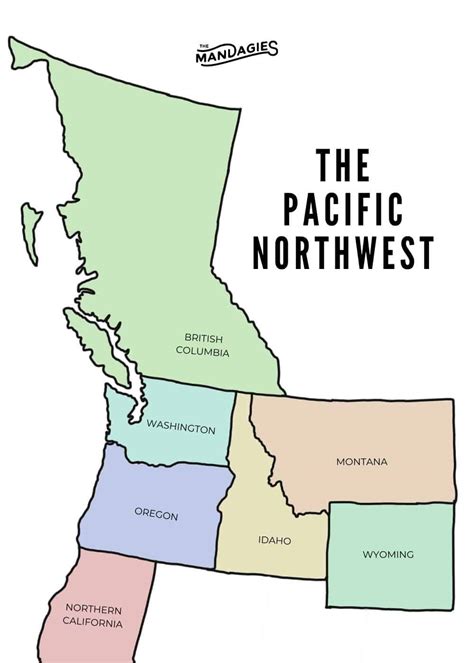
Map of the Pacific Northwest region.
The Early Years: Laying the Foundation
Pacific Northwest Wrestling began in the mid 1920s when Midwestern-born Ted Thye came to Oregon to promote in the region, hiring Herb Owen as a manual laborer and assistant. While on a trip to Australia, Owen usurped the promotion’s legal status in Oregon to become sole owner under the state’s regulatory laws.
Pacific Northwest Wrestling started in the early 1920s when a former world middleweight and world light-heavyweight (Australian version) wrestling champion by the name of Ted Thye came to Portland with plans to promote both boxing and wrestling. Thye hired Herb Owen as his assistant.
Read also: High School Wrestling in NC
While Thye was on a trip home to Australia, Owen had the ownership of the company put in his name. Herb Owen started out just promoting boxing matches, but soon began promoting wrestling matches as well, focusing on lightweights. During the early years, Herb brought in boxer Jack Dempsey.
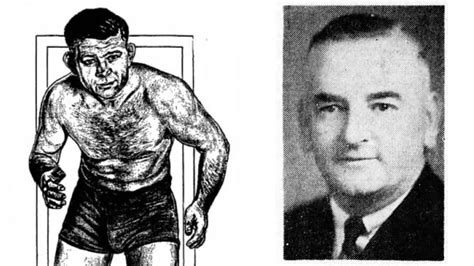
Ted Thye (left) and Herb Owen (right), early pioneers of Pacific Northwest Wrestling.
According to Barry Owen, Don's son, Dempsey even refereed some wrestling matches for Owen. An unknown to many at the time, George Wagner, worked for Owen early in his career. While in the PNW, Wagner developed the character for which he would become famous, Gorgeous George.
Despite losing its regionally broadcast television program in 1967, Portland Wrestling was still doing well. The 1970s continued to be good to Portland Wrestling, with the addition of such superstars as Buddy Rose, Matt Borne, Ed Wiskoski, Roddy Piper, Jesse Ventura, Lonnie Mayne, Jimmy Snuka and Stan Stasiak.
Don Owen's Vision: Building a Wrestling Powerhouse
After the death of the elder Owen, his son Don would take over the promotion, becoming one of the initial members of the NWA. Don Owen, the visionary behind Pacific Northwest Wrestling, grew the territory into a legendary wrestling powerhouse from the 1940s to the 1980s. Don Owen was born in 1912 in the small town of Eugene, Oregon. Growing up in the business, he started doing odd jobs early on for his father.
Read also: MMA & BJJ Academy Review
Once he took over as the promotion leader, he began attending meetings of the fledgling NWA. In 1948, he became one of the founding members of the official organization and renamed his territory NWA Pacific Northwest, but it would always be known as Portland Wrestling.
In the early ’50s, Owen began to attempt to secure television time for a weekly wrestling program he intended to air. On July 10, 1953, Don Owen started what was the first regular professional wrestling program on television. Pacific Northwest Wrestling aired a weekly 60 minute live program originally called Heidelberg Wrestling, named for its sponsor, Heidelberg Brewing Co. of Tacoma, Washington. The show was initially broadcast on KPTV, but moved to rival KOIN-TV in 1955.
With the help of associate Harry Elliot, Owen continued to expand into the West Coast market, from Colorado to the ocean, up to Alaska, and across the border into British Columbia on a CBS affiliate out of Seattle.
Once the ’60s rolled around, Owen began seeking a venue he could call his own and base his promotion out of. It looked as though Don Owen had found the missing piece of the puzzle when he ran across an old bowling alley for sale. Owen ran several cards there, selling out many of these shows.
The Portland Sports Arena (also known as the "House of Action") is the historic building that hosted Portland Wrestling (PNW) from 1968 to 1992. The Portland Sports Arena was now in operation, and the word was getting out across the Northwest and into Canada that Oregon was becoming a place to congregate.
Read also: Shaping Leaders and Building Champions
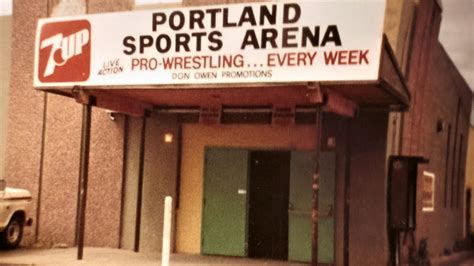
The Portland Sports Arena, also known as the "House of Action," hosted Portland Wrestling (PNW) from 1968 to 1992.
Stars Forged in the Northwest
The influx of star power into the Portland Northwest Wrestling territory steadily grew stronger as the ’70s rolled on. Many of wrestling’s biggest names made their way into the area and stopped off to make huge impacts before moving on to the East Coast and Minneapolis markets to cement their legacies in the business.
Jimmy Snuka
James Reiher was born on May 18th, 1943, in Fiji, amid the fighting in the Pacific during WWII. He was an avid bodybuilder and worked out in the gym of professional wrestler Dean Ho. Many future wrestling stars worked out there and James fit right in with them.
In the early ’70s, he relocated to the Northwest and sought out Owen’s thriving PNW promotion. He adopted the name that led him to fame and fortune when he started wrestling as Jimmy Snuka. Snuka held the PNW Championship six times during his tenure there and captured the Tag Team Championships half a dozen times with partner Dutch Savage.
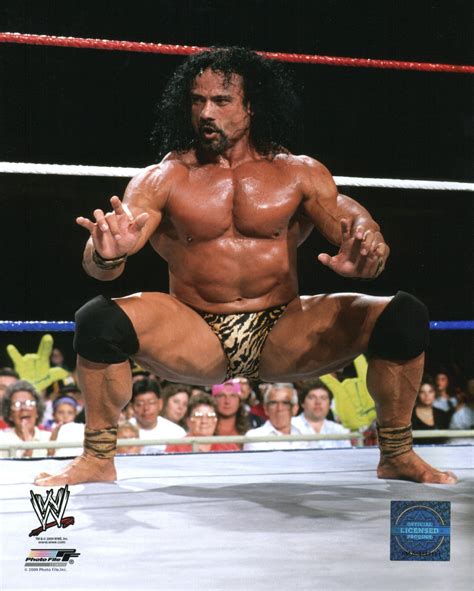
A young Jimmy Snuka early in his pro wrestling career.
"Tough" Tony Borne
Tony Borne broke into the business in the 1950s and soon made Portland and the PNW his home. “Tough” Tony Borne, known for his fierce demeanor, left a lasting impact on PNW as a dominant singles and tag team competitor.
Moondog Lonnie Mayne
Lonnie Mayne was a second-generation wrestler from California, but he got his signature nickname from Vince Sr. during a run in New York in the early ’70s. He has the prestige of being the first Moondog of the pack. Lonnie Mayne was trained by his father, Ken, and found steady work on the West Coast.
Ramos, who had gotten to be famous for his hard-hitting heel style, had a match where he broke Moondog Mayne’s arm so bad the bone was sticking out through the skin.
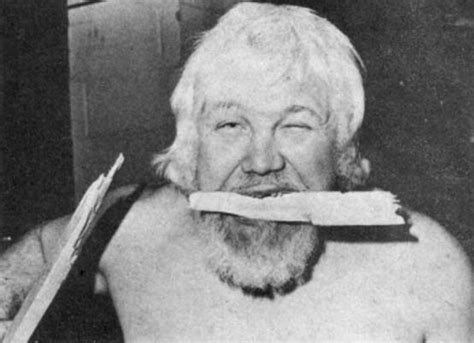
Moondog Lonnie Mayne, pictured here in 1967, was a wild and unpredictable star in Portland Northwest Wrestling.
Beauregarde
Born on April 29th, 1936, Larry Pitchford was a Portland native who trained from a pair of greats, Dean Ho and Mr. Fuji, in 1963. Initially working as "The Golden Boy," but after talking with Ripper Collins, he took the advice and new name of Beauregarde. Known for his wild personas and distinctive ring attire, Beauregarde, a Portland native, brought charisma and unpredictability to Pacific Northwest Wrestling.
He ran the gambit from bleached blond with a slight resemblance to Buddy Roberts to a bushy brown-haired Viking who wore a horned helmet to the ring. His finisher was a move called The Thumb, and lord help you where he stuck it!
The Von Steigers
The pair of Kurt and Karl Von Steiger arrived in Portland Northwest Wrestling in the late summer of 1968. The feared German duo, the Von Steigers (Kurt and Karl), dominated the PNW tag team scene with their ruthless heel tactics in the late 1960s and early 1970s. It wasn’t only Tough Tony Borne and Moondog Mayne who were in the trenches and hunting for the tag titles in PNW around this time.
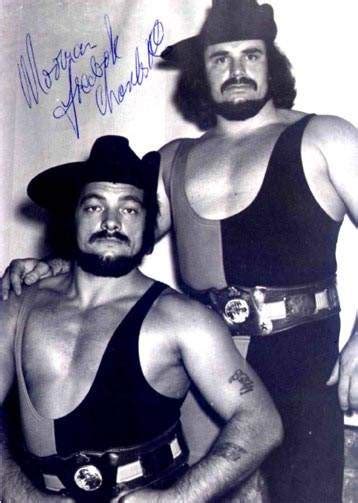
The Royal Kangaroos (Lord Jonathan Boyd and Norman Frederick Charles III) brought their Australian grit to the Pacific Northwest and were six-time NWA Pacific Northwest Tag Team Champions throughout the 1970s.
The Royal Kangaroos
The Royal Kangaroos (Lord Jonathan Boyd and Norman Frederick Charles III) brought their Australian grit to the Pacific Northwest and were six-time NWA Pacific Northwest Tag Team Champions throughout the 1970s. Notorious rule breakers themselves, it was odd to see two heel teams go after the gold. Did you know? For lovers of wrestling history, Johnathon Boyd was later a rotating member of The Sheepherders, who eventually came to fame in the WWF as The Bushwhackers.
Jesse Ventura
Former Minnesota Governor and WWE Hall of Famer Jesse Ventura, then going by the name Jesse ‘The Great’ Ventura, shook up Portland Northwest Wrestling in the mid-’70s with his charisma and power, setting the stage for his later success in the AWA and WWF.
Dutch Savage
Another of the talented men who made Portland their home was a Scranton, Pennsylvania native who made his way to the Northwest via Macon, Georgia. Savage had learned how to work singles and tag in his travels, and Owen put that to work.
He had a run with another legend in the making of Jimmy Snuka, and the pair won the Pacific Northwest tag titles half a dozen times. During this time, he also established himself over the border in British Columbia. He continued working on his drawing and booking abilities, and in 1972, he invented the infamous Coal Miner’s Glove Match.
He retired from active competition in 1981 and later bought out Sandor Kovacs’ ownership stake in the Washington territory and a one-third portion of PNW from Don and Elton Owen. Savage passed away after complications of a stroke on August 3rd, 2019.
Buddy Rose
Born Paul Perschmann in Las Vegas on November 27th, 1952, Buddy Rose made his debut in wrestling in the early 1970s. Buddy Rose, the ‘Playboy’ of Portland Northwest Wrestling (PNW), captivated audiences with his flamboyant style and unforgettable feuds, solidifying his place as one of the territory’s most memorable stars.
He began working the tag team ranks and won his first PNW Tag Team Championship on October 25th, 1976.
Buddy Rose v Roddy Piper 3/3
Ed Wiskoski (Colonel DeBeers)
Trained by the legendary Harley Race alongside Lord Littlebrook, Ed Wiskoski cut into the business in 1972. Ed Wiskoski, later known as Colonel DeBeers, during his time in Portland Northwest Wrestling (PNW). The St. Wiskoski mainly worked as a heel due to his natural ability to draw heat. Teaming with Buddy Rose for most of his tenure in Portland, the pair held the NWA Tag Team Titles on eleven occasions.
After he left and moved on to the AWA, he took on the persona he is most remembered for in the mustache-twisting Col. As the Colonel, he was hated everywhere he went. This can be linked to an incident near Antelope, Oregon, when an ashram led by Bhagwan Shree Rajneesh caused turmoil in Eastern Oregon, eventually leading to them trying to poison the water supply of the town of Dalles.
Wiskoski took it to the limit and came out in full turban and red robe regalia, which the cult was known for. The fans lost it. Having that regional localization of the product is what made the wrestling territories so great. Col. He and Buddy Rose became lifelong friends, and the two even ran a wrestling school together for four years in the early 2000s.
Roddy Piper
Born in 1954 in Saskatoon, Canada, Roderick always had a temper and bucked authority when he faced it. Roddy Piper, the legendary “Hot Rod,” captivated the Portland Northwest (PNW) Wrestling territory with his quick wit and intense rivalries, propelling himself to worldwide fame.
The two were oil and water, and after his expulsion from middle school, he was thrown out of the house and left to find his own path. He eventually became somewhat of a "gopher" for them and earned his stripes, which would open the doors to the business for him. After Minneapolis, the word was out on this scrappy kid who was a hot promo and willing to learn.
Piper was one of the rambling souls who lived on the highways of America during those years. Always gone and hardly home, you learned the business and made that name for yourself. He knew the call from Gene LeBell meant opportunity and his chance at the West Coast, so he headed to Los Angeles.
Piper gave them a total dose of the wise-cracking "Rowdy" side of his character that he had been working on. It was a natural fit for California. Buddy Rose was the top heel in Portland at that time, and he was making big money for Owen and the rest of the boys on the card.
Owen was a good payoff guy, and Piper came to the promotion and the northwestern United States in general.
Billy Jack Haynes
Among these was a local Portland boy who exploded onto the scene. William Albert Haynes III was born on July 10th, 1953, in Portland. Portland native Billy Jack Haynes, pictured here in 1984, brought intensity and charisma to Portland Northwest Wrestling. He changed his name and patterned his gimmick after the wildly popular ’60s protest film Billy Jack.
Upon winning the strap, he would embark on a feud with Rip Oliver that would last until he left for the WWF in 1986.
Rip Oliver
Rip Oliver had a long tenure with Pacific Northwest Wrestling territory. Rip Oliver, the master of the ‘Oliver Carry Out Service,’ set a record in PNW with the most NWA Pacific Northwest Heavyweight Championship reigns and held tag team titles a combined 18 times.
Like many of his PNW brethren, he worked in and out of Portland throughout his wrestling career. Like many Portland alums, he worked for Vince McMahon in the powerhouse ’80s incarnation of the WWF.
He is one of numerous journeyman wrestlers who made their reputations in the territories, only to fall into obscurity once the boys from New York took the game over. After leaving NYC, he returned to his home, opened up the Oregon Wrestling Federation in the early 1990s, and retired a few years later in 1996.
The Owen Family and Key Figures
Promoter Don Owen’s brother, Elton Owen, used to wrestle in his earlier years and later became a promoter in Southern Oregon. He also did some judging, refereeing, and promoting in boxing. Professional wrestling was hot in Portland in the ’80s but came with a bittersweet arrival. Don’s brother Elton retired from the company in 1982.
In today’s terminology, he would be known as a road agent who ran the house shows, took in the gate, and paid the boys. Elton, an ex-boxer, was popular with the boys, sometimes more than he realized. "I was in the locker room after the show in the line to get paid,” Rogers explained in a recent conversation with me for Pro Wrestling Stories. “I went back and sat down with my money, and a few minutes later, Piper asked me if I had been paid. I told him yes. He smiled and told me to go get in line again."
Rip, while chuckling, added, “Piper laughed his *** off. Even the boss wasn’t safe from the road ribs. Don’s son Barry picked up for Elton, and the business moved ahead.