Sparring is a key component of training for Muay Thai and other combat sports. It allows you to put into practice the techniques and combinations you have learnt, while accumulating soft experience against fighters of different styles. Sparring regularly helps to improve a martial art practitioner’s reflexes and perform under pressure.
In the world of Muay Thai sparring, understanding your opponent’s movements and intentions is crucial. These muay thai sparring tips will sharpen your skills, develop timing, improve defense, and test techniques in a dynamic environment. Muay Thai sparring is one of the most valuable tools in Muay Thai training.
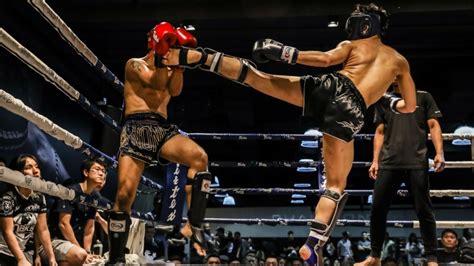
Many beginners to sparring get nervous or excited that they tense up easily. Making conscious effort to breathe and relax can minimise fatigue or gassing out too quickly. Most importantly, sparring is not a contest and meant to be an enjoyable process.
The Importance of Technical Sparring
Thai fighters spar differently from Western fighters. They emphasize technique, timing, and reaction speed over power. Thai fighters approach sparring in a way that prioritizes speed, technique, and control over brute force.
Defining an objective provides structure to training. For example, you can choose to focus on a few select techniques, or reflex and defense, or learning to read your opponent’s moves. At the end of each round, ask your sparring partner on the areas that you can improve on. They are always in the best position to make observations on your strengths and weaknesses. Becoming aware of your weakness is the first step to eliminate it.
Read also: Protection and Comfort in MMA Gloves
Generally, sparring is about techniques over power. This is applicable for all levels, particularly for beginners. We spar to learn, not to win and it is certainly not an ego contest.
Technical sparring is great in many ways, but it tends to be slower and non-threatening. This is why controlled hard sparring will motivate you to avoid taking those shots clean. Moreover, your body and fighting stance react differently when getting hit with power. Taking a hard teep? You’re going backwards. Check a hard kick? You’re moving to the side a bit and you better have good balance.
Controlled Hard Sparring
While technical sparring should be the cornerstone of a fighter’s training regimen, there’s still a time and place for hard sparring. I’ve never liked hard sparring. The majority of my training has taken place in the West, where it’s more common and often necessary for fight preparation.
What does “controlled” hard sparring mean? Controlled hard sparring is sparring with more power - enough to make your sparring partner move a bit and make them think twice before eating another shot. What makes this different than just regular hard sparring is the control part, meaning you’re not aiming to knock them out or break their ribs.
Using more power than light technical sparring, you get more adrenaline rushing just like in a real fight. It also gives both participants a feeling of what it’s like to fight under pressure in different situations. What’s it like when you’re trapped in the corner and they’re throwing bomb after bomb? How do you get out? What’s it like to trap and throw bombs?
Read also: Muay Thai Gloves Review
For instance, say you and your sparring partner are trading hard punches and kicks. They get rocked with one of your punches and drops their hands.
Malicious intent is fine in the ring, but don’t forget that in training, it’s a learning environment. There is no need for ill intent and for anyone to cause injury to a fellow teammate. On the receiving end, it means less unnecessary injuries, especially head trauma. If you haven’t heard, the brain is fairly delicate and too much damage causes a lot of (preventable) issues.
When you identify a problem you’re having in sparring, you will know what you need to work on. Getting out off the ropes when someone is throwing hard shots at you is not as easy as when someone is throwing light kicks.
Unlike in Thailand, where fighters compete every few weeks against smaller opponents, Western fighters train longer for fewer fights and often face opponents with more size and power. Traditional Thai-style sparring differs significantly from what many Western gyms practice.
Three days per week, sparring is Thai-style-fast, technical, and controlled at 50% power. The goal is to sharpen reflexes, improve timing, and build confidence without unnecessary damage. Once per week, we introduce controlled hard sparring (70-80% power) for fight preparation. During fight camps, hard sparring increases-but it’s still structured. The goal isn’t to prove dominance in sparring-it’s to prepare effectively while preserving longevity in the sport.
Read also: Choosing the Right Sparring Gear for Kids Taekwondo
Benefits of Sparring
Sparring isn’t just for fighters who step into the ring. For hobbyists, it’s one of the best ways to truly understand Muay Thai. It teaches timing, defense, and strategy in a way that pad work or heavy bag drills can’t.10 Live Sparring Drills to Improve Your Muay Thai
One of the first lessons sparring teaches is defense. On pads, you can throw ten perfect combinations without worrying about what’s coming back. In sparring, you quickly realize the importance of guard position, footwork, and reading your training partner’s movements. You learn to block, parry, check kicks, and slip punches.
Sparring forces you to think strategically. You can’t just throw techniques randomly, you need to set them up. Maybe you feint a jab to land a kick, or even some movements to bait your partner into striking first. You also develop a feel for distance and timing. That moment when you land a kick counter at the perfect time?
For many hobbyists, sparring isn’t about preparing for a fight; it’s about learning to stay calm when things get stressful. Your heart rate goes up, the adrenaline kicks in, and your brain races. Over time, you learn to breathe, stay composed, and make better decisions. You learn how to remain calm during the storm.
It’s one thing to throw a beautiful roundhouse kick on a heavy bag. It’s another to land it on a moving, thinking opponent. Sparring exposes the gaps in your technique; perhaps your stance is too narrow, or your punches drop too low on the return. Instead of being discouraging, this feedback is valuable.
One of the biggest misconceptions is that sparring means going all out. In reality, the best gyms emphasize controlled, light sparring, especially for hobbyists. Think of it as “technical sparring” with a playful edge. The goal isn’t to knock each other out, but to experiment, try new things, and learn in real time. When sparring feels fun, even a little playful, students relax more and pick up skills faster.
For hobbyists, sparring is where Muay Thai becomes more than exercise. It’s where you learn to defend, strategize, and stay calm under pressure. It makes you appreciate the art on a deeper level, while giving you skills that translate far beyond the gym. You don’t have to be a professional fighter to spar, you just need the willingness to learn.
Table: Sparring Guidelines
| Question | Answer |
|---|---|
| Is sparring necessary? | You don’t have to, but sparring is the best way to understand Muay Thai as a martial art. |
| Is sparring dangerous? | Not if done correctly. Good gyms keep sparring light and supervised. |
| How often should I spar? | Once or twice a week is plenty. |
| What gear do I need? | A good pair of gloves (14oz or 16oz), shin guards, a mouthguard, and hand wraps. |
Respect and Etiquette
Whether it’s stepping into the ring or just daily sparring, it is important to show respect to your opponent, training partner or your trainer. In Muay Thai, opponents or sparring partners touch gloves before action commences and appreciation is shown with a “Wai” (slight bow with hands together) when it ends.