The world of mixed martial arts (MMA) has seen massive growth in popularity, attracting a diverse profile of fans from across the globe. As combat sport participants, fans, and caregivers prepare for competitions, it’s crucial to acknowledge the sport’s growth, as well as some current trends.
This article delves into the various causes of death among UFC fighters, examining factors such as drug overdoses, injuries sustained during fights, and underlying health conditions. It also explores safety measures and the importance of health awareness in combat sports.

The UFC octagon, where many fighters have made history.
The Rise of MMA and Its Global Impact
The phrase mixed martial arts (MMA) was originally coined in 1993 when describing the Ultimate Fighting Championship (UFC)’s first major event (UFC 1). However, the martial arts have been practiced in some capacity for thousands of years. In contemporary times, international audiences have provided many of the largest crowds in MMA history, including events such as UFC 243 in Melbourne Australia and the PRIDE event in Tokyo Japan which had 91,000 people in attendance. Additionally, there are often millions of people paying to view these events on television (Max: 2.4 Million pay-per-view buys for UFC 229; 1.1 Billion social media views for UFC 300).
Mixed martial arts is a combination of combat sports that includes both striking and grappling, in a competitive format. Furthermore, as social media booms at an exponential rate, highlight reel knockouts and/or dramatic submissions have drawn the eyes of a host of new ravenous fans hoping to engage in competitions like these. This growth in popularity has been exemplified by the UFC bringing championship events across the world to Europe, Africa, Australia, the Middle East and by opening training facilities in numerous countries.
Read also: Evolution of UFC Combat
Historically, MMA events were dominated by men. In recent years women’s participation in these sports has gained traction, accelerated by several key events, including women’s Judo being awarded medals in the summer Olympics in 1992, the first ever women’s MMA tournament in Japan in 1995, women’s freestyle wrestling entering the Olympics in 2004, and more recently, Rhonda Rousie’s rise in the UFC in 2011 and women’s boxing entering the Olympics in 2012.
According to a study from 2009, only 2% of media attention related to MMA was directed towards women. Within only the past 10 years this number has grown. A 2023 study from Statista reported that 6% of women were avid MMA fans and 18% were casual fans (23% of men reported being avid fans and 30% reported being casual fans). Women are now headlining televised pay-per-view events and serving as a main attraction in other professional events which is demonstrating to younger girls that MMA participation is a viable option.
Common Injuries and Long-Term Health Concerns
Much of the concern related to MMA is centered around perceived repetitive head trauma. A recent systematic review reported that 28-46% of MMA fights end in knock-out or technical knock-out, with 12.7% ending by knock-out. Of note, the cited review identified five studies that evaluated long-tern neurological outcomes of MMA participants following trauma, all of which identified microstructural brain damage.
In fact, in a recent survey study conducted by The Athletic, 61.2% of UFC fighters reported that their career gives them worry about potential long-term brain damage, with an additional 9% answering “maybe”. In this same survey, 21% of participants reported noticing discernible differences in their brain function after their fighting career.
With the growing interest in women’s combat sports, it’s important to acknowledge some of the key differences: women’s fights are on average 90 seconds longer than male fights, with a significantly higher portion ending after knockout from a head injury when compared with men’s fights (32.2% vs 23.1%).
Read also: From UFC to BKFC: Mike Perry's Journey
Despite these dangers, the sport of MMA is thought to be significantly safer than other specific disciplines that are encompassed by the MMA umbrella. Sports such as Boxing and Kickboxing are surprisingly associated with significantly more head trauma. In a study from the University of Alberta, 7.1% of boxers were knocked-out or lost consciousness, which is significantly higher than 4.2% of MMA fighters.
Additionally, head and neck injuries were found to be highest in Boxing (84%), Karate (74%) and MMA (64%). More drastically, in the history of Boxing its been estimated that there have been over 1000 deaths from injuries sustained within the fight, while only 7 deaths have been reported in sanctioned MMA bouts. While the current authors understand that boxing has a significantly longer history, it must be acknowledged that there were 4 Boxing-related deaths within the last year alone.
To address these head injuries, boxing organizations have implemented a 3 knockdown rule which means that the fight is typically stopped if one competitor is knocked down 3 times. Similarly, many competitors utilize head gear during training to minimize the impact of multiple practice sessions.
Submission focused martial arts such as Judo, Brazilian Jiu-Jitsu and Wresting have more joint and long bone injuries. These sports focus on complex movements that force limbs into unique positions of stress that can result in injury to either the soft tissue structures about the joints or fracture of the long bones.
For example, a study from Bickley et al. emergency department found that 8400 injuries from MMA were identified between 2009-2019. They found that strains/sprains (32%) and fractures (19%) were the most common injuries. Another recent study on Brazilian Jiu-Jitsu athletes found that 30% of fighters reported at least one knee injury in the last year, with MCL (38%) and LCL (19%) injuries being the most commonly reported injuries. This same study reported that shoulder injuries were the next most common at 18% of athletes.
Read also: Greatest WWE Wrestlers
An epidemiological study on injuries in combat sports found that 27% of injuries in MMA were fractures, while only 7% of injuries in both boxing and Kickboxing were fractures. While this study does not discuss the specific fracture patterns or the anatomic region of these fractures, it is worth noting that both Kickboxing and Boxing are striking sports while MMA includes the submission-based grappling, in addition to striking, which likely explains the difference in fracture incidence identified in the study.
Athletes that compete in submission sports or have a submission-based strategy during MMA use a combination of force and leverage to place unnatural strain on both their competitor and their own limbs, making both competitors susceptible to long bone fracture and soft tissue injury.
As is the case with many sports, a substantial percentage of injuries occur during training. Furthermore, when one considers that many competitors train or practice multiple times per day, without taking days off, only to compete a handful of times per year, it stands to reason that the martial arts would have a higher percentage of injuries that occur while training.
With the growing popularity of MMA across the world, and the spotlight on the specific martial arts disciples as the Summer Olympics approach, it becomes our job as clinicians to be cognizant of the injury patterns associated with these athletes. Recent epidemiological studies have identified these patterns and pointed to the separation of submission based and striking based sports as a key differentiator in injury patterns; they have also identified training to be the most frequent setting for injuries to occur.
The literature has also shown that mixed martial arts might not be quite as dangerous as expected, especially when it relates to brain trauma.
Although more long-term prospective studies are needed to determine how best to treat these athletes and to ultimately determine the natural sequela of these injuries, proper care starts now with the recognition of injury patterns and a swift diagnosis in this rapidly growing and evolving discipline.
Tragic Losses: Examining Specific Cases
Several high-profile deaths in the MMA world have highlighted the risks associated with the sport and the importance of addressing underlying health issues and potential substance abuse.
Stephan Bonnar

Stephan Bonnar, a UFC Hall of Famer, died of an accidental drug overdose.
When Hall of Fame fighter Stephan Bonnar died on Dec. 22 in Las Vegas at 45, the UFC announced the cause of death as a presumption of heart complications. But Nevada’s Clark County coroner’s office has completed its investigation and is blaming the death on an accidental fetanyl overdose, according to MMA Fighting.com.
Offically, the cause of death was “Fentanyl, Parafluorofentanyl and Mitragynine intoxication.” Fentanyl is a potent synthetic opioid, and along with its analogues - including Parafluorofentanyl - it is reported to have caused the majority of drug-overdose deaths in the US. Meanwhile, Mitragynine is an active alkaloid in the plant Kratom, which can be used for medicinal purposes.
Bonnar made his professional MMA debut in 2001, before fighting in the UFC between 2004 and 2012. He then retired in 2014 after a single bout in Bellator. Bonnar’s first appearance in front of a UFC crowd came during the first season of the television show The Ultimate Fighter. In the season finale, the American was outpointed by Forrest Griffin while challenging his compatriot for the light-heavyweight title. The fight is widely considered a pivotal moment for the UFC, sparking a period of significant growth among the company’s audience.
Bonnar went on to compile a 15-9 professional record, facing UFC greats Anderson Silva, Jon Jones and Rashad Evans along the way - as well as Griffin a second time, and another UFC champion in Tito Ortiz.
“Stephan Bonnar was one of the most important fighters to ever compete in the Octagon,” said UFC President Dana White at the time of Bonnar’s death. “He will never be forgotten. The fans loved him, related to him, and he always gave them his best.
Isaac Johnson
Isaac Johnson, a 31-year-old MMA (Mixed Martial Arts) fighter, died after collapsing during a fight at the 'Matador Fighter Challenge' at Cicero Stadium in Chicago, United States. Isaac Johnson, 31, was fighting against Mario Aleksandrovski at the Matador Fighter Challenge on November 21, according to local outlet NBC 5 Chicago.
NBC 5 Chicago reports that Johnson collapsed during his fight against Mario Aleksandrovski. An ambulance was called to the stadium to rush the fighter to hospital, but Johnson died a few hours later.
Joe Goytia, promoter of the Matador Fighter Challenge, the event in which Johnson was participating, told Fox 5 Washington, D.C. that Johnson passed the mandatory physical examination before the fight. "I have no words to express how I feel right now... One of the fighters at our event, Isaac Johnson, collapsed towards the end of his fight. The medical staff on hand provided medical attention and he was transported to hospital. this morning I was informed that he did not survive. I have no words to express how I feel right now; I can only express my sincere condolences to his family, friends and teammates.
Kimbo Slice
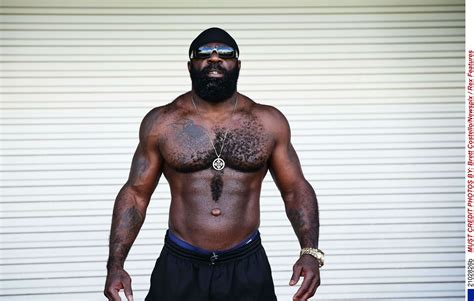
Kimbo Slice, a famous mixed martial artist, passed away due to heart failure.
Kimbo Slice, a famous mixed martial artist, passed away on June 6, 2016, at 42. His death shocked the MMA world. The autopsy showed he died from heart failure. This might be connected to his use of anabolic steroids, which affected his health.
Kimbo Slice, born Kevin Ferguson, was a famous mixed martial artist starting in the early 2000s. Kimbo Slice had a professional MMA record of 5 wins and 2 losses. He fought in big promotions like the UFC and Bellator, earning him fame. Kimbo Slice's life and career were filled with achievements in MMA and boxing.
Kimbo Slice was admitted to the hospital on June 3, 2016, with severe pain, shortness of breath, and nausea. Doctors found heart failure and told him a heart transplant was needed. Kimbo Slice's medical history was a big factor in his death, with liver issues and heart failure playing a role. His passing was deeply mourned by the combat sports world.
The kimbo slice autopsy report confirmed he died from kimbo slice heart failure. Long-term use of anabolic steroids can raise the risk of fatal heart failure. Kimbo Slice was diagnosed with heart failure just days before his death. He had symptoms like acute abdominal pain, nausea, and shortness of breath before going to the hospital.
Kimbo Slice's lifestyle was intense, with a strict kimbo slice training regimen. He followed a diet rich in protein and supplements. His kimbo slice dietary habits focused on lots of protein for muscle growth and recovery. Yet, this diet likely worsened his heart problems. His kimbo slice lifestyle was demanding, affecting his health. Despite his ring success, his lifestyle led to his early death.
Kimbo Slice's death shows how vital awareness and education are. Regular health checks are key for athletes and everyone else. They help catch health problems early. It's important to talk about the dangers of heart issues and CTE. Knowing about these risks helps people protect their health. We must focus on kimbo slice health issues and offer help for both mental and physical health.
Injury Patterns in MMA
Not surprisingly, fighting style significantly impacts one’s predilection to injury. Submission focused martial arts such as Judo, Brazilian Jiu-Jitsu and Wresting have more joint and long bone injuries.
Recent epidemiological studies have identified these patterns and pointed to the separation of submission based and striking based sports as a key differentiator in injury patterns; they have also identified training to be the most frequent setting for injuries to occur.
Here is a summary of injury types based on fighting style:
| Fighting Style | Common Injuries |
|---|---|
| Striking (Boxing, Kickboxing) | Head and neck injuries, knockouts |
| Submission (Judo, BJJ, Wrestling) | Joint injuries, fractures, strains/sprains |
Safety Measures and Prevention
The literature has also shown that mixed martial arts might not be quite as dangerous as expected, especially when it relates to brain trauma. require a health professional to be present at ringside.
To avoid kimbo slice heart problems, knowing the symptoms and getting medical help is crucial. Living a healthy life, with exercise and a good diet, can lower heart problem risks.
Kimbo Slice's lifestyle was filled with stress and pressure. This could have hurt his mental health. As a famous athlete, he faced a lot of pressure to do well. It's vital to remember how important mental health is for athletes. They need support when they're struggling.
His charisma and fighting skills inspired many young athletes to enter mixed martial arts. His influence on MMA and street fighting is clear, with his name linked to toughness and resilience.
Top 5 Steroids in MMA and How They Work
Regular health checks are key for athletes and everyone else. They help catch health problems early. It's important to talk about the dangers of heart issues and CTE. Knowing about these risks helps people protect their health.
Together, we can make our community healthier and more supportive. We must focus on kimbo slice health issues and offer help for both mental and physical health.