The Ultimate Fighting Championship (UFC) is one of the most popular sports in the world, bringing in more than $1 billion per year. Its pay-per-view events now draw better ratings than professional boxing and wrestling. UFC events are hotly debated subjects on social media as well, especially close decisions.
In combat sports, a decision is a result of the fight or bout that does not end in a knockout, submission or other finish, in which the (usually) three judges' scorecards are consulted to determine the winner; a majority of judges must agree on a result. The judges' result can either award a win, loss, or draw. If a fight reaches the time limit with no finish, the outcome of fight is decided based on the judges' scorecards.
However, many fans do not understand how UFC judging works. Here's a comprehensive guide to UFC judges and technical decisions.

How UFC Judging Works
Before diving into UFC scorecards, it is important to understand how judges get their start. It all starts with a formal training program. Many choose to sign up for instruction with the Association of Boxing and Combative Sports (ABC). Each state commission has different requirements for certification. These requirements are going to guide your training path. Prospective judges also spend a lot of time getting live practice. Shadowing judges involves filling out scorecards that have no bearing on the fight’s result. Instead, they are used for practice and compared to the scorecards completed by experienced judges.
The goal is to make sure that these scorecards are consistent with top-notch judging. If the scorecards are on point, then you will get selected to judge official events. Another way to get practical experience is to referee matches and spar at local MMA gyms. Here, you can get a close-up look without the influence of crowd noise and commentary.
Being a UFC judge means continuously staying at the top of your game. There is no shortage of qualified and quality judges in MMA. It is exciting for prospective judges to be so closely involved with a high-octane sport like UFC. There is tight competition to get UFC judging opportunities. This means that only the best of the best are selected for the most visible UFC events.
The Role of UFC Judges
A judge is responsible for scoring a UFC fight between two opponents. Scoring rules and guidelines may vary based on the MMA organization or state where the fight takes place. In general, the UFC follows the guidelines set by the Unified Rules of Mixed Martial Arts (URMMA). The UFC does not assign judges for an event. Instead, the state commission where the fight is taking place does.
Decision Types
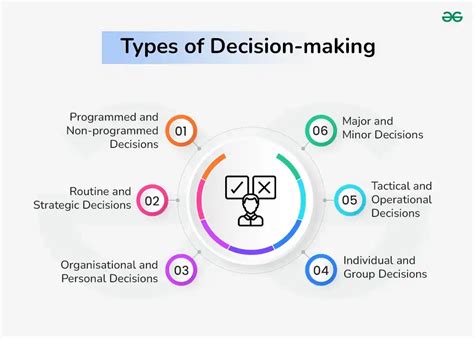
- Unanimous Decision: If all three judges reach the same conclusion, it is considered a unanimous decision.
- Split Decision: If one judge disagrees with the others, it is a split decision.
- Draw: There is a potential for a draw if the judges cannot determine a winner.
- Majority Decision Draw: A majority decision draw occurs when one judge selects a winner while the other two judges cannot.
- Split Decision Draw: A split decision draw is another possible outcome.
The 10-Point Must System
UFC fighting is scored by three judges using a 10-point must system. Each round is scored separately. The round’s winner receives 10 points. The fighter on the losing side of the round receives between 7 to 9 points. This range depends on how close or one-sided the fight is.
A 10-7 round score is uncommon, indicating a level of dominance that usually results in a knockout (KO) or technical knockout (TKO). A 10-8 round score occurs when one fighter dominates the entire round, controlling it while executing grappling maneuvers or landing powerful blows. A 10-9 round is a closer contest, indicating that one fighter was the clear round winner but did not control the action for the entire round. The round loser may land some blows or engage in effective grappling.
Depending on the nature of the bout, the fight may have 3 or 5 rounds. Each round’s score is summed up at the end of the fight to determine the winner. If a fighter wins all 3 rounds, he or she will have a total score of 30. A back-and-forth fight is naturally going to have a closer score with the potential for disagreements between the judges.
The scoring system for the UFC is subjective based on the judge’s perception of the fight. There are three categories they look for when determining the round scoring.
- A fighter’s aggression is one thing the judges are looking for.
- Control of the cage is another factor under consideration.
- Lastly, MMA judges are looking for fighters to land effective strikes or successfully grapple with their opponent.
For example, landing punches or knees is going to influence a judge’s view. Inflicting damage is part of the calculation for effective strikes. Like boxing, drawing blood via an effective strike will sway the judges. Also considered is the volume of strikes landed. Judges may also consider how many strikes are landed compared to the number thrown. Taking down an opponent is also important. Multiple takedowns are indicative of cage control and effective grappling. However, a fighter on top of their opponent for a long time does not necessarily mean they are winning.
Here's a table summarizing the scoring criteria:
| Criteria | Description |
|---|---|
| Effective Striking | How many legal blows a fighter lands upon their opponent, inflicting damage and volume of strikes landed. |
| Effective Grappling | How successfully a fighter uses wrestling and grappling to attack their opponent, including takedowns used to establish an attack. |
| Aggressiveness | How aggressively a fighter attempts to finish the fight. |
| Fighting Area Control | How successfully a fighter manages to dictate the pace of the match and their position within the octagon. |
Technical Decision
A technical decision happens when a fight has to be stopped because of a headbutt.
Other Ways to Win
Besides decisions, there are several other ways a fight can end:
- Knockout (KO): It occurs when a fighter falls to the ground legally due to strikes, and does not answer the referee's count.
- Submission: It happens when a fighter gives in to the opponent. A technical submission is ruled when the referee or doctor stops the fight because a fighter is unable to continue in combat.
- Disqualification: It happens when a bout is stopped short of knockout or judges' decision because, intentionally, one or both contestants have repeatedly flagrantly fouled an opponent or violated other rules.
WORST Judging Decisions In UFC History
Fouls and Penalties
In the octagon, the referee plays a significant role, closely monitoring every aspect of the fight. The referee can deduct one point if the opponent has used the banned strikes or has been fouled. The deduction of the points depends on the techniques used by the fighter. The Ultimate Fighting Championship is based on some criteria that have rules and regulations that the fighters must follow. The referee gives fouls and penalties to the fighters, who are the rules brokers. If a fighter fails to obey the rules, it might lead to the deduction of the points, or they even get disqualified in a bout. The third penalty is to get a declaration of no contest.
UFC fighters need to focus on the rules and regulations. Illegal strikes will result in a points deduction. The points are given based on the strikes and grappling skills of the fighter.
The Octagon
Fights in the UFC don't take place inside a ring -- they take place inside the Octagon. As you probably have guessed from its name, the Octagon is an eight-sided octagonal mat and cage. Its walls are made of fencing material, with padding covering all the edges and corners, and it's 30 feet across. The mat is made of canvas, which is custom painted for each event and then never used again. Two gates lead into the Octagon, and they're secured shut at the beginning of each round. When a fight is in progress, only the referee and the two fighters are allowed inside. Between rounds, officials open the gates to allow a fighter's corner men to enter. Corner men can give their respective fighters strategic advice and help stop cuts and scrapes from bleeding.
Competitors are not allowed to go outside the Octagon during a bout, nor are they allowed to try and throw their opponents over the side of the cage.
According to Dana White, there are several reasons the UFC uses an octagonal mat. The original UFC event was conceived as a way to match styles against each other to find which was best. The Octagon was designed to avoid giving any one martial arts discipline an advantage. Because the angles in an Octagon are wider than those for each corner of a boxing ring, there is little chance for a fighter to get stuck in a corner with no way out. The UFC bordered the Octagon with fencing so that fighters couldn't fall or get thrown out of the ring. The Octagon is a stable structure designed with the fighter's safety in mind, while still providing a good view for spectators.
Fighting Techniques
Fighters' techniques can be classified in three broad categories: striking, grappling and ground fighting. Let's look at each one in more detail.
- Striking: Includes punches, kicks, knee strikes and elbows. Often fighters will learn striking techniques from various disciplines, from boxing to Muay Thai (a Thai style of boxing). The UFC requires all fighters to wear fingerless 4 to 6 ounce gloves and no footwear. There are restrictions on where and how a fighter may strike his opponent. Fighters can't throw a knee strike or kick to the head of an opponent on the ground, for example.
- Grappling: Some fighters spend more time working on grappling and wrestling skills than striking. A fighter can attempt a takedown on his opponent, meaning he forces his opponent to the ground. You can defend a takedown with a sprawl, where you use balance and leverage to stay standing. Good grapplers may also be skilled in submissions. A fighter might submit due to strikes or submission holds like a guillotine choke.
- Ground Fighting: Unlike boxing -- or even most kickboxing matches -- in the UFC, fights continue even if a fighter falls to the ground. Fighters can throw strikes (sometimes called ground and pound) or apply submission holds while on the ground. There are many ways to attack and defend. Usually one fighter will end up on top of the other fighter, and you're likely to hear terms like guard, half guard, side control and full mount. These terms refer to the position of the fighters in relation to each another.
For a fighter to be successful in the UFC, he must train in all three techniques extensively.
Conclusion
You now have a basic understanding of what goes into the UFC judging process. UFC fights are fast-paced and feature complicated grappling moves. It takes an experienced professional to accurately judge a contest. Even then, there are disagreements amongst these professionals. The good news is that the best judges are assigned to UFC fighting. They are thoroughly trained and have vast experience scoring fights.