Martin Hisao Tanaka (April 22, 1921 - June 30, 1991), better known as Duke Keomuka, was an American professional wrestler who left a lasting impact on the world of wrestling.

Over a wrestling career that covered all of the 1950s and most of the 1960s, Keomuka solidified his status as a premier heel across multiple National Wrestling Alliance (NWA) territories, notably in Texas and California, by adopting the persona of a ruthless Japanese antagonist. In the 1950s, Keomuka formed a very successful tag team with Hiro Matsuda.
Early Life and Internment
Following Japan's attack on Pearl Harbor on December 7, 1941, President Franklin D. Roosevelt signed Executive Order 9066 on February 19, 1942, authorizing the military to exclude and relocate persons of Japanese ancestry from the West Coast for national security reasons. This policy affected approximately 120,000 Japanese Americans, including Tanaka, who was interned at the Manzanar War Relocation Center in Inyo County, California, one of ten major camps established by the War Relocation Authority.
Internment involved abrupt forced removal from homes, often with minimal notice, leading to widespread loss of property, businesses, and personal belongings as families were compelled to liquidate assets at significant financial loss or abandon them. Living conditions at Manzanar included barracks housing divided into small family units, communal facilities, and exposure to extreme desert weather, with internees subject to armed guards and barbed wire perimeters. Manzanar operated from 1942 to 1945, during which internees maintained some community activities, including sports and education, to preserve morale and skills.
Upon release, he returned to civilian life in California, where economic hardship persisted for many former internees due to forfeited assets and employment disruptions. The Supreme Court's ruling in Ex parte Endo affirming the right to release loyal citizens and the war's conclusion.
Read also: Steve Keirn: Wrestling Icon
Wrestling Career
Keomuka's feuds centered on high-stakes confrontations with American babyfaces, such as aerial specialist Ricki Starr in matches documented from the mid-1950s, and "Nature Boy" Tommy Phelps in a televised first fall circa 1952-1953 on KTVE in Texas. These bouts showcased his aggressive style against technically proficient or flamboyant heroes, fostering storylines of patriotic redemption that boosted gate attendance in regional promotions.
Matches often featured "karate vs. In-ring, Keomuka favored a hard-hitting, endurance-based approach over aerial maneuvers, prioritizing stiff forearms, palm thrusts, and ground control to wear down opponents through sustained punishment and submission threats. This style emphasized martial arts authenticity in portraying foreign heels, leveraging his Japanese-American heritage to execute moves with credible ferocity that avoided high-flying theatrics in favor of brawling dominance and claw-induced taps.
Keomuka further distinguished his heel archetype by popularizing martial arts-inspired maneuvers like karate chops and sleep holds, techniques he adapted to intimidate foes and audiences alike, influencing subsequent wrestlers in the era. Despite the physical demands of frequent stiff encounters-evident in his endurance across territories amid limited medical oversight-Keomuka's career demonstrated remarkable resilience, maintaining top billing through the decade without major interruptions.
Many Houston fans really enjoyed it when Duke later took an All American fist to the face in rageful good guy retaliation. Long before Bruce Lee and Chuck Norris came along to show us these moves on film, Duke Keomuka introduced Houstonians to the “karate chop” blow to the necks and other vulnerable areas of his opposition. Duke fought dirty, even using soap as an eye-rubbing act of irony in his unclean efforts to win at any cost.
Duke’s other big move was the “sleep hold,” a move that stopped short of strangulation and left an opponent either unconscious or asleep on the canvas or East End sidewalk. Karate chops became an aspirational weapon that we tried to use in the daily struggle for agreement with our peers, but we simply lacked the kill or right will for its successful execution.
Read also: "Pretty Boy" Larry Sharpe's impact on wrestling
Over a wrestling career that covered all of the 1950s and most of the 1960s, Keomuka teamed with Danny Savich in 1951 to take the NWA Texas Tag Team Title several times over. DIrty DOn Evans, another of my favorites, was a frequent tag team partner in other title pursuits in the later 1950s. Duke took several other team titles with different partners in Florida and elsewhere.
Here are some of Duke Keomuka's title wins:
| Championship | Times | Partners |
|---|---|---|
| NWA Texas Tag Team Championship | 14 | Danny Savich (5), Ivan Kalmikoff (1), Mr. |
| NWA World Tag Team Championship | 6 | Taro Miyaki (2), Mr. |
| NWA Southern Tag Team Championship (Mid-Atlantic version) | 2 | Mr. |
One notable bout involved bad feelings between Duke and Timothy Geohagen, leading to a loser leaves town fight at the north side colliseum in Ft Worth, Texas. Duke beat the living crap out of Geohagen in that match. He was a bloody mess and had to be carried from the ring.
Promotional Career
КАК УСТРОЕН РЕСТЛИНГ? Секреты шоу, техника, тренировки и Тайсон Фьюри — реслинг с Костей Ивановым
In the 1980s, Duke Keomuka transitioned from active wrestling to a primary role as an NWA promoter in Florida, co-managing Championship Wrestling from Florida (CWF) with Hiro Matsuda and Mike Graham. This shift leveraged his veteran status and long-standing partnerships, including his earlier tag team success with Matsuda, to book talent and events across key venues in Tampa, Orlando, and Miami.
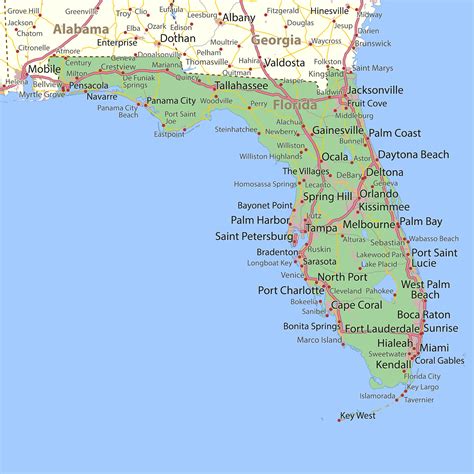
Keomuka's promotional tenure, particularly from 1985 to 1987, involved strategic talent acquisition via personal networks, such as recruiting wrestlers familiar from his Texas and Hawaii circuits, to counter declining attendance from national competition. By February 1987, escalating financial strains led to Jim Crockett Promotions acquiring the Florida territory from Keomuka, Matsuda, and Graham, effectively dissolving independent CWF operations.
Read also: The Story of Chris Melendez
Death and Legacy
Keomuka died on June 30, 1991, at the age of 70. His son was scheduled for a match teaming up with Paul Diamond (who at the time worked as Kato of the Orient Express tag team) to take on Haku and The Barbarian but didn't arrive as his father died the day before the match, so his manager Mr.