Wrestling is one of the most challenging sports an athlete can compete in, demanding not only strength, technique, and mental toughness but also exceptional cardiovascular endurance. As any experienced wrestler knows, success on the mat isn’t just about raw strength-it’s about having the conditioning and stamina to maintain high performance throughout an entire match. To be a great wrestler, an athlete must be strong, explosive, well-conditioned, and tough. Physical fitness is of the utmost importance for any wrestler to be on top of his game.
To be in shape for wrestling you have to have a body that is explosive, strong, able to react quickly, has great grip strength, and has excellent power endurance. Considering how tough the sport of wrestling is, an athlete's strength and conditioning play a critical role in deciding who wins and who loses. At the national and international levels, skill levels are often nearly equal.
What sets athletes apart is their raw strength, explosive power, speed, and conditioning. It takes a lifetime of dedication and discipline to reach the highest levels of the amateur wrestling world. Strength and conditioning training is a critical component of creating successful wrestlers. When a properly designed training program is in place, athletes can target sport-relevant special strengths and develop these strengths to improve their sports performance. By utilizing a well-organized training program, athletes can improve these physical attributes and become dominant within the sport.
Wrestling cardio workouts are the thread that ties together the diverse aspects of wrestling training. They're closely intertwined with wrestling core workouts, as a strong core is essential for maintaining balance and power during cardio-intensive drills. In the preseason wrestling workouts, these cardio workouts lay the foundation for overall fitness, while in the in-season, they sustain energy levels for intense matches. During the off-season wrestling workouts, cardio exercises play a pivotal role in maintaining conditioning and fitness. Wrestling warm-ups, which kickstart training sessions, often include light cardio to prime the body for the demands ahead. Lastly, wrestling cardio workouts are a cornerstone of wrestling conditioning, as they improve both aerobic and anaerobic fitness, ensuring that wrestlers can perform at their best throughout a match.
This guide ensures that you are getting the right training and keeping the right workout routine. This article is meant to provide you with a basic structure for setting up a full year of training. Feel free to adapt the sample workouts to your needs. You may need a little more or a little less, depending on where you are as an athlete.
Read also: Discover the story of Casey Swiderski

Understanding the Demands of Wrestling
Amateur wrestling places tremendous demand on an athlete. Unless you are a monster capable of quickly pinning all your opponents, you must build a gas tank to become a successful wrestler. When discussing what attributes make a great wrestler, we must first mention conditioning. Most wrestlers build this cardiovascular capacity over the years through practice. However, if athletes seek to reach peak performance, a conditioning plan is recommended. Without an adequate level of conditioning, any strength gained during barbell training will be useless once the athlete becomes winded.
Ultimately, the sport's objective is to maintain control of the opponent while scoring points or going for a pin. Brute strength also plays a critical role in wrestling. In this sport, strength and conditioning have a harmonious relationship. Without proper conditioning, strength levels will dwindle during a match. Without adequate strength, an athlete risks being physically overpowered by stronger opponents within their weight class.
Cardio for Wrestling: Aerobic vs. Anaerobic
Cardio is crucial in any physical activity as well as in wrestling. Wrestlers need to maintain high levels of energy throughout a wrestling match to outlast their opponent and deliver the last blow. This can only be achieved by following a well-planned cardio training regimen specifically designed for wrestlers. Cardio exercises yield the best results with a combination of high-intensity, high-impact, and low-intensity, high-impact exercises. Cardiovascular exercises get the heart pumping, and to determine the effectiveness of the exercise, the heart rate should be monitored continuously.
Based on how much the heart rate is increased, cardiovascular exercises are categorized as aerobic and anaerobic. During aerobic training, the heart should work at 50-80% of its maximum capacity. Examples of aerobic training include skipping rope for 5-10 minutes or 20-30 minutes of continuous running or cycling. During anaerobic training, the heart works at 80-90% of its maximum capacity. Anaerobic exercises are intense bursts of activity that require high power and energy.
For wrestling, getting into shape means being able to tap into the aerobic system and still maintain explosiveness and technical skill. You want to train the alactic system to be more explosive. You want to train the glycolytic system to be stronger. You want to train the aerobic system to be base support so that you can maintain a higher percentage of the alactic system and glycolytic system over a longer period to be strong repeatedly.
Read also: Sectional Wrestling Tournament Details
Sample Cardio Workouts for Wrestlers
Absolutely, wrestling is an excellent way to improve your cardiovascular endurance. The sport involves explosive bursts of energy, rapid changes in direction, and sustained physical effort, all of which challenge your heart and lungs. A well-structured wrestling cardio workout plan should include a combination of aerobic and anaerobic exercises.
Here are some sample cardio workouts tailored for wrestlers:
- High-intensity interval training (HIIT) with 30-second sprints followed by 30-second rest periods.
- Wrestlers should begin with 30-second sprints of High-intensity interval training followed by a 30-second cooling-down session.
- Run/jog at your top speed for a 100 to 200-meter patch. Rest for 10-15 seconds and repeat.
- Burpees are a full-body exercise that uses multiple muscles in a short period. Perform 10-15 reps of burpees for 3 sets.
- For interval training, perform high-intensity exercises such as jump rope, pull-ups, push-ups, lunges with weights, dumbbell squats, and burpees for a short amount of time.
- The high-intensity interval should be followed by 30-60 seconds of active rest, such as easy walking. Depending on your stamina, the high-intensity interval can last between 30 and 120 seconds.
Assault Bike Training
A great means of building aerobic capacity for power endurance can be done by using an assault bike. Wrestlers do well when there is a carrot hanging out in front of them. Doing a long slow distance for 30 minutes and going 12 miles is great to build a base. Doing 100 calories in 5 minutes is another great base builder.
With that said, the best assault bike workout you can do as a wrestler is doing Tabata intervals for three rounds. Each round has 20 seconds of work and 10 seconds of rest for 4 minutes. However far you get in that time frame determines how well you have developed your power endurance. A great goal is to hold 80 rpm for the 20 seconds of work and then gear down to 30 rpm for the rest. The cool part is that the Tabata is interval based. Wrestling is a sport of extreme intensity done in bursts. Scrambles in wrestling go hard.
Assault Bike Training for Endurance | Phil Daru
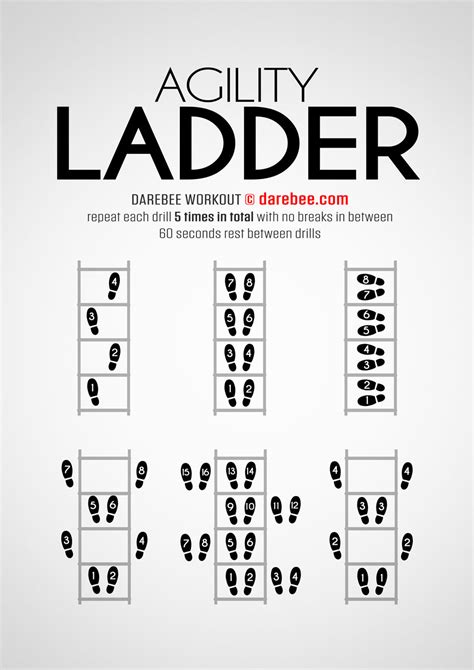
Agility Ladder Drills
Agility ladders are fitness and balance equipment used for performing different agility drills. Agility drills are a type of High-Intensity Functional Training (HIFT) exercise that enhances agility, footwork, coordination, focus, strength, and stamina. Agility ladder drills can be performed in multiple ways.
Read also: The story of Angelo Posada
Seasonal Training Considerations
Before diving into specific training methods, it’s important to understand the role of seasonal training. During the off-season, you don’t need to maintain the same intense level of conditioning as during competition. This period is perfect for building strength, adding muscle mass, and developing explosiveness.
The foundation of wrestling conditioning starts in the weight room. When wrestling an opponent of similar weight, superior strength means you’ll expend less energy executing moves. Wrestling demands explosive power at any moment during a match. Long-duration cardiovascular work, often overlooked by wrestlers, plays a crucial role in building your conditioning base.
Success in wrestling conditioning comes from balancing these four components throughout your training cycle. During the off-season, emphasize strength building and technical development while maintaining a base level of conditioning. Remember, there’s no shortcut to superior conditioning. It’s about consistent, intelligent training that balances all these elements.
Off-Season Program
The first phase of the offseason program is often called the general preparatory phase. The goal is to build muscle and improve strength and muscular endurance. In phase one, the emphasis is on learning or relearning the movements and building a base to work with. Since there is more time for strength and conditioning, we want the athletes to get into the weight room four times a week.
The offseason program sets the stage for the year of strength and conditioning work. The plyometric training in this phase is the base we will build from throughout the offseason and into the pre-season. The offseason conditioning work aims to develop a solid cardiovascular base. That said, we don’t want to do a ton of conditioning and take away from what we are doing in the weight room. So, we are going to start with two sessions of LSD cardio twice a week for 30 minutes each session.
Pre-Season Program
The pre-season is a transition between the off-season and the competition period. During this time, the priority shifts toward strength and power development. The workouts also become more specific to wrestling regarding exercise selection than in the offseason.
The pre-season endurance work aims to increase intensity and maintain duration from the offseason. *Note: If you don’t have a climbing rope, substitute it with towel pullups.
Competitive Season Program
The competitive season program has two goals. First, we want to maintain the muscle, strength, and power we developed in the off-season and pre-season. Secondly, we want to ensure the athletes peak at the right time at the end of the year.
With dual meets during the week and tournaments on Saturdays, the best days to lift in-season are Monday and Thursday. Since the athletes typically do bodyweight exercises (pushups, pullups, rope climbs, sit-ups, planks, etc.) in practice, we don’t program them in the weight room. The overall workload during the season is high. Since the athletes are doing a lot of conditioning work in practice, we only need to run them a little outside of that. Also, with the scheduling, it makes sense to consolidate all training on the same two days.
Integrating Strength Training with Cardio
The approach to integrating a strength training program with a wrestling practice schedule will depend on the time of year. In the offseason, we train 3-4 times a week, 6-8 hours before or after practice. Ideally, we would like to schedule weight training sessions before a practice occurs. During the season, we want to limit the chance of weight training interfering with sports success. Athletes will train 2-3 times per week, with training dictated by the practice and competition schedule.
Strength coaches must communicate with sports coaches to ensure each workout leaves the athlete ready to compete on a weekly basis. This may mean only performing a main exercise and following up with some conditioning work. When dealing with in-season athletes, we primarily aim to avoid significant detraining. As long as we provide worthwhile stimulus 2-3 times per week while in season, it helps the athlete's current performance and allows them to build upon their previous work when the next off-season comes around.
Sample Training Schedule
The Conjugate Method framework is perfect for training athletes. Our basic template calls for athletes to perform two max effort workouts per week, along with two dynamic effort workouts. During these workouts, athletes will also perform accessory exercises designed to increase strength, enhance work capacity, and improve physical composition. This schedule can be executed in one of two ways: athletes can choose to follow a four-day-per-week training schedule or a condensed schedule of three days per week, with dynamic effort training combined on the same day.
At Westside, we opt to go with the three-day condensed training schedule with our sports athletes. The first training day of the week will be max effort lower. The objective of this training day is to improve lower body absolute strength. Along with lower body absolute strength improvements, athletes will also benefit from increased lower body bone and tissue density. This training has a significant impact on protecting the ankles, knees, and hips from soft tissue injury.
The next training day is max effort upper. The objective here is mostly the same as max effort lower, except our focus is on enhancing the strength of the upper body. Just as this training benefits the bone and soft tissue density of the lower body, it will also help to increase bone and soft tissue in the upper body. This means athletes can withstand more stress and strain on joints such as the neck, shoulders, elbows, and wrists.
The final two training days of the week will be dynamic effort lower and upper. These training sessions intend to improve explosive strength, leading to enhanced power capabilities and increases in the rate of force development. The training can be performed on separate days or combined into one day, as previously mentioned.
Additional Tips for Wrestlers
- Flexibility is Key: Being more flexible allows you to make it out of your trickier holds that would otherwise have resulted in a tap-out. Being flexible in wrestling reduces the chances of injury to a minimum level. Make sure you are performing your stretching exercises separately from the rest of your workout routine.
- Proper Gear Matters: Relying on other things like training and workout in wrestling, it is crucial to choose the right workout gear. The right workout gear never bothers you while training or fighting in the ring. It is not at all a good idea to train wrestling wearing your regular saggy shorts.
- Consistency is Crucial: Consistent Training: Regularity is key to building and maintaining cardio fitness. Cardiovascular endurance is a vital component of success in wrestling, and it can be developed through focused training.
Frequently Asked Questions
Q: What are the most important strength exercises for wrestlers?
A: We recommend variations of the squat, bench press, and deadlift. For example, a Zercher squat is a great lower-body option, while a floor press is a good choice for upper-body strength.
Q: How can I integrate strength training with my regular wrestling practice?
A: If it is the offseason, we train 3-4 times a week, 6-8 hours before or after practice. Ideally, we would like to schedule weight training sessions before a practice occurs. During the season, we want to limit the chance of weight training interfering with sports success. Athletes will train 2-3 times per week, with training dictated by the practice and competition schedule.
Q: Are there different strength training routines for various styles of wrestling?
A: No. Considering the similarities in required special strengths for all styles of wrestling, the Conjugate Method covers all the bases.
Q: Should wrestlers strength train while cutting weight?
A: It depends on the athlete.
Conclusion
Preparing for wrestling requires significant effort both during and after the season. Wrestlers experience tremendous strength and conditioning demands, and it is critical that they follow a training program that accounts for all necessary special strengths. Using the Conjugate Method, we can deliver optimal training stimulus throughout the year, leading to improved sports performance and retention of strength and abilities gained year to year. With a wrestler's limited time to dedicate to the gym, the chosen strength training method must be as efficient and effective as possible.