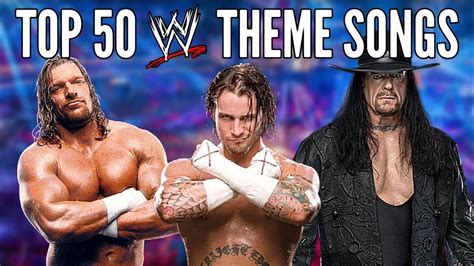
From Hulk Hogan’s patriotic “Real American” to the smell of what The Rock was cooking, to the shattering of glass for “Stone Cold” Steve Austin and The Undertaker’s iconic gong, a professional wrestler’s entrance theme music makes them instantly identifiable and sets the tone for what’s to come. Wrestling fans cheer or boo, instinctively reacting to the first sound of every theme. Today’s pro wrestling fans love to sing along to the entrance music of modern stars like Seth Rollins and “The American Nightmare" Cody Rhodes or are raging at the first note of Roman Reigns’ theme. Venues all over the country echo with the serenade of the fans belting out every lyric of Chris Jericho’s "Judas" by his band Fozzy.
Wrestling theme songs are a significant part of a wrestler’s identity. The vocals, instrumentation, and sound effects making up these anthems leave a lasting impression. It’s what grabs our attention before the bell is rung or any punch is landed.
Early Adoption of Entrance Music
Entrance music didn’t become a mainstay in pro wrestling until the late 1980s and early 1990s. Interestingly, Gorgeous George is often wrongly credited as being the first to use theme music with his "Pomp and Circumstance" in the 1940s and ‘50s. Yes, he was one of the only wrestlers from that time to embrace entrance music as part of his gimmick. It is interesting to note that while the origins of using entrance music in wrestling are not completely clear, it is widely believed that Lansdowne played a significant role in its early adoption. It’s easy to see why using “God Save the King” as entrance music would be an effective heel tactic in America during the early 20th century.
Back in the early Carnival days of wrestling, music played a different role. It was often used as a distraction tactic when there was trouble with a mark (a pro wrestling term used to describe the fans that believe the scripted story). Meanwhile, Mildred Burke is the first female wrestler credited with using entrance music. Burke’s heyday in wrestling was from the mid-1930s to the mid-1950s. She was a former three-time women’s world champion. The Argentine Lucha Libre promotion Titanes en el Ring, which predominantly ran from 1962 until 1988, is documented as being the first to give all of its wrestlers music. North American promotions had yet to completely embrace music as part of wrestling culture.
“Leroy Brown was a huge, burly man at 6’2,” 310 pounds, and in the 1970s, he’d come to the ring on L.A. “Smiling broadly and shaking hands, the song energized the Olympic Auditorium crowd. At one point, he also entered the ring to George Clinton’s funky “Atomic Dog.” It was one of the many ways JYD contributed to the pro wrestling industry. The legendary Sgt. Slaughter is the first to use entrance music in the WWF, now known as WWE.
Read also: Discover the story of Casey Swiderski
The Rise of Iconic Themes
By the early 1990s, entrance themes became as common in pro wrestling as a wristlock. First, The Sandman came out to "Enter Sandman" by Metallica. Next, you had the likes of Raven and Tommy Dreamer using The Offspring’s’ "Come Out and Play" and "Man In The Box" by Alice In Chains, respectively.
JJ Maguire may not be as widely known as Jimmy Hart for his contributions. Johnston’s themes were popular and designed to fit a wrestler’s character. Hart has deep musical roots as a member of the band The Gentrys. Mikey Rukus is a producer and recording artist who creates the entrance theme music for AEW, MMA fighters, and beyond. Rukus is one of the premiere names in walkout music for MMA and professional wrestling.
Hip-Hop and Wrestling: A Perfect Tag Team
For three decades, rappers have orally disseminated hip-hop’s love for professional wrestling through 16s. Wrestling began flirting with hip-hop entrances back in 1991. However, it would take until 1998 for the two cultural phenomenons to take their relationship public. Over the next two decades, a who’s who of hip-hop names have recorded original ring walk soundtracks for wrestlers.
From the kings of rock to the patron saints of trap, here are some of the best hip-hop entrance themes in wrestling history:
- Run-DMC - DX Theme: Reuniting for a makeover of DX’s Rage Against the Machine-inspired theme, the Kings of Rock fashioned the ultimate marriage of rap and wrestling.
- Three 6 Mafia - "Some Bodies Gonna Get It" (Mark Henry): The post-crunk riot anthem caused wrestling fans to immediately forget Henry’s decade of disrepute and set a championship course for the Strongest Man in the World.
- The Usos - "Done With That": After adding a couple of passionate bars of their own to accentuate CFO$ cultured use of sub-bass 808s and syncopated hi-hats, the Usos followed in the family tradition of performing their theme song.
- Yelawolf - "Pop Style" (AJ Styles): Patently inspired by DMX’s “Ain’t No Sunshine,” the organ-driven rap hymn took the internet by storm following Styles’ 2016 debut.
- Konnan & Mad One - "Psycho": Konnan would typically enter the ring to Public Enemy, “Guantanamera” by Wyclef Jean, or Kid Frost’s “La Raza” for non-televised matches, before debuting “Psycho” with Mad One in 1999.
- John Cena - "The Time is Now": Produced by former G-Unit affiliate Jake One (who had initially made the beat for Ghostface,) “The Time is Now“ ushered in the era of Super Cena-a humanoid force capable of surviving even the deadliest of beat downs.
- C-Murder - "Wolfpac Theme": The resulting “Wolfpac theme” quickly rendered Militia a distant memory. Today, Hall and Nash are immortalized in hip-hop, with Conway the Machine and Westside Gunn naming their duo after them.
- Lil Kim’ - “Time to Rock and Roll” (Trish Stratus): The resulting collaboration with Jim Johnston, the crowd galvanizing “Time to Rock and Roll,” turned the Queen Bee’s affable chuckle into an emblem of Stratus’ record-breaking run as WWE Women’s champion.
- Naughty by Nature - "Here Comes the Money" (Shane McMahon): With more streams than the group’s classic singles, “Everything’s Gonna Be Alright” and “Uptown Anthem,” “Here Comes the Money” was also one of the many WWE themes remade by Smoke DZA on his series of Ringside EPs.
Wrestlers on Their Theme Music
Many wrestlers have shared their thoughts on the importance and impact of their entrance music:
Read also: Sectional Wrestling Tournament Details
- "When I first heard the Monster Magnet [artist who created ‘Live For The Moment’] song, I said, ‘Well, it’s okay. I’m not crazy about it. Then they said, ‘Oh, we’ve got other music, and we’ve got some ideas for it. I’ll be honest, after two or three entrances using the Oh Yeah Monster Magnet music, I couldn’t imagine having it any different. It’s such a great tempo for the whole environment and the excitement of coming down to the ring."
- "We shot the original vignettes for my debut, and all I saw was what we shot. I watched the first one and thought it was cool how they put together. At the end, it said, ‘Ethan Carter Is Coming’ and the song played, and that was the very first time I heard the song. Then at Bound for Glory, I heard it, and I’m like, ‘This is great!’ The entrance song is so important for a first impression with the fans. It’s not generic guitar riff D; the song fit the character before I was even the character."
- "While I was with ECW, Paul had brought in a band called Kilgore to redo ‘Walk’ so that we could use that without fearing any repercussions from whoever owned Pantera’s publishing rights. I thought Kilgore did a great job, and for much of my ECW career, I would come out to Kilgore’s version, and it sounded very, very much like the original."
- "When I was on the indies, I always came out to ‘Pour Some Sugar on Me’ by Def Leppard, and I told WWE I wanted something like that. I wasn’t particularly high on the vocals; the vocals sounded a lot to me like Sammy Hagar. While I respect what he does and all, I’m more of a David Lee Roth guy. And basically, I asked them to maybe make an attempt at something with sort of an AC/DC sound to it."
- "Replacing ‘Never Gonna Stop’ wasn’t my choice. The copyright ran out on ‘Never Gonna Stop.’ And the way that started is, I tore my labrum in my shoulder, but I didn’t get surgery, so I ended up having a month off. I always hated that ‘You Think You Know Me’ music because it never fit me and what I actually listen to. The guys that did Big Show’s music did this version of Black Label, and it was just not good. The following week, they brought me a copy of the CD, ‘The Sinister Urge’, and I was just like, ‘Oh, really? Holy shit!’ I didn’t think that was gonna happen. I said, ‘Okay. ‘Never Gonna Stop." So [after coming back from injury], I used it and really, really liked it. And then when I came back from the neck injury, they were like, ‘Okay, well we can’t use it.’ And also if you watch DVDs, it’s never on the DVDs. When I was out with my neck injury, I met Mark Tremonti. I met him at a Metallica show, actually. I heard ‘Metalingus’ and I was like, ‘Dude, can I use that when I come back?’ And he said, ‘Yeah! Of course!’ So that ended up being the genesis of it, and when I heard it, it was actually Mark singing. It hadn’t been Myles yet."
The ECW Revolution
Even at ten years old, I was already a lapsed wrestling fan-a former Hulkamaniac who’d drifted away right around the time Hulk Hogan left World Wrestling Federation (WWF) for World Championship Wrestling (WCW). It was kookier than ever. The gimmicks had become more cartoonish but less interesting. Everyone had a “thing”-the plumber, the garage man, the deranged dentist, the guy whose entire personality was that he worked a job other than wrestling. Characters you could understand instantly, which meant there was nothing else left to uncover.
I’d seen ECW mentioned in wrestling magazines, but the grainy halftone photos made it look like a low-budget WWF knockoff. Watching it proved otherwise within about three seconds. This was something else entirely. Louder, stranger, and infinitely more alive. ECW felt illicit. This wasn’t like WWF at all. The lighting was terrible, the camerawork was shaky, and the crowd looked seconds away from rioting. But the songs cut through everything. The wrestlers were making their entrances to real music, not generic themes cooked up in WWF’s corporate headquarters-no disrespect to Jim Johnston. These were songs that played on cool radio stations well outside my tiny Top 40 bubble. ECW’s musical world sounded bigger, messier, angrier. It sounded like real life. The whole crowd seemed to know what it meant.
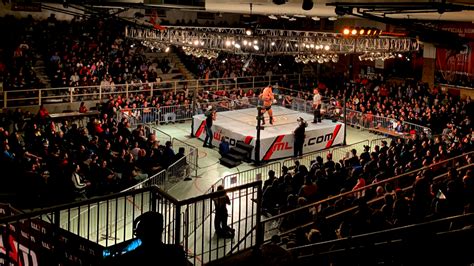
Then a guy with a protruding gut and draped in zebra-print Zubaz stormed through the audience with a cigarette in his mouth and a beer in his hand. It was The Sandman. The people weren’t cheering for this guy-they were paying respect by singing along to the music. To them, this wasn’t just a wrestler walking to the ring. It was a ritual-a crazy, 1,000-person karaoke session. And to me, sitting on my bed with the volume low enough not to stir my sleeping parents, it felt like the door to another world had just burst open.
My musical diet until that point was whatever was on pop radio, or whatever my parents played in the car. Metallica was a band I recognized from T-shirts worn by older kids who were definitely cooler than me. The energy of “Enter Sandman”-its tone, the lyrics-I’d never heard anything like it, and it sent me tumbling down the heavy metal rabbit hole: Sabbath, Motörhead, Danzig, Slayer, every heavy, scary, unhinged corner of music I could locate. Raven came out to the Offspring, which threw me into Bad Religion, Descendents, and Pennywise-an entire punk ecosystem I’d have missed without ECW. To this day, I know every word of “Natural Born Killaz” because it played on loop throughout every one of New Jack’s matches.
ECW owner, promoter, and mastermind Paul Heyman truly had his thumb on the pulse of professional wrestling and whatever the hell was happening in ’90s culture. The product was raw, underground, gritty-the programming was the kind of production that looked like it was (barely) being held together with sweat, duct tape, and the collective willpower of everyone involved. It looked like real life. ECW wasn’t trying to define the ’90s. Instead, it reflected what the decade actually felt like and cranked it up to an 11. The entire era felt DIY, angsty, suspicious of anything overly polished. ECW didn’t try to clean anything up or package it nicely for a wider audience. Everything was amplified-Heyman held a funhouse mirror to the decade’s noise, palpable frustration, and low-grade chaos.
Read also: The story of Angelo Posada
If WWF was Saturday-morning cartoons and WCW was corporate sports with a pyro budget, then ECW was the random gathering of kids in every parking lot around the country-all coexisting in one place without anyone telling them they didn’t belong together. And the music was a massive part of what made it feel true.
“It absolutely was a reflection of the times… Some fans discovered music for the first time on ECW programs,” he wrote to me. “The wide diversity of the music ECW used exposed fans to stuff they normally wouldn’t listen to. While it was more of a rock/metal fanbase, there were also goths, club kids, hip hop fans, country fans, and they would all groove to each other’s tunes. The songs in ECW weren’t corny, homogenized, or corporate music written to accentuate merchandise lines. They were ripped straight out of the basements, bedrooms, and backseats of the times, not stuffy high-rise conference rooms. ECW’s soundtrack felt lived-in in a way the other promotions couldn’t kayfabe their way out-Because it wasn’t ‘fake’ generic music like WWF and WCW used. There were ‘real songs’ that fans had heard before ECW,” Slash said, bluntly. “It gave more of an illusion of realism.”
ECW could only use those “real songs” because Heyman just… used them. No licensing department. No negotiations. No legal team dotting i’s and crossing t’s. Heyman simply hit “play” on whatever song fit the vibe and worried about the consequences later-or, more accurately, didn’t worry. “Everyone knew it would be a problem,” Slash admitted. “But Paul didn’t care. He had the rights to some of the music we used, but for others, his stance was he’d keep using it until he got a cease and desist letter from an attorney.”
The Modern Era: AEW and Beyond
Another die-hard ECW fan was All Elite Wrestling (AEW) founder and creative force Tony Khan. That’s why AEW’s approach to music feels so familiar yet refreshing. At a time when WWE (rebranded from WWF in 2002) and Total Nonstop Action (TNA) themes are sanded down into algorithm-friendly soundalikes, AEW uses real music to soundtrack its programming. And, given Khan’s financial fitness, I’m sure the songs are licensed through the proper legal avenues. Pixies’ “Where Is My Mind?” turns Orange Cassidy’s ringside appearance into a thesis statement without him even taking his hands out of his pockets; Jon Moxley evokes the cool-crazy of Japanese deathmatch icon Atsushi Onita when he comes out to “Wild Thing.” I’m convinced half the fans didn’t know one-hit wonder band Baltimora until Jack Perry started using “Tarzan Boy” for his walkout.
That’s not to say corporate music can’t work. CFO$ created some world-class WWE themes a decade ago-tracks so effective they helped an entire generation of new WWE stars get over before they ever said a word. But since then, the shift to Def Rebel has flattened the soundscape, producing themes that function more like interchangeable branding exercises than identity-defining cues. Too many modern entrances feel like placeholders-generic, flat, and instantly forgettable. The exceptions prove the rule. CM Punk still walking out to “Cult of Personality” feels seismic because the song arrives with decades of not just pro wrestling but cultural residue baked in. Even Becky Lynch’s theme recently got a makeover thanks to Philly’s own The Wonder Years.
An entrance needle-drop doesn’t simply announce a wrestler. It drags an entire emotional history into the building with it. Even when the corporate stuff works-and sometimes it really does-it’s a distinct flavor. “The Undertaker’s theme, a knock-off of Frederic Chopin’s Funeral March from the 18th Century, is about as perfect as you can get for that character,” Slash told me. “Goldberg’s WCW theme was iconic.
This summer, I wound up back in the old ECW Arena at the corner of Swanson and Ritner in South Philadelphia-the same building where they taped the shows that rewired my pre-teen brain. 25 years later, I’m at a “legends reunion show,” the kind of thing that could’ve been a sad museum exhibit but wasn’t. The place still vibrated with that old ECW energy you couldn’t possibly recreate. The event itself was fun. The matches were whatever-a little sloppy, a little off-cue-but the nostalgia excused every missed spot.
Then, mid-match, the PA crackled. And the first notes of “Enter Sandman” came blasting through the speakers. The crowd jumped to their feet, myself included. Goosebumps. Full-body static. The Sandman appeared at the back of the arena and started his slow walk towards the ring. It was exactly as I remembered it-every move identical to the ones he made a few hundred times on WGTW. The Sandman is older, slimmer, and grayer now, but that didn’t matter. It was The Sandman.
In that moment, it made perfect sense why music matters so much in wrestling, and why wrestling ended up shaping so much of how I understand music. Wrestling didn’t just help soundtrack my life. It taught me that the right song, at the right time, can flip a switch inside people, transform the air in an entire room, and turn a half-empty arena into a thunderous cathedral.