Like any form of popular media, wrestling has experienced its fair share of fads and trends. In the 90s, the blood-soaked lawless world of hardcore wrestling was all the rage. The early 2000s saw a surge in the number, reach, and popularity of independent promotions. Although its precise origins are unclear, the phenomenon known in its heyday as apartment house wrestling - or simply apartment wrestling for short - reached its apex under Manhattan millionaire, playboy, and eccentric Dave Moll.
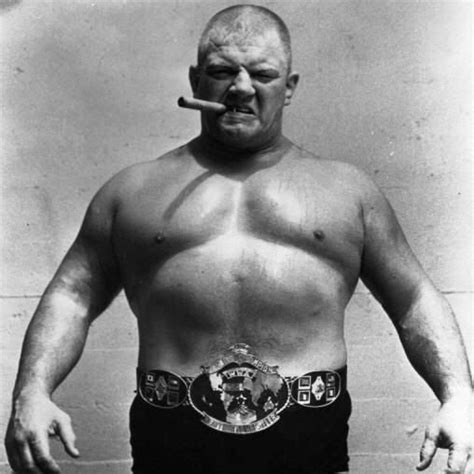
Let's delve into the unique world of apartment wrestling, exploring its history, rules, and the figures who shaped this unusual spectacle.
The Rules and Style of Apartment Wrestling
In most regards, the rules of these contests hewed closely to the standards of professional grappling. Matches at Moll’s penthouse were contested to pinfall, submission, or knockout, just as they were in Madison Square Garden a few blocks over. Interestingly enough, as with prostyle wrestling itself, early apartment matches were typically contested as two-out-of-three falls with a one-minute rest period between each, but as time went on, a single fall became the norm.
Perhaps the most noticeable quirk of apartment wrestling is the attire used. For Dave Moll, the womens’ bodies were as much a part of the spectacle as their performance, and they wrestled barefoot and in bikinis. The venues presented their own limitations, too.
With competitors usually facing each other on gym mats (if they didn’t just use the carpet) rather than in a ring, their fighting style shied away from moves that necessitated ropes, such as high-flying maneuvers or the Irish whip. Additionally, without the padding a ring could provide, apartment wrestlers were less likely to use slams or throws - though they did happen, and no doubt produced no small amount of excitement when they did.
Read also: Discover the story of Casey Swiderski
As a result, apartment wrestling tended toward a softer style of wrestling, with smothers, sleeperholds, and scissor holds being favored. That isn’t to say, however, that apartment wrestling was all fun and games. Just as in any competitive venue, there were times when tensions ran high.
Even at its height, apartment wrestling was a loosely organized spectacle at best, and a formal set of rules or a governing body was never created. As such, the precise nature of what was and wasn’t allowed varied from match to match, depending on the whims of both the wrestlers and the promoter. Because of this, even at the most heated of bouts, the men and women organizing the events had a laissez-faire attitude when it came to enforcing rules - after all, when things got brutal, they often only grew more interesting.
The first recorded apartment matches were only stopped for the inevitable wardrobe malfunctions that occurred when you had two scantily-clad women rolling around and grabbing at each other, and within the first few years even that was left to happen (much to the delight of many watching, I’m sure).
The Rise to National Attention
For a time, apartment wrestling was a pastime unknown to the general public, and it may have remained the domain of Dave Moll and a few associates inspired to hold similar contests of their own, were it not for the fateful turn of events in 1973 that opened the door to a nationwide audience. One of America’s biggest wrestling magazines was facing a downturn in sales, and they needed a new hook to boost readership.
It was then that one of their reporters reached out to Moll, securing a seat at one of his shows. The report of the match was published later that year, introducing millions across the country to apartment wrestling. Sales for the magazine saw a spike, and the demand rolled in for further coverage on the erotic sport.
Read also: Sectional Wrestling Tournament Details
Not everyone was enthused, of course. Some wrestlers of the day complained that they were losing space in the magazine to what they viewed as “not real wrestling”. Others refused to have their pictures printed in the same publications they accused of peddling smut. But perhaps the biggest proponent of all was Dave Moll himself.
Eager to see his creation get widespread attention, he signed an exclusive deal with the publishing house for them to report on his apartment matches - and soon, they became a regular feature, the match recaps lavishly illustrated with expertly taken photographs. With visions of turning apartment wrestling into a recognized sport, the eccentric millionaire grew more ambitious over the coming years.
In January 1975, after a lengthy tournament, apartment house wrestling crowned its first champion, a busty blonde from Los Angeles named Cynara “the Queen” Morgan - though that title was vacated by the end of next year. It likely wouldn’t have lasted long anyway.
Around the same time its mainstream coverage was waning, the sport experienced another revolution. Home video was making it more accessible to record and distribute tapes, which meant anyone could become a producer. Apartment house affectionados began arranging and taping matches in their own or rented apartments, and fans were able to buy videos and photoshoots of the bouts, first through newsletters and catalogues - and later, as the internet connected distributors and consumers across the globe, online.
Apartment wrestling was just one of the niche genres kept alive by the home video boom, even if it might not have been sustainable in the mainstream market. Furthermore, the advent of video not only made it easier to distribute matches, it also granted access to the full experience, as close as it could come to being there in person.
Read also: The story of Angelo Posada
Although not as hot (in terms of popularity!) as it once was, apartment wrestling is by no means a thing of the past. Today, there are many companies out there producing content for apartment wrestling fans, and even more wrestlers making it all possible. After its initial wave of popularity, the phenomenon spread as far as Europe and Japan, bringing an influx of new talent wherever it went.
Even some wrestlers from the professional scene have crossed over to the apartment world, and sometimes even vice versa. While some companies produce scripted, staged matches for the entertainment of enthusiasts, others prefer a more competitive approach, with both women fighting to win; there’s something for everyone out there.
The Apter Mags and Wrestling Magazines
The characters and events referenced in this article were created by Dan Shockett for the London Publishing wrestling magazines (“Apter mags”). Admit it. Once upon a time, maybe recently, you’ve at least thumbed through a wrestling magazine at the supermarket. There’s no shame in it.
The Apter Mags had the market all but cornered during my childhood in terms of what was available for wrestling “news” on the local magazine rack. See, from 1973 through 1983, Sports Review Wrestling may have been the first magazine to openly appeal to the perverted side of wrestling fans. They did monthly features on “Apartment Wrestling”, which amounts to girls in bikinis having a catfight in an apartment. I don’t recommend doing so from work or in front of your parents, but if you’re over the age of 18 and won’t get fired, go ahead and google “Apartment Wrestling.” You’ll see what I mean. After Sports Review stopped carrying those features, it was just another wrestling magazine.
When WCW launched theirs, I decided to give it a shot despite not being a huge fan of WWF’s magazine that only covered one promotion. The magazine felt different from everything else that was out at the time, and the articles compared favorably to the Apter Mags, which had become the standard at that point. Imitation can be the sincerest form of flattery, and WCW could have completely aped WWF’s style with their own propaganda mag.
When Raw magazine debuted, it was a shock to the system. It featured borderline nudity, a fair amount of profanity, and dropped hints at what was happening behind the curtain without coming right out and saying it. For the time frame, it was perfect. Raw Magazine suited the Attitude Era perfectly. It became somewhat watered down as time went on, and eventually it just became the magazine for the Raw brand. Eventually, the Raw and Smackdown magazines were shut down and everything was once again consolidated into WWE Magazine.
Pro Wrestling Illustrated has dominated the landscape of professional wrestling magazines for twenty five years now. It’s stronghold isn’t what it once was, as WWE Magazine has certainly worn away at it by virtue of having a somewhat captive audience. However, Pro Wrestling Illustrated keeps chugging along, releasing Top 500 lists and year end awards year after year. As long as they can manage that, they’ll be just fine.
Historically speaking, at least going by what I was able to dig up, Inside Wrestling was the first of Stanley Weston’s truly successful professional wrestling magazines. It beat The Wrestler by just a month or two, so it holds the distinction despite the fact that they both started publication in 1968. Once upon a time, when I bought a wrestling magazine, I focused on the ratings and the short columns like the ones that Eddie Ellner or Matt Brock allegedly wrote.
This was by far my favorite wrestling magazine that hit the shelves when I was a kid. Why? Dream Matches. This was fantasy booking 101. Apter and Co. would dream up the matches, set the scene, then explain the action. Sometimes it was logical stuff, like Hulk Hogan vs. Ric Flair. Sometimes it was less obvious, like a bunch of wrestlers competing against each other in track and field events for some reason. It didn’t matter what it was. I loved it, and I grabbed every new issue as soon as I saw them on the shelves.
All of the above are possible. Whatever the case may be, let me know in the comment section below and I’ll join the discussion at some point.
Pro Wrestling Slang and Jargon
Professional wrestling has accrued a considerable amount of slang, in-references and jargon. Much of it stems from the industry's origins in the days of carnivals, and the slang itself is often referred to as "carny talk." Often wrestlers used this lingo in the presence of fans so as not to reveal the worked nature of the business.
Agent or Road agent, management employee, often a former veteran wrestler, who helps wrestlers set up matches and relays instructions from the bookers. Often acts as a liaison between wrestlers and higher-level management. Angle, a fictional storyline. An angle may be as small as a single match or a vendetta that lasts for years.
Blind Tag, a tag made in a tag team match where the wrestler on the apron, tags his partner unbeknownst to him or without his consent. It can also refer to such a tag where the tagger's opponent is unaware a tag has occurred, leaving him open to a blind-side attack. Booked, a term that refers to the predetermined nature of wrestling.
Bury, refers to the worked lowering (relegation) of a popular wrestler's status in the eyes of the fans. It is also the act of a promoter or booker causing a wrestler to lose popularity by forcing him to lose matches badly (squash) and/or making him participate in unentertaining or degrading storylines. It can be a result of real-life backstage disagreements or feuds between the wrestler and the booker, the wrestler falling out of favor with the company, or the wrestler receiving an unpopular gimmick that causes him to lose credibility regardless of win-loss record.
Card, the lineup of the matches that will be staged at a given venue for a given performance. The card is generally performed in a roughly inverse order to the way in which it might be printed for posters or other promotional materials. The major matches between well-known opponents may be for "titles" and are said to be "top of the card" or "headliners" while the preliminary matches between lesser-known opponents are said to be the "undercard."
Championship, in kayfabe, a recognition of a wrestler being the best in his or her promotion or division in the form of a championship belt (also "title" or "strap"). Cheap pop, when a wrestler (often a face) incites a positive crowd reaction by "kissing up" to the crowd (for example, mentioning the name of the city or complimenting a local sports team).
Clean finish, when a match ends without cheating or outside interference, usually in the center of the ring. Double Turn, the rare occurrence when both the heel and the face switch roles during an angle or a match. Extreme wrestling, a style of wrestling based heavily on highspots and weapon attacks.
Gas, 1. Steroids or 2. Gimmick, a wrestler's personality, behavior, attire and/or other distinguishing traits while performing. It can also be an implement used to cheat. For example, Jeff Jarrett's gimmick is knocking out opponents with his guitar, and the guitar itself is also a "gimmick." In recent years, the emphasis has been on more realistic gimmicks which portray the wrestler as an actual person, albeit with exaggerated personality traits, as opposed to previous years during which gimmicks could be best described as cartoonish.
Gorilla Position, the staging area just behind the entrance curtain, where wrestlers wait before they come into view of the crowd. Head drop, a move which, as a result of a botch, causes the receiver to be dropped on their head, often resulting in a legit concussion or other injury such as a broken neck.
Hooker, a wrestler with strong legitimate mat-wrestling abilities and an array of match-ending (or in extreme cases, career ending) holds known as "hooks," hence the name. In the early 20th century, one who has worked for carnivals taking on "all comers." Since these types of events are on the decline, this word is falling out of common usage.
Kayfabe, term used to describe the illusion (and up-keep of the illusion) that professional wrestling is not staged. Legit, anything that is "real"; for example, a "legit" wrestler has a background in actual fighting, a "legit" event is one that actually took place (outside of kayfabe), a "legit" fight is when two wrestlers actually come to blows.
Mania Era, (also referred to as the Federation Years) refers to the time period spanning from 1984-1993 in WWF/WWE history when Vince McMahon took the company from being a regionally promoted business to a successful national business. The term "Mania" denoting the era is attributed to "Hulkamania" being the dominant aspect of the era.
No Holds Barred, a match than cannot end by disqualification or count-out. Office, when one wrestler indicates to another to reverse a submission hold. One-Fall, a match that requires one decision to end, such as a pinfall, a submission, a count-out, or a disqualification.
Over, refers to a performer whom the fans care about (either positively or negatively) or the act of making someone look good, often by losing to them. Plant, is a professional wrestling term for a trained wrestler or actor who poses as a fan, usually seated in the front row of an event. Plants are a good tool for a heel wrestler to gain heat from the crowd.
Pull-apart Brawl, a match that originally involves two or more wrestlers but degenerates into a brawl. At that point, other face and heel wrestlers from the locker room storm the ring, after which an all-out brawl results. Usually, these matches end in a no contest or double disqualification. Psychology, the story of a match. Push, when a wrestler gains popularity with wins and positive exposure.
Rasslin', refers to a Southern style of professional wrestling which emphasizes kayfabe and stiffness, with fewer squash matches and generally longer feuds. Rib, practical jokes played by or on wrestlers. Road Agent, this person/crew of people run live events (house shows) backstage, assist the bookers, and produce the finishes of the match(s).
Run-in, occurs when one or more individuals who are not actively participating in a match run into the ring. Run-ins are almost always made by heels, typically to further a feud with a face. More often than not, a run-in will result in a "beatdown" in which the heel(s) pummel the face(s) until the script calls for the beating to stop, either from the heels' satisfaction with their handiwork, a retaliatory run-in by one or more faces, or (less often) the entrance of one or more authority figures (referees, road agents, security personnel).
Smark, a portmanteau of "smart mark," a phrase coined by internet smart marks to describe a fan who enjoys pro wrestling despite or because they know that it is staged. Brian Pillman cut an infamous promo about smarks when he made his debut in ECW. Sports Entertainment, a term coined by WWE to differentiate its product from traditional professional wrestling as an attempt to garner interest from a broader audience.
Spot, a preplanned move, which is designed to get a particular audience reaction or determine the pace of the match. Stable, is a group of wrestlers within a promotion who have a common element-friendships, either real or storyline, a common manager, or a common storyline-which puts them together as a unit.
Superhuman comeback, when one wrestler, usually a face, no-sells his opponent's offense, usually after several minutes of being dominated. Swerve, a sudden change in the direction of a storyline to surprise the fans. Usually, but not always, it involves one wrestler turning on an ally, often to join someone who had been a mutual enemy to that point.
Tap Out, submitting to a submission maneuver by tapping on the mat. Unheard of in World Wrestling Entertainment until late 1997 when Bret Hart tapped out to an ankle lock applied by Ken Shamrock while the referee was bumped. Previously, wrestlers vocally told the referee if they wished to submit or not.
Professional wrestling has always thrived on its own secret language: a vibrant code of insider terms passed down from locker rooms to late-night drives. For generations, this lingo helped wrestlers protect the illusion, navigate the business, and communicate discreetly.
Nowadays, there isn’t much need to hide the fact that wrestling is a combination of athletics and pre-determined entertainment. With the internet and behind-the-scenes documentaries, fans embrace the reality behind the curtain.
With modern concerns in the world’s biggest pro wrestling company today over safety, image, and TV regulations, blading is rare. "Potatoes" were once common in rugged matches, especially among veterans proving toughness. Furthermore, how you throw a punch today is not anywhere near as finessed as it once was, nor is it as emphasized.
As more wrestlers come from formal schools and performance centers, direct references to greenness are now viewed as unkind or outdated. Today’s wrestling culture has shifted to emphasize equality, talent building, and brand integrity, making the label “jobber” feel disrespectful.
“Sometimes, accidents happen, and you get color the hard way. This is a step up from a regular jobber but not quite a full roster member. That said, many old-school pro wrestlers still use the term and believe in it.