The name Bruce Lee has become synonymous with martial arts legends. While the god-like persona often portrayed captures the imagination, the reality of Bruce Lee as an innovator, revolutionary, and master strategist is even more compelling. He possessed an uncanny ability to recognize the true nature of combat and translate it into functional reality.
Bruce Lee was all about attribute development, and this article will focus on Bruce’s attribute of innovation, specifically looking at aliveness, broken rhythm, and independent motion which are concepts that work together and, when harmonized, can converge to supercharge one’s fighting technique.
To delve into these three areas of innovation, let’s begin with one of Bruce Lee’s signature moves: the straight blast.
The straight blast is a fighting technique in which you pump a series of vertical punches down an opponent’s centerline. These vertical punches are sometimes referred to as chain punching. The volume of punches could be three, four, five, or six; the actual number of fists unloaded during a chain punch is academic - it is the way the punches are applied that is more important. These punches are fortified with intense forward pressure. This forward pressure causes a person to backpedal, robbing them of their fighting attributes and rendering them helpless for that moment.
To answer this question, we must look back to the origins of the modern-day straight blast. The concept of chain punching down an opponent’s centerline predates Bruce Lee. The original move from which the straight blast was inspired was born from the art of Wing Chun and is known as the Jik Chun Choi. By all accounts, Bruce had great respect and appreciation for Wing Chun and used core components of the art as a baseline for his martial art of Jeet Kune Do.
Read also: Individual Martial Arts Instruction
However, Bruce had a significant sticking point with Wing Chun, which can be summarized in one word: footwork. Compared to Western Boxing or fencing, why was Wing Chun’s footwork so lifeless, static, and unalive? The answer to this question, and to solve this problem, Bruce’s innovation attribute kicked in.
Bruce took the framework of the Jik Chun Choi and modernized the footwork, making it more combative, athletic, and alive. This thought process is the birth of the idea of “aliveness” and is central to Bruce Lee’s fighting method.
Aliveness
To develop aliveness in one’s fighting, it starts with rhythm. Initially, fighters naturally tend to form a cadence, a steady beat in their motion, when trying to establish rhythm. It’s no different than a monotone drumbeat. While a cadence is a valid form of rhythm and an improvement over static position-based combat, it lacks the twitchy, unpredictable nature of organic athletic movement.
A cadent rhythmic beat does not achieve maximum aliveness. It is merely a starting point.
Bruce solved this monotone cadence problem in martial arts by introducing the principle of broken rhythm.
Read also: The Jade Fortress Martial Arts System
Broken Rhythm
The idea of broken rhythm is that once a cadence is recognized, it needs to be quickly changed. This change can be achieved by staggering the beats or hitting a half or quarter-beat tempo. To put it differently, apply different timing changeups. This idea of breaking the cadence and the rhythm gives footwork an aliveness booster. It adds an unpredictable element to both a fighter’s offense and defense.
Take into consideration the diagram in Figure 2. This figure illustrates the “Pyramid of Aliveness.” It shows that aliveness is not a binary state, alive or not alive. Instead, aliveness is a spectrum of three basic levels: static, movement with cadent rhythm, and broken rhythm.

The late, great Joe Lewis talks extensively in his writings about his time with Bruce and how Bruce was fascinated with Western Boxing, particularly with Muhammad Ali. Lewis accounts that he and Bruce logged many hours together watching, analyzing, and reenacting old Ali footage, trying to build that same aliveness into their fighting.
With Bruce Lee as his coach, Joe Lewis came out with movement and rhythm that had not been seen before in Western martial arts. To no coincidence, Lewis’s footwork matched Muhammad Ali’s. Ali was a savant and moved naturally with a broken rhythm. Bruce recognized this and comparatively identified the lack of athletic rhythm as a significant gap in martial arts training at the time.
Bruce’s ability to identify this difference and bottle Ali’s footwork into an articulable and trainable concept that could be infused into classic martial arts training made him a master innovator.
Read also: Deep Dive into Court Martial Films
Independent Motion
Bruce’s innovation did not stop at aliveness and broken rhythm. Bruce’s brother Peter was a reputable fencer. The influence of fencing helped shape how Bruce applied his martial arts technique. Bruce observed the method by which fencers fought. He noted how they moved to penetrate their opponent’s defense deceptively.
The idea was to thrust the foil first, then the body. This hand-before-body action increases the move’s perceptual speed, making it more difficult for an opponent to defend and react to the inbound attack. If the foil moves first, this eliminates telegraphing of the body’s primary pivot points, making the strike harder to detect until it is too late to react. This concept is referred to as weapon first or the independent motion principle.
Being a true innovator, Bruce leveraged the idea of independent motion and integrated it into martial arts. Like how he borrowed footwork and broken rhythm to create aliveness from Western Boxing, he repeated the same exercise, borrowed an idea from a weapons base system, and fertilized this insight into the world of empty hands.
The fist moves first, then the body, therefore minimizing telegraphing and increasing perceptual speed, thus providing higher penetration speed against our opponents.
While fighters in today’s MMA genera may find this idea commonplace, for its time, this innovation was indeed a significant advancement in empty-handed martial arts.
The Straight Blast - A Vehicle of Innovation
Today, the straight blast reigns as one of the most valuable and street-effective self-defense tools ever devised - to the extent that it has been the centerpiece in the elite branches of US government self-defense programs for over thirty years. It is a straightforward move to learn, applies gross motor skills, and the effects are devastating to an opponent if used correctly during a fight.
The answer is that he introduced the NFL running footwork, which adds previously missing aliveness. Punching from the waist up, NFL from the waist down.

The straight blast addresses Bruce’s principles of aliveness head-on with the running footwork, but what about independent motion and broken rhythm? How do these come into play? What if we injected Bruce’s innovative principles into the straight blast and folded them into a unified movement?
Could we further increase the aliveness of the straight blast and enhance its effectiveness? The answer is yes.
Adding Independent Motion to the Straight Blast
When we run, we engage the feet first, not unlike a track star poised on the starting line in a race. Their feet dig in, and their thighs engage. However, in fighting, we are not track stars, and from an opposing fighter’s perspective, the telegraphing that occurs in this foot-to-thigh-to-body-to-arm engagement can be quite substantial.
To help optimize the bridging of the gap against our opponent, we can apply the theory of Independent Motion to our straight blast run to help boost penetration speed. The quicker we can penetrate and reach the target, the lower our chance of getting hit or missing.
How do we apply independent motion to this scenario? We fall. When an opening presents itself, rather than initiate a sprint, we “fall” into the opening with our punches. Gravity acts like a pulley attached to our fist and pulls us toward our opponent.
The fist goes first, followed by the shoulder and the hip. The feet engage as momentum pulls you far enough forward to catch yourself from falling. Not engaging the feet would ensure a proper face plant on the concrete. Once the feet catch, you will gain a burst of forward momentum that will rapidly propel your blast to completion. The feet are trying to keep up with the body.
An additional side benefit is that it keeps our groin slightly farther out of range from an accidental knee that may fly up when the opponent back peddles.
Per Figure 4, once we have mastered independent motion with the straight blast, working in a progression, we can move to our next concept: broken rhythm.
Adding Broken Rhythm to the Straight Blast
Since the straight blast is an all-out blitzkrieg-type action, it is rarely thought to be put into the rhythm of the actual implementation. However, suppose we are to adhere to the Pyramid of Aliveness in Figure 2. To apply maximum effectiveness, the best martial artist will break the rhythm of any found cadence.
Broken rhythm is formally defined as any sudden break in an attack’s speed, direction, or essence. For example, when attacking, the essence of my footwork may switch from soft to hard. This sudden change in essence, would indicate a break in rhythm.
Another example of broken rhythm would be when striking, firing with three full beats followed by a ½ beat pause, then three more full beats. This would be a break in the timing (a change in speed is a change in timing). The third is a change in direction - perhaps I could hit my blast on an upward trajectory to my opponent’s face and suddenly switch direction, punch him in the groin, then back on to the face again.
For instance, this changeup is optimal if the opponent’s hands come up to protect their head. Punch them in the groin to bring their hands back down, to then recontinue the pressure onto the face.
Training in a Progression
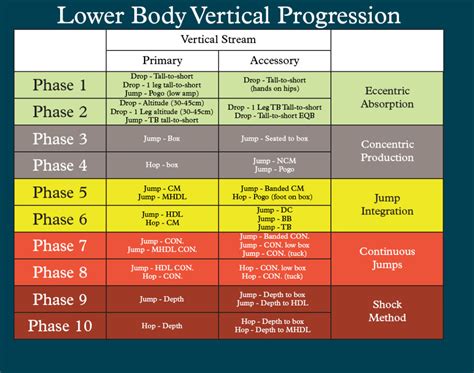
When we train in martial arts, we always work in a progression. The following three-phase training progression illustrates the best method to develop a useful independent broken blast.
In one single move, one can look at the independent broken blast as the Jik Chun Choi unleashed, using the best of Bruce Lee’s innovations.
There are times when putting this type of sophistication behind your Straight Blast is overkill. For the average street entanglement, this level of sophistication may be unnecessary. However, knowing you can sophisticate your technique when needed gives you additional choices against a more formidable, more intelligent, more skilled opponent than you. When things don’t go as planned, it gives you the confidence to dig out of it.
Key Concepts:
- Aliveness: Incorporating dynamic, athletic movement into footwork, moving beyond static positions.
- Broken Rhythm: Introducing unpredictability by changing the timing and tempo of movements.
- Independent Motion: Initiating attacks with the weapon (fist) before the body to increase perceptual speed and minimize telegraphing.
Table 1: Comparison of Martial Arts Styles
| Style | Footwork | Rhythm | Motion |
|---|---|---|---|
| Wing Chun | Static, lifeless | Cadent | Body and hands move together |
| Western Boxing | Dynamic, athletic | Broken | Integrated, full body movement |
| Jeet Kune Do (Bruce Lee) | Combative, alive | Broken | Independent, weapon first |