Championship Wrestling from Florida (CWF) was more than just a wrestling promotion; it was a cultural phenomenon that shaped the landscape of professional wrestling for decades. From its humble beginnings in 1949 to its final days in 1987, CWF left an indelible mark on the industry, nurturing legendary talent and captivating audiences with its unique blend of athleticism and storytelling.
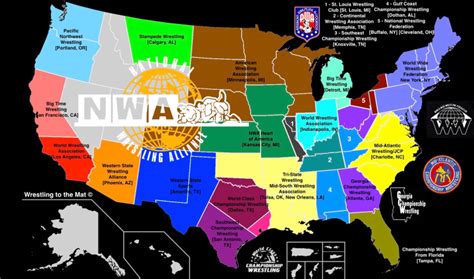
Map of NWA Territories in the 1980s. Championship Wrestling from Florida was a key territory in the NWA.
This article delves into the rich history of CWF, exploring its key figures, major events, and lasting legacy. It examines how CWF grew from a regional territory into a nationally recognized brand, and how it continues to influence professional wrestling today.
The Early Years: "Cowboy" Clarence Luttrall and the Foundation of CWF
The story of Championship Wrestling from Florida begins with "Cowboy" Clarence Preston Luttrall, a former wrestler who founded the promotion in 1949. Luttrall, known for his heel persona, established CWF as a member of the National Wrestling Alliance (NWA), aligning it with other wrestling territories across the country.
Luttrall introduced the Florida Television Championship in 1956. This allowed his regular roster a championship they could vie for while the main title was on the road to other NWA affiliates. In addition to the primary heavyweight and tag team titles, Championship Wrestling from Florida (CWF) recognized several secondary championships that emphasized mid-card competition, specialized match types, and regional variations within the National Wrestling Alliance (NWA) framework.
Read also: North American Broadcast Rights Secured
The NWA Florida Television Championship, introduced as a mid-card title in the 1960s and active through the 1980s, focused on fast-paced matches suitable for television broadcasts, with its first recognized reign by Ray Stevens in 1956 after defeating Harry Smith in Tampa. The NWA Brass Knuckles Championship (Florida version) catered to hardcore wrestling, allowing the use of knuckled gloves in matches to emphasize brawling styles, and was reactivated specifically for the Florida territory in 1968 under Johnny Valentine's reign. The NWA Florida Junior Heavyweight Championship targeted lighter, more agile performers, originating in 1942 prior to CWF's formal establishment but integrated into the promotion's structure by the 1950s to develop rising stars through technical showcases. It was defended until 1984, with brief reigns by local talents such as C.B. Territorial variants included the NWA Florida Bahamian Championship, a minor title active from 1982 to 1987 that extended CWF's reach into Bahamian events, starting with Pez Whatley's victory and featuring short reigns by wrestlers like Chris Champion to spotlight international undercard action.
The office was a member of the National Wrestling Alliance during the entire CWF era, Eddie Graham serving two terms as NWA president, and loosely aligned before that, with other 'world' champions sometimes defending their titles.
The Eddie Graham Era: A Golden Age for Florida Wrestling
Eddie Graham became involved with Championship Wrestling from Florida (CWF) in 1961, initially as a partial owner and booker, before acquiring full control in 1971 from founder "Cowboy" Clarence P. Luttrall. Under Graham's leadership, CWF entered its golden age, becoming one of the most respected and influential wrestling territories in the United States.
Graham further enriched CWF by introducing international talent and establishing robust training programs, notably through Hiro Matsuda's dojo at the Tampa Sportatorium. The promotion thrived with stars such as NWA champions Lou Thesz and Gene Kiniski, Graham, Don Curtis, Sam Steamboat, the Great Malenko (Larry Simon), Johnny Valentine, Hiro Matsuda, Bob Orton, Sr.
Graham quickly began developing new ideas for drawing fans and building the gates. He had memorable battles with Jose Lothario and Chief Jay Strongbow over the title during this time.
Read also: Championship Highlights
When I close my eyes and think of a wrestling match, any match, it’s his voice that I hear with its distinctive rasp and his unbridled use of the English language.
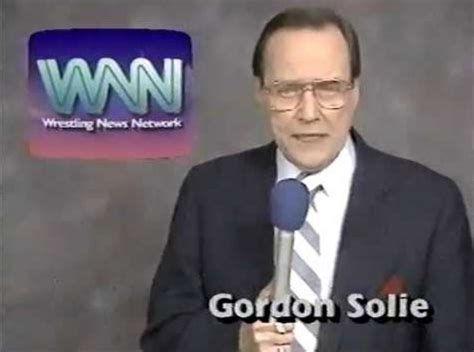
Gordon Solie, the legendary voice of Championship Wrestling from Florida.
CWF filmed and later taped its weekly TV wrestling show at the Tampa Sportatorium at 106 North Albany Avenue in Tampa, which was in reality a small television studio with seating for a live audience of about 100 people, with the wrestling office and gym in the same building. Arena footage was always also used, and full arena show broadcasts began in the early '80s.
In the 1970s, CWF expanded its syndication footprint, distributing the program to additional local stations across Florida and neighboring Southern states such as Georgia and Alabama under titles like "Championship Wrestling from Florida" and "Southern Pro Wrestling." This wider reach significantly increased visibility, with the television exposure directly contributing to higher live event attendance at major venues such as the Fort Homer Hesterly Armory in Tampa, where crowds often exceeded 5,000 for major cards.
Key Events During the Eddie Graham Era
CWF hosted several major events that drew large crowds and showcased the promotion's top talent. Some notable events include:
Read also: A Guide to City Championship Wrestling
- January 25, 1978 - Superbowl of Wrestling in Miami, FL at The Orange Bowl: This event featured a star-studded lineup, including Rocky Johnson, Ivan Putski, and a main event between Billy Graham (WWWF World Champion) and Harley Race (NWA World Champion) that ended in a time limit draw.
- February 23, 1978 - NWA/WWWF World Title Unification in Jacksonville, FL: This event showcased a mix of local and national talent, including The Fabulous Moolah and Mr. Wrestling II.
- August 3, 1980 - The Last Tangle in Tampa in Tampa, FL at Tampa Stadium: This event featured a Southern Championship match between Dick Slater and Barry Windham, as well as appearances from wrestling legends like Jack Brisco and Jerry Brisco.
How Eddie Graham Discovered Gordon Solie (Championship Wrestling From Florida)
Top Championships in CWF
Championship Wrestling from Florida featured several prestigious championships that were highly sought after by wrestlers in the territory.
NWA Florida Heavyweight Championship
The NWA Florida Heavyweight Championship was the top singles title in the Championship Wrestling from Florida (CWF) territory, emblematic of the promotion's NWA heritage and serving as a cornerstone of its competitive landscape. Defended across Florida's key arenas, including frequent high-stakes bouts at Tampa's Fort Homer Hesterly Armory (the Sportatorium), the title underscored CWF's emphasis on regional rivalries and athletic showcases.
Jack Brisco exemplified the championship's elevation during the 1960s and into the 1970s, securing multiple reigns that highlighted his amateur wrestling background and in-ring versatility. Dusty Rhodes' multiple reigns in the 1970s further immortalized the title through charismatic, fan-favorite performances that drove pivotal storylines, such as feuds with dominant heels that blurred lines between heroism and grit.
NWA Florida Tag Team Championship
The NWA Florida Tag Team Championship served as the premier tag team title within Championship Wrestling from Florida (CWF), promoting dynamic partnerships and intense rivalries central to the promotion's storytelling. In the early 1970s, the Brisco Brothers-Jack and Jerry Brisco-emerged as dominant figures, securing multiple reigns, including victories on February 16, 1971, and April 13, 1971, while mounting key defenses against rivals like the Funks and international teams such as the Assassins.
Their athletic style and family-oriented narratives helped elevate the title's prestige, with frequent changes occurring at weekly events in venues like the Tampa Sportatorium to sustain ongoing feuds and draw crowds. By the 1980s, teams like the Hollywood Blonds-initially Buddy Roberts and Jerry Brown in the 1970s with reigns such as March 19 to September 3, 1974, and later iterations including Dusty Wolfe and Ken Timbs in 1984-continued this tradition, engaging in multi-man clashes that pitted flashy heels against local favorites. These rivalries, often involving international invaders like Mr. Saito and Mr.
The Transition Period and Eventual Closure
When Eddie Graham died by suicide in January 1985, due to a combination of personal and business problems, responsibility for the office went to Hiro Matsuda and Duke Keomuka, both of whom bought in during the 1960s. The other remaining owners were Mike Graham, Eddie's brother Skip Gossett, Dusty Rhodes and Buddy Colt.
Under their guidance, CWF focused on stabilizing day-to-day operations by reducing the scope of touring shows across Florida and leaning on reliable draws such as Kevin Sullivan and Dory Funk Jr.
The promotion continued losing money and merged with Jim Crockett Promotions in February 1987. Most of the stars had gone to Jim Crockett Promotions or the WWF by that point. CWF continued operating as a JCP subsidiary until its last card on November 14, 1987, in Robarts Arena in Sarasota; in the main event, NWA Western States Heritage champion Barry Windham battled Dory Funk Jr.
The Legacy of CWF
Championship Wrestling from Florida may no longer exist, but its legacy lives on through the wrestlers it produced, the stories it told, and the impact it had on the wrestling world. Many of today's top stars were influenced by CWF, and its influence can still be seen in modern wrestling promotions.
The PWF introduced its own championships to anchor programming, most notably reviving the Florida Heavyweight Championship under its banner, distinct from the original NWA-sanctioned version held during the Eddie Graham era. Mike Graham captured the title on December 25, 1988, as FCW Heavyweight Champion, holding it into the rebranding before losing it to Al Perez in early 1989; subsequent reigns included Dustin Rhodes (May 23, 1989), Kendall Windham (June 27, 1989), and Steve Keirn (July 9, 1989), with the belt remaining active until Tyree Pride's final reign ending on June 29, 1991.
In 2022, Championship Wrestling from Florida was revived under the banner "Championship Wrestling from Florida Reloaded" by promoter Jeff Weaver, with events held in the Tampa Bay area to celebrate the promotion's storied history. The relaunch began with an inaugural show in July 2021, followed by a schedule of 11 to 12 events in 2022, including a February 26 card at the Lake Wimauma Convention Center featuring matches between up-and-coming talents like Wolfe Taylor and veterans such as Kevin Sullivan serving as a mentor. These gatherings emphasized tributes to foundational figures like Dusty Rhodes and Eddie Graham, filling gaps in post-1980s documentation by recreating the territorial spirit through live spectacles in original strongholds like Tampa.
The original CWF profoundly influenced modern wrestling stars by serving as a rigorous training ground, where figures like Hulk Hogan honed their skills amid brutal matches and storylines in the 1970s and 1980s. Scott Hall debuted professionally in CWF in 1984, feuding with Dusty Rhodes and building the foundation for his Razor Ramon persona, while the Road Warriors elevated their tag team dominance through high-profile bouts in the territory, including clashes with local favorites.
CWF's cultural impact endures via documentaries and fan-driven initiatives that highlight its innovative booking and tragic elements, such as the 2022 "Tales from the Territories" episode "CWF: Bloodstains in the Everglades," which includes insights from Keirn, Kevin Sullivan, and others on the promotion's hardcore ethos.
tags: #championship #wrestling #from #florida