This article delves into the specifics of amateur wrestling, particularly the style practiced at the high school level in the United States. Scholastic wrestling, frequently referred to as folkstyle wrestling and commonly known as simply wrestling, is a style of amateur wrestling prevalent in high schools and middle schools across the nation.
According to an athletics participation survey conducted in 2006-07 by the National Federation of State High School Associations, a significant number of high schools, specifically 9,445, sponsored boys' wrestling teams. With 257,246 boys actively participating, wrestling secured its position as the eighth-most available and sixth-most popular high school sport in the country.
In scholastic wrestling, great emphasis is placed on one wrestler's control of the opponent on the mat, usually by controlling the opponent's legs or torso.
Top 5 Wrestling Moves *ESCAPES*
Evolution of Scholastic Wrestling
At the high school level during the 1930s and 1940s, wrestling programs and championships would grow rapidly, as state-based high school athletic bodies added and sanctioned the sport. In the mid-20th century, college and high school wrestling programs greatly expanded after the National Collegiate Athletic Association (NCAA) standardized collegiate wrestling rules, which were all or partly adopted on the high school level by state athletic associations.
The standardization of NCAA rules also inspired colleges, universities, and junior colleges to expand their dual meets and tournaments, including developing organized wrestling programs and expanding existing ones.
Read also: Personal Growth Through Jiu Jitsu
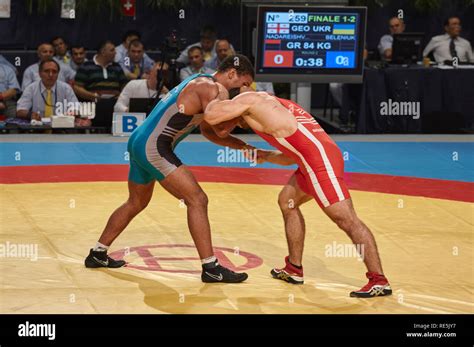
A wrestler executing a takedown.
Girls' Scholastic Wrestling
Girls scholastic wrestling has a less definitive history. It began in the 1970s when girls sporadically began joining boys wrestling teams. In the 1990s, girls-only high school wrestling programs began being established.
Notable early women scholastic wrestlers include Tricia Saunders, the first female National Wrestling Hall of Fame inductee. In 1993, the first official all-girls high school wrestling team was established at Brookline High School in Brookline, Massachusetts; the team of 15 girls became an official public high school team three years later in 1996.
Regulation and Weight Control
Since the early 20th century, state high school associations across the United States host annual wrestling championships for individuals and for teams. At one time, there could be no middle school wrestlers participating at the high school level, but as of 2016, middle school wrestlers now can also compete at the high school level if allowed through procedures set out by their respective state associations.
Scholastic wrestling is regulated by the National Federation of State High School Associations (NFHS). Each state high school association has adopted its wrestling rules, with each making some modifications. Every high school is expected to practice wrestling at two levels, varsity and junior varsity, although wrestling at the freshmen (ninth grade) level is becoming more widespread.
Read also: BJJ in Schenectady, NY
The NFHS generally sets the standard for weight classes for high school-level dual meets, multiple duals, and tournaments. Weight classes for junior varsity, freshman, and middle school teams may differ from state to state. Each state high school association that sanctions wrestling also has a defined weight control plan that prohibits excessive weight loss and dehydration during the season.
The plan would prohibit dropping below seven percent body fat for males and 12 percent body fat for females in order to reach a lower weight class. These weight control plan includes provisions for weight assessment by the school's athletics medical staff, and certification of the lowest allowable weight class with the team's head coach and the person that performs the weight assessment. After the date of certification, a growth allowance of two pounds in each weight class may be allowed in some states.
Many tournaments offer an allowance of one or two pounds, allowing wrestlers to compete in a certain class if they are within the allowance of making the weight limit for that class.

Competition Structure
The high school wrestling season customarily runs from October or November to March. Regular season competition begins in late October or early November and continues until February. Post-season competition usually continues from February to March depending on whether individual wrestlers or teams qualify for regional, sectional, or state championships.
Dual Meets
Wrestling teams from two different high schools normally compete in what is known as a "dual meet". It is possible for there also to be a "multiple dual", where more than two wrestling teams compete against each other at the same event on the same day. For example, one high school wrestling team may face another wrestling team for the first dual, and then a third wrestling team for the second dual. Also, those two wrestling teams may compete against each other in a dual meet as well.
Read also: Best MMA Gyms in SLC
Dual meets usually take place on evenings during the school week, or on Saturday mornings, afternoons, or evenings during the wrestling season and begin with weigh-ins, shoulder-to-shoulder, at a maximum of one hour before the meet begins. Wrestlers may wrestle up only one weight class above the weight class that they are placed in, with some exceptions. If a wrestler fails to make weight, he either has to forfeit or weigh-in at a higher class.
If a wrestler is suspected by a referee or coach of having a communicable skin disease, the wrestler can either be disqualified or provide written documentation from a physician that the skin disease is not communicable. Dual meets often feature one or two pound allowances, but in order to qualify for a league championship, wrestlers are required to weigh in without the benefit of a pound allowance at what is called "scratch weight" a certain number of times during the dual meet season.
After weigh-ins, the referee coordinates the random draw, which determines the sequence of weight classes for the dual meet. After the random draw, the referee will call the wrestlers from each team who have been designated as captains. One of the captains will call a disk toss. The disk will then fall to the floor and determine which team has the choice of position at the start of the second period, and which one of the team's members is to appear first at the scorer's table when called by the referee for each weight class.
The wrestling captain who wins the disk toss may choose the even or odd weight classes, the weight classes, from lowest to highest, that are numbered evenly or oddly. The first weight class chosen in the random draw is odd. The rest of the weight classes are even and odd accordingly. If the 120lb weight class is chosen in the random draw, for example, then the 120lb, 132lb, 145lb, and subsequent weight classes would be odd, and the 126lb, 138lb, 152lb, and subsequent weight classes would be even.
This order would work in the traditional sequence until the last even weight class at 113lb. During a dual meet, both the junior varsity and varsity squads from the two schools compete against each other. The top junior varsity wrestler of each school compete against each other in an order determined by the random draw.
The first weight class drawn starts the competition, with the following weight classes proceeding in order. For example, if the 152 lb weight class was drawn first, the matches would follow after that weight class up to the 285 lb match. The matches would then revert to 106 lb and proceed to 145 lb. The dual meet would then commence with each school's top junior varsity wrestler in the first weight class drawn.
After that, the top junior varsity wrestlers then compete in the succeeding weight classes. If more than one junior varsity wrestler is at a certain weight class for each school, the coaches will sometimes hold an "exhibition match", which does not count towards the junior varsity team score but allows the wrestlers to gain more competitive experience.
Sometimes matches are not scored for a winning team, allowing wrestlers to focus on skills and technique rather than winning. If one school has two junior varsity wrestlers at the same weight and the other school only has one, the lone wrestler may sometimes be permitted to wrestle both the other's wrestlers.
After a break, the varsity matches commence in the same fashion as the junior varsity matches. However, there are no exhibition matches at the varsity level.
Tournaments
High schools in the United States often compete in a tournament, which allows many schools to establish their rankings, not only for individual wrestlers and high school teams as a whole. Tournaments are often sponsored by a high school or a state high school association and are held on Friday, Saturday, Sunday, or over any two days during the weekend. Admission is often charged to cover costs and make a small profit for the host.
A tournament committee usually administers the event and after individual and team entries have been verified, the officials then determine the order of the matches, called a drawing, by certain brackets usually including eight and up to 16 individual wrestlers. The tournament officials when doing this drawing take into account each wrestler's win-loss record, previous tournament placements, and other factors that indicate the wrestler's ability.
With that in mind, wrestlers who are noticed as having the most superior records are bracketed so that two top-ranked superior wrestlers in each weight class do not compete against each other in an early round. This is called "seeding". A tournament begins with weigh-ins, shoulder-to-shoulder, starting two hours or less before competition begins.
With the drawing and weigh-ins completed, wrestlers then compete in two brackets in each of the 14 weight classes. Often, a tournament host will field a "house team" composed of junior varsity wrestlers from competing schools when there are open slots in the brackets. Tournaments are usually either varsity or junior varsity competitions.
If there are not enough wrestlers to fill up the bracket in a weight class in the first round, a bye will be awarded to a wrestler who does not have to compete against another wrestler in his pairing. After taking account the number of byes, the first round in each weight class then begins.
Most high school wrestling tournaments are in double elimination format. The last two wrestlers in the upper championship bracket wrestle for first place in the finals, with the loser winning second place. In other words, a wrestler cannot place higher than third if he is knocked down to the lower consolation bracket by losing in the championship semifinals.
This is largely the result of time constraints: one-day tournaments often last into the evening. Depending on how many places are scored, the consolation rounds would then commence, beginning among all of the wrestlers who lost to the winners of a certain round. For example, in tournaments scoring eight places, consolation rounds would begin with all of the wrestlers who lost to the winners of the first round matches.
After the championship semifinals, the losers in the semifinals would be cross-bracketed into the consolation semifinals. The winner of the consolation finals would then win third place, with the loser winning fourth place. In tournaments where six places are awarded, the losers of the consolation semifinals would wrestle for fifth place, with the loser winning sixth place. If eight places are awarded, the losers of the consolation quarterfinals would wrestle for seventh place, with the loser winning eighth place, and so on.
After the championships finals, the awards ceremony usually takes place with plaques, medals, trophies, or other awards given to the individual and team winners with the highest placements.
For tournaments too large to properly accommodate all wrestlers, some host schools will implement a "carry-over" bracket system in order to finish a tournament within the standard time restrictions of a few days. In said tournament, a wrestler will advance into the consolation bracket only if the winning opponent successfully advances into the finals.
In the first few rounds of the tournament, a single-elimination-type method is implemented. For example, if a wrestler goes to a 64-person tournament, he or she must win at least one match before losing. Upon the loss, the winning opponent will advance until he or she reaches the finals. Only those wrestlers who advance to the round before the quarter-finals and those who have lost to the wrestlers of the quarter-finals may have a chance at placing in the tournament.
If our said wrestler wins the first match and loses the second match. The second opponent must advance an additional three rounds before our wrestler will be guaranteed another match and opportunity to place in this tournament. The carry-over system allows for more matches and a better siphoning process for large-scale tournaments by allowing only the best wrestlers to advance and giving the best of the losing opponents a chance to place in the tournament as well.
Elite Invitationals and Postseason Tournaments
Each state or geographic area features two or three elite tournaments every year. These events are by invitation only and are called "Invitationals". Tournament sponsors, which are usually high schools, colleges, or universities, invite the best varsity wrestlers from their area to compete against each other. Many elite tournaments last two or even three days. For this reason, elite tournaments are often scheduled during the school's winter break.
Between one season and the next, postseason tournaments and preseason tournaments are often held in scholastic wrestling and also in freestyle and Greco-Roman. The most active wrestlers often take part in those to sharpen their skills and techniques.
The Wrestling Mat
The match takes place on a thick rubber mat that is shock-absorbing to ensure safety. A large outer circle at least 28 feet in diameter that designates the wrestling area is marked on the mat. The circumference line of that circle is called the boundary line. The wrestling area is surrounded by a safety mat area (or protection area) that is at least five feet in width.
The mat area is designated by the use of contrasting colors or a 2-inch-wide (51 mm) line, which is in bounds as of the 2023-2024 scholastic season. The mat can be no thicker than four inches nor thinner than a mat which has the shock-absorbing qualities of at least 1-inch (2.5 cm) PVC vinyl-covered foam.
Inside the outer circle is usually an inner circle about 10 feet (3m) in diameter, designated by the use of contrasting colors or a 2-inch-wide (51 mm) line. Wrestlers are encouraged to stay within this inner circle or else they risk being penalized for "stalling," which is deliberately attempting to exhaust the match's clock without meaningful wrestling acts or maneuvers. Each wrestler begins action at a starting line inside the inner circle that is three feet long.
USA Wrestling Qualification Procedures
The following rules and procedures apply to USA Wrestling events:
- State Teams: Limited to four wrestlers per age, style, and weight class. Automatic qualifiers do not count against the limit.
- Registration: All athletes must register through their respective state associations.
- Automatic Qualifiers:
- Current year 1st-6th place at USA Wrestling Regionals (same age and style)
- Current year 1st-8th place at U15, U17, and U20 Nationals (same style)
- Previous year 1st-8th place at Junior and 16U Nationals (same style)
- Geographical Exception: Hawaii and Alaska's roster limit shall not exceed 4 per weight class plus 2 additional wrestlers at any weight class.
- Girls' Qualification: 16U and Junior Girls 1st-6th Place finishers serve as automatic qualifiers at Junior & 16U Nationals in their designated age group.
- Kids Nationals Weight: Wrestlers may not compete lower than the lowest weight weighed in at any regional, minus one weight class.
- Kids Nationals Eligibility: One must compete in any regional or obtain a waiver to compete from his/her state chairperson.
Bracketing and Tie-Breaker Criteria
- Bracketing: Double elimination line bracketing will be used for all groups and styles with a wrestle back to 4th. Weights with four (4) or fewer competitors will wrestle in a round robin format. Weights with two (2) competitors will wrestle two (2) out of three (3) to determine region champion.
- USA Wrestling Performance Index (PIN): Separation used for all brackets. The number of separated spots will be based on registered numbers and decided upon by tournament director and head operations official
The USA Wrestling Performance Index (PIN) measures consistency over time and rates the probability of a person winning against an opponent based on their bodies of work.
- A person with a higher PIN is considered more likely to beat someone with a lower PIN and the closer the PINs are between athletes, the closer the probability gets to 50/50 chances.
- This does not reward the one-time win or head-to-head over an opponent. What it does is reward an athlete’s consistency over time. If you consistently beat people with higher PINs, you will gain PIN points to surpass them in the index, given that you do not lose to lesser competition along the way.
- The more you wrestle, the more opportunity you have to change your PIN.
- The baseline number for a person’s PIN is 1,000 points. The more points your PIN has above 1,000 reflects positive success against your opponents.
In the event of a tie between two or more participants in a round-robin, the following criteria shall be used to break the tie:
- If two participants are tied, the head-to-head outcome will determine highest placer.
- Cumulative activity points (2 pts: Fall, Inj. Default, Forfeit, WBD; 1.5 pts: Technical Fall; 1 pt: Major decision).
- Most pins.
- Most technical falls.
- Fastest time of falls (cumulative).
- Fastest time of technical falls (cumulative).
- Most match points.
- Lowest contestant weight.
Regional/National Rules Modifications
Regional/National Rules Modifications:
- If an athlete flees the mat during an attack and the offensive wrestler finishes his/her takedown or other scoring maneuver, the offensive wrestler will score the takedown/scoring maneuver (2, 4, or 5 points) PLUS caution to his/her opponent and one more point (2, 4, 5 + 1). Match will restart in PAR TERRE. This rule applies to all styles.
- If an athlete flees the mat during an attack and the offensive wrestler is unable to finish his/her attack, the offensive wrestler will score the step out (1 point) PLUS caution to his/her opponent and one more point (1 + 1). Match will restart STANDING. This rule applies to all styles.
- If an athlete flees the mat in par terre, caution to the defensive wrestler and his/her opponent receives one point. Athletes will restart in par terre. -- If an athlete flees in danger, caution to the defensive wrestler plus two points to the offensive wrestler, restart par terre (no change from previous rules).
- Par Terre Starting Position: Match will start once the offensive athlete places hands on any part of the back.
- If an athlete is put on activity time and does not score, the active wrestler will get one point on top of any points he/she scores in activity time. The passive athlete on activity time must score in that 30 seconds or their opponent will receive one point. The point will be awarded without stopping the match.
- In the 14U and younger, U15, 16U, U17 and Veteran age categories, no verbal warning for inactivity will be given due to the shortened periods. The first stoppage in the match for passivity will go directly to activity time.
- All Masters age categories will wrestle 2-minute periods.
- In a fall situation where the defensive athlete nearly has his/her shoulders to the mat and screams to simulate an injury and a reason for this potential injury is not observed, the refereeing team is obligated to call a fall, with mat chairman approval.
- Headgear is not required for wrestlers 14U and younger. A distinguishable shade of red or blue is acceptable for singlest.
- Double arm bar with sit-out, three quarter nelson w/leg hook and west point ride (iron cross/cross chest cradle) maneuvers are now LEGAL in all age divisions.
- Technical superiority in GR will now be 8 points across ALL age divisions.
- Kickbacks are legal in FS, assuming the offensive wrestler does not use undue force against the defensive wrestler’s knee. This has always been legal.
- In Greco the offensive wrestler DOES NOT have to accompany his opponent to the mat during a throw or action in order to score points.
- Mouth guards are not required for wrestlers (even wrestlers with braces) but recommended
- Rest time in between matches is a minimum of 15 minutes
- A match can be started when a wrestler does not have a coach
tags: #city #championship #wrestling