The Closed Guard is one of the foundations of guard work in Brazilian Jiu-Jitsu (BJJ) and is often considered the first line of defense of all guard games. In this position, you are on the bottom with your back to the floor. You need to have both legs wrapped around your opponent’s waist with your feet crossed (locked), holding your adversary’s hips close to you so you can control their posture and limit their movement.
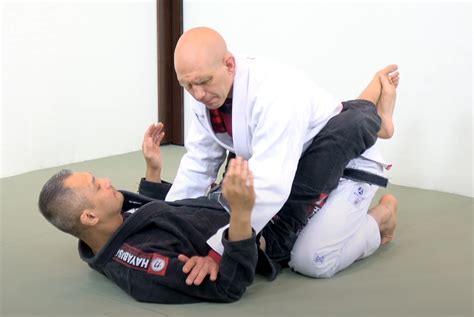
The closed guard position in BJJ.
Training closed guard teaches you to maintain control, utilize leverage, and apply pressure effectively so you can better dictate the pace of a match. In tournaments, mastering the closed guard can be the difference between securing a victory and suffering a defeat.
Elevated Basics: The Ultimate No-Gi Closed Guard Guide
Closed guard, also known as full guard, is a fundamental defensive position because it allows you to control your opponent’s posture, balance, and the pace of the fight. When you’re in the closed guard, your opponent is deep between your legs, where you can work to keep their posture broken and shut down a lot of their early passing potential.
Establishing Control
Establishing a good grip is really important to control your opponent and limit their movement. Pull their head down or control their arms to prevent them from posturing up, and, if you’re training with a gi, slide your hand under their chin and get a firm grip on the collar close to their neck. With the other hand, grab your opponent’s sleeve just above their wrist.
Read also: Comprehensive Rash Guard Guide
Offensive Movements from Closed Guard
BJJ is primarily a submission-based art, and closed guard is a great position to start from if you want to control a match and prepare for offensive movements (such as sweeps or submissions). Although it’s a defensive position, you can work it to your advantage through small, incremental adjustments.
Sweeps
One of the simplest sweeps from closed guard is the hip bump sweep. If your opponent tries to sit up and gain posture, you can go for the sweep. When they are almost at a 90-degree angle, open your guard, put your hand behind you, and drive your hips into them. Bring your arm to the other side of their head to keep their bicep connected to your chest. If they have a tall posture, you can also come up and bulldoze into them.
To do this, shoot your armpit to their shoulder, open your guard, drive your hip into them, and keep their arm tight against you. Often, when you attempt the sweep, your opponent will try to shut you down by driving back into you. If you keep your hips close, you’ll fall back, but if you scoot out and create separation, you can drive your arm underneath and slip inside.
Get your hand close to your chest and reach around your own arm. Another option is the Kimura. If your opponent is at a 45-degree angle, you can slide your arm over for the hip bump sweep but instead hook underneath their tricep tendon.
Grab their wrist, sit back, and pull their elbow toward you while keeping a 90-degree bend in their arm. If your opponent creates separation, you can use a technical standup to snap them down and move into attacks like an anaconda choke, Darce choke, or guillotines. Post on your elbow, put your foot on their hip, and slide your hand behind their head.
Read also: Enhance Your Jiu-Jitsu
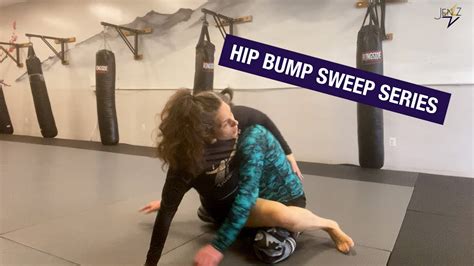
Performing a hip bump sweep from closed guard.
Submissions
The armbar is a method that typically targets the arm of the opponent. It is a joint lock that works against an opponent's arm and elbow joints. The tricky joint lock works against the joints and creates maximum pressure over the arm. The armbar is also known as the cross-arm lock or juji gatame. It targets the arm's joint, and pressure is applied to the hyperextended arm, creating immense pressure on the joint. Make sure to grip the arm by moving it in the opposite direction. The fighter spins the legs over the shoulder, creating torque, and the opponent goes for the tap.
The triangle choke is the most effective submission method used in Brazilian jiu-jitsu. It is applied in BJJ Gi and No Gi tournaments. It is a versatile move that involves placing the legs around the neck. It takes the shape of a triangle and applies pressure to the neck, shoulder, and backbone. The first step is to get into the closed guard position. Move the hands in between both arms and slide them with force. Bring the knees in the upward direction and pull the opponent towards you.
Kimura lock is a powerful submission method that can be applied from the closed guard position. It is a four-figure lock that is kept on one arm of the opponent. It is the joint lock that works on the leverage or the torque; it targets the shoulder joints with the backward movement of the hand. It creates an extremely painful effect that makes your opponent submit immediately after tapping. Finish the submission by applying the pressure over the arm that will make your opponent go for a tap.
Omoplata is a shoulder joint lock technique used in multiple martial arts, including judo and catch wrestling. It is the submission that provides the maximum advantage, it is the popular method that is used in Brazilian jiu-jitsu to pin the opponent. It is famous for the name of ashi sankaku garami in which the fighter uses the leg and hips to target the opponent.
Read also: Combining Anime and Jiu-Jitsu
The cross choke is a strangle choke used in BJJ to submit the opponent. It is a classic choke that works from the mount or closed guard position. The fighter targets the collar or lapel of an opponent with both hands and then pressure is applied to choke the neck. The final step is to switch the position of the hip, move the opponent's head upward, and place your hands close to each other.
The guillotine choke is a dynamic move and chokehold used in judo and BJJ. It is the chokehold that resembles the rear naked choke (RNC). The only difference is in the execution of the strangle. A rear naked choke is applied from the back, while a guillotine choke is applied from the front. The Guillotine Choke is a headlock that restricts the blood flow from moving in an upward motion. Pull down your opponent so that he keeps the elbow on the mat. Use the other hand to tighten the grip. Place your back on the mat. Lock your arm by keeping the hand on your hand for the finish.
Americana lock is a technique also used in various martial arts. In it, the attacker uses the four-finger lock to submit the opponent. This arm lock is also known as a wrist lock, keylock, or even joint lock. The fighter controls the arm by making an angle of L using leverage. For the finish, push the arm in the outer direction.
Essential Skills for Closed Guard
Closed guard relies heavily on core strength, flexibility, grip strength, and effective hip movement. Your core muscles help you manage your opponent’s posture. Strength training is absolutely important but do not overlook regular dynamic and static stretching routines.
Flexibility and mobility training have an underrated impact on how you move on the mat. Dynamic stretching exercises such as leg swings, arm circles, and hip rotations. Static stretches at the end of your training sessions to improve flexibility and reduce muscle stiffness. Yoga and mobility not only improve your range of motion, but your balance and coordination too.
Where would you be without grip strength? Brazilian Jiu-Jitsu is a grappling art, after all. Strong forearms and hands enable you to maintain effective grips and resist your opponent’s attempts to break free from your closed guard.
Run hip movement drills such as hip escapes (aka shrimping), which are fundamental for creating space and repositioning in the guard. You should also practice transitioning between attacks and submissions. Flow drills combine different submissions and sweeps and can help you improve the fluidity of your movements and reaction time.
For example, transition from an armbar to a triangle, then to an omoplata. Focus on specific sequences, such as attacking an armbar while your partner defends, then transitioning to a sweep if the submission fails.
Closed Guard in Self-Defense
A big part of BJJ’s popularity is its real-world application. With enough practice, anyone of any size can use BJJ techniques to protect themselves from an attacker. The closed guard in particular, allows you to mitigate blows from an assailant.
Key Principles for an Effective Closed Guard
When having your opponent in closed guard you don’t want to give him any space. As with space you do not want to let your opponent get his posture. Always have your legs higher up on your opponent’s waist, closer to his upper back. When they are higher up it is much harder for him to sit back and get his elbows in.
Knock his hand off your body. When he has his hand flat on your body he has the opportunity to push off of you. Pull him in with your legs. Do not rely on using just your hands to pull your opponent in close to you. It will not work. Your hands against his whole body are not an even battle.
Control his head. This is a really important point. Where ever the head goes the body goes. So you want to try to control your opponent’s head most of the time at least until you have moved onto something better. If you have ever experienced someone constantly pulling down on your head while you were in their guard, you would probably agree that it is very frustrating at times.
Also when you pull down on their head you want to pull down on the upper back of their head because that is where you get the most leverage. It is much harder to pull down on your opponent’s head once you get closer to his neck area. Try to control his arms/shoulders. Immediately when you gain control of your opponent’s head and bring him close to you, you want to get control of at least one of his shoulders or arms. This gives you a lot of control.
After you gain control of your opponent you want to start moving your hips out so you can start working some attacks. Most attacks are going to come from the side or with your hips out. So you need to be a step ahead of your opponent and start moving your hips out right away. The more you stall the more he has to work.
Many people make the mistake of not angling out while having a closed guard. Any movements you make, you want to stay tight at the same time. An example would be to place one of your feet on the ground to aid in scooting your hips out, but as you do this you will always keep control of your opponent’s head and shoulder/arm. This way he can’t sit up.
Once you get your hips out you want to immediately get your legs tight around your opponent’s body again. If you feel you can’t stop your opponent from getting his posture and opening your legs. You need to always open your leg voluntarily before he does. Remember you want to always be a step ahead. If he forces your legs open, he will have the upper hand and will most likely be able to control your legs and hips.
When he sits back, try to sit up with him. Remember you always want to be tight. Always practice regaining guard control. During your practice sessions work on letting your partners open your guard and work passes. Then fight your way back into guard.
Regaining Guard Control
First off, always practice your hip scapes (shrimps), this is a really important fundamental movement that is used in a ton of techniques involved in grappling. Secondly, do not let your opponent get control of your legs above your knees, close to your waist.
Always practice your backward rolls. important in getting back to your knees if your opponent stacks you up and there is no way for you to stop him from passing your guard. If you can roll back to your knees, you’re in a much better position. Always practice your shoulder bridges. These are very important for you if your opponent does pass your guard.
Also remember that the closed guard can be a great tool and many attacks and advantages can come from it. Remember to work with it. Too many people use the closed guard to just hold their opponent and stall.
Closed Guard: Then and Now
When I started BJJ in 1994 the Closed Guard was not just a position. It was the magic pill that makes you invincible. Royce Gracie was fighting in the UFC choking people out and breaking arms from the closed guard and it seemed that being on your back with your legs wrapped around your opponent was a pretty good place to be.
I remember that even when I was purple belt in 2004 the closed guard was my favorite guard position and I used it all the time with triangles, armbars and sweeps. In this article I would like explain why the closed guard isn´t used much anymore and I will show a few principles that can help you to make your closed guard great again.
The Problems with Traditional Closed Guard
I never trained much in the Gi since my focus was always on MMA and Submission Wrestling training and usually in my earlier years we started our rolling sessions from standing. When you go for leg takedowns like the double-leg takedown you will pretty often end up in the closed guard of your opponent and if your opponent is initiating the takedown he will end up in your guard.
Later when we start rolling from our knees or when people in Submission Wrestling did not fight for the takedown anymore but were pulling guard or just sitting down the closed guard was not happening so easy anymore. If you start sitting or at least one guy sitting and the other standing there is a lot of distance and time that prevent the closed guard.
If the guy on bottom wants to wrap the legs around his opponent it is a long way and no skilled opponent will allow him to close the guard. So when you start rolling from your knees it is highly unlikely today that you will just be able to pull closed guard. You have to make little steps from quarter guard to half guard and then maybe to closed guard.
This is a pretty long way and people are starting to work more and more from quarter and half guard or initiating leglocks then going for the closed guard. This isn´t a bad thing it just takes away the focus from the closed guard and that is what we are seeing today.
The Impact of Leglocks
If you are in the closed guard on the bottom with your legs wrapped around his body essentially you give him the chance of attacking both of your legs with leglocks. Especially if you don´t train with the Gi and not use the IBJJF rules leglocks are something you have to acknowledge and you have to deal with them frequently.
If leglocks and reaping is allowed you can´t play a lazy type of closed guard opening and closing legs frequently and trying to flow from attack to attack. If you do so you will easily end up in a leglock. For me dealing with leglocks was the biggest gamechanger in the development of my new closed guard because leglocks make you work much tighter and more aggressive from your back.
No-Gi Considerations
If you training without the Gi a lot of the classical techniques will not work or at least will not work frequently against skilled opponents. You do not have lapel chokes you can not grab the sleeves and there is less friction when you apply armbars or triangle chokes.
I would say in No-Gi your arms do less and your legs have to do more to compensate the missing grips on your opponents gi. If you are missing good leg work and lower body dexterity you will likely quit playing closed guard and focus more on other guards or positions. If you want to defend yourself against strikes being in closed guard you need also pretty good leg control.
If you are trying to pull your opponent close to you by just using your arms it will be pretty difficult to be successful against a stronger opponent. From my own experience I would say that my blue and purple belt closed guard 15 years ago was pretty lazy. I was closing my legs and then playing with a lot of sweeps and attacks without being overly aggressive.
Closed Guard for me was a place to chill out and sooner or later get submission anyway. Today I have a very different approach which I will explain you know. I do not see the closed guard as a control position anymore but as the beginning of an attacking combo.
There is constant pressure from the bottom and from the minute I enter this position I am thinking about very few but effective sweeps and submissions I can use from there. This is one of the most important principles from the closed guard and it is often misunderstood.
If you are able to connect your upper and lower body together like I show in the first video you are able to use your own bodyweight to pull your opponent down and that creates more power than if you would just pull him forward with your hip flexor muscles.
If you are able to put pressure from the bottom against your opponent you can use the rest of your body to attack and as soon as you break his posture your bodyweight will automatically pull him forward and down. You do not open your legs but create a strong attachment so your opponent has to carry your weight while you don´t waste much strength and energy.
Pressure is the underlying concept that has to be always present as soon as you wrap your legs around your opponent. Breaking someones posture from bottom of the closed guard could sometimes be really difficult.