Brazilian Jiu-Jitsu (BJJ) is a martial art that emphasizes ground fighting and submission holds, requiring a combination of technique, strength, and strategy. For beginners, mastering the foundational skills is crucial for long-term development and success in the sport. In this article, we'll explore essential beginner drills, known as Infinity Drills, that help new practitioners improve their techniques and understanding of BJJ. Furthermore, we'll delve into flow rolling and sustainable training routines to enhance your overall BJJ journey.
Infinite drilling sequence to warm up your joints
The Essence of Flow Rolling in BJJ
Brazilian Jiu-Jitsu is globally regarded as an influential grappling martial art known for its defensive method in matches or real-life situations. Flow rolling refers to the utilized perspective in a distinguishing sport in BJJ. This concept defines controlling technical freestyle rolling rather than a forceful strategy. It's a necessary exercise technique for grappling and guides how to complete a smooth transition between diverse methods and positions in a coordinated mode.
BJJ involves drilling between you and your partner, which separates BJJ from other martial arts in its rolling culture. Students participate with strong athletes to enhance their skills. Flow rolling is a form of sparring that gives your opponent a lighter space to test their skills and abilities against teammates. Like live sparring in other martial arts, rolling helps you examine for progress by giving you space to work on your strength.
Flowing is a type of BJJ sparring in which competitors offer minimum resistance to test their skills instead of trying to tape each other. A flow state is an instinct that comes naturally into a match without putting too much effort into it. BJJ experts and coaches know the significance of rolling in competition, as it occasionally concerns rolling hard and going beyond one's physical capabilities. Flow rolling allows BJJ students and partakers to playfully use their strategies by experimenting in a safe background.
This idea extracts the extreme pressure on participants to focus more on their technical actions and refine their tactics. Flow rolling benefits use strategies against defying opponents. In traditional sparring, participants have room to use a new technique against a tough fighter, emphasizing conquering the match more. Flowing consistently can be beneficial in executing strategies and improving each application. Your mind remains watchful throughout the flow, rolling and operating on utilizing new techniques, positions, and escape moves.
The more fluent you are with your movements, the less you will think about them before applying them. Flow rolling is vital to skill development in Brazilian Jiu-Jitsu (BJJ) and other grappling arts. Flow rolling allows athletes to concentrate on their techniques without pressure from the competition. Repeating the same technique helps you exchange skills with your opponent. With flow rolling, you become an attentive player.
You can effortlessly analyze what moves your competitor is using and what counter-attack you can apply. Flow rolling helps change the submission and guards from distinct positions with smooth changes as if they are accomplished naturally and effortlessly with fluid movements. Since rolling is less intense, the probability of injury corresponding to full-intensity sparring decreases. Flowing increases the intensity of positioning and handling the point, which can cause injuries. It is a mutual benefit for both players, as exchanging knowledge can help improve your strategies and familiarity with the flow.
There is always room for advancement with better communication and feedback. In this way, the player is immersed in a more controlled atmosphere without over-pressure on their head about winning the match and concentrates better on executing their moves properly. Flow rolling improves the sharpness of your training partner's activity, helping you anticipate their actions and adjust your movements accordingly. It also analyzes the timing of transitioning between positions and techniques, developing a smoother and more influential role.
Flow rolling develops a resourceful mindset in players without evaluating intimidation to win the match. It helps players think creatively and mix different techniques, like chocks or submission moves and allows them to adapt problem-solving skills that can be used on the mat. Practicing these techniques can improve your confidence in your knowledge and how you use combinations you have rehearsed in an undisturbed environment. Flow rolling in BJJ provides a mental refreshment that relieves pressure and competitive tension, making training more pleasant and negligibly stressful.
The controlled qualities of flow rolling decrease the chances of sustaining injuries while allowing an extreme emphasis on stopping and preventing movements, which is necessary for long-term growth in BJJ. Likewise, flow rolling enables more useful knowledge via mutual interaction and feedback between workout partners. Its advantages and aptitude development are considerable for a harmonious and secure system. Rather than high-intensity sparring, which emphasizes more competition and success, flow rolling emphasizes smooth, favorable deals of styles.
Flow rolling improves one's timing management capabilities, improves reflexes, and makes them more attentive regarding their player's next move and cognitive skillfulness. It helps a practitioner develop his skills in flow rolling, allowing him to perform techniques fluently as intended and maintain control. Communication during flow rolling helps both participants get through the practice with an understanding of their goals and level of engagement to roll. It can also be a valuable addition to someone's training program, used as part of warm-ups or technique drills, and even could be done alongside more intense sparring sessions. Remember to shift gears and intensity levels while transitioning between flow rolling and live traditional sparring.
Types of Rolling
- Warm-up rolling: A light sparring session that evolves the player's body to prepare for extreme practice. Players concentrate on smooth and influencing the growth of their body through practice, gentle training, and building movements rather than moving towards high-intensity techniques.
- Technical flow rolling: Underscores proper form and strategy.
- Position rolling: Concentrates on specific training approaches where BJJ fighters focus on maintaining position rather than starting rolling through free sparring.
- Movement flow rolling: Centered around keeping a smooth and vibrant exchange of movements within the match.
- Rolling with low intensity: Focuses on the smooth use of approaches and headed movements rather than using high intensity.
- Rolling to submission: Helps improve one’s capacity to achieve strategies under strain, formulate problem-solving aptitudes on the mat, and enrich overall grappling ability.
- Hard rolling: Is characterized as a drastic and fierce form of rolling in which the player pushes their boundaries, applying additional power and more physical exchange of moves.
Infinity Drills for BJJ Beginners
Infinity Drills are named for their continuous, flowing nature, allowing practitioners to repeat movements and transitions indefinitely. These drills are crucial for beginners for several reasons:
- Technique Refinement: Repeated practice of these drills helps in refining techniques and improving the efficiency of movements.
- Fluid Transitions: They teach practitioners how to seamlessly transition between different positions and techniques, a critical skill in BJJ.
- Pressure and Control: Practicing these drills enhances the ability to maintain pressure and control over an opponent, which is vital in BJJ matches.
- Adaptability: The drills encourage adaptability, allowing practitioners to switch between offensive and defensive roles fluidly.
- Muscle Memory: Regular practice helps in developing muscle memory, making complex sequences of movements more instinctive.
Drill 1: The Closed Guard Break and Side Control Transition
The first drill starts in the closed guard position, a fundamental BJJ position where you wrap your legs around your opponent's waist while lying on your back. This drill focuses on controlling your opponent's posture and transitioning to a more dominant position.
- Posture Control: From the closed guard, maintain close contact with your opponent by placing your head near their sternum and using your hands, with elbows bent like T-Rex arms, to control their biceps. This setup prevents them from posturing up and prepares you for the next move.
- Guard Break: Choose a side to execute the guard break. Extend the opposite leg back to create a pushing force against their midsection, which helps in breaking their closed guard. While doing this, your feet should remain hooked around your opponent's body to maintain control.
- Transition to Side Control: After breaking the guard, move to side control by positioning your body perpendicular to your opponent's. Use your hand to press against their thigh, simulating a "serving pizza" motion, to secure the side control position. Your goal is to collapse their arm by applying pressure near the wrist and transitioning your hands and knees to maintain control.
- Advanced Positioning: To finalize the drill, execute a series of movements that transition you from side control to setting up potential submissions, highlighting the fluid nature of BJJ transitions and the importance of pressure and control.
Drill 2: Hand Stripping and Submission Setup
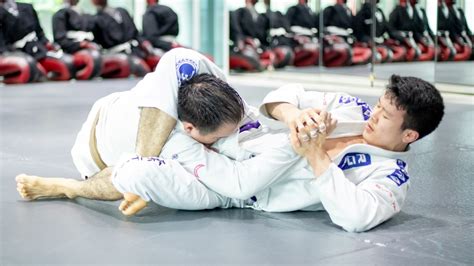
The second Infinity Drill focuses on stripping the hands from the hips, maintaining wrist control, and setting up submissions. This drill enhances your defensive and offensive capabilities in BJJ.
- Hand Stripping: Starting from the bottom position, use the momentum of bridging (upa) to create space and strip your opponent's hands from your hips. This move should be synchronized with your hip movement to maximize efficiency.
- Maintaining Control: Once you've removed their hands, secure their wrist and transition to an over-the-shoulder grip. This control is crucial for setting up the next series of moves.
- Submission Attempts: With control over one arm, you can attempt submissions like the kimura. If your opponent counters by hugging you, transition to a hip bump sweep by sliding up and using your momentum to reverse the position.
- Continuous Flow: The drill emphasizes the continuous flow between different techniques, showcasing how BJJ practitioners can transition from defensive to offensive positions seamlessly.
- Repetition and Fluidity: Repeat the drill, focusing on the fluidity of movements and the transition between techniques. This repetition helps in building muscle memory and a deeper understanding of the mechanics of each move.
Building a Sustainable BJJ Training Routine
Brazilian Jiu-Jitsu is a marathon, not a sprint. Whether you're a beginner or a seasoned practitioner, the key to long-term success lies in building a sustainable training routine that balances intensity, recovery, and personal growth. Progress is about consistency, not just intensity. The first step to building a sustainable routine is setting realistic, achievable goals.
Key Elements of a Sustainable Routine
- Realistic Goals: Think about where you want to be in 6 months or a year.
- Consistency: A sustainable routine balances training, recovery, and life outside the gym. Adjust this schedule based on your fitness level, recovery needs, and personal commitments.
- Recovery: Recovery is just as important as training. Without proper rest, your body can’t repair and grow stronger. Aim for 7-9 hours of quality sleep per night. Fuel your body with nutrient-dense foods and stay hydrated. If you’re feeling fatigued or sore, take an extra rest day.
- Cross-training: Cross-training can improve your overall fitness, prevent boredom, and reduce the risk of overuse injuries. Build functional strength with compound movements like squats, deadlifts, and pull-ups.
Mindset and Long-Term Progress
Your mindset plays a huge role in your long-term progress. BJJ is a challenging art, and setbacks are inevitable. Focus on small improvements rather than immediate results. Treat every roll, whether you win or lose, as a learning opportunity. Keep an open mind and be willing to learn from everyone, including lower belts. Everyone’s journey is different.
To avoid plateaus and burnout, consider periodising your training. BJJ is not just about physical progress-it’s also about community and enjoyment. Don’t forget why you started BJJ in the first place. Building a sustainable training routine is about finding the right balance between effort and recovery, consistency and flexibility, and intensity and enjoyment.
The Significance of Timing and Rhythm in BJJ
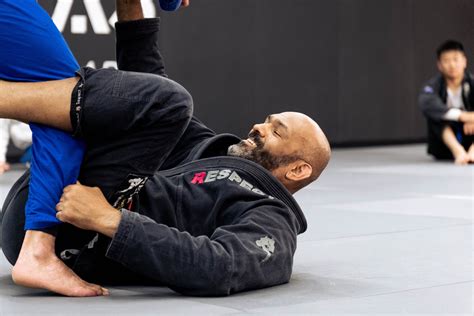
Brazilian Jiu-Jitsu is often described as a physical game of chess, where strategy, technique, and precision are paramount. However, one of the most under-appreciated aspects of BJJ is the role of timing and rhythm. These elements are the invisible threads that weave together effective techniques, seamless transitions, and successful submissions. Timing and rhythm are the backbone of fluid, efficient movement in Brazilian Jiu-Jitsu.
Many elite BJJ practitioners and MMA fighters have mastered the art of timing and rhythm. Marcelo Garcia is renowned for his seamless transitions and ability to chain techniques together. His success lies in his impeccable timing-he knows exactly when to shift his weight, change grips, or attack a submission. Demian Maia’s BJJ and MMA careers are built on his ability to control the pace of a match. His timing allows him to methodically advance positions, while his rhythm keeps his opponents guessing. The Miyao brothers are known for their relentless guard passing and explosive movements. Their success comes from their ability to time their passes to their opponent’s breathing and movement patterns.
Developing Timing and Rhythm
- Drilling: Drilling is the foundation of timing and rhythm.
- Observing Opponents: Every opponent has a unique rhythm-their breathing patterns, movement speed, and reaction times. Pay attention to when your opponent inhales and exhales.
- Situational Sparring: Situational sparring is one of the best ways to develop timing and rhythm.
- Live Rolling: Live rolling is where timing and rhythm truly come into play. Set a timer and challenge yourself to attack or transition every 10-15 seconds.
- Breathing: Your breathing is the foundation of your rhythm.
- Study High-Level Competitors: One of the best ways to improve your timing and rhythm is to study high-level competitors.
Harnessing the Flow State in BJJ
Brazilian Jiu-Jitsu is as much a mental art as it is a physical one. The concept of the flow state, popularised by psychologist Mihaly Csikszentmihalyi, refers to a mental state in which you are fully absorbed in an activity, experiencing a sense of timelessness, heightened focus, and peak performance. Achieving flow state requires a combination of mental preparation, physical readiness, and the right environment.
Flow state thrives on clarity. Before stepping onto the mats, set specific, achievable goals for your session. Flow state is most accessible when you’re fully present in the moment. Instead of worrying about winning or losing, focus on the process-your breathing, your movements, and the techniques you’re applying. Deep, controlled breaths help calm your nervous system, improve focus, and maintain energy levels. Flow state requires uninterrupted focus. Flow state occurs when there’s a balance between challenge and skill. If a task is too easy, you’ll get bored; if it’s too hard, you’ll feel anxious.
Techniques to Achieve Flow State
- Mindfulness: Pay attention to the sensations of rolling-the grip of your opponent, the pressure of your movements, the sound of your breath.
- Visualisation: Before training or competing, visualise yourself performing techniques flawlessly and staying calm under pressure.
- Enjoyment: Approach your training with a sense of curiosity and playfulness. Celebrate small victories, like hitting a new technique or surviving a tough roll.
Flow is about moving with intention, adapting to challenges, and finding harmony between effort and ease. The flow state is a powerful tool for any BJJ practitioner looking to elevate their mental game. By setting clear goals, focusing on the process, controlling your breathing, and embracing mindfulness, you can tap into this state of peak performance and enjoyment.

Additional Considerations for BJJ Training
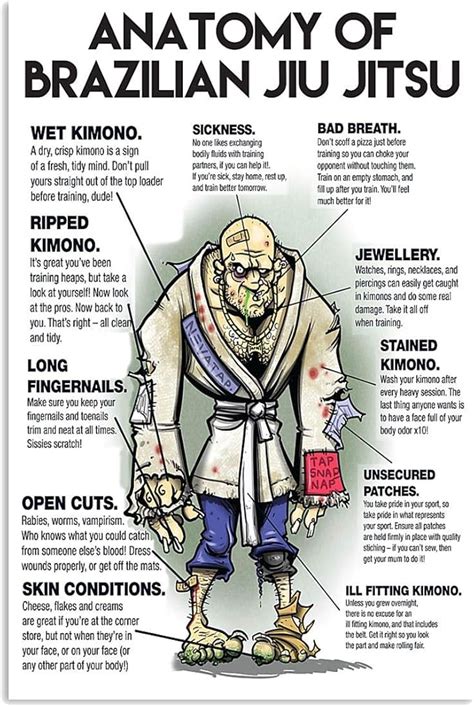
Grappling is an intense, close-contact sport that demands not only physical skill but also a strong sense of responsibility toward your training partners and yourself. One of the most overlooked yet critical aspects of training is maintaining good hygiene. Poor hygiene can lead to skin infections, unpleasant training experiences, and even long-term health issues.
Essential BJJ Gear
When it comes to Brazilian Jiu-Jitsu (BJJ), the right gear can make all the difference. Whether you’re a seasoned practitioner or just starting out, investing in high-quality BJJ gear is a game-changer. Not only does it enhance your training experience, but it also boosts your performance on the mats. Whether it’s your gi, rash guard, spats, or no-gi shorts, keeping your gear clean and well-maintained is crucial for performance, hygiene, and longevity.
| Aspect | Description |
|---|---|
| Hygiene | Maintaining cleanliness to prevent skin infections |
| Gear Maintenance | Keeping gear clean and well-maintained for performance and longevity |
| Flow Rolling | A training method to improve technique and fluidity |
| Sustainable Training | Balancing training, recovery, and life to avoid burnout |
tags: #continuous #flow #bjj