Heavy bag and speed bag training are essential components of boxing and martial arts, offering a range of physical and technical benefits. Selecting the right bag depends on your training goals.
Choosing the right punching bag is essential for maximizing your boxing or martial arts workout.
Training bags are your workout partner.
Let's explore the advantages of each type of training.
Heavy Bag Training
Heavy bags are ideal for building power and endurance. For the seasoned warriors seeking the ultimate workout, a heavy bag weighing a hundred pounds or more will put your strength and stamina to the test.
Read also: Choosing the Right Everlast Bag
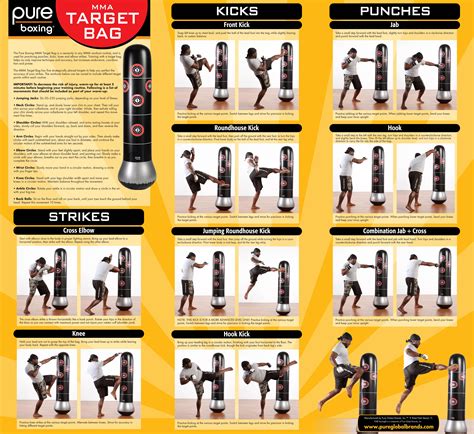
Lighter heavy bags ranging from 40 to 80 pounds are less strenuous and are perfect for speed training. Remember, selecting the appropriate weight is crucial for your training goals and physical capabilities.
Technique and Conditioning
Heavy bag training helps develop proper punching technique, power, and overall conditioning. Striking the heavy bag feels (and sounds) sooo good and is a great power and endurance developer.
Here's an example of a heavy bag training session:
- 10 minutes of soft tapping of the knuckles on the bag with various strikes (linear punches, back fists, hooks). This serves as a preparation exercise.
- 10 minutes of low impact striking.
- 5 minutes of heavy combos.
The total time of this will vary depending on how soon I bruise and the amount of rest that I take between striking.
The Perfect Heavy Bag Boxing Workout for Beginners w/ Olympic Boxer
Potential Issues and Injuries
Training too frequently without proper protection can lead to injuries. I had to stop hitting the heavy bag hard after 4 months of hitting it without gloves. It turns how that as I got stronger I was able to penetrate the bag more which is good in a sense but bad in terms of conditioning.
Read also: Punching Bag and Gloves Guide
When I hit the bag now, it wraps around my fist instead of just landing on the knuckles that I'm striking with. The wrap around damages the other knuckles that I don't use when doing linear or hook punches. Eventually those knuckles would be conditioned as well but there's now real reason to have conditioned and deformed knuckles.
To avoid injuries, consider the following:
- Reduce training frequency.
- Use wraps and gloves.
- Focus on harder spots on the bag.
Without wraps and gloves you cannot train with the same intensity as if you are training for a competition with wraps and gloves and nine rounds.
It's abrasive but not much movement and it only happens with my hardest hits. As my fist sinks into the bag it tightens around my fist and it's bruising the side of the middle finger knuckle. The joint that is affected is the Proximal interphalangeal joint. It only happens on my right hand because my right hand hits harder than my left.
Injuries are bound to happen in training. The key is to keep them at minimal. Me breaking my wrist or fingers on a heavy bag would be a unacceptable training.
Read also: Choosing the Right Everlast Punching Bag
Speed Bag Training
Speed bag training is good for more than just making you look like a workout pro, though! You’ll unlock tons of fitness benefits from this training. Boxers love speed bag training for the skills it helps them build, but you don’t need to plan on entering the ring to enjoy these attributes!
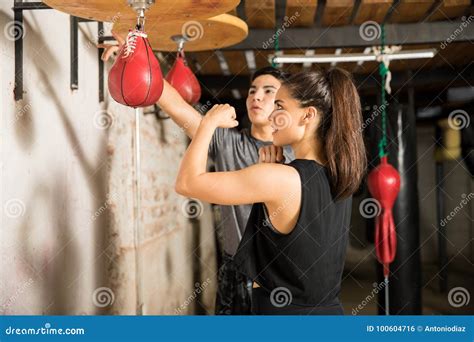
For those focusing on speed, agility, and precision. A cardio reflex striking bag is the ideal choice. The rapid and responsive rebounding with each strike allows you to develop your defensive reflexes.
Speed bag training is also a great arm and shoulder workout for toning! You’ll pick up the technique more and more each time you train, and nothing kills the desire to learn faster than measuring oneself against others.
Here's how to get started with speed bag training:
- Start with one hand and build up a rhythm.
- Strike the bag once with your right/lead hand.
- Let the bag swing back and hit the back of the platform, then swing forward, then backwards once more.
- Strike the bag with your right/lead hand.
- Let it swing back and hit the back of the platform, then swing forward, then back once more.
- Immediately switch hands as it swings forward and strike it with the left/back hand.
Once you feel comfortable, practice mixing up the order of your strikes even more. Other basic patterns include Right, Right, Left; Left, Left, Right; and Right, Right, Left, Left.
Eventually, you’ll start hitting the speed bag after its first bounce off of the back of the platform instead of the second. At least your sense of physical timing.
Gloves and Equipment
You can train on a speed bag without needing any kind of gloves. The best gloves for speed bag training will be lightweight and with a slender profile.
Unless you’re familiar with using speed bags for training, it’s best to stay away from high-ounce bag gloves or boxing gloves. These bulky gloves are great for sparring and heavy bag work, but their size can obscure your vision when training on a small target like a speed bag.
Choosing the Right Bag
Selecting the right type of bag depends on your training goals.
| Bag Type | Weight | Benefits |
|---|---|---|
| Heavy Bag | 40-80 lbs | Speed training |
| Heavy Bag | 100+ lbs | Strength and stamina |
| Reflex Bag | N/A | Speed, agility, and precision |