Wrestling, mankind’s oldest and most basic form of recreational combat, traces its origins back to the dawn of civilization.
The first real traces of the development of wrestling date back to the times of the Sumerians, 5000 years ago. The Epic of Gilgamesh written in cuneiform, the sculptures and the low reliefs, are numerous sources that reveal the first refereed competitions, accompanied by music.
Carvings and drawings estimated to be between 15,000 and 20,000 years old, found in caves in southern Europe, illustrate wrestlers in hold and leverage positions.
Sumerians cast wrestlers in bold relief on stone slabs at least 5,000 years ago, antedating all other artifacts of ancient sport.
A small bronze statuette of wrestlers, apparently used as a vase, was unearthed in the ruins of Khafaji, 200 miles from Baghdad. This artifact, dated 2600 B.C., now is housed in the Iraqi national museum.
Read also: The fighting style of Chuck Norris
There are also many historical and archaeological traces of wrestling in Ancient Egypt. Among them, it is worth mentioning in particular the drawings discovered in the tombs of Beni-Hassan representing 400 couples of wrestlers.
No archaeological excavation or historical document has depicted wrestling so completely and so technically correct as have drawings in the temple-tombs of Beni Hasan in middle kingdom Egypt. Hundreds of drawings there demonstrate clearly that most contemporary wrestling holds were performed in ancient Egypt.
In fact, the maneuvers depicted are more closely related to the present-day sport than are those of such modern variants as sumo, kokh, glima, et al.
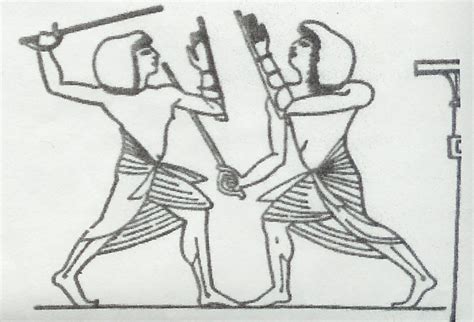
Wrestling scene from the tomb of Ptahhotep
Wrestling in Ancient Greece and Rome
For the Greeks, wrestling was a science and a divine art, and it represented the most important training for young men.
Read also: List of Tekken Characters' Fighting Styles
Athletes wrestled naked, with their bodies coated with olive oil and covered with a layer of very thin sand to protect the skin from sunlight or from cold during winter. After wrestling, they scraped this layer off with an instrument called strigil and washed themselves with water.
Fights were similar to those of freestyle wrestling, as shown by drawings and inscriptions from that time. During the Ancient Olympic Games, from 708 B.C., wrestling was the decisive discipline of the Pentathlon.
Wrestling matches were described by the Greek poet Homer, and wrestling became the final and decisive event of the pentathlon, the five-fold contest of the Greek public games. The poet Pindar describes how the gods Zeus and Cronus wrestled for possession of the universe along the river Alpheus at Olympia.
Zeus was victorious, and Olympic festivals dating from the Eighth Century B.C. commemorated his triumph. Wrestling was the most popular event in the ancient Greek Games, and lists of Olympic wrestling winners have been recorded since 708 B.C.
One of the most famous of the Greek wrestlers was the philosopher, Plato, who won many prizes for wrestling as a young man. His real name was Aristocles, but because of his success, he was given the name Plato, meaning ”broad shoulders.”
Read also: Native American Martial Arts
In fact, it was the last discipline to be held - after the discus, the javelin, the long jump and the foot race - and it designated the winner of the Pentathlon, the only crowned athlete of the Games. The most famous of all wrestlers was Milon of Croton (student of the philosopher Pythagoras), six times Olympic champion (from 540 to 516 B.C.), ten times winner of the Isthmic Games, nine times winner of the Nemean Games, and five time winner of the Pythic Games.
Wrestling in Roman Times was developed on the basis of the legacy of the Etruscans and the restoration of the Greek games. Wrestling was the favourite sport of young aristocrats, soldiers and shepherds. According to Classius Dion, the palestra was at the origin of the military success of the Romans.
The greatest popularity of the Olympic Games was during the period of the ”five good emperors” in Rome, around 125 A.D. With the expansion of the Roman Empire, the contests spread across Europe.
Pankration: Ancient Greek Wrestling
The Middle Ages and Renaissance
In 393, Emperor Theodosius I prohibited all pagan games and outlawed the Olympic Games. Olympic Values sank into the dark Middle Ages, but they were always latent, without ceasing to exist.
During Middle Ages and Renaissance, wrestling was practiced by the social elite, in castles and palaces. Numerous painters and writers celebrated wrestling and encouraged its practice : Caravaggio, Poussin, Rembrandt, Courbet, Rabelais, Rousseau, Montaigne, Locke, etc.
During the Napoleonic period, the French developed a style which today is identified as Greco-Roman. No hold on or with the legs is permitted, nor is tripping allowed.
It was in this era that the ”catch-as-catch-can” style - forerunner of modern freestyle - developed. The style was completely free, with no holds barred on any part of the person or garments of the opponent.
Modern Olympic Wrestling
The attempts made to restore the Olympic Games were numerous, but it was not until 1896 that they were re-established by Baron Pierre de Coubertin.
After the creation of the International Olympic Committee in 1894, the development of new international sport federations and Olympic committees were accelerated. The first Olympic Congress took place in 1894 at « la Sorbonne » and decided of the ten sports that would be part of the Olympic program : athletics, wrestling, rowing, cycling, fencing, gymnastics, weightlifting, swimming, shooting and tennis (see the congress minutes).
During the wrestling tournament in Athens, there were no weight categories and all five competitors wrestled under rules similar to those of the professional Greco-Roman wrestling. The matches lasted until one of the competitors won. It was allowed to interrupt and resume the matches on the following day. The first Olympic champion - the German athlete Schumann - who was not a trained wrestler, was also the winner of horse jumping and parallel bars.
In 1904, freestyle wrestling was first introduced during the St. Louis Games and was only disputed by American wrestlers. It was only during the fourth Olympic Games held in London in 1908 that competitions were organized for both styles.
At the Stockholm Olympic Games in 1912, freestyle wrestling was again absent from the program and glima competitions (Icelandic wrestling) were organized. Wrestling matches took place on three mats in the open air. They lasted one hour, but finalists wrestled without limit of time. The match which confronted the Finnish wrestler Alfred Johan Asikainen and the Russian Martin Klein lasted 11 hours and 40 minutes and appears on the Guinness Book of Records.
Both wrestlers, having the same score, were separated by two periods of three minutes of ground wrestling. The Russian finally defeated the Finnish who weighed 8 kilos (17.64 lbs) more than he did. From this date, and encouraged by the newly created International Federation, wrestling developed in every country.
Northern Europe countries maintained during many years the monopoly of Greco-Roman wrestling, whereas freestyle wrestling was largely dominated by the English and the Americans. In Amsterdam, in 1928, the Egyptian wrestler Ibrahim Mustafa was the first African wrestler to win an Olympic title. The Japanese Shohachi Ishii won the first Asian title at the Olympic Games in Helsinki, in 1952.
A hundred years after the introduction of freestyle wrestling in the Olympic program, worldwide wrestling entered a new era with the acknowledgement of female wrestling as an Olympic discipline on the occasion of the Athens Games in 2004.
Professional Wrestling
Professional wrestling began in France around 1830. Wrestlers who had no access to the wrestling elite, formed troupes that travelled around France showing their talent. Wrestlers thus frequented wild animals’ exhibitors, tightrope walkers and bearded women.
Showmen presented wrestlers under names such as “Edward, the steel eater”, “Gustave d’Avignon, the bone wrecker”, or “Bonnet, the ox of the low Alps” and challenged the public to knock them down for 500 francs. In 1848, French showman Jean Exbroyat created the first modern wrestlers’ circus troupe and established as a rule not to execute holds below the waist. He named this new style « flat hand wrestling ».
Upon Mr. Exbroyat’s death in 1872, Mr. The French influence extended to the Austrian Hungarian Empire, to Italy, to Denmark and to Russia and the new style circulated under the name of Greco-Roman wrestling, classic wrestling or French wrestling.
Professional wrestling matches were thus organized everywhere in Europe with variable programs and competition rules according to the taste of wrestlers, of managers and of the audience. In 1898, the Frenchman Paul Pons, also named “the Colossus”, was the first Professional World Champion just before the Polish Ladislaus Pytlasinski.
At the end of the 19th century, professional wrestling was the most in vogue sport in Europe, but it started to degrade from 1900 because of the pre-arranged matches, the announcement of forgery, false victories and false nationalities of the competitors. The rediscovery of Olympic amateurism encouraged the creation of numerous clubs and schools that finished professional wrestling off.
However, from a historical point of view, professional wrestling has its indisputable merits.
Styles and Rules
Wrestling clearly has no single point of origin.
More than 160 traditional or ”folk-lore” variants are recognized by the International Amateur Wrestling Federation. In the Soviet Union, for example, it was a practice to organize spectacular championships and exhibitions of folk-lore wrestling, such as ”tchidaoba” from Georgia, ”kokh” from Armenia, ”gulech” from Azerbaidjan, ”kurach” from Uzbekistan, ”kurek” from Kazakhstan, et al.
Great Britain developed styles referred to by the parts of the country in which they originated: Cumberland, Westmoreland, Cornwall and Lancashire. In the Cumberland style, if the starting hold is lost, or if any part of the body except the feet touches the ground, the contestant loses.
The Cornwall-and-Devon style starts from the upright position and ground wrestling is prohibited. In Switzerland, a popular style is ”schwingen” where special pants are used, with a strong belt that is gripped at the start of the contest.
A style called ”glima” is popular in Iceland, and the wrestlers there are equipped with belts for grasping. Japanese sumo, perhaps the best known and most stylized of all the folk-lore styles of wrestling, determines a winner when the opponent is thrown to the ground or forced outside the boundaries of the mat. There are no weight classes in sumo, and the contestants often attain 350 to 450 pounds.
Modern wrestling is a highly instinctive sport that requires strength, alertness, resiliency and, above all, agility and quickness. Olympic and World championships are conducted in two separate styles, freestyle and Greco-Roman. International competition is governed by United World Wrestling.
The 10 weight classes for men range from 55 kilograms (121.25 pounds) to 130 kg (286.601 pounds) in Greco-Roman and men's freestyle and 50 kg (110.23 pounds) to 76 kg (167.55 pounds) in women's freestyle. USA Wrestling (originally the U. S. Wrestling Federation) is the national governing body and international delegate for the sport in this country.
As part of its responsibilities for education and for promotion of the sport, USA Wrestling conducts national championships each year in folkstyle, freestyle, Greco-Roman and women’s wrestling, presents an extensive series of clinics on coaching, officiating and sport medicine, and produces a large number of books, films and video tapes.
As many as 70 regional and national tournaments are conducted annually for various age groups starting at age 9. Such competition usually is wrestled under international rules, subject to modifications adopted for the health and safety of young wrestlers. Some of these events determine the lineup of United States teams competing against national teams of other countries.
Today’s wrestling mat is 4 to 6 cm (approximately 2 inches) thick and made of a foam core plastic with a smooth, bonded cover that is easy to clean with disinfectant. The center wrestling area is 7 meters in diameter and is surrounded by a 1-meter wide band called the ”passivity zone.”
Effective with the 1989 season, each bout now consists of a single 5-minute competition, with no rest period. The bout starts with the wrestlers on their feet, facing each other 1 meter apart. If the wrestlers step into the ”passivity zone” with no action in progress, they are returned to the center for a fresh start. Each bout is directed by three officials - a referee, judge and mat chairman. At least two officials must agree on any decision.
The five-minute bout can be cut short by a fall, by one wrestler opening a lead of 10 or more points over his opponent, or by disqualification for illegal holds or for misconduct. A fall occurs when a wrestler’s shoulders are pinned to the mat for one-half second.
The winner of a bout which lasts the full 5 minutes is determined by points awarded for successful execution of specific maneuvers - such as takedowns (bringing the opponent to the mat from a standing position), reversals, near falls (turning the opponent’s shoulders toward the mat at an angle of less than 90 degrees), and a variety of throws to the mat.
To be credited with a victory, a wrestler must have scored at least 3 points by the end of the regulation period. If he has not, or if the score is tied at any number, the bout goes into a 3-minute overtime period. If either wrestler earns a victory after the start of the overtime, the bout ends immediately. If neither has qualified by the end of the extra 3 minutes, the officials choose the winner.
Once a wrestler has taken his opponent to the mat, he is given the opportunity to continue in ”par terre” position (on the ground) and to attempt to turn his opponent’s shoulders into a ”danger” position - past 90 degrees. If it becomes evident to the officials that he will not succeed quickly, the wrestlers are returned to the standing position. No points are scored merely for controlling the opponent.