Starting Brazilian Jiu-Jitsu (BJJ) can be an exciting yet nerve-wracking experience, especially if it’s your first time on the mats. Whether you’re looking to get fit, learn self-defense, or simply try something new, proper preparation can help ease the nerves and set you up for success. This is the second article in the series BJJ Ultimate Guide: A Beginner’s Roadmap to Brazilian Jiu-Jitsu. Now that you have decided on a few BJJ schools worth visiting, it is time to schedule your trial class. You might feel a mix of anticipation and nerves.
Rest assured, there’s no reason to be scared if you have done your homework and selected the best places near you. It is a great opportunity to know more about them and let them know more about you and your goals. If you have signed up for your first Brazilian Jiu-Jitsu class, it is natural to feel excited and have many questions. Thus, in this blog, we will provide you answers to all these concerns, ensuring you’re fully prepared for the start of your BJJ journey. Get rid of those first class jitters with these tips on how to get through your first bjj classDoing anything for the first time is daunting!
You’re in your own head, thinking about everything that needs to go right, not embarrassing yourself and just surviving. This is definitely true for your first jiu-jitsu class. We’ve all been through this feeling both on and off the mats. But I’m here to help you get through the class and help you shake off those nerves.
My first jiu-jitsu class was awkward for a few reasons: I wasn’t dressed to grapple, I was the only woman in the gym, and I moved clumsily. I lucked out because it was almost like a private class so no one except the gym owner had to experience my awkwardness up close. I got through it and started a now (as I write this) 10-year love-hate relationship with Brazilian jiu-jitsu. I hope you’ll feel more comfortable than I did in my first BJJ class, so the following is how a class goes and how you’ll feel during it.
Your First Brazilian Jiu-Jitsu Class: What to Expect & Tips for Beginners
Pre-Class Preparation
Proper preparation is key to a successful first BJJ class. Here's what you need to do before heading to the gym:
Read also: Mike Tyson's First Loss
- Hygiene:
- Hygiene is crucial- ensure you shower before any BJJ class, trim your nails, and brush your teeth.
- You cannot train in jiu-jitsu if you have long nails at your hands and feet.
- When grappling, long sharp nails are likely to slice your opponents and cause infection.
- That isn't only about making others uncomfortable with nicks and cuts.
- Any open wound can become a breeding ground for infections such as ringworm and staph.
- Nutrition and Hydration:
- Eating a light, balanced meal about 1-2 hours before your BJJ class is recommended; focus on easily digestible foods like fruits, vegetables, and lean proteins to fuel your body without feeling sluggish.
- Staying hydrated is equally important, so drink plenty of water throughout the day.
- You'll require hydration after a sparring session!
- Attire and Gear:
- If you’re attending a no-gi class, wear something flexible, such as athletic shorts and a moisture-wicking T-shirt.
- For gi classes, you’ll need a gi (which you can typically borrow for your first class), so make sure you feel comfortable moving in it.
- Most BJJ schools will provide you with a clean uniform for your trial, but it’s a good idea to check in advance.
- When you're ready to attend the first session, you'll have to determine what to wear.
- It's unnecessary to wear a Brazilian Jiu-Jitsu Gi for your test class.
- Shorts, a t-shirt, or a surf rash guard are usually enough.
- It is important to try and avoid wearing clothes with pockets, belt loops, pockets, or loose fabric.
- They are risky as toes and fingers can get trapped in them.
- Other Essentials:
- Also, get some flip-flops to be used off the mats.
- Flip Flops: You are required to wear shoes any time you need to get off your mat for any reason.
- Flip flops are easy and simple to wear and take off.

Arriving at the Gym
What you do upon arriving to your first day of class is probably going to widely vary depending on the gym.
- Punctuality:
- Aim to arrive on time in your first BJJ class, ideally a few minutes (15) early, to familiarize yourself with the gym.
- Arriving 15-20 minutes early gives you time to sign in, meet the instructor, and stretch before class begins.
- When you arrive for your first BJJ class, it’s a good idea to get there about 10-15 minutes early.
- That way, you’ll have time to sign the waiver form, borrow a uniform if needed, and shake off any first-day nerves.
- Introduction:
- Introduce yourself to the instructor and front-desk employee.
- It is a great opportunity to know more about them and let them know more about you and your goals.
- Even if you have already signed a waiver, they may have you sign another one if you are talking to a different person.
- Once you’ve introduced yourself to the front desk, they should explain what to do next.
- Some gyms require you to take a private lesson with an instructor, while some gyms will have you jump into a full class right away.
- Inform the Instructor:
- Inform them of any existing injury and also any mental health condition or disability.
- Often, parents hide the fact that their children have a special condition, which does not benefit the instructor at all.
- Ask Questions:
- Use the minutes you arrived earlier to ask questions.
- As much as you know, less anxiety you feel.
- If you’re unsure about something, don’t hesitate to ask your instructor for clarification.
- After your first training session, there's a chance you'll have additional questions.
- If you have any questions, do not hesitate to contact your jiu-jitsu teacher.
- Community:
- When you arrive at the chosen BJJ gym, you’ll likely be greeted by friendly faces.
- It’s common for beginners to feel a bit intimidated, but remember, everyone started where you are now.
- The community is typically welcoming and supportive, eager to help newcomers.
- They see you as someone who will add to the team, making it better and stronger down the road.
What to Expect During Your First BJJ Class
Here’s the Order of a Jiu-Jitsu Class:
- Warm-up
- Techniques
- Positional Sparring
- Open Mat
Warm-Up
A typical BJJ class begins with a warm-up. This might include jogging, stretching, and basic movements to prepare your body for training. Pay attention to these exercises; they are crucial for preventing injuries and improving your overall fitness. If you are out of shape do not worry, do it at your own pace, you are not trying to prove anything to anyone. It is normal to struggle with some of the drills. Do not worry, you might do this daily and you will learn. For kids, observe if they have classes according to age brackets and skill levels.
Brazilian Jiu-Jitsu refers to a martial art focused on submission and wrestling. If you have poor fitness, you may discover that this sport is more physically demanding than you might have thought. You will discover that BJJ warm-ups are very important. Certain gyms adhere to a specific program and begin with the same warm-up routine. It could be a sequence of movements or drills that include a full-body routine or even a mixture of exercises. In addition, the purpose of the class could also determine the way to warm up. For instance, in classes focusing on a takedown, they might use pummelling (a wrestling exercise) to warm up. Particularly on the first day, be prepared to not know the sport’s rules. Don't be concerned about looking awkward.
Techniques
During your first BJJ class, the instructor will likely focus on the fundamentals of BJJ techniques. Expect to learn basic positions like self-defense moves, the guard, mount, and side control, as well as simple submissions and escapes. It’s common in a BJJ class to be paired with higher-ranked students, especially as a beginner. This is beneficial because experienced practitioners can guide you through the techniques and ensure you’re practicing them correctly. Take this opportunity to observe the class environment. Notice how the more experienced students move and interact. This can provide valuable insights into the culture and etiquette of BJJ.
Read also: The Dawn of UFC
Next, it’s time to learn some techniques. Some gyms have the luxury of having a separate beginner class where you will learn every basic technique and solidify them as you go into your BJJ journey. But, if you’re in a class where everyone is learning everything at the same time, don’t worry. A great coach will break down all the moves to make it understandable for beginners. In addition, the coach will make sure you’re partnered up with an experienced upper belt. Depending on the length of the class, you will learn three to four techniques which are all connected in some way. While you’re drilling or practicing the techniques, the coach will pay extra attention to you to make sure you understand.
Rolling and Sparring
In some BJJ classes, there might be a sparring session, known as “rolling.” As a beginner, you might not participate in this initially, but it’s good to watch and learn. If you do roll, go slow, and focus on the techniques you’ve learned. It’s perfectly fine to tap out if you’re in an uncomfortable position-this is a part of the learning process. Instead of sparring, you may be put to do some specific training, where you study or practice the situation of the class with resistance. It is a safe way to start.
Rolling is similar to drilling, except you are no longer focusing on the technique-of-the-day, and you are open to freely try to wrestle and submit each other. If this is your first class, the coach may not yet want to try any submissions. If you know nothing about BJJ, you may not even know any submissions--or even know what a submission is. A submission refers to a technique that simulates breaking, tearing, or choking the opponent. The idea is that if you get a hold of a submission, you hold it just before any actual damage is done, and your opponent taps the mat in concession that you got them. This way, you can simulate a fight without actually hurting each other (hopefully). You should expect to be exhausted after your first sparring sessions, but don’t worry, it will get easier.
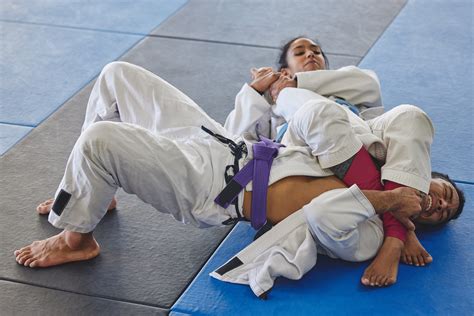
Positional Sparring
Positional sparring is the best part of the class (in my opinion). It gives you an opportunity to practice the techniques you learned in class in real life. This is the time to recall some of details the coach mentioned during class. Positional Sparring can be quite intense, but my tip is to try and focus on what you learned and not spaz out. Instinct is great but sometimes you can injure someone. In some cases, the coach will just have first timers do some more drilling depending on your comfort level.
Open Mat
This is also a time that you can get to know some of the other people at the gym. You’ll get a mix of personalities, including some people who can’t be bothered to talk to beginners (just being honest). But most people are friendly and will want to get to know you.
Read also: The story of Mike Tyson
What is Expected of You During A BJJ Class
Like anything else you do for the first time, you’re going to be going through a lot of emotions. Add these emotions to the fact there will be a lot going on. Here are some of the things you should expect and that will be expected from/of you during your first Brazilian jiu-jitsu class.
- That You’ll be Confused and Nervous
- These feelings are the most suboptimal feelings to have doing anything.
- You will be doing movements that your body may not be used to and of course you don’t want to mess them up.
- But, of course this is okay! It's going to happen.
- To Get A Lot of Attention
- While you feel awkward doing these body movements, you’re going to have the coach paying a lot of attention to you to make sure you understand the movements and why you’re doing them, as well as to make sure you don’t get hurt.
- Also, I won’t lie, the students who come are going to be watching you too out of curiosity.
- To Be Partnered up with an Upper Belt
- If the jiu-jitsu class you’re attending is big or if there are many beginners in attendance, the head coach might pair you up with an upper belt to make sure you’re getting attention and that someone can guide you the right way.
- If you come with a friend, the main coach will most likely split you up so you can learn with another upper belt just so there isn’t a “blind leading the blind” situation.
- That You’ll Respect All the Rules, The Coaches, and Your Teammates
- You are a paying customer, and you’ll get all the training you need to be successful in jiu-jitsu as long as you keep coming.
- But, there are gym rules and etiquette that everyone needs to follow.
- It’s important to know that you should check your ego at the door when you come in.
- No one is better than the rules or anyone else.
- Just keep in mind the rules set by the gym owners and coaches are there to make sure you and the other people training there are safe.
BJJ Class Etiquette
BJJ has a rich culture built on respect, discipline, and community. Greet your instructor and fellow students with a smile, and be respectful of the mat and everyone around you.
- Every gym has a different culture and standards when it comes to tradition.
- You may find members bowing before entering and leaving the mat, lining up by belt level, or referring to black belts as “professor”.
- Every gym is different, so don’t be afraid to ask questions!
First BJJ Class Tips
I know that there is a lot that goes into a BJJ class and a lot to think about. But here are some tips on how you can have a successful first class and be excited for the next one.
- Don’t Go Crazy
- You are new to a combat sport where people do get injured.
- That being said, try not to do so much crazy and spazzy movements in your first class.
- Just try your best to remember the moves taught in the class and of course go an instinct when it comes to defending yourself in positional sparring.
- Don’t be Afraid to Talk and Ask Questions
- As I mentioned before, the coaches and even students at the gym are there to help you.
- If you have any questions, don’t be afraid to ask the coach or someone else.
- It doesn’t help anyone if you keep your thoughts to yourself.
- You’re not detracting from anyone else’s experience.
- In fact, by asking a fellow student how to do something (pending on how long they’ve been training), it helps them figure out their own understanding of the technique.
- In addition, if you ask the question out loud during the class, your question might be something someone had a question about but was too afraid to ask.
- Just make sure you’re not talking when the coach is talking.
- You Might Bruise or Feel Sore
Injury Prevention and Management
BJJ is a physically demanding sport, so it's essential to listen to your body and know your limits. Tap early and tap often during live rolling to avoid injuries from joint locks or chokes. Always communicate with your training partners and let them know if you're uncomfortable or need to take a break. Remember, safety always comes first.
In the event of an injury, it's crucial to properly address it to prevent further complications. Before you return to the mats, make sure your injury is fully healed. If you need to take an extended break from BJJ, invest the time in cross training with weights, running, or yoga so you come back strong, fast, and flexible. You may want to skip live rolling for your first class back to make sure you’re completely recovered from your injury.
Post-Class BJJ Hygiene
Cleanliness is an extremely important part of being a BJJ practitioner. When you start BJJ, you will find that you spend a lot of time showering, washing and drying your Gi’s, and organizing your gym wear in preparation for upcoming classes. You will likely end up with multiple outfits, which will result in a lot of laundry.
- Shower Quickly
- Even if you are at a small gym, there will likely be a number of people looking to shower after class is over.
- Before you jump into the shower, ask if there is anyone in line ahead of you.
- There may be an unofficial line that you weren’t aware of.
- When it’s your turn, you should be able to shampoo your hair, wash your body, and rinse off in around five minutes.
- Then, grab your towel, and dry off outside of the shower stall.
- This will allow the next person to jump into the shower while you get dry, and it will keep the line moving at a quick pace.
- That being said, if there is no one else in line for the shower, take your time and enjoy.
- Wear Your Clothes
- After class, don’t leave with your Gi or No Gi uniform still on.
- Even if you don’t shower until you get home, make sure you put your street clothes back on.
- This may seem like common sense to those who wrestled in high school, but it’s not actually something your average person may realize.
Signing Up
You found a BJJ school, tried a class, and decided to sign up. Awesome! Welcome to the BJJ world! Now it is time for some paperwork. When signing up for a Brazilian Jiu-Jitsu (BJJ) in a professional school, you will be asked to sign an agreement. This document outlines essential details such as pricing, fees, and cancellation policies. By carefully reviewing the agreement, you can avoid surprises and ensure a smooth, transparent relationship with your BJJ gym. It’s an important step to fully commit to your training while respecting the gym’s rules and procedures. At our BJJ schools, for example, the member receives a copy of the agreement and has a 5-day cooling-off period. We understand that it is hard to read it right after class.
Mindset and Expectations
Remember, it’s normal to feel that the BJJ techniques are difficult at first. For kids, it is important to realize they may not do everything perfectly in the very first BJJ class and that some adaptation time is needed. Above all, relax and enjoy your first BJJ class. Jiu Jitsu is not just about physical prowess, but also about mental growth and resilience. It’s a journey that requires patience and dedication. Each class is a step towards mastering this intricate martial art. If your body is too tense, and you are contracting every single muscle of your body, you won’t do the moves properly. Remember, you are not fighting (yet).
Also, BJJ is a journey, and as a beginner, it’s important to embrace the learning process. Don’t worry about mastering every technique in your first class. Focus on learning the basics and enjoy the experience.
- It's important to set realistic expectations for your BJJ journey.
- Progress in BJJ takes time and dedication, and it's normal to experience setbacks and challenges along the way.
- Celebrate your successes, no matter how small, and remember that every journey is unique.
Belt Hierarchy
In BJJ, practitioners are ranked based on their skill level and experience, represented by colored belts. As a beginner, you'll start as a white belt and work your way up through the ranks by attending classes regularly, learning and mastering techniques, and demonstrating proficiency in live rolling. Promotion times vary, but expect to spend 1 - 3 years at each belt.
Earning a black belt in Brazilian Jiu-Jitsu can be challenging and demands years of hard work, discipline, and dedication. Achieving a black belt in BJJ may take anywhere from 10 to 15 years. The very first jiu-jitsu lesson is designed to teach the principles of Brazilian Jiu-Jitsu.
| Belt Color | Typical Time to Achieve | Description |
|---|---|---|
| White | Beginner | Starting rank, focused on basic movements and positions. |
| Blue | 1-3 years | Developing fundamental techniques and strategies. |
| Purple | 2-5 years | Refining techniques and developing a personal style. |
| Brown | 3-5 years | Advanced techniques and strategic thinking. |
| Black | 5+ years | Mastery of BJJ principles and techniques. |
Your first BJJ class is just the beginning of an exciting adventure. Embrace the challenges, ask questions, and take in as much as you can during each class. Remember, every expert was once a beginner. With time, you’ll find yourself improving and becoming more comfortable on the mats.