If you've ever been curious about the roots of Brazilian Jiu-Jitsu or wondered why the Gracie name is so respected in martial arts circles, you're in the right place. The story of Gracie Jiu-Jitsu starts in the early 20th century with a man named Carlos Gracie. He learned traditional Japanese Jiu-Jitsu and Judo from a traveling Japanese master, Mitsuyo Maeda.
I’m excited to take you on a journey through the history of Gracie Jiu-Jitsu, a legacy that has shaped self-defense and combat sports worldwide. Whether you’re just starting out or looking to deepen your understanding, this story is packed with inspiration and practical insights.
Some historians believe Jiu-Jitsu is the oldest martial art, originating in India over 2,000 years before Christ. Buddhist monks developed the techniques, focusing on balance and leverage to avoid relying on strength or weapons for self-defense. As Buddhism spread, so did Jiu-Jitsu, reaching Southeast Asia, China, and eventually Japan, where it gained significant popularity.
But a martial art consists not only of techniques or fighting strategies. When we consider the philosophical framework of Jiu-Jitsu, it is reasonable to associate Buddhist monks in India around 2,000 B.C. Wrapped by important Buddhist principles like acting in a non-harmful way or pursuing self-mastering and enlightenment, Jiu-Jitsu served well the self-defense needs of monks.
In a country fragmented by the feudal system, with each feud having its own set of warriors (the Samurai), Jiu-Jitsu became a necessary fighting skill for combat survival. But Jiu-Jitsu did not earn this name until the 17th century. Jiu-Jitsu evolved among the Samurai as a method for defeating an armed and armored opponent without weapons. Because striking against an armored opponent proved ineffective, practitioners used their attackers’ energy against them rather than working to oppose that energy directly.
During the Tokugawa era (around 1800), societal changes in Japan, including the reduction of the Samurai warrior's status, led to a decline in the practice of Jiu-Jitsu. Samurai, no longer permitted to carry swords, relied on empty-handed combat techniques. By the 1900s, Jiu-Jitsu had become nearly extinct in Japan, surviving primarily in the sportive form of Judo.
Read also: Inside Renzo Gracie Milford
The radical political, cultural, and social transformations in Japan in the 19th century made Jiu-Jitsu gravitate from a reputable art of combat to an illegal practice. Kano also realized Jiu-Jitsu could be used as a powerful educational tool that could support any human being's development. Complementing his updated training philosophy, Kano made an effort to adopt new training methods and remove dangerous techniques. This new philosophical and methodological approach to the practice of Jiu-Jitsu had a significant positive impact on Japanese society. It helped Jiu-Jitsu regain its social status that had been declining since the Meiji Restoration.
To bring more notoriety and recognition to Kano Jiu-Jitsu, Jigoro Kano and the Japanese government began working towards adding it to the Olympic Games. As Kano Jiu-Jitsu evolved into the sport of Judo, many rules were introduced to redefine the focus of practice and make the sport more appealing to spectators. While the reforms of Jigoro Kano contributed tremendously to the survival of a millenary martial art tradition, the emphasis on take-downs created a fragmented martial art.
Among Kano's remarkable students, though, was Mitsuyu Maeda. After traveling to many countries, including the US, Central America, and Europe, Maeda landed in Brazil in 1914. In 1914 Maeda landed in the northern state of Para, Brazil, to help establish the Japanese colony in that region.
In the late 19th century, Jiu-Jitsu masters began emigrating from Japan, spreading their knowledge and competing in various countries. Esai Maeda Koma, also known as "Conde Koma," was one such master. In 1915, he arrived in Brazil to assist in establishing a Japanese immigration colony. There, he met Gastao Gracie, a Brazilian scholar and politician, who helped him in his endeavors. In gratitude, Koma taught Gastao's oldest son, Carlos Gracie, the fundamentals of Jiu-Jitsu.
The first time Carlos Gracie met Count Koma was one of these demonstrations. Carlos Gracie was a wild kid that was slipping out of control of his father, Gastão, and mother, Cesalina. Energetic and rebellious, Carlos was proving to be a lot of work to his parents. Carlos was introduced to Jiu-Jitsu at the age of 14. He became an avid student for a few years. The training under Maeda had a profound impact on him.
Read also: Personal Growth Through Jiu Jitsu
For the young and frail Carlos Gracie, Jiu-Jitsu became a path to personal improvement. He moved to Rio de Janeiro with his family and began teaching his brothers the techniques he learned from Koma. Together, they expanded their knowledge, developing innovative techniques and refining existing ones. In 1925, Carlos opened the first Gracie Jiu-Jitsu Academy in Rio de Janeiro.
Carlos Gracie was a strong advocate for no-rules competitions, where he discovered the importance of ground fighting. He and his brothers adapted and modified the techniques to suit their naturally weaker physiques. They also incorporated their philosophies of life and natural nutrition, with Carlos pioneering "the Gracie Diet" for athletes.
Arriving in Rio de Janeiro at 20, Carlos Gracie had difficulties adapting to everyday life and working a regular job. Carlos's wild spirit would not allow him to settle down. At the beginning of the 20th century in Brazil, the martial arts instructor's profession was not exactly promising. The passion for Jiu-Jitsu, and Koma’s earlier dedication to making him a champion, allowed Carlos to discover a new meaning to his life. At 23, Carlos Gracie understood well the excellent benefits Jiu-Jitsu could bring to one's life.
The Marquês de Abrantes school was not exactly what one would expect as the pioneering powerhouse of Gracie Brazilian Jiu-Jitsu. Carlos knew it would be impossible to accomplish such a gigantic task alone. With that house, however, Carlos united his brothers and engaged them in his life project. The first generation of Gracie brothers living and working in that same house forged the family spirit we still feel today.
Through competitions and street fights, they further refined their techniques, giving rise to what we now know as Gracie Jiu-Jitsu or Brazilian Jiu-Jitsu (BJJ). The Gracies' focus on ground fighting and submission techniques set them apart from other Japanese practitioners who emphasized takedowns and throws. This unique approach proved highly effective in the "Vale-Tudo" MMA style of fighting, revolutionizing professional fighting by demonstrating the power of ground combat.
Read also: Legacy of Excellence: Ralph Gracie Florida
Carlos Gracie viewed Jiu-Jitsu as a means to cultivate tolerance, respect, and self-confidence. He challenged renowned fighters of his time, often significantly larger than himself, to prove the art's effectiveness. The Gracie family's success in these challenges brought them recognition and prestige, contributing to the growing popularity of Gracie Jiu-Jitsu.
The Key Figures in Gracie Jiu-Jitsu
The Gracie family is a legendary lineage of martial artists who played a central role in shaping modern Brazilian Jiu-Jitsu (BJJ). Building on the foundation taught by Maeda, Carlos and Helio Gracie, along with other family members, adapted traditional techniques to emphasize leverage, control, and ground fighting, allowing smaller or less physically strong practitioners to defend themselves effectively. Through continuous refinement, practical testing in real combat situations, and strategic innovation, they created a system that became the cornerstone of BJJ and later influenced the global rise of Mixed Martial Arts.
Among the many influential figures in the Gracie lineage, one often overlooked name is Márcio “Macarrão” Stambowsky. A direct student of Rolls Gracie, Márcio is one of the first five black belts promoted by Rolls-a true honor in the Gracie family. Márcio represents the quiet strength of the Gracie legacy.
Márcio’s wife, Carla Gracie, is a Gracie by blood. She represents the union of tradition and evolution within the art. Carla has been instrumental in supporting the family’s mission and preserving the values of Brazilian Jiu-Jitsu. One of the few women to carry the Gracie name and hold a black belt, Deborah Gracie Stambowsky, daughter of Márcio and Carla, is a beacon of progress in a historically male-dominated space.
Neiman Gracie (Neiman Gracie Stambowsky) is the son of Master Márcio “Macarrão” Stambowsky and Carla Gracie, representing the 4th generation of the legendary Gracie Jiu-Jitsu family. As a black belt in Brazilian Jiu-Jitsu, Neiman earned titles at the Pan-American Championship and the NY International Open before transitioning to MMA in 2013. Neiman carries his family legacy with humility, often emphasizing the Gracie philosophy that “a last name doesn’t win fights”-respect is earned through training, technique, and dedication.
The History of Brazilian Jiu-Jitsu Explained: Where Did the Gracie Family Learn It? - School Time
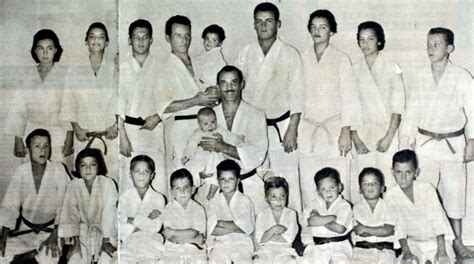
The Gracie Brothers
The Gracie family is large and influential, but when it comes to the original generation that shaped Gracie Jiu-Jitsu, there were five main brothers:
- Carlos Gracie
- Helio Gracie
- Oswaldo Gracie
- Gastão Gracie
- George Gracie
Each brother contributed in unique ways, whether through teaching, competing, or spreading the art internationally. Helio, in particular, is often credited with refining the techniques to focus on leverage and defense, making the art accessible to everyone. The family’s legacy didn’t stop there. The next generations, including famous names like Royce Gracie, helped bring Brazilian Jiu-Jitsu to the global stage, especially through early UFC events. Their success proved the effectiveness of Gracie Jiu-Jitsu in mixed martial arts and self-defense.
Why Gracie Jiu-Jitsu Stands Out
What makes Gracie Jiu-Jitsu different from other martial arts? It’s all about strategy and efficiency. Instead of relying on strength, it teaches you how to use your opponent’s energy against them. This means that even if you’re smaller or less physically strong, you can still defend yourself effectively.
Here are some key principles that set it apart:
- Leverage over strength: Use body mechanics to control and submit opponents.
- Ground fighting focus: Most fights end up on the ground, and Gracie Jiu-Jitsu specializes in this.
- Self-defense emphasis: Techniques are designed to neutralize threats quickly and safely.
- Continuous learning: The art evolves through real-world testing and innovation.
The Gracie family focused on real-world effectiveness, creating techniques designed to work against resisting opponents of all sizes. This emphasis on leverage, submissions, and ground control distinguished BJJ from other martial arts and laid the foundation for its role in modern Mixed Martial Arts (MMA).
If you’re looking to build confidence and practical skills, this approach is perfect. It’s not just about fighting; it’s about understanding your body and mind in challenging situations.
Brazilian Jiu-Jitsu: More Than Just a Martial Art
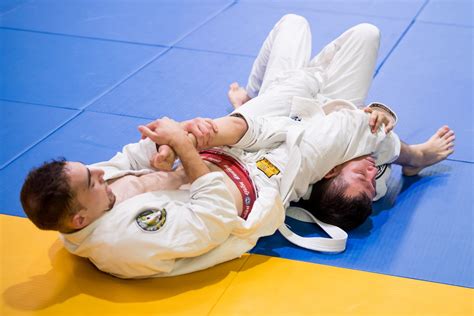
Brazilian Jiu-Jitsu (BJJ) is not just a martial art-it’s a cultural legacy, a philosophy of leverage and intelligence over brute strength. BJJ is a martial art and combat sport focused on ground fighting, leverage, and submission techniques. Unlike striking arts, BJJ emphasizes controlling an opponent through joint locks, chokes, and positional dominance. It teaches practitioners how to neutralize larger, stronger opponents by using technique, timing, and leverage rather than brute strength. BJJ is widely recognized for its practical self-defense applications, competitive sport format, and benefits for fitness, coordination, and mental focus.
Thanks to the Gracies-and the countless instructors, students, and competitors they’ve inspired-Brazilian Jiu-Jitsu is now practiced in every corner of the globe. The story of Brazilian Jiu-Jitsu is one of transformation, family, and worldwide impact. From the early teachings of Mitsuyo Maeda to the innovation of Hélio and Rolls Gracie, and now with figures like Márcio Stambowsky, Carla Gracie, and Deborah Gracie shaping the future-this martial art has become much more than self-defense.
Evolution and Global Influence
Over the decades, BJJ spread globally as the Gracies challenged fighters of all styles and demonstrated the effectiveness of ground-based techniques. The art gained international recognition through the early Ultimate Fighting Championship (UFC) events, where Royce Gracie showcased that a smaller practitioner could defeat larger opponents using skill, technique, and strategy.
Today, Brazilian Jiu-Jitsu continues to evolve, integrating sport competition rules, advanced positional strategies, and cross-training with other martial arts. Its influence extends into MMA, self-defense training, and fitness programs, making it both a practical and competitive discipline worldwide.
Why Train Gracie Jiu-Jitsu?
Training in Gracie Jiu-Jitsu offers more than just physical benefits. It teaches you how to stay calm under pressure, think strategically, and respect others. These lessons carry over into everyday life, making you stronger both on and off the mats.
Here's a summary of the key benefits:
| Benefit | Description |
|---|---|
| Self-Defense | Practical techniques for real-world scenarios. |
| Fitness | Improves endurance, flexibility, and coordination. |
| Mental Focus | Teaches strategic thinking and calmness under pressure. |
| Community | Builds a supportive and respectful environment. |
So, why wait? Whether your goal is self-defense, fitness, or community, Gracie Jiu-Jitsu has something to offer. It’s a journey worth starting today!