The Ultimate Fighting Championship (UFC), under the ownership of William Morris Endeavor and the leadership of Dana White, has evolved into a global mixed martial arts (MMA) powerhouse since its inception on November 12, 1993. The company's brand value has dramatically increased in recent years, soaring by 335 percent in a single year. This growth reflects the sport's rising popularity, fueled by the allure of star fighters like Conor McGregor and Ronda Rousey.
The drastic growth of the company catapulted the UFC among the most valuable sports business brands worldwide.

Conor McGregor, one of the UFC's biggest stars, has significantly contributed to the promotion's revenue growth.
Understanding UFC's Financial Landscape
As the biggest and most important promotion in the sport of mixed martial arts, it is understandable why so many are curious to know the answers to these questions. As the commonly identified "800 pound gorilla" in MMA, their financial health is the financial health of the sport. Due to the fact that its parent entity, Zuffa, LLC, is a private company, the UFC has no obligation to share any such information with the public, which often leaves us only with speculation and guesses. This isn't to say that the UFC's finances are completely opaque.
While Zuffa's books may indeed be closed to us there are other sources out there that offer a glimpse into their business. Two of the Big Three credit rating agencies, Standard and Poor's and Moody's, both regularly issue reports on Zuffa, LLC's finances to its clients. Both of these companies are nationally recognized statistical rating organizations whose purpose is to inform potential lenders of Zuffa's ability to meet their loan obligations.
Read also: Comprehensive Punching Bag Guide
Key Revenue Streams
When one breaks down the sources of revenue this becomes even more apparent as money from tickets, television, sponsors, and pay-per-view all skyrocketed following the launch of the The Ultimate Fighter in 2005. In only two years the UFC saw a 1258% increase in their revenue. This included approximately 1700% growth in pay-per-view revenue, a 5500% increase in money from sponsorships, and a more than 10,000% increase in revenue from live and taped television.
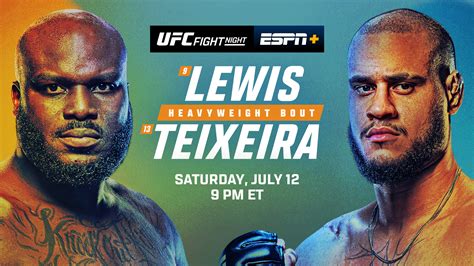
The UFC's deal with ESPN is a major source of revenue.
Since then the UFC has managed to greatly diversify its sources of revenue mostly through the licensing of a video game, new television deals, both domestic and foreign, and sponsorships.
Prior to this, while the UFC was still broadcast on Spike TV, nearly 75% of all revenues came from live pay-per-view events (though revenues from those events included pay-per-view, gate, closed circuit and international rights fees, broadcast and sponsorship revenues). The other approximately 25% of revenues were sourced from live and taped television broadcasts, as well as various other sponsorship, merchandising, and content distribution arrangements. Since 2012, approximately 55% of total revenue has been event-based, with the majority of coming from pay-per-view buys and ticket sales.
Even with a generally recognized "poor year" in 2014 the UFC has still manages to see an impressive increase in revenue and diversification in its revenue sources.
Read also: Tyson's Money Troubles
Pay-Per-View Performance
The match between Conor McGregor and Nate Diaz at UFC 202 on August 20, 2016 pulled in an all time high, at the time, of the leading buy-rates of UFC pay-per-view events with a total of 1.65 million pay-per-view buys. The average number of pay-per-view buys fluctuated significantly with 2018 having an average of roughly 447 thousand buys per event.
GREATEST UFC Rounds You Can't Miss! 💥
Estimating Revenue and Fighter Compensation
With these reported and estimated revenue numbers we can now try to answer at least one of the questions we posed at the beginning: "what percentage of the revenue is going to the fighters?" While we can't answer this for every year we can try to make an estimate for the period covering 2005 through 2011 using our revenue totals and comments from the owners of the UFC.
According to UFC CEO Lorenzo Fertitta in an interview with ESPN, the company had paid "more than $250 million" to the fighters during that timeframe, a total that he claims would be "not far off what the other sports leagues pay as a percentage of revenue." With an estimated $1.839 billion in revenue generated from 2005-2011, $250 million in fighter wages would represent 13.6% of all revenue. If the amount paid out to the fighters was $300 million than the fighters' share of revenue would rise to 16.3%.
In most of the North American major league sports collective bargaining agreements call for revenue splits of usually 50% of all revenue for the athletes. This is misleading since there are often exemptions to some of it so that it is not included in the revenue sharing agreement.
Read also: Jake Paul vs. Mike Tyson: Money Matters
Growth and Diversification
In 2009 the video game UFC Undisputed was released. Over 7 million copies were sold by the original producer THQ between 2009-2011, of which the UFC was thought to receive around 17 percent of the gross sales. Since 2012, the game has been produced by EA Sports.
While the UFC benefited in 2006 from a large sponsorship deal with Xyience that did not prove sustainable the promotion has continued to entice major companies into the Octagon. Since 2007 the company has entered into sponsorship agreements with numerous mainstream advertisers.

The UFC's partnership with Bud Light is one of the richest sponsorships the company has ever signed.
Recent Financial Performance (2023)
Now that the UFC operates as a publicly traded company - first under Endeavor and now as part of TKO Group Holdings - financial disclosures are regularly reported. What that shows is that the UFC has become a juggernaut of profitability, with revenue increases quarter after quarter, transforming the promotion into a company valued at over triple the-more-than $4 billion price tag Ari Emanuel and his investors at Endeavor paid for it in 2016.
The UFC went on a ridiculous streak of sellouts at arenas, and while that momentum eventually stopped, the organization has still broken several live gate records over the past year. A deep dive into the numbers in 2023 proves that the UFC isn’t slowing down, and if anything, the organization may be gaining steam heading into 2024 and beyond - 2025 will almost assuredly become the UFC’s biggest financial year because the company will ink a new broadcast rights deal worth billions. Multi-billions actually.
In the nine-month span ending on Sept. 30, the UFC earned revenue reaching $1,009.4 billion which was up from $868.4 million from the same time in 2022. Breaking that down by segment - the bulk of the UFC’s revenue comes from media rights like the promotion’s deal with ESPN, which has paid out $702.5 million through September. That number is up more than $80 million from 2022.
Live events accounted for $115.6 million, with sponsorship totaling $148 million. Finally, consumer products, which includes t-shirt and merchandise sales, hit $43.3 million thus far in 2023.
Live Gate Numbers for 2023 PPVs
As far as the overall live gates for 2023 PPVs - minus UFC 283 in Brazil and UFC 294 in Abu Dhabi, where no attendance or live gate numbers were made available - the biggest was UFC 295 in New York while the lowest was UFC 289, with a live gate of $3,834,893 for the card in Vancouver headlined by Amanda Nunes vs. Irene Aldana.
Here's a table summarizing the live gate numbers for UFC PPV events in 2023 (excluding UFC 283 and UFC 294):
| Event | Location | Live Gate |
|---|---|---|
| UFC 295 | New York | $12,432,563 |
| UFC 289 | Vancouver | $3,834,893 |
The attendance and live gates for UFC Fight Night cards were also robust, as the promotion continued cutting costs by promoting a number of events at the UFC APEX.