Hybrid Martial Arts is a dynamic approach that doesn't focus on a single form of technique or discipline. Instead, it integrates multiple disciplines and techniques, blending them to create a more powerful and versatile fighting style.

Defining Hybrid Martial Arts
Hybrid martial arts distinguish themselves from traditional martial arts by eschewing the single-origin purity and standardized curricula that define the latter. Instead, they embrace an eclectic integration of techniques from diverse disciplines to create adaptable fighting systems. A central principle of hybrid martial arts is adaptability, which emphasizes adjusting techniques and strategies in real-time to the opponent's actions and the specific context of engagement.
A defining feature of hybrid martial arts is their emphasis on personal customization, enabling practitioners to evolve systems organically based on efficacy and context, in opposition to the uniform, prescriptive training paths found in arts like judo, where techniques follow a codified syllabus tied to belt rankings and competitive norms. Unlike mixed martial arts (MMA), which functions primarily as a competitive sport governed by unified rulesets in controlled environments like cages or rings, hybrid martial arts represent a broader philosophical framework applicable to non-competitive contexts such as self-defense or personal development.
Hybrid martial arts also contrast with sport-specific disciplines, which confine techniques to narrow rulesets tailored for particular competitive formats, by promoting a full-spectrum combat methodology that encompasses striking, grappling, and potentially improvised weapons or environmental factors.
Historical Roots
The foundations of hybrid martial arts can be traced to ancient civilizations where disparate fighting techniques were integrated for comprehensive combat effectiveness. In Asia, historical blending occurred through cultural exchanges along trade routes and migrations, where Indian martial traditions influenced Southeast Asian practices. By the 19th century, Western encounters with Eastern arts sparked initial hybrid experiments in Europe.
Read also: All About Hybrid MMA Gloves
In the early 20th century, Western contributions to hybrid martial arts emerged through systems designed for practical self-defense and military application. In the 1930s and 1940s, Imi Lichtenfeld developed Krav Maga in Bratislava for Jewish self-defense amid rising antisemitism, later refining it for the Israeli Defense Forces after 1948. Following World War II, global exchanges facilitated the spread of hybrid systems, particularly in Asia where colonial legacies and returning practitioners spurred innovation. By the 1970s, Japanese innovations further advanced hybrid grappling-striking integrations.
Modern Evolution
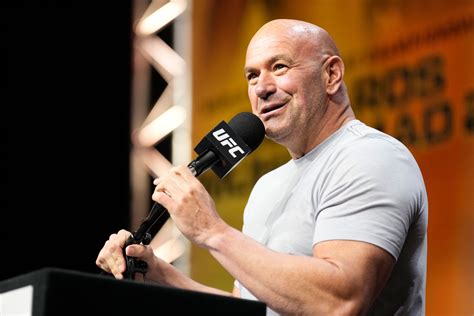
The acquisition of the Ultimate Fighting Championship (UFC) by Zuffa, LLC in January 2001 marked a pivotal shift in the institutionalization of hybrid martial arts, particularly through the promotion of mixed martial arts (MMA). Under Zuffa ownership, led by Frank Fertitta III, Lorenzo Fertitta, and Dana White, the UFC transitioned from a niche, controversial event series to a mainstream sports entertainment powerhouse, with revenue growing from near-bankruptcy levels to a $4 billion sale in 2016.
This era facilitated the widespread adoption of the Unified Rules of MMA, finalized in late 2000 but rigorously enforced and refined post-2001, which standardized hybrid fighting formats by integrating striking, grappling, and submissions while prohibiting dangerous techniques like eye gouges.
Technological Advancements
Advancements in technology have profoundly influenced hybrid martial arts training since the early 2000s, enabling more precise cross-disciplinary integration through data analytics and visualization tools. Video analysis software, such as Hudl or Dartfish adapted for combat sports, allows practitioners to dissect footage of techniques from diverse styles-like Muay Thai clinch work combined with Brazilian jiu-jitsu transitions-identifying inefficiencies in real-time during gym sessions.
Sports science innovations, including wearable sensors for biomechanics and force plate data, support data-driven optimization of hybrid routines, such as balancing explosive power from wrestling with endurance from kickboxing, leading to measurable improvements in athlete performance metrics like reaction time and injury prevention.
Read also: Individual Martial Arts Instruction
Global Diversification
Global diversification of hybrid martial arts accelerated post-2000, with systems emerging that fused traditional elements with practical self-defense applications tailored to regional contexts. As of 2025, hybrid martial arts trends reflect deeper technological integration and social inclusivity, reshaping training paradigms and accessibility.
AI-powered coaching tools, such as apps using computer vision for pose estimation and feedback on hybrid technique execution, enable personalized virtual sessions that analyze movements from multiple disciplines in real-time, democratizing access for remote learners. Virtual reality platforms have introduced hybrid arts into esports-like simulations and immersive training, with VR taekwondo and MMA modules allowing safe sparring against AI opponents, as seen in collaborations between organizations like World Taekwondo and tech firms.
Striking Techniques
Hybrid martial arts incorporate striking techniques from multiple disciplines to create versatile stand-up fighting capabilities, primarily drawing from boxing for precise punches and defensive head movement, Muay Thai for clinch-range elbows and knees, and Taekwondo for dynamic high kicks that extend striking range. These elements allow practitioners to address varying distances effectively, blending the power generation of Western boxing with the comprehensive limb usage of Muay Thai and the speed-oriented leg techniques of Taekwondo.
Integration strategies in hybrid systems focus on fluid transitions between open-range striking and closer clinch work, enabling fighters to maintain momentum without exposing vulnerabilities. For instance, karate's linear striking power can combine with savate's angular footwork to facilitate entries into the clinch, where Muay Thai knees follow punches seamlessly. This approach leverages feints and level changes from boxing to disguise intentions, allowing strikes to set up controlling positions while minimizing counters.
Tactically, hybrid striking emphasizes distance control through feints and probing strikes, which disrupt an opponent's rhythm and open paths for multi-limb combinations effective in unpredictable scenarios. Feints drawn from boxing, paired with Taekwondo's quick kicks, create openings for Muay Thai's powerful follow-ups, providing an edge in no-rules environments where adaptability is key.
Read also: The Jade Fortress Martial Arts System
Grappling and Ground Fighting
Grappling and ground fighting form a cornerstone of hybrid martial arts, emphasizing control, transitions, and submissions to neutralize opponents in dynamic combat scenarios. Techniques drawn from judo enable explosive takedowns that transition seamlessly from stand-up exchanges to ground dominance. Brazilian jiu-jitsu (BJJ) contributes chokes and defensive guards, allowing practitioners to maintain positional superiority while setting up submissions from inferior positions.
In hybrid systems, these elements are adapted through integrated flows that blend stand-up initiations with fluid ground progressions, enhancing overall efficacy in unrestricted environments. For instance, sambo's leg locks are often combined with BJJ elements to create versatile submission chains that exploit lower-body vulnerabilities during transitions.
Strategic depth in hybrid grappling extends to specialized escapes and reversals designed for multifaceted threats, where ground work integrates awareness of incoming strikes. Practitioners train reversals from vulnerable positions to invert dominance while defending against punches, ensuring mobility in strike-permissible contexts. From the mount, short-range strikes augment positional control, turning a pinning hold into an offensive platform without relinquishing grip.
Risk management in hybrid ground fighting underscores a balanced approach to mitigate dangers in full-contact settings, where extended floor time invites ground-and-pound strikes or joint trauma. Emphasis is placed on quick stand-up recoveries via technical get-ups to avoid submission traps or battering, as prolonged grappling correlates with higher rates of orthopedic injuries like shoulder dislocations.
Weaponry
Some hybrid martial arts incorporate weapon-based techniques, drawing from traditions like Filipino escrima or kali for stick and knife fighting, integrated with unarmed methods for comprehensive self-defense. These elements emphasize disarms, fluid transitions between armed and empty-hand combat, and practical application in street scenarios, as seen in systems like Kajukenbo.
Training Regimens
Training in hybrid martial arts emphasizes cross-disciplinary regimens that integrate elements from various combat styles to foster well-rounded proficiency and adaptability. Conditioning methods prioritize full-body explosiveness and endurance through sport-specific programs that combine strength, power, and high-intensity interval training (HIIT). Mental preparation focuses on scenario-based training to cultivate adaptability under duress, often through stress inoculation techniques that progressively expose fighters to simulated combat pressures.
Modern tools augment these regimens with technology for precise monitoring of hybrid-specific metrics.
Training MMA for 1 Year Changed EVERYTHING...
Mixed Martial Arts (MMA)
Mixed Martial Arts (MMA) originated as a competitive format to determine the most effective fighting style, with its modern inception marked by the inaugural Ultimate Fighting Championship (UFC) event on November 12, 1993, in Denver, Colorado. Founded by promoter Art Davie, Brazilian jiu-jitsu practitioner Rorion Gracie, and producer Bob Meyrowitz, UFC 1 featured no weight classes or time limits, allowing fighters from various disciplines-such as boxing, wrestling, karate, and savate-to compete in an eight-sided chain-link cage known as the Octagon.
The sport's evolution toward regulated competition accelerated in the early 2000s with the adoption of the Unified Rules of Mixed Martial Arts, first codified by the New Jersey State Athletic Commission in 2000 and later unanimously approved by the Association of Boxing Commissions in 2001. These rules standardized bouts in a fenced enclosure, permitting a blend of striking, grappling, and submissions while prohibiting dangerous tactics like eye gouging or small-joint manipulation; fights typically consist of three or five five-minute rounds, with victories by knockout, submission, or judges' decision.
Central to MMA's hybrid nature are techniques integrating stand-up striking from Muay Thai-utilizing eight limbs for punches, kicks, elbows, and knees-with ground control and submissions from BJJ, such as armbars and chokes, often combined with wrestling takedowns for positional dominance. Fighters like those in UFC 1 exemplified this fusion, where Gracie's BJJ countered strikers by transitioning to the ground for leverage-based finishes, a strategy that became foundational as the sport matured.
As of 2025, the UFC remains the premier MMA organization, having hosted over 700 events since its founding and featuring between 600 and 850 contracted fighters across 12 weight divisions, driving the sport's global expansion.[59][60] Other major promotions include Bellator MMA, now integrated under the Professional Fighters League (PFL) with innovative tournament formats, and ONE Championship, which emphasizes Asian martial arts integration and has grown to host events across multiple continents.
Professional MMA training occurs in specialized gyms that blend disciplines under one roof, with American Top Team (ATT)-founded in 2001 in Coconut Creek, Florida-serving as a leading example by combining Muay Thai, BJJ, wrestling, and strength conditioning to prepare fighters for elite competition. ATT has produced numerous UFC champions and operates multiple locations, fostering an ecosystem where athletes spar across styles to simulate real bouts, enhancing adaptability and well-rounded skill development.
Examples of Hybrid Martial Arts Systems
- Combat Hapkido: An American hybrid martial art developed in the 1990s by John Pellegrini, founder of the International Combat Hapkido Federation, specifically tailored for law enforcement and self-defense applications.
- AKBAN: Established in Israel in 1986 as an independent martial arts organization, representing a modern hybrid system designed for urban survival and close-quarters combat.
- Shooto: Founded in Japan in 1985 by Satoru Sayama, serving as an early hybrid framework that blends shoot wrestling-featuring takedowns, pins, and submissions-with striking arts like karate and boxing, laying groundwork for mixed martial arts competitions.
- Kajukenbo: Pioneered in Hawaii during the late 1940s by a group of martial artists including Adriano Emperado, which fuses karate striking, judo throws, jujutsu locks, kenpo forms, and boxing footwork into a street-oriented self-defense art.
Impact and Influence
Hybrid martial arts have become integral to professional combat sports, particularly within the Ultimate Fighting Championship (UFC), the leading mixed martial arts (MMA) promotion, where versatile skill sets are essential for competitive success. Fighter archetypes in professional MMA highlight the shift toward hybrid necessity, favoring "all-rounders" who blend techniques over pure specialists.
Rule evolutions in professional leagues have further shaped hybrid strategies by refining what techniques are permissible, influencing training emphases on adaptable skill integration. Economically, hybrid martial arts' prominence has fueled MMA's global expansion and revenue streams, including sponsorships and pay-per-view (PPV) events that capitalize on high-stakes, multifaceted bouts.
Hybrid martial arts have profoundly shaped film and television by showcasing realistic, multifaceted combat that blends striking, grappling, and submissions, captivating audiences and elevating the visibility of systems like MMA. In fitness trends, hybrid martial arts have merged with high-intensity programs like CrossFit, creating accessible workouts that build functional strength, agility, and cardiovascular endurance for diverse participants.
Gyms worldwide now offer MMA-CrossFit hybrids, such as circuit training incorporating pad work, wrestling drills, and metabolic conditioning, appealing to those seeking practical, full-body fitness. Hybrid martial arts have spurred cultural shifts toward empowerment narratives, promoting gender inclusivity through trailblazers like Ronda Rousey, whose dominant UFC tenure from 2013 onward shattered barriers and inspired a surge in women's involvement in combat sports.
Her advocacy for female divisions and body positivity narratives has normalized women in hybrid systems, fostering resilience and equality.
Hapkido: A Detailed Look
Hapkido is a hybrid martial art characterized by its diverse set of techniques and circular movements. The martial art focuses on both long-range and close-range fighting techniques, and its syllabus consists of a variety of weapons. Like Aikido, Hapkido was adapted from Daitō-ryū Aiki-jūjutsu. Principles such as redirection of force, which are also integral to Aikido, are an important part of this martial art.
Hapkido was adapted from Daitō-ryū Aiki-jūjutsu by Choi Yong-Sool, who lived and trained in Japan for 30 years. This combat system was later combined with kicking and striking techniques of indigenous Korean martial arts such as Taekkyon and Tang Soo Do. Throwing and ground-fighting techniques were also incorporated from Judo. Hapkido thus became hybrid in nature, incorporating elements of striking, grappling, and weapons-based combat into its system.
Key Aspects of Hapkido
- Makko Chigi: Combination of blocks and attacks trained in such a manner that they can be recalled in a high-pressure situation.
- Ki Meditation Training: Combination of breathing exercises, stretching, and meditation to cultivate and maximize inner energy.
- Break Falls: An integral part of all grappling and throwing techniques in which practitioners learn to minimize the impact of being thrown to the ground.
Techniques and Concepts
This fighting system addresses both long-range and close-range combat. Kicks, punches, and other forms of striking are used in long-range combat, whereas joint-locks, throws, and pressure-point techniques are used in close-combat scenarios. Like Aikido, Hapkido’s movements are circular in nature and utilize footwork and strategic body positioning to redirect the opponent’s energy. This allows practitioners to effectively utilize leverage to overcome larger and stronger opponents.
Hapkido consists of a wide variety of techniques such as:
- Kicks and sweeps (large variety of kicks as seen in Taekkyon and Taekwondo)
- Knees
- Punches
- Elbows
- Open hand strikes
- Joint-locks, including elbow and wrist locks
- Throws, like those encountered in Judo
Core Principles
- Hwa: Blending as opposed to clashing with an opponent. This refers to blending with the attacker’s movements and energy to gain control and subdue the opponent.
- Won: Circle principle, is a method of movement to gain momentum to execute techniques in a natural and flowing way. The circular movement pattern enables the Hapkido practitioner to deflect and redirect an opponent’s attack away from the vital areas of the practitioner’s body. The practitioner gains a degree of control of the opponent’s force and is then able to use that force against the opponent.
- Yew: Flowing water principle, best understood as a stream that is consistently flowing. Such water can erode even a hard rock even though the rock is perceived as a stronger substance than water. This refers to remaining fluid in nature and adapting to the opponent so that brute force can be neutralized, and the opponent can be controlled with their own energy.
Energy Dynamics
The Hapkido practitioner views an attacker as energy instead of a physical being. The idea is that the larger the attacker, the more energy the attacker has. The more energy the attacker has, the more energy is available for the Hapkido practitioner to use against the attacker. Focused breath from the center of the body to harmonize movements and increase the effectiveness of technique. All movements must originate from the Dun Jung area, which is the center of the body.
Weaponry in Hapkido
Hapkido also incorporates various weapons into its training:
- Kal - Knife
- Jung Bong - Baton sized stick
- Danbong - Short Stick (approximately 35cm in length)
- Ji-pang-ee - Cane
- Rope
- Gum - Sword
- Jangbong - Long staff
- Ssangjeolgon - Nunchaku