Kickboxing is the perfect workout for women looking to challenge their minds and bodies. The benefits of kickboxing for women are far-reaching and can have lasting impacts on all aspects of their lives. It’s suitable for women of all shapes, sizes, and fitness levels, making it an inclusive and adaptable form of exercise.
1. Enhanced Mental Focus and Confidence
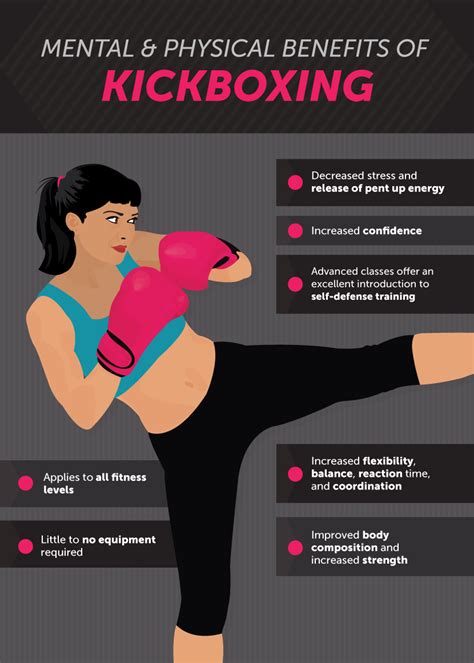
Exercise, in general, can help women improve their mental focus. Men and women who exercise regularly have more mental clarity and confidence inside and out. Kickboxing goes the extra mile by elevating women’s confidence and feelings of empowerment. The practice of overcoming a physical challenge leads to significant gains in mental toughness, which is a major benefit of kickboxing for women.
Many women aren’t used to striking objects in their daily lives. Kickboxing offers a haven to tap into a new kind of physical release that may be outside the realm of their comfort zone. Finally, kickboxing requires balance training, which has been shown to improve spatial awareness and memory in men and women.
2. Self-Defense Skills
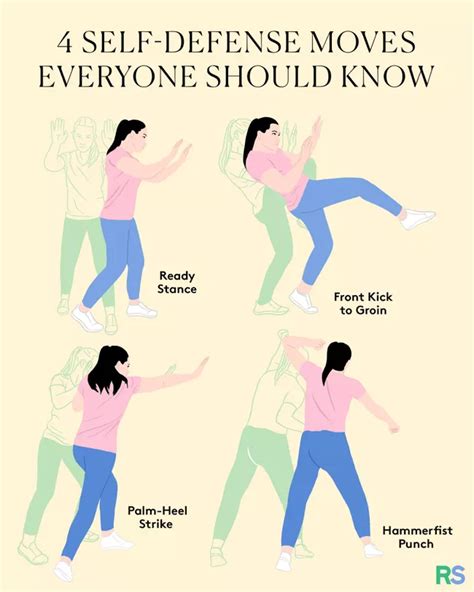
Learning self-defense is another huge benefit of kickboxing for women. Women often shy away from combat sports training, even though this is crucial knowledge that can keep them safe in a vulnerable situation. Kickboxing for women offers a fun, welcoming and safe environment to learn offensive and defensive moves.
During these classes, women are gaining valuable real-life skills while they’re having fun! Knowing how to react quickly to a physical threat is also empowering. Another reason that kickboxing for women is becoming so popular is that it gives women the knowledge and skill set to be more independent. As women become more capable in kickboxing, they become more capable in all aspects of their lives.
Read also: The Benefits of Kickboxing for Women
3. Full-Body Workout
It’s hard to find an activity that works as many muscles as kickboxing. Kickboxing for women is an all-body workout that engages the upper body, lower body, and core through various exercises and movements. In addition to high-intensity routines involving kicking and punching, kickboxing training incorporates jump rope, core exercises, and circuit training.
A typical kickboxing for women class will include kickboxing fundamentals and bag work alongside more traditional strength and conditioning drills.
4. Improved Cardiovascular Health
Kickboxing is an effective cardio workout that can improve lung function and heart health. Research has found that people who participated in kickboxing three times a week for one hour at a time increased their maximum oxygen uptake (also known as VO2max). The VO2max measures the amount of oxygen a person can use during physical activity.
Kickboxing is both an aerobic and anaerobic activity, giving the body unique lung and heart benefits. As your body demands more energy and oxygen to power through the exercise, your heart will have to work harder to pump blood around your body and your lungs will need to operate more efficiently.
Cardio Kickboxing Workout to Burn Fat at Home - 25 Minute Kickboxing Cardio Interval Workout
5. Strength Building and Muscle Toning
Kickboxing is not just an incredible cardio workout; it’s also a powerhouse for building strength and toning your entire body. The combination of punching, kicking, and defensive movements engages multiple muscle groups simultaneously, providing a comprehensive strength-training experience.
Read also: Kickboxing in Buckhead
As you progress in your kickboxing journey, you’ll notice significant improvements in your overall strength and muscle definition. Moreover, building lean muscle mass through kickboxing can have long-lasting benefits for your metabolism.
6. Stress Relief and Better Sleep
There’s no better way to shake off a tough day than with a workout. Kickboxing for women allows participants to channel their stress into killer, anxiety-melting sessions at the gym. Trust us, if you’ve had an awful day and your mind keeps circling around the negatives, there’s nothing more gratifying than physically punching off your stream in a safe and healthy way.
As the music blasts high-energy tones, you’ll be punching and kicking your sandbag opponent with an intensity that only you can control. As a bonus, kickboxing for women can lead to longer and deeper sleep. Getting enough sleep at night is vital for combatting stress and anxiety and improving overall physical health. A one-hour kickboxing for women session will wear you out and make you sore. Your body will be asking for sleep and you’ll be happy to oblige.
7. Social Benefits and Community
One of the most essential benefits of kickboxing for women is meeting other people who share the same fitness goals and values - especially in your neighborhood! Kickboxing class participants will cheer each other on and help each other reach new heights. These friendships can help keep women motivated so that they’re more likely to stick with a regular fitness routine. Often, these friendships extend outside the studio too.
Exercising with other people encourages you to push through the hard stuff. Not only will you enjoy their company, but you’ll likely have more fun than you would on your own. For example, if you’re having trouble sticking to your workout routine, try enrolling in a kickboxing class where you meet new people and break a sweat.
Read also: Understanding Muay Thai and Kickboxing
Kickboxing Training: A Scientific Perspective
It has been suggested that martial arts and combat sports can have positive effect on physical fitness and health. The effect of martial arts and combat sports practice (i.e., Judo, Taekwondo, Karate) was investigated in several studies among youth, adolescents, elders and people suffering from some disorders (e.g., developmental coordination disorder, multiple sclerosis). Most of these studies reported that martial arts and combat sports training involved a significant improvement in physical and motor abilities.
Recently, Jackson et al. investigated the kickboxing training effects on balance and mobility impairments among people with multiple sclerosis (MS) and demonstrated that it can be a feasible activity to improve balance and mobility for individuals with MS. Except for the study of Jackson et al., there is no other published study that has focused on examining the effect of kickboxing regimen training on different physical fitness variables among healthy adults.
Study on Kickboxing Training
Thirty participants were recruited to participate in the study. In order to eliminate any gender effect, only male subjects were recruited. The Subjects were randomly assigned to a kickboxing training group (n=15) or a control group (n=15). The characteristics of the two groups were (age: 20.9 ± 1.4 years, weight: 72.3 ± 7.5 Kg, height: 1.8 ± 0.1 m, BMI: 22.7 ± 2.9 kg·m−2 and body fat: 12.6 ± 3.5 %) for kickboxing group and (age: 21 ± 1.5 years, weight: 73.1 ± 8.4 Kg, height: 1.9 ± 0.4, BMI: 23 ± 2.8 kg·m−2 and body fat: 12.8 ± 2.4 %) for control group.
The two groups consisted of participants who never had been involved in any combat sports practice. Before the commencement of the study, subjects gave their written consents to participate in the study after explaining to them the risks and benefits of the study and they made a commitment to not participate in other physical activities during the period of training.
All subjects were tested before and after five weeks of kickboxing training. All assessments were performed at the same time of day to reduce the effect of diurnal variation on performance. The kickboxing program was performed three times weekly without additional physical conditioning sessions for five weeks with each session lasting 1-hour with a qualified kickboxing coach. The training duration was chosen in attempt to verify if a low volume of kickboxing training could bring significant improvement in physical fitness. The daily dietary were maintained as homogeneous as possible for all participants during the training sessions.
Training Program Details
The typical kickboxing training session was divided into 4 periods.
- The first period was the warm-up.
- The three remaining periods (∼11 minutes) were divided into bouts of 2-min of specific kickboxing exercises interspersed with 1-min rest.
- At the end of each period there was a 3-min interval of rest.
The control group only performed activities including general physical exercises with some recreational sport practice close to physical education classes program for the same period of time with the command of a physical education’s teacher. The training program consisted of a 15 minutes of warm-up period, 9-10 minutes period dedicated to some jogging at moderated intensities intercepted with period of rest. Then, a period of 18<20 minutes dedicated for some games from different physical activities (e.g., football, basket ball, tennis). The periods of effort were alternated with passive rests.
Key Findings from the Study
The findings of the present study revealed that 5-weeks of kickboxing training involved significant improvements in aerobic power (i.e., MAP and VO2MAX), anaerobic fitness (i.e., upper-body peak power and lower-body mean power during the Wingate test) as well as improvements in muscle power (force output during CMJ test, performance in medicine ball and bench press throw tests), sprint and agility and flexibility in comparison to baseline and control group values.
The present study showed that the kickboxing can be a suitable exercise for enhancing cardio respiratory fitness (13.2 ± 6.0 % and 11.2 ± 5.9 respectively for VO2MAX and MAP). In the same way, anaerobic power for both upper and lower- body increased after the training program.

Table: Muscle Power Variables and Training Program Results
Here's a summary of the muscle power variables and training program results:
| Variable | Effect | Details |
|---|---|---|
| VO2MAX | Group and Moment | Higher values for kickboxing group and at the end of the program. |
| Maximal Aerobic Power (MAP) | Moment | Higher values at post-training. |
| Lower-Body Wingate Test Mean Power | Moment | Higher mean power at the post-training period. |
| Upper-Body Wingate Test Peak Power | Group and Moment | Higher values for the kickboxing training group and at post-training. |
| Squat Jump Height | Interaction | No significant difference confirmed by Bonferroni test. |
| Bench Press Throw Power | Moment and Interaction | Higher values post-training for the kickboxing group. |
| Velocity during Bench Press Throw | Moment and Interaction | Experimental group improved from pre to post-training. |
| Medicine Ball Throw | Group and Moment | Higher values for the kickboxing group and in the post-training. |
| 5x10-m Shuttle Run Test | Moment | Higher values post-training. |
| Flexibility | Moment and Interaction | Kickboxing training group showed higher values at post-training. |
Conclusion
Kickboxing fitness is a growing trend among women who want a more holistic and empowering kind of workout. It's clear that boxing and kickboxing-style workouts are moving beyond their traditional roots and becoming more of a broader fitness trend with women leading the charge. What started as niche or studio-based training has now transformed into a mainstream fitness choice, available in boutique gyms, group classes, and even at-home workout platforms.
tags: #kickboxing #for #women