At first glance, the heavy bag can be intimidating. However, punching bag training is a common drill at every level of boxing, offering a full-body workout that enhances striking and strengthens muscles for both beginners and professional boxers.
Before the likes of Sugar Ray Robinson and Muhammad Ali introduced speed and agility to the boxing world, power and striking were the major tools of every boxer. Boxing involves techniques and movements only a physically fit and mentally focused fighter can perform.
Whether you're a seasoned fighter or just starting, incorporating a punching bag into your routine can significantly improve your technique, endurance, and overall fitness. Let's explore the numerous benefits of light punching bag training.
Full-Body Workout
You only hit the bag with punches, so how is it a full body workout? In a boxing workout, every part of the body is active.
The resistance provided by the punching bag helps increase your muscle strength and power. Each punch you throw forces your muscles to work against the bag’s weight, helping to build upper body strength. But it’s not just your arms that benefit. Punching with proper form recruits stabilizer muscles that are often unused in traditional workouts.
Read also: The UFC Light Heavyweight Championship
Additionally, since punching bag muscle workouts require full-body movement, the torso rotation fires up your abs and obliques. Continuously working the punching bag drills improves muscle definition and enhances punching power. The routine will become normal for your body, and that’s how you gain strong muscles from resistance training.
Improved Technique
Technique is everything in boxing. Boxing is about more than just throwing punches; it’s about executing each move with proper form, precision, and movement. Professional boxers are masters of executing precision, striking, and movement simultaneously.
While shadow boxing, another popular drill, allows you to practice similar techniques, heavy bags further enhance that experience. Unlike shadowboxing, where you practice moves without physically experiencing them, heavy bag training gives you feedback on how well you perform and how accurate your techniques are. When you hit a heavy bag, you feel the force of that impact in your hands, too, as if hitting an opponent.
Since practice makes a man perfect, the more jabs, hooks, and uppercuts you throw, the more practice you’ll have in executing strikes with proper form. Punching bag training equips you with a skill beneficial for boxers and anyone looking to stay active and agile.
Enhanced Endurance and Footwork
50% of boxing is throwing and countering, but the other 50% is about movement. If you watch a boxer, they are never still-they are always side-stepping, pivoting, slipping, and generally just moving. When training, you don’t just stand in a place and hit the bag with your upper body strength. You constantly move around the bag, generate powerful punches, and hit the bag.
Read also: Choosing the Right Everlast Bag
And when you’re doing a punching bag workout, you want to constantly move around the bag and incorporate footwork to improve your technique. This process trains your body to work hard and maintain balance and stability while throwing blows. Your body doesn’t work alone to achieve this mastery. As you hit the bag with significant strikes, it repulses the force and comes back at you.
Boxing Footwork Drills for Beginners
Stress Relief
It’s a fantastic way to relieve stress. Sometimes, the best way to relieve anger is to release it! While many consider yoga as the best physical exercise for stress relief, many people don’t find peace in it. Boxing punching bags provide the perfect outlet for stress relief.
Atop the mental satisfaction, there are also physiological benefits of punching bag training. Exercising with the bag produces feel-good neurohormones like endorphins and norepinephrine, which are your body’s natural mood enhancers.
Building Muscle with Punching Bags
To answer the question: Does boxing build muscle? The answer is yes. Picture your favorite boxer - it’s likely someone with a lean, muscular physique. While punching bag workouts are known to improve strength, that’s only one of the many full-body benefits they offer.
Though punching bag training offers light resistance, it requires consistent high-rep workouts to build muscle. Heavy bag training isn’t recommended to build bigger muscles. Muscles grow stronger over time with high-volume heavy bag work. Training with heavy bags also builds the power and explosiveness necessary to land effective punches.
Read also: Exploring the Advantages of Electronic Punching Bags
It’s easy to get in strength training before, after, and during heavy bag workouts. It’s best to alternate between punching bag muscle workouts and strength and conditioning to achieve maximum results. For optimal muscle growth, supplement your boxing with calisthenics and strength training for a full-body workout. Complement punching drills with sit-ups, mountain climbers, and other calisthenics.
Speed Bag Training
Speed bag boxing exercises are a great way to add dynamic fitness into your training. Speed bags are small boxing punching bags used to build reflexes and hand-eye coordination through quick, repetitive movements. Modern speed bags are commonly made of processed rubber or high-quality leather.
They are used to train the muscles and reflexes of the arms, hands, shoulders, and upper body. Boxing, especially speed bag training, is a great way to improve cardiovascular health. Coordination between the eyes, mind, and hands allow athletes to develop quick reflexes and focus. The rotation of the shoulders and arms improves mobility, and continuous core, chest, and back engagement builds balance and stability.
Here are some tips for speed bag training:
- Find Your Rhythm: Start slow and watch your rebounds.
- Stand Steady: Maintain a forward-facing stance with planted feet and a strong core.
- Switch it up: Work both sides of your body by switching your hitting hand every 2 to 3 strikes.
- Technique Comes First: As a beginner, turn your focus on correct form over fast speed.
A speed bag setup provides a compact boxing solution for small gym spaces and home gyms.
Bring variety into your workout routine with this challenging, yet rewarding, style of exercise.
Freestanding Punching Bags for Home Boxing
Home boxing is becoming a fitness revolution and for a good reason. It’s not just a workout; it’s a stress-busting, cardio-pumping, full-body experience-all in the comfort of your living room. But to get the most out of it, you need the right equipment. Enter freestanding punching bags: the ultimate solution for home setups.
Freestanding punching bags have made the home boxing experience a breeze, offering a convenient, space-efficient alternative to traditional hanging bags. Whether you’re an experienced boxer or just getting started, these bags combine practicality and versatility to fit seamlessly into your home workout routine.
What is a Freestanding Punching Bag?
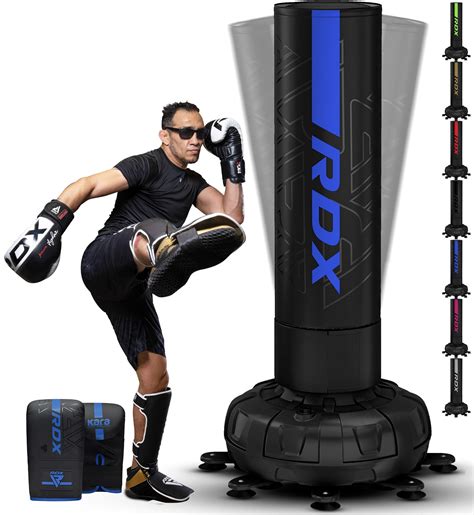
A freestanding punching bag is a self-supporting training tool designed to mimic the experience of a traditional heavy bag without the need for mounting or suspension. Unlike hanging bags which require ceiling hooks or wall brackets, freestanding punching bags stand independently on a stable base, making them a perfect option for home boxing enthusiasts.
The key advantage of freestanding bags is their convenience. They require no installation, meaning you won’t need to drill holes or reinforce ceilings-ideal for apartments or rented spaces. Plus, their portability allows you to move them around, whether you’re working out in the living room today or the garage tomorrow.
Design-wise, freestanding punching bags consist of a durable bag mounted on a weighted base, often filled with sand or water for stability. Many models also offer adjustable height settings, making them suitable for users of different sizes and training styles.
Their versatility shines in their ability to handle various workout routines, from standard punches to powerful kicks. Whether you’re practicing boxing, Muay Thai or cardio kickboxing, these bags adapt seamlessly. With freestanding punching bags, you get a practical, space-efficient solution to elevate your training from the comfort of your home.
Benefits of Freestanding Punching Bags
- Portability: Freestanding punching bags can be easily moved and stored, making them ideal for small spaces.
- Versatility: They support a variety of workout styles, including boxing, kickboxing, and martial arts.
- Adjustable Features: Many bags come with adjustable height settings, catering to users of different sizes.
- Space-Saving: Perfect for apartments or homes without dedicated gym areas, offering a compact solution without compromising functionality.
- Durability: Constructed from high-quality materials, ensuring long-term reliability for all fitness levels.
Choosing the Right Freestanding Punching Bag
Selecting the perfect freestanding punching bag is essential to maximize your training experience and ensure it meets your specific needs. With so many options available, it’s crucial to consider factors like size, durability and purpose to find a bag that aligns with your fitness goals.
- Size and Height Adjustability: Choosing a bag with customizable height ensures a comfortable and effective training experience.
- Durability: Look for options made from durable synthetic leather, vinyl, or heavy-duty polyurethane to withstand repeated punches and kicks.
- Base Stability: Bags with weighted bases, often filled with sand or water, provide excellent stability and prevent tipping during high-intensity workouts.
- Purpose: Consider your training focus-whether it’s boxing, kickboxing, or martial arts-and choose a bag tailored to those needs.
- Space Considerations: For small spaces, opt for compact designs that can be easily moved.
Freestanding vs. Hanging Heavy Bags
When choosing between freestanding punching bags and hanging heavy bags, it’s essential to consider your training needs, space, and setup preferences.
Freestanding punching bags are a fantastic option for home boxing enthusiasts due to their portability and ease of use. They require no installation, making them ideal for those with limited space or those who don’t want to deal with the hassle of mounting a bag. However, they may lack the stability of hanging bags, especially when it comes to absorbing high-powered punches and kicks.
Hanging heavy bags are more stable and offer superior resistance, making them great for advanced power training. However, they require installation and take up more space.
For most home boxing enthusiasts, the versatility, portability, and ease of setup of freestanding punching bags make them the preferred choice.
Tips for Effective Punching Bag Training
Whether you’re a beginner or an experienced boxer, using a freestanding punching bag effectively is key to getting the most out of your training.
- Start with the Basics: Begin with basic punches like jabs, crosses, and hooks. Practice your form slowly, focusing on hitting the bag with precision rather than power.
- Focus on Proper Form and Technique: Keep your wrists straight, elbows slightly bent, and your feet positioned properly for stability.
- Incorporate Cardio and Strength: Incorporate high-intensity interval training (HIIT) into your routine by alternating between punching the bag and bodyweight exercises like squats or push-ups.
Maintaining Your Freestanding Punching Bag
To get the most out of your freestanding punching bag, regular maintenance is key!
- Clean Regularly: Keep the surface of your punching bag clean by wiping it down with a damp cloth after each session.
- Check for Wear and Tear: Inspect your bag for any signs of wear or damage, especially on the striking surface.
- Maintain Base Stability: Make sure to regularly refill the base with sand or water to maintain the right weight.
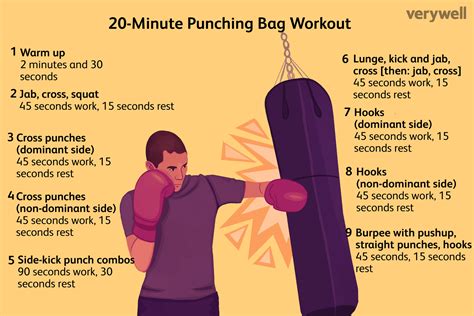
Sample Punching Bag Workout Routine
Here is a sample routine to get you started with a full-body heavy bag workout. Always start with a warmup to get the muscles loose and the body limber.
- Warm-up (5 minutes): Jumping jacks, arm circles, leg swings
- Basic Punches (10 minutes):
- Jab-and-cross combo (3 minutes)
- Hook deliveries (3 minutes)
- Rapid uppercuts (4 minutes)
- Defensive Positioning (5 minutes): Bob, weave, slip, and block from imaginary opponents to improve reflex time
- Cool-down (5 minutes): Stretching exercises
Breathing Techniques
Proper breathing is a major part of boxing-if you can’t breathe properly, you will fatigue fast. Start slowly and inhale to prep the punch, exhale when delivering it.
Is Punching Bag Training Right for You?
All levels of fighters benefit from a punching bag workout. A punching bag workout can improve many areas of life, from building strength and endurance to improving coordination and reducing stress. Whether beginners or professional boxers, all train with punching bags as a full-body workout that enhances striking and strengthens muscles.
Is punching bag training safe? It should go without saying that if you’re going to spar, you want to wrap first.
Conclusion
Freestanding punching bags are the perfect solution for home boxing enthusiasts, offering a combination of convenience, versatility, and effectiveness. Their portable design makes them ideal for small spaces, while their stability and durability ensure a great training experience. Whether you’re focused on boxing, kickboxing, or simply relieving stress, a punching bag workout can help you achieve your fitness goals.