Choosing the right uniform-whether it's a gi or a dobok-is essential for anyone practicing martial arts. You have probably seen a karate kid in a crisp white gi, a Muay Thai fighter in colorful shorts, and a BJJ grappler rolling in pajamas that look like they were made for battle. Each of those uniforms, or “gis” and “doboks” as some are called, has a special purpose. It’s not just about fashion, believe me! Think of it like this: a football player needs pads and a helmet, right? Well, martial arts outfits are specific tools for the art.
Each martial art has its own specific uniform designed to meet the unique demands of its techniques.
FUJI TruFit Sizing Guide - Get The Best Fitting BJJ Gi
Martial arts uniforms go by different names like gi, dobok, keikogi, or even mawashi, depending on the style. Most of these names come straight from the language of the country where the martial art grew up. So, “Gi” and “Keikogi” are Japanese words. “Dobok” is a Korean word. It makes sense, doesn’t it?
Understanding the Basics
What is a Gi?
In karate, “Gi” simply means “clothing” or “uniform.” It’s the outfit we wear when practicing, designed specifically for the movements in karate. Karate uniforms are called “karate Gi” or just “Gi.” It’s the traditional name for the set of jacket, pants, and belt that make up what we wear in training.
The “gi” encompasses various styles, each tailored to a specific Japanese or Brazilian martial art.
Read also: Individual Martial Arts Instruction
A quality karate Gi feels like an extension of yourself. Its purpose goes beyond appearance or tradition; it’s built to support the dynamic movements of karate. Understanding the roots and structure of the Gi helps you appreciate what to look for in your next Karate uniform.
Origins and Evolution of the Karate Gi
Karate’s origins trace back to Okinawa, Japan, where the Gi became the standard for martial arts training. While it took inspiration from the judo Gi, the karate Gi is typically lighter and designed to allow more fluid movements without extra weight. Through time, the design has evolved, but the essence remains the same: to represent discipline, respect, and the unity of mind and body.
Anatomy of a Karate Gi
The karate Gi typically includes three parts: the jacket, pants, and belt. Each piece serves a purpose. The jacket is cut for ease of movement, especially in the arms and torso, allowing you to execute blocks, punches, and holds with confidence. The pants are made to withstand kicks, squats, and stretches without tearing or restricting movement. The belt, tied around the waist, holds the uniform in place and represents your rank and achievements in martial arts.
Karate Gi: The Traditional Uniform
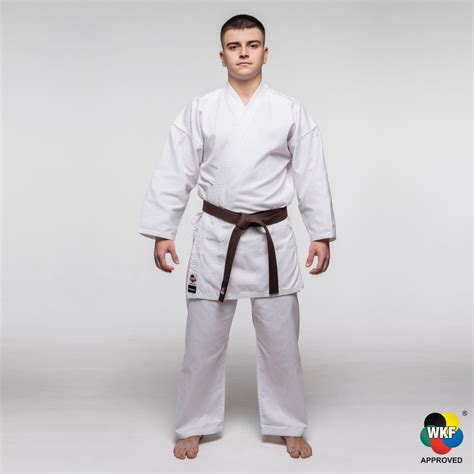
The traditional uniform for karate is called a Karate Gi. It’s a crisp, white outfit with a jacket, pants, and belt. The karategi is light, letting you move fast for strikes and blocks. The belt shows your rank: white for beginners, black for masters. A cool fact? The white color stands for purity and focus in Japanese culture.
The karategi, or gi for short, comes in different fabrics and varying fabric weights. Gis also come in different colors depending on the student's level of experience and the requirements of the teacher. Learning about the different types of karate uniforms helps shoppers make an informed purchase.
Read also: The Jade Fortress Martial Arts System
The karate Gi, a timeless symbol of martial arts tradition, has maintained its classic design for generations. Crafted with a loose-cut cotton jacket and pants, karate uniforms prioritize flexibility and comfort, allowing practitioners to execute a full range of dynamic movements. Secured with a cotton karate belt, these garments not only serve a functional purpose but also reflect a student's dedication and progress in their martial arts journey.
At KarateMart.com, we understand the importance of finding the perfect karate uniform for your training needs.
Material & Weave
Karate uniforms come in two types of fabric: a cotton-poly blend featuring 55 percent cotton and 45 percent polyester or 100 percent cotton fabric. Many cotton-poly uniforms feature a light or medium weight and they are less likely to shrink than 100 percent cotton products. This material makes a good everyday training uniform for adults.
Gis made from 100 percent cotton come in many weights, from light to heavy. Because this material is prone to shrinkage, cotton gis must be washed in cold water and air-dried.
A martial arts gi is typically made from cotton or a cotton-polyester blend, which helps it stay durable while remaining breathable during tough workouts. The material is woven tightly to handle grabbing, striking, and intense motion without tearing.
Read also: Deep Dive into Court Martial Films
Weight Categories
The right weight for your Karate Gi depends on your training goals, experience level, and comfort preferences. Karate uniforms come in four main weight categories: lightweight, medium weight, heavyweight, and super heavyweight.
- Lightweight Gi: A lightweight gi is ideal for beginners or anyone who practices in warmer environments. The thinner fabric keeps you cool during long workouts and allows unrestricted motion for strikes and kicks.
- Medium Weight Gi: A medium weight gi offers a perfect balance between comfort and durability. The fabric has more structure and produces a crisp "snap" sound when executing techniques.
- Heavyweight Gi: A heavyweight gi is made for advanced practitioners who value toughness and control. The thick fabric adds resistance, helping to develop strength and precision in techniques.
- Super Heavyweight Gi: A super heavyweight gi is the most durable option available. The dense weave provides unmatched structure and feedback, making it ideal for high-level training or frequent competition.
If you're new to karate, a lightweight or medium weight gi will keep you comfortable as you develop technique and flexibility. As you progress, you may prefer a heavier uniform that adds structure and durability to your training.
Because karate involves very active movement, uniforms must be stitched carefully.
- Lightweight uniforms are used by beginning students and for everyday training because they offer ease of movement and tend to keep the body cooler.
- Because they offer a good blend of weight and durability, medium-weight uniforms make a popular choice for everyday karate training.
- Heavyweight gis are most often used for instruction, competition or demonstration. The canvas-like material delivers long-lasting durability, and it features a snapping sound during movement, which adds to the drama of a demonstration or performance.
Fit and Design
The design of a Karate Gi serves both form and function. The loose sleeves and pants allow for a wide range of motion during kicks and punches, while the overlapping jacket provides a clean, traditional appearance. The belt (or obi) indicates the student's rank and ties the uniform together securely.
The traditional karate gi has earned its place as a staple in martial arts schools worldwide. Its versatility makes it a preferred choice for many disciplines, even beyond karate itself. While some styles like judo or jiu-jitsu demand specialized attire, the karate uniform's thoughtful construction ensures it accommodates the high kicks, stances, and techniques common across various practices.
Cuts of Karate Gi:
- Japanese cut has short sleeves and trousers for less restriction. This cut also has a longer lapel that prevents it from riding up over the belt (obi).
- The Kata cut has even shorter sleeves and is chosen more for aesthetic appeal.
- European Cut has longer sleeves and trousers. The lapel is shorter. This cut again is chosen for aesthetic appeal.
Color
Typically, karate schools require beginning students to wear white or black uniforms. The color of your Karate Gi usually depends on your dojo's traditions, competition rules, and personal preference. Most schools require a white uniform because it represents purity, discipline, and respect for the art. White is the most common choice and the standard color for most dojos around the world.
Karate uniforms come in a wide array of colours. Most Karateka still wear white. Different styles of Karate have slightly different uniforms though all share the same basic design, differing only in the lengths of sleeves, legs, and the skirt of the uwagi (jacket).
The Karate Gi is traditionally white because it represents purity, discipline, and humility. In Japanese martial arts culture, white symbolizes a beginner's mindset and a willingness to learn. The color white has deep cultural roots in Japanese martial arts. It reflects respect for the dojo, the instructor, and the practice itself.
While white remains the traditional color, some dojos now allow black or colored gis for advanced students, instructors, or special events. Wearing a white gi connects every practitioner to centuries of martial arts history.
Sizing
Karate students rely on sizing charts to find a uniform with the proper fit. Uniform sizes range from 0000 to 8, going from smallest to largest. To begin, shoppers look on a sizing chart for their height range and then find the corresponding weight range. Occasionally, a uniform that accommodates a student's weight will need to be tailored to attain the proper length.
A Karate Gi should fit comfortably and allow you to move freely in every direction. It needs to feel loose enough for kicking and striking but not so baggy that it catches or looks sloppy. The jacket should wrap securely around your torso with enough overlap to stay closed while training. The sleeves should reach just above the wrists when your arms hang naturally at your sides.
Choosing the right size Karate Gi ensures you can train comfortably and move naturally without restrictions. Most gi sizing charts are based on your height first, then adjusted for weight and body type. If your measurements fall between two sizes, it's usually best to go with the larger one. A gi that's too small can restrict movement and wear out faster at the seams. A well-sized gi moves with your body and enhances performance instead of holding you back.
Karate students find lightweight to heavyweight karate uniforms in a variety of sizes and colors at AWMA.
Belts
Karate belts are fashioned for double wrapping, which means the belt wraps twice around the waist before it is tied off. One exception is a child's belt, which features hook and loop closure and only wraps once around the waist. Generally, the size of a karate belt matches the uniform size. Occasionally, students require a larger or smaller belt. Karate belts range from size 00 at 72 inches to size 7 at slightly more than 131 inches.
To achieve the proper size for a karate belt, wrap a string or a measuring tape around the part of the waist where the belt is worn.
Judo Gi: Built for Grappling
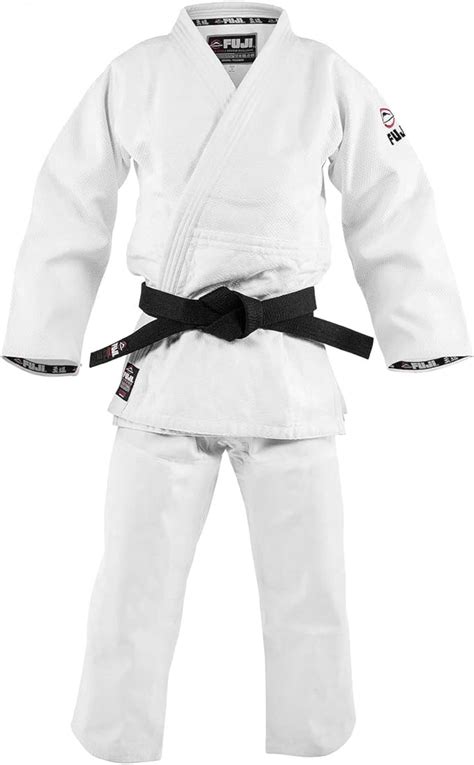
Judo’s uniform, the Judo Gi, is a tough, white outfit built for grappling. My judo friend once showed me how the judogi’s sturdy collar lets you grab and throw without tearing. The thick cotton stands up to tugs and pulls. Like karate, the belt shows your rank, tying you to judo’s Japanese roots.
A judo uniform is called a “judogi.” This combines “judo” with “gi” (clothing). The judogi consists of a heavy jacket (uwagi), pants (shitabaki), and belt (obi).
Club Gi vs. Competition Gi
- Club Gi: Club gis are typically single-weave, making them lighter and more affordable. These gis are great for beginners and those who practice Judo recreationally.
- Competition Gi: Competition gis are usually double-weave, which makes them heavier, more durable, and better suited to withstand the rigors of competitive Judo.
Regulations
For official competitions, especially those sanctioned by the International Judo Federation (IJF), your gi must meet specific requirements regarding fabric, fit, and color (typically white or blue).
BJJ Gi: The Grappler's Armor
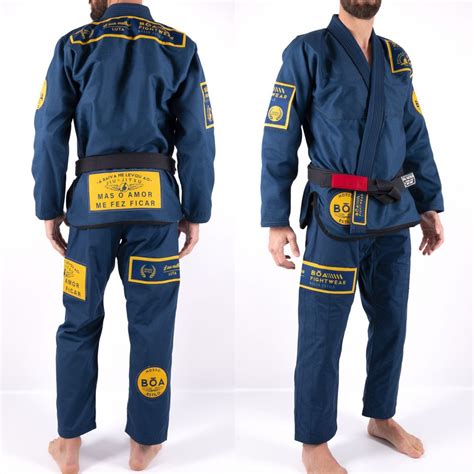
Starting judo? As a BJJ brown belt, I can tell you that BJJ Gi is my second skin. The GI’s tough cotton or ripstop fabric handles rough grappling, trust me, I have tested it in countless rolls! The belt shows your rank, from white to black. In BJJ, the gi must follow rules for tournaments, like IBJJF standards.
In Brazilian Jiu-Jitsu, we call our uniforms “gi” (pronounced “ghee”).
Club Gi vs. Competition Gi
Club gis are usually lighter, often made from single-weave or pearl-weave fabric.
Regulations
These gis must adhere to strict rules regarding color (usually limited to white, blue, and black) and fit, as set by the International Brazilian Jiu-Jitsu Federation (IBJJF).
Taekwondo Dobok: Designed for Kicking
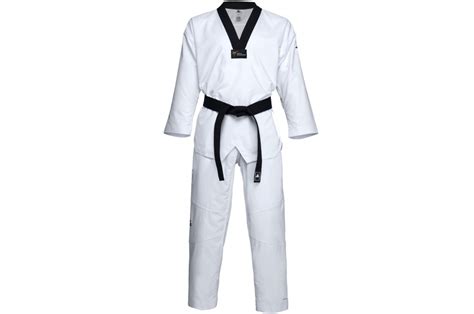
Taekwondo’s uniform, the dobok, is a light, white outfit with a V-neck jacket, pants, and belt. I tried taekwondo once, and the dobok felt like wearing clouds, perfect for high kicks! The V-neck sets it apart from other uniforms, and the belt shows your rank, just like in karate. Born in South Korea, the dobok reflects speed and precision.
Taekwondo uniforms, called doboks, come in three main types.
- WT (World Taekwondo) Style Dobok: Characterized by a V-neck pullover jacket, often without lapels, designed for sport Taekwondo.
- ITF (International Taekwon-Do Federation) Style Dobok: Features a traditional open-front jacket that ties, similar to a karate gi, often with a white or black trim depending on rank and organization.
Taekwondo uniforms don’t have strict “levels,” but they change with rank. Beginners wear a plain white dobok with a white belt. Some schools use colored doboks (like blue or red) for special teams or instructors. Your belt shows your level, not the dobok itself.
Dobok Styles
- Student Dobok (Color Belts): Typically plain white with minimal decoration, featuring the school's emblem and ITF logo.
- 1st to 3rd Dan Black Belt Dobok: Includes a black collar and black piping along the sleeves and pants.
- 4th to 6th Dan Black Belt Dobok: Features additional black trim or embroidery, signifying an advanced rank.
- Black Belt Dobok: Features a black v-neck collar.
Other Martial Arts Uniforms
Kendo
Kendo uniforms look completely different from other martial arts clothes. The kendogi is usually navy blue or white with shorter sleeves than a karategi. What’s really unique is the hakama - those wide, pleated trousers that almost look like a skirt.
Aikido
Aikido practitioners wear a uniform similar to judogi but with some differences. What sets aikido apart is that senior students also wear the hakama (pleated trousers), similar to kendo. The hakama in aikido helps hide foot movements, making it harder for opponents to predict your next move.
- Traditional vs. Modern: The gi is typically heavier and more durable, similar to a Judo gi, but often with additional reinforcement to accommodate the varied techniques used in Jujitsu.
- Material & Design: Some Aikido practitioners prefer a slightly lighter gi, especially in warmer climates, while still retaining the necessary durability for practice.
- Fit: The gi is designed to allow freedom of movement, with reinforced stitching at the shoulders and sleeves to handle the stress of training.
Muay Thai
Muay Thai’s uniform is all about Muay Thai shorts. When I first stepped into a Muay Thai gym, I was surprised, no jacket, no belt, just shorts. Muay Thai fighters wear shorts and sometimes tops that allow for maximum movement. These shorts are shorter than what you would see in other martial arts. Why? Most Muay Thai shorts feature wide leg openings and a high cut that makes high kicks easier.
Mixed Martial Arts (MMA)
Mixed Martial Arts (MMA) uses MMA gear, a combo of a rash guard and fight shorts or leggings. I have rolled with MMA fighters, and their gear never gets caught like my BJJ gi does! Many fighters add sponsor logos for a pro look. New to MMA? As a BJJ brown belt, I love the freedom of no-gi; my rash guard feels like a second skin! It’s great for grappling without the gi’s grips. Starting no-gi BJJ?
Boxing
Boxing keeps it simple with shorts, shoes, and sometimes a sleeveless top. Boxing trunks sit higher on the waist than other martial arts shorts. The shoes are just as important as the shorts.
Kung Fu and Wushu
- Traditional Kung Fu Uniforms: Often consist of loose-fitting pants and a top with frog-button closures (often a mandarin collar). The fabric is typically cotton or silk, allowing for a wide range of motion necessary for dynamic kicks, stances, and intricate hand movements. Colors can vary widely, from traditional blacks and whites to more vibrant hues.
- Wushu Uniforms (Modern Sport): These are often more fitted and streamlined than traditional uniforms, made from lighter, synthetic materials for acrobatic movements and speed.
Capoeira
Abadá: These are loose-fitting, white cotton pants that are the hallmark of Capoeira attire. The white color is symbolic of purity and peace.
Krav Maga
Krav Maga, the self-defense system developed for the Israel Defense Forces, prioritizes practicality and real-world application.
- T-shirt: Typically a plain, often black or white, t-shirt with the Krav Maga logo.
- Tactical Pants or Cargo Pants: Durable, comfortable pants that allow for full range of motion. Jeans or athletic pants are also common.
Sambo
Sambo, a Russian martial art and combat sport, combines elements of Judo, wrestling, and other combat systems.
- Kurtka (Jacket): The defining feature of the Sambo uniform is the Kurtka, a sturdy jacket similar to a judogi but with some key differences. It has straps for the belt and sleeves that are shorter and wider, making it harder for opponents to grip. It often features small “wings” or loops under the arms for gripping.
Hapkido
- Dobok (Korean Uniform): Like Taekwondo, Hapkido practitioners wear a Dobok, typically white.
- Jacket Design: While some Hapkido doboks feature the V-neck pullover style common in WT Taekwondo, many traditional Hapkido schools use an open-front jacket that ties, similar to a traditional karate gi or ITF Taekwondo dobok.
HEMA (Historical European Martial Arts)
HEMA is a relatively modern practice focused on the reconstruction and revival of historical European fighting systems based on surviving treatises and manuals.
- Fencing Jacket/Gambeson: Heavily padded jackets (often synthetic for modern HEMA, sometimes cotton) designed to absorb impacts from blunt training weapons.
Gi Care Tips
Proper care extends your uniform’s life and maintains hygiene. Always wash it immediately after training using cold water and a mild detergent to prevent shrinking, fading, and odor. For best results, hang dry to prevent shrinking and preserve fabric integrity. If using a dryer, opt for a low-heat setting.
Taking proper care of your Karate Gi helps it last longer, stay comfortable, and look sharp for every class. Wash your uniform in cold or lukewarm water using a gentle detergent. Hot water can shrink cotton fabric and weaken the fibers over time. Avoid using bleach, as it can damage stitching and cause yellowing. Air drying is the best method for maintaining the integrity of your gi. Hang it on a sturdy hanger or clothesline in a shaded area to prevent sun fading. If you need to use a dryer, choose the lowest heat setting and remove the gi while it's still slightly damp to avoid shrinkage.