In the 1930s, a poised and well-dressed young woman named May Whitley entertained Londoners with a stage performance demonstrating the intricacies of self-defense. This demonstration of jujitsu, captured in a British Pathé film entitled "The Weaker Sex!", showcases Whitley's skills and charisma.
Whitley's sparring partner was Charles Cawkell, a member of Britain’s first international Judo team. In their performances at the Trocadero in London in 1933, Whitley nonchalantly delivered hardcore jujitsu justice while Cawkell played the role of the moaning thug assailant.
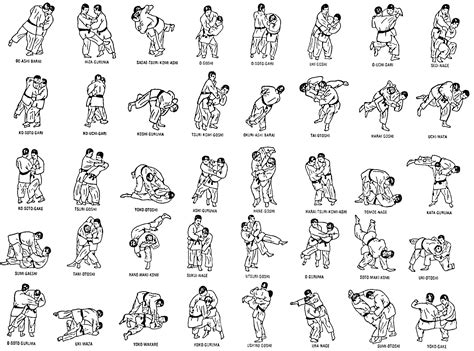
It's utterly brilliant to watch May meting out some suitable hardcore jujitsu justice, in between chatting to the camera and touching up her make up completely unrattled, as Charles plays the thug assailant.
However, the partnership between Whitley and Cawkell was not to last. By 1934, their sparring had moved from the stage to a courtroom.
This is May Whitley explaining the aim of jujitsu in a self-defence class in 1933. #jiujitsu #women
Legal Battles and Continued Performances
On July 26, 1934, the Daily Mirror reported that Charles Cawkwell, a masseur and jiu-jitsu exponent, sought an injunction against May Whitley, a West End cabaret performer. Cawkwell aimed to restrain Whitley from performing jiu-jitsu in a way that infringed on his exhibition. By this time, Whitley was already performing her act with another Judoka, James Harrison, during the summer season at the Portsmouth Hippodrome.
Read also: Training at Alliance Chula Vista
While the reasons for their falling out remain lost to time, May appears to have won the case against the injunction. By September 1934, she was at the Leeds Empire performing her jujitsu act in a show headlined by comedians Flanagan and Allen.
Marriage and Disappearance from the Public Eye
According to a March 17, 1935 piece in The Straits Times, Whitley’s act caught the attention of Ahmed Abdullah, a millionaire from Turkey. The article explained that Abdullah’s father was a wealthy tobacco merchant, making Whitley the eventual heiress to a fortune.
Though Abdullah’s family was initially against the union, Whitley was quoted as saying she was ready to convert to Islam: “I am to be accepted into Muhammedanism.” After that pronouncement, media coverage of Whitley appears to have ceased. According to martial arts historian Joe Svinth, “May Whitley” was possibly an abandoned stage name, and any further newspaper mentions of her adventures likely died along with it.
May Whitty: A Possible Connection
It's interesting to note that Dame Mary Louise Webster (née Whitty), known professionally as May Whitty, was an English stage and film actress who achieved significant recognition in Hollywood. While it's speculative, it's worth considering whether "May Whitley" was a stage name, and if there's a connection to Dame May Whitty.
Dame May Whitty had a successful career both on the West End stage and in British films. She made her Hollywood film debut at the age of 72, recreating her 1935 stage role in the Hollywood film Night Must Fall (1937), which also starred Robert Montgomery and Rosalind Russell. She received an Oscar nomination.
Read also: New Jujutsu Odyssey Codes
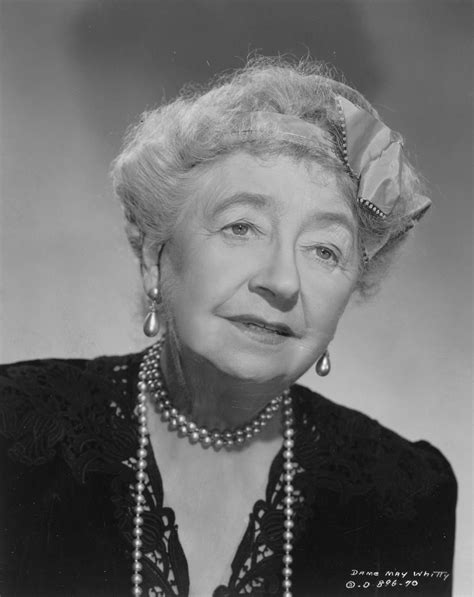
Despite the lack of concrete information about May Whitley's later life, her performances and demonstrations of self-defense left a mark on London's entertainment scene in the 1930s. Her story serves as a reminder of the diverse and often overlooked figures who have contributed to the history of martial arts.
The Broader World of Martial Arts
May Whitley's story fits into the larger context of martial arts history. Many individuals have shaped and popularized various disciplines, leaving a lasting impact on millions of practitioners worldwide. Some of the most influential figures include:
- Kanō Jigorō: The founder of judo, which was the first Japanese martial art to gain international recognition and become an official Olympic sport. Kano's innovations include the use of black and white belts, as well as dan rankings.
- Gichin Funakoshi: The father of karate, who introduced the striking art to the Japanese mainland in 1922.
- Royce Gracie: The world’s best-known exponent of Brazilian Jiu-Jitsu, who co-founded the Ultimate Fighting Championship and demonstrated the efficacy of his art through actual fighting.
- Bruce Lee: The father of Jeet Kune Do, who essentially introduced Chinese martial arts to the world and inspired countless millions to take up the practice of martial arts.
- Choi Hong Hi: The father of Taekwondo, a Korean, striking-based martial art with an emphasis on kicks.
These figures, along with countless others, have contributed to the rich and diverse landscape of martial arts, each leaving their own unique legacy.
Read also: Benefits of Jiu Jitsu