If you’re a jiu jitsu enthusiast, you know that mastering this complex martial art requires dedication, patience, and consistent practice. This guide delves into essential techniques, drills, and strategies to elevate your jiu jitsu game.
Fundamentals and Training
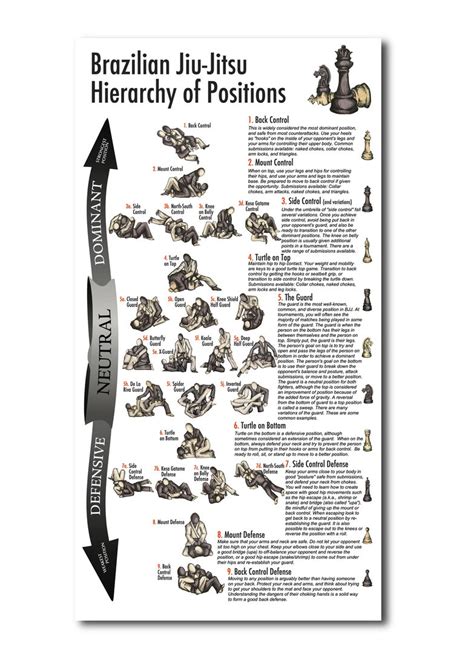
Perfect Your Basics: Just like building a strong foundation for a building, mastering the fundamental techniques of jiu jitsu is essential. Spend time perfecting your basic positions, such as mount, guard, side control, and back control. Focus on your posture, leverage, and transitions.
Train Regularly: Consistency is key in jiu jitsu. Make it a priority to train regularly, and set specific training goals to keep yourself motivated. Aim to attend classes or practice drills at least 2-3 times per week to build muscle memory, improve your endurance, and sharpen your skills.
Study Technique Videos: In addition to regular training, take advantage of the vast array of technique videos available online. Many experienced jiu jitsu practitioners and instructors share their knowledge through instructional videos, which can be a valuable resource for expanding your technical repertoire.
Compete in Tournaments: Participating in jiu jitsu tournaments can be a great way to challenge yourself and test your skills against other practitioners.
Read also: Training at Alliance Chula Vista
Focus on Your Health and Recovery: Jiu jitsu is physically demanding, and taking care of your body is crucial for long-term success. Pay attention to your nutrition, hydration, and sleep to optimize your performance on the mat.
Strength and Conditioning
For the BJJ athlete, a strength advantage is a huge benefit. It won’t make up for a large gap in technique and skill, but it will narrow it.
Total Body Relative Strength: This training plan deploys classic total body barbell exercises with significant level changes, as well as upper body pushing and pulling strength exercises. Loading is heavy, and volume (total reps) is low.
Grip Strength and Strength Endurance: Studies of BJJ athletes in competition showed a 20% loss of grip strength following a single match. The grip demand is a huge part of the sport, and stronger grip over the duration of a match will enable the athlete to put themselves in better positions for points.
Work Capacity based on Level Change: BJJ can transition from standing to the knees to on the ground in a single match or sparring session. The work capacity development in this training focuses on movements which replicate a fast paced match by constantly changing levels at bodyweight or under load.
Read also: New Jujutsu Odyssey Codes
Chassis Integrity: The chassis strength demand is huge in BJJ, from a variety of positions. You will train mid-section rotation, anti-rotation, and extension movements from the back, standing, and hanging.
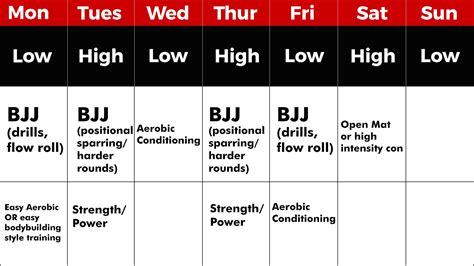
Basic Aerobic Conditioning: BJJ matches are marked by a low to moderate aerobic/cardio efforts broken by intense, high efforts as competitors fight for advantage. This plan can be conducted in the same day as BJJ practice, or between practice.
Detailed Techniques and Strategies
Guard Techniques
In Brazilian Jiu-Jitsu, the double arm under the legs guard position technique is a fundamental move that allows the practitioner to control their opponent's movement and set up various attacks. To execute this technique effectively, follow these steps:
- Start by securing both of your opponent's legs with your arms.
- Keep your elbows tight to your body to prevent any escapes.
- Engage your core and maintain a strong base to stabilize your position.
- From this guard position, you can work towards sweeping your opponent or transitioning to a submission hold.
Guard Defense
Defending against an opponent's guard pass is crucial in Brazilian Jiu-Jitsu to avoid being put in a disadvantageous position. Here are some tips for executing a guard defense technique:
- Stay active with your guard, constantly adjusting and repositioning to create barriers for the pass.
- Use your grips strategically to control your opponent's movement and limit their options.
- Focus on hip movement to create angles that make it difficult for your opponent to pass your guard.
- Utilize framing techniques to create space and prevent your opponent from establishing dominant control.
Crucifix Position
The crucifix position is a highly advantageous control position in Brazilian Jiu-Jitsu that allows for a variety of submission opportunities. To explore different submission options from the crucifix position, consider the following variations:
Read also: Benefits of Jiu Jitsu
- Armbar: Control your opponent's arms and isolate one for a powerful armbar submission.
- Choke: Use the crucifix position to set up a collar choke or a shoulder choke for a quick submission finish.
- Shoulder Lock: Apply pressure on your opponent's shoulder joint to force a submission or create openings for other attacks.
Sleeve Belt Rib Roll Over Counter Attack
The sleeve belt rib roll over counter attack technique is a dynamic move that can catch your opponent off guard and allow you to gain the upper hand. Follow these steps to execute this technique effectively:
- Start by gripping your opponent's sleeve and belt to control their upper body.
- Engage your core and initiate a smooth roll over your shoulder to destabilize your opponent.
- Use the momentum from the roll to transition into a dominant position or set up a submission hold.
Hook Flip Option
The hook flip option is a strategic move that can be utilized to gain leverage and control in the top position. To execute the hook flip effectively, follow these guidelines:
- Establish a strong base and posture to maintain control over your opponent.
- Hook your leg around your opponent's body and use it as a lever to manipulate their position.
- Engage your core and initiate a controlled flip to transition to a more dominant position or set up a submission opportunity.
Drills and Strategies
When it comes to mastering the art of grappling, understanding and executing various drills and strategies is crucial. This section will delve into five key aspects that are essential for improving your skills in Brazilian Jiu-Jitsu.
- Defending the Bull Fighting Guard Pass: One of the most common guard-passing techniques in Brazilian Jiu-Jitsu is the bull fighting guard pass. This maneuver involves the passer attempting to move around the legs of the guard player by creating space and applying pressure. To effectively defend against this pass, specific drills can be practiced.
- Drill Tip: Practice creating frames with your arms and legs to create barriers for your opponent's advancements. Focus on hip movement and maintaining proper distance to prevent the bull fight pass.
- Mastering the Clock Choke: The clock choke is a powerful submission that can apply immense pressure on your opponent's neck. This technique is highly effective when executed correctly and can lead to a swift victory. Mastering the clock choke requires precision and understanding of leverage.
- Technique Tip: Start by securing your opponent's lapel with a deep grip, then swiftly transition to their back while maintaining control. Apply pressure by utilizing your forearm across their neck, mimicking the hands of a clock.
- Strategic Transitions: Transitioning between positions is a key aspect of Brazilian Jiu-Jitsu. Knowing when and how to move from side control to mount, or vice versa, can dictate the flow of the match. Having a strategic approach to these transitions can give you the upper hand.
- Utilize underhooks and overhooks to secure control during transitions. Timing is crucial; wait for the right moment to make your move. Be aware of your opponent's reactions and adjust your strategy accordingly.
- Controlling Limbs: Controlling your opponent's arms and legs is fundamental in dominating the grappling exchange. By restricting their movements and limiting their options, you can increase your chances of success in securing advantageous positions or submissions.
- Technique Focus: Practice maintaining control over your opponent's limbs through grips and transitions. Work on breaking their posture and disrupting their base to gain the upper hand during the grappling exchange.
- Preventing Opponent from Facing You: Keeping your opponent from facing you is crucial to maintaining control and dictating the pace of the match. By understanding how to disrupt their movements and counter their attempts to reposition, you can stay one step ahead in the grappling game.
- Focus on off-balancing your opponent to prevent them from facing you directly. React swiftly to their movement patterns and anticipate their next actions. Utilize pressure and leverage to thwart their attempts to change positions.
Submission and Defense Techniques
As you delve deeper into the world of martial arts, mastering submission and defense techniques becomes essential for both self-improvement and self-defense. In this blog section, we will explore various techniques that will empower you to control your opponent, break free from their grip, apply effective joint locks, and ultimately adjust your strategies to counter your opponent's movements.
- One of the fundamental techniques in submission and defense is gaining control over your opponent's ankle while in the foot-on-hip position. By leveraging this position effectively, you can disrupt your opponent's balance, limit their movement, and set yourself up for various submission opportunities.
- When your opponent manages to secure a tight grip, knowing how to break free is crucial. The belt technique offers a strategic way to release yourself from their hold, creating openings for counterattacks or transitioning into advantageous positions.
- Mastering wrist locks and the kimura position provides you with versatile submission and control options. By applying proper technique and leverage, you can exert pressure on your opponent's joints, forcing them to submit or leading to a positional advantage.
- Effective submission techniques rely not only on correct positioning but also on applying pressure in a controlled manner. Understanding how to generate and maintain pressure during submissions increases their effectiveness and reduces the likelihood of your opponent escaping.
Jiu Jitsu for Self-Defense
Adaptability is key in martial arts, especially when facing dynamic opponents. Can you think of facing an attacker who is noticeably bigger in size and more aggressive? In most cases, we will try to escape the scene and find help. But you should at least be able to defend yourself to some extent. Jiu Jitsu self defense techniques are extremely helpful. Jiu Jitsu focuses on technique and leverage over pure power. So, it has become famous all over the world for personal safety as one of the most practical martial arts. In this informative piece, we’ll share with you the principles and benefits of this remarkable art as well as 10 highly effective self-defense techniques of Jiu Jitsu.
Jiu Jitsu focuses on neutralizing the opponent rather than attacking. In the world of self-defense, size, and strength can often be intimidating factors. But in Jiu Jitsu, leverage and techniques are more important than raw strength. In Jiu Jitsu, you use your opponent’s body to your benefit by controlling their moves with joint locks and chokes. Another fundamental principle of Jiu Jitsu is prioritizing position before submission. When you get your attacker in a better position, like mount or side control, before attacking, it’s much harder for them to get away or respond. Remember that patience is very important here.
Jiu Jitsu is a powerful martial art form with a great deal of potential. All the techniques you can learn, and all the skills you can gain from Jiu Jitsu can help you better deal with tough situations. Here, we have compiled a list of 10 incredible Jiu Jitsu techniques for self-defense.
- Punch Defense: Defending yourself against punches is really important because, in real-life situations, street fights often begin with strikes being thrown at you. You can keep yourself safe and in control with effective punch defense techniques rooted in Jiu Jitsu principles.
- Ground Fighting: In a street fight, it’s common for the brawl to end up on the ground rather quickly.
- Guard Pulling: Guard pulling is a fundamental technique in Brazilian Jiu-Jitsu (BJJ). And it’s very helpful in aggressive situations. Imagine this: Your attacker comes charging at you with fierce strikes. This strategy keeps you safe from further harm and gives you control over the situation. You are putting your enemy in a vulnerable position on the ground.
- Escaping the Mount: Imagine finding yourself on the ground with a violent person sitting firmly on top of you, ready to strike. Escaping from the mount in Jiu Jitsu teaches you how to regain control. There are techniques like bridge and roll or hip bump and shrimp escape.
- Using the Guard: When you are under attack on the streets, one difficult situation is that you are on your back with an attacker looming over you. This guard will allow you to see the person and protect yourself using your legs. Closed guard is where your legs are wrapped tightly around your opponent’s back. In open guard, your legs hook onto his body or limbs to create distance.
- Armlocks and Choke Holds: In many situations that ask for self-defense, you will see ground fights with lots of grappling. Armlocks involve manipulating your opponent’s joint to put pressure on it. Choke holds, on the other hand, stop the flow of oxygen by locking arms or legs around the neck and putting pressure on it.
- Side Control: When you find yourself in a side control position during a self-defense situation, it’s important to know how to control your opponent effectively. In Jiu Jitsu, side control is considered one of the dominant positions. In this position, you face your opponent perpendicularly while hovering above their legs with chest-to-chest contact. From here, you have a few options.
- The Kimura: The Kimura is a versatile and effective technique in Brazilian Jiu Jitsu for controlling your opponent’s movements and putting them into submission. So, when you put controlled pressure without being overly rigid, you can manipulate your opponent’s arm to the point where they have no choice but to submit or risk injury.
- Hip Bump Sweep: Imagine regaining your guard or ending up with the attacker in your closed guard after a scramble. One of the best ways to get from bottom guard to full mount against your attacker is to use the hip bump sweep.
- Getting Back on Your Feet: Being on the ground is always dangerous. Your ultimate goal should always be to get back on your feet and find safety. Jiu Jitsu mainly focuses on ground fighting. Even if you end up on the ground during a street fight or altercation, Jiu Jitsu gives you the skills and athleticism to quickly get back onto your feet.
Gracie Jiu Jitsu Basics w/ Rorion Gracie Pt. 1 (Takedowns)
Jiu Jitsu teaches you simple, useful, and effective techniques for any circumstance where you need to protect yourself from an attack. Jiu Jitsu stands out for its emphasis on realistic training and live sparring, known as rolling. Think about a fight on the street or a conflict at the bar. By regularly engaging in live sparring sessions, practitioners of this martial art learn how to defend themselves when they’re under pressure.
Self-defense methods in Jiu Jitsu are very flexible, so they can be utilized in a lot of different scenarios. You can use these techniques to control your opponent, perform submission holds, and escape from them, no matter what the situation is. What makes Jiu Jitsu even more remarkable is that as it’s all about leverage and technique, size or strength doesn’t matter! This means that it’s a martial art suitable for anyone, regardless of their size or gender.
Jiu Jitsu comes with many benefits. As an incredible form of martial art, it strengthens all practitioners with skill, confidence, and resilience. All the techniques we have discussed, from punch defense and guard pulling to arm locks, chokes, the Kimura, and more, will come in handy if you learn them right.