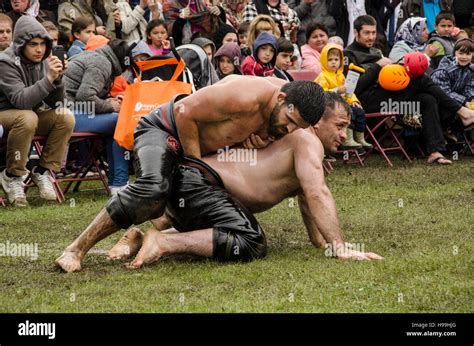
In a world of fleeting trends and digital distractions, there exists a spectacle of raw, primal, and deeply spiritual power that has captivated audiences for centuries. Imagine a sun-drenched field, the air thick with the scent of grass and olive oil. Before you stand titans, their bodies glistening under the Turkish sun, clad in stiff leather trousers, locked in an embrace that is as much a dance as it is a struggle. This is "Yağlı Güreş"-the legendary "Turkish Oil Wrestling". This is not just a contest of strength; it is a ritual.
Turkish Oil Wrestling, or Yagli Gures, is one of Turkey's oldest sports and a historic festival that has been held annually since 1346. Two men, covered in oil, wear trousers and wrestle, battling it out in matches that can last for hours to become champions. It is open to men from all cultures, regions and ages without discrimination, with as many as thousands entering each year. As the wrestling begins, the drum and shawm bands start to play the festival's traditional repertoire, adding to the event's excitement as the two men prepare to beat their opponent and be crowned Başpehlivan.
To understand Turkish Oil Wrestling is to understand a fundamental piece of the Turkish soul. It is a pilgrimage for its participants and a mesmerizing tradition for its spectators.
Yagli Gures is the national sport of Turkey and wrestling is deeply rooted in Turkish culture. These amazing traditions have been passed down for centuries from master to apprentice, the apprentice being called a Cirak. Yagli Gures is an extremely special style of wrestling and needs more attention as it definitely is one of the hardest and most challenging styles.
The History of Yağlı Güreş
The story of Turkish Oil Wrestling begins not in a stadium, but on the battlefields of the ancient world. The earliest evidence of wrestling in Anatolia dates back to the civilizations of the Hittites and the Babylonians. In Assyria, ancient Egypt, and Babylonia, oil wrestling was performed. It spread to Iran and Turkey during the First Achaemenid conquest of Egypt. Oil wrestling was performed by ancient communities 4,500 years ago in Thrace and the Balkans. Oil wrestling can be traced back to ancient Sumer and Babylon. It was also a popular sport amongst the Ancient Greeks and the Romans.
Read also: The Art of Combat
Cognate forms of folk wrestling practiced by Turkic-speakers are found throughout Western Eurasia (i.e. Europe and Central Asia) under the names Köraş, Khuresh, Kurash and more. After the conquest of Anatolia by Seljuk Turks, a form of traditional freestyle wrestling called Karakucak Güreşi (literally "Ground hug") was popularized, where special leather clothing was worn and wrestlers commenced the competition by pouring olive oil on their bodies. This form evolved into what is currently known as Yağlı Güreş, or Turkish oil wrestling.
In the Ottoman Empire, wrestlers trained in special schools called tekke (تکیه), which were both athletic and spiritual centers.
Kırkpınar Tournament: The Heart of Oil Wrestling
The most pivotal event in Oil Wrestling history is the Kırkpınar Tournament, held annually in Edirne. Evidence from Ottoman chronicles and documents indicate that the Kırkpınar Games have been held every year since 1362. The Guinness Book of World Records accepts this as the world's oldest continually sanctioned sporting competition. The games have only been cancelled about 70 times.
The legend, dating back to 1362, tells of two Ottoman soldiers, Ali and Selim, who were brothers in arms. During a military campaign to conquer Rumelia, they stopped to rest. To pass the time and test their strength, the two brothers began to wrestle. Their contest was so evenly matched that they wrestled for hours, neither able to secure a victory. Their comrades, deeply moved, buried them under a fig tree. Years later, when soldiers returned to the site, they found a spring bubbling up from the ground where the brothers had fallen.
This origin story sets the tone for the entire sport. It’s not about animosity, but about respect, brotherhood ("er meydanı" - the field of men), and pushing human limits.
Read also: Mastering the RNC
Each year in June, the Turkish Oil Wrestling tournament is held at Kirkpinar, Edirne, in Turkey. At that event, two soldiers fought to the death in a wrestling bout, and the winners were given horses, camels or bulls as a prize. Although now, champions are crowned with a golden belt and cash prizes. For most, though, the award of being crowned the winner.
The Rules of Turkish Oil Wrestling - EXPLAINED!
The Essence of Oil
The most distinctive and defining feature of this sport is, of course, the oil. Before their matches, wrestlers douse themselves from head to toe in olive oil. From a practical standpoint, the oil makes gripping incredibly difficult. It neutralizes brute strength and shifts the contest from a simple test of power to a complex battle of technique, balance, leverage, and strategy. A wrestler cannot simply rely on his muscles to overpower an opponent; he must use skill to find a hold, often resorting to intricate moves that require inserting a hand into the opponent's kıspet (the leather trousers).
The oil was first introduced to ensure fairness, making the wrestling about the tactic rather than the wrestler's size or strength. The addition of oil also makes it difficult to stand and get any grip, as the sweat mixes with the oil on the grass around them. It ensures the match is fair, as both opponents are at a disadvantage allowing men of different weights to battle.
Symbolically, the oil represents purity and a connection to nature. Olive oil has long been considered a sacred substance in Anatolian cultures, used in religious rituals, for healing, and as a source of light and nourishment. By covering themselves in it, the wrestlers are purified, set apart from the ordinary world, and prepared for a sacred contest.
The Pehlivan: More Than Just a Wrestler
A pehlivan (Turkish oil wrestler) is not merely an athlete; he is an archetype of Turkish virtue. The word itself is of Persian origin, meaning "hero" or "champion." The code of conduct for a "pehlivan" is as important as his wrestling prowess. Historically, "pehlivans" were pillars of their communities. They traveled the land, not just to compete, but to spread a message of integrity and strength. This ethos is encapsulated in the saying, "Er meydanı" - the field of men, where true character is revealed not just in victory, but in how one handles defeat. A great "pehlivan" shows respect to his opponents, his elders, and the tradition itself.
Read also: Learn the Rear Naked Choke
The Kıspet: A Symbol of Tradition
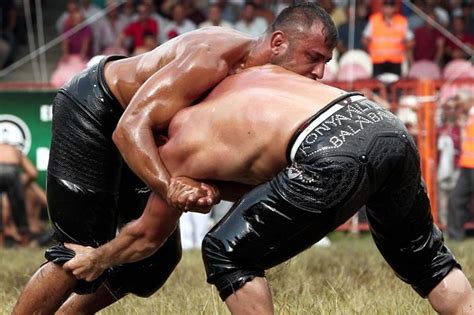
The "kıspet" are the traditional leather trousers worn by the wrestlers. Made from water buffalo or cow hide, weighing up to 13 kilograms, they are a crucial piece of equipment and a powerful symbol. Crafting a "kıspet" is an artisanal skill passed down through generations. Each pair is custom-made and molded to the wrestler's body. The process of breaking in a new "kıspet" is a rite of passage in itself, often requiring the wrestler to soak them and wear them for extended periods to achieve the perfect fit.
Rules and Gameplay
A Turkish Oil Wrestling match takes place on an open grass field. The objective is to achieve a firm hold and control over one's opponent, resulting in a pin. However, the primary method of scoring is by reaching into the opponent's "kıspet". This act, known as "paça kazanmak", is a significant achievement.
Unlike Olympic wrestling, oil wrestling matches may be won by achieving an effective hold of the kisbet, the loose-fitting leather pants worn during oil wrestling. Thus, the wrestler aims to control his opponent by putting his arm through the latter's kisbet. To win by using this move is called paça kazık.
Turkish Oil wrestling has a few interesting rules, the first of which is that the wrestlers can actually reach within the opponent’s pants in order to achieve a better grip for throwing. The wrestlers are not allowed to grab the genitalia of the opponent.
Here's a summary of the rules:
- Attire: Wrestlers must be covered in oil and wear kıspet (traditional leather trousers).
- Time: Matches are limited to 40 minutes, with a 7-minute final score period if needed.
- Doping: Illegal substances are banned, leading to disqualification.
- Winning: The goal is to position the opponent so their belly button faces the sky.
Previously, there was no fixed time limit on the fight, meaning it can last from minutes to hours. However, two men previously fought for longer than a day and unfortunately lost their lives, so a fixed time limit of 40 minutes is now placed on all matches.
Traditions and Rituals
The most important of rituals is peşrev, a theatrical introduction to wrestling, prayer, and warm-up at the same time. Rituals like peşrev also exist in the other kinds of Turkish traditional wrestling (karakucak, aba güreş), but they are much simpler and don't have a developed symbolism. At the beginning of peşrev, wrestlers line up in rows with the main pehlivan (başpehlivan, the winner of the previous competitions) on the right. Wrestlers then look toward the Kıbla's side; they take the right hand of the competitor in their own right hand, take the competitor's left hand in their left hand, and listen to cazgır prayer. Holding each other's hands means: "You are more than a brother for me; you are my comrade in a holy war, in struggle on the way of martyrdom (şehadet).
Training and Apprenticeship
Every wrestler from a traditional upbringing has an apprentice they help shape. The master trains with his apprentice, also known as the 'Cirak', who teaches the art of oil wrestling and shows them any tactics they have learnt. When it comes time for the master wrestler to quit the 'arena of the brave', his apprentice will step in to continue the tradition.
The Modern Era and Global Appeal
In the 21st century, Turkish Oil Wrestling faces the challenge of staying relevant. Yet, it is experiencing a remarkable resurgence. While it remains a deeply Turkish tradition, its appeal is becoming more global. Modern "pehlivans" often come from specific regions in Turkey, like the wrestling heartland of "Karakucak". They still undergo rigorous training, but now often combine traditional methods with modern sports science. The Kırkpınar Festival itself has evolved into a massive cultural event, featuring music, food, and a vibrant fair, attracting tens of thousands of tourists.
The Experience of Watching Yağlı Güreş
To watch a Turkish wrestling match is a multisensory experience. The visual of the oiled bodies in the sunlight is unforgettable. The sound is a symphony of its own: the deep, rhythmic breathing of the wrestlers, the slap of flesh on flesh, the calls of the referees, and the encouraging shouts from the crowd. The matches can be long, strategic marathons. It’s not uncommon for contests to last an hour or more, a true test of endurance. The tension builds slowly, with periods of stalemate suddenly erupting into a flurry of explosive action as one wrestler seizes an opportunity.
Turkish Oil Wrestling is a powerful anomaly in the modern sporting landscape. In an age of hyper-commercialization, it remains a profoundly spiritual and cultural practice. It is a sport where the journey and the code of honor are as important as the victory. From the legendary fields of Kırkpınar to local festivals across Turkey, the chain that connects the 14th-century brothers Ali and Selim to the "Başpehlivan" of today remains unbroken. It is a living monument to Turkish history, a dramatic display of human physicality, and a beautiful testament to the enduring power of tradition.
So, the next time you see an image of these glistening giants locked in their timeless embrace, remember-you are not just looking at a sport.