Traditional martial arts are more than mere physical combat techniques; they represent a profound connection to cultural heritage, philosophy, and spirituality.
Traditional martial arts refer to the ancient combat practices and disciplines that were developed and passed down over generations in different cultures. These arts were often created for survival, self-defense, and warfare, but they also carried deeper philosophical and spiritual meanings.
In many parts of the world, traditional martial arts are not just about fighting. They are deeply intertwined with cultural heritage, spirituality, and philosophy. For instance, in East Asia, the practice of martial arts is often linked to Buddhist, Taoist, or Confucian ideals, promoting values like discipline, respect, and inner peace. Meanwhile, African and Southeast Asian martial arts often involve ritualistic elements that reflect local religious practices.
It’s essential to differentiate traditional martial arts from modern combat sports. While modern forms like MMA or Krav Maga focus primarily on effectiveness in real-world combat situations, traditional martial arts often include a broader range of techniques and philosophies, from meditation to artistic forms, that emphasize personal growth and spiritual enlightenment alongside physical prowess.
Martial arts have been present since the dawn of human history. In ancient civilizations, combat techniques were necessary for survival, be it for hunting, protecting one's tribe, or engaging in warfare. These early practices laid the foundation for the martial systems we know today.
Read also: The History of Turkish Oil Wrestling
From the ancient Egyptians to the Mesopotamians, early human societies developed forms of combat that would later influence structured martial systems. Weapons like spears, bows, and swords were standard, but hand-to-hand combat techniques were also crucial, particularly in times of war.
Many martial arts styles have their roots in battlefield tactics. As civilizations advanced, so too did their methods of warfare, leading to the creation of sophisticated systems of armed and unarmed combat that would later evolve into formal martial arts practices.
As they continue to evolve, their rich traditions offer valuable lessons in discipline, respect, and self-improvement.
Ancient Roots of Martial Arts
The term ‘martial arts’ comes from the Latin; “arts of Mars, after the Roman god of war and conflict.” But to get to the origins of ‘all’ combat styles, we must go back to a time in human evolution when the Latin language was not even conceptualized.
Martial arts are ancient codified systems and traditions of hand to hand combat sequences and techniques. With ancient origins in self-defense and tribal territorial conquest, martial arts evolved through military, law enforcement, and within systems of conscious and spiritual development.
Read also: Mastering the RNC
Today, the highly-trained warriors of the ancient arts are still providers of some of our best forms of entertainment.
The Oldest Martial Arts in the World
The World's Oldest Martial Arts
- Wrestling/Grappling: Forms of grappling and wrestling were recorded by many ancient cultures and the martial art’s actual origins are impossible to pinpoint. However, unarmed wrestling is accepted as the oldest combat technique in history. Wrestling was clearly depicted in ancient Egypt around 2000 BC, but older statues than the Egyptian depict men grappling. If we are to accept the claims of some historians, featured on AthleticScholarships.Net, wrestling is even depicted in 15,000-year-old cave drawings in France. In ancient Greece, wrestling was taught to soldiers, who were all experts in hand-to-hand combat. As wrestling evolved, it became a very popular Olympic sport and was recorded at the 18th Olympiad event in 704 BC. A 2nd century BC Greek papyrus manuscript detailing wrestling instructions is currently the earliest known European martial arts guidance manual.
- Boxing: The earliest ‘recorded' evidence of fist-fighting competitions was found on ancient Sumerian reliefs discovered in modern-day Iraq which were created in the 3rd millennium BC in the Mesopotamian nations of Assyria and Babylonia, and in Hittite art from Asia Minor. In 1350 BC, a relief sculpture carved in Thebes, modern Egypt, illustrated two naked, bare-fisted fighters wearing bands supporting their wrists, which evolved into the classic boxing glove. The earliest evidence of fist fighting ‘with gloves’ was found on Minoan Crete dating to around 1500 BC, and the first formalized boxing rules appeared at the 23rd Olympiad of 688 BC. Today, boxing is one of the world’s most popular spectator sports and is an essential component in modern MMA.
- Malla-yudda: Malla-yudda emerged as early as 3000 BC in several South Asian countries, including India, Pakistan, Bangladesh, Sri Lanka, and Nepal. In Sanskrit, mallayuddha translates to “wrestling combat” and refers to a ‘prize-fight’ more than any particular style or school of wrestling. A famous Indian folktale tells of a legendary Malay hero who was a specialist in malla-yudda. The earliest written record of the event is found in the Mahabharata, a 5th century BC ancient Indian epic. Classic Malla-yudda is divided into four fighting styles, each named after and protected by a Hindu god: Jambuvanti, adopts locks and holds to force opponents into submission; Hanumanti concentrates on technical superiority; Jarasandhi, practices the breaking of limbs and dislocation of joints; and Bhimaseni, is the manipulation of one’s opponents weight, using gravity and sheer strength. Malla-yudda lost popularity at the end of the 16th century, but it is still practiced in small communities of fighters across South Asia.
- Shuai Jiao: Ancient Chinese records made in 2697 BC detail the activities of soldiers practicing an ancient style of military Kung-Fu known as "jǐao dǐ" (horn butting) in the winter. The soldiers wore ‘horned headgear’ and attempted to ‘butt’ and throw their enemies out of a circle. This particular fighting discipline has been described as the original source of ‘all’ latter forms of martial arts in China, and a later development, Jiao li, was first referenced in the Classic of Rites during the Zhou Dynasty. It brought in a range of new blocks, joint locks, and strikes on pressure points. This discipline of martial arts became a very popular public sport, but these community events were actually clever devices used by the fight organizers as a way to highlight and recruit the strongest fighters on a local level to fight for the potential reward of being hired as one of the emperor’s bodyguards. The term “shuai jiao” was chosen by the Central Guoshu Academy of Nanjing in 1928 when the fighting rules were formalized. It continues to be taught in police and military academies in China today.
- Pankration: The word Pankration comes from πᾶν (pan) “all” and κράτος (kratos) meaning “strength, might, power”, thus, the term means "all power.” Originating around 2000 BC, Greek mythology claims the system was applied by the legendary Heracles (Hercules) when he fought the Nemean Lion, and also by Theseus, who used it to fight the Minotaur. Pankration was introduced to the ancient Greek Olympics in 648 BC and some modern historians attribute the origins of Pankration as having developed as a ‘war technique’ by the Spartan hoplites and Alexander the Great’s Macedonian phalanx. According to Michael Poliakoff’s 1986 book Studies in the Terminology of Greek Combat Sport, the art of Pankration combined boxing and wrestling, permitted kicking and holds, locks and chokes. Contests were savage, with battering, twisting of limbs, strangling, and struggling on the ground. They only ended when one of the fighters submitted, was rendered unconscious, or died. Although Pankration was not reinstated as an event when the Olympic Games were revived in 1896, modern Pankration tournaments are still held, in which the fighting style has become a niche form of Mixed Martial Arts (MMA).
Martial Arts Across the Globe
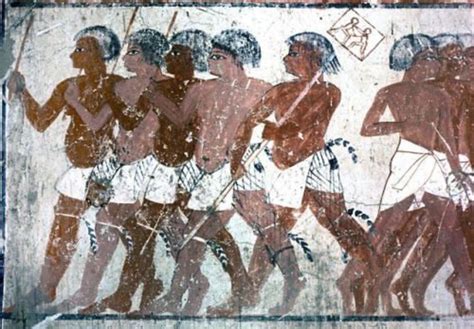
The undocumented history that scholars are still trying to piece together might be even deeper. Martial arts’ origins across the African continent might not be as well-documented as those from ancient Greece and China, but its history is no less important.
China
China is home to one of the oldest and most revered martial traditions in the world, with an intricate history that spans thousands of years.
Chinese martial arts, commonly known as Wushu or Kung Fu, trace their origins to the Xia and Shang dynasties (21st to 11th centuries BCE). These early martial traditions were born out of the need for self-defense, military training, and hunting.
Read also: Learn the Rear Naked Choke
Kung Fu developed into numerous schools and styles, each with its focus and philosophy. The Shaolin style, associated with the monks of the Shaolin Temple, became world-famous for its intricate balance between physical conditioning and mental discipline.
Wing Chun, another significant style, focuses on close-range combat and quick strikes, while Tai Chi is a slower, meditative martial art known for its health benefits and spiritual focus.
Chinese martial arts are profoundly influenced by the major philosophical traditions of China. Taoism emphasizes balance and flow, principles that are reflected in styles like Tai Chi. Buddhism, particularly through the Shaolin monks, integrated meditation and mindfulness into martial training. Confucianism added a strong moral and ethical dimension, stressing respect, humility, and social harmony.
Japan
The samurai class in Japan played a pivotal role in shaping the martial arts of the country. The Bushido code, which governed the conduct of the samurai, stressed virtues like loyalty, honor, and courage. These principles are deeply embedded in martial arts like Karate, Judo, and Aikido.
Karate originated on the island of Okinawa and became popular for its powerful strikes and blocks. Judo, developed by Jigoro Kano in the late 19th century, focuses on throws and grappling, turning an opponent’s strength against them. Aikido, created by Morihei Ueshiba, emphasizes harmony and the redirection of an opponent’s force.
Kendo, or the way of the sword, keeps alive the ancient sword-fighting traditions of the samurai.
Japanese martial arts evolved from techniques used on ancient battlefields. Over time, as the need for large-scale warfare decreased, these practices shifted towards personal development, self-defense, and sport, leading to the martial arts we know today.
Korea
Korean martial arts have a rich history that dates back over 2,000 years, with influences from both Chinese and Japanese systems.
During Korea’s Three Kingdoms period (57 BCE - 668 CE), martial arts played a crucial role in military training. Early forms like Taekkyon and Subak were practiced by soldiers and civilians alike. These arts emphasized both hand-to-hand combat and weaponry.
Taekkyon, a predecessor to modern Taekwondo, was known for its fluid and rhythmic movements, focusing on kicking techniques. Subak, a combat art focusing on strikes and grapples, also influenced the development of Korean martial traditions.
Taekwondo, officially recognized in the 20th century, gained global popularity after its introduction into the Olympics in 2000. Known for its dynamic kicking techniques, Taekwondo combines elements of speed, agility, and precision, making it one of the most practiced martial arts worldwide.
Southeast Asia
The martial arts of Southeast Asia are renowned for their brutal efficiency and connection to local cultural and spiritual practices.
Muay Thai, often referred to as the "Art of Eight Limbs," originated in Thailand and is one of the oldest and most devastating striking arts. Its roots can be traced back to ancient Siam, where it was used in warfare and for self-defense. The art makes use of fists, elbows, knees, and shins, making it highly versatile in close combat.
Pencak Silat is a martial art practiced across Southeast Asia, particularly in Indonesia, Malaysia, and the Philippines. Known for its fluid and dance-like movements, Silat combines strikes, joint locks, throws, and weaponry, reflecting the region’s diverse cultural and religious heritage.
Many Southeast Asian martial arts incorporate spiritual practices and rituals into their training. For example, in Muay Thai, fighters often perform a ritual dance called the "Wai Kru" before matches to pay respects to their teachers and ancestors. Similarly, Silat practitioners often use traditional weapons like the keris, a curved dagger, which carries cultural and spiritual significance.
Africa
Martial arts’ origins across the African continent might not be as well-documented as those from ancient Greece and China, but its history is no less important.
Historians of trace African wrestling traditions back to Egypt’s Beni Hasan system (which is explored in detail in ancient Egyptian artwork from as early as 3000 BC) but there’s plenty of evidence to suggest that submission-based wrestling was a common activity among many tribes in West Africa. Stick fighting was also a common practice in many tribes, and was particularly popular in Egypt.
Here are some examples of African martial arts:
- Aha (Kemetic Aha, Ahah, Kemet Mariama): Aha is a tricky form of boxing and grappling practiced by the Kemites. An ancient Egyptian boxing art still used today.
- Capoeira: This Angolan art's sole purpose is to immobilize the opponent. However, because of the high risk of injury, the modern objective is to only knock them down.
- Dambe (Hausa Boxing): a fist fighting system from Nigeria consisting of kicks, punches, knees and headbutts.
- Evala: is a wrestling sport practiced by the Kabye people of northern Togo.
- Gambian Wrestling: is an African martial art that is a deep-seated tradition and national sport. The warriors wear loincloths called "Juju's" and strut, dance, spar, and brag in challenge of noisy support from the drums. The fight continues until a contestant is brought to the ground. Punching, kicking, spitting and flinging sand in the eyes is all legal. After sundown, the atmosphere builds with excitment as the champions come out to fight.
- Kuta: The basis for Hikuta is the ancient art of Kuta. Kuta was initially developed by the bodyguards of the ancient Pharoahs in Egypt as the most efficient and effective way to defend their king. Kuta remained top secret amongst the Asian rulers for over a thousand years until military soldiers found out the secrets.
- Laamb (Senegalese wrestling): is a wrestling art that takes place in Senegal. Before the event the beating of the drums along with the mellow voices of the singers will alert everyone that it's about to start. The crowd would gather around a sandy pit and watch several bouts before the final bout of 2 champions. The fighters would wear "wrappers" around their waist, which would be provided by their fiances or female relatives, and the rest of their body will be naked. The winner must knock his opponent's knees, shoulder, or back to the sand. Strikes and slaps are allowed nowadays.
- Nuba Wrestling: practiced for over 3,000 years, is one of the oldest forms of this ancient sport.
- Tahteeb: A native grappling art of Egypt.
- Testa: is a brutal Eritrean headbutting art. It may also include kicks, hand strikes, parries, grabs, etc. Hand, foot, and grabbing techniques are very intricate and are solely used in order to strike the opponent with the Big Knuckle, or head.
Naked Martial Arts and Combat
The practice of entering combat without the use of clothing and armor has been documented on several occasions in history.
In some martial arts that are designed to be used for military fighting, full or partial nudity still occurs. The traditional donga style of stick fighting practiced by the young warriors, now bearing firearms, of the Omo Valley Suri tribe of South Sudan and western Ethiopia, is often practiced entirely naked.
Frequently Asked Questions
What is the oldest known form of martial arts?
The oldest known form of martial arts is believed to be Kalaripayattu from India, which dates back over 3,000 years. It is considered one of the earliest fighting systems, blending physical combat with spiritual practices.
How did traditional martial arts spread globally?
Traditional martial arts spread globally through cultural exchanges, trade routes, and migration. The expansion of empires, colonization, and later globalization in the 20th century-especially through films and sports-greatly contributed to their worldwide popularity.
What role does philosophy play in martial arts?
Philosophy plays a central role in many traditional martial arts, especially in East Asia, where concepts from Buddhism, Taoism, and Confucianism shape training methods. These philosophies emphasize self-discipline, respect, balance, and inner peace, alongside physical mastery.
How are traditional martial arts different from modern combat sports?
Traditional martial arts often incorporate historical techniques, rituals, and spiritual elements, while modern combat sports, like MMA, focus more on practicality and effectiveness in competition or self-defense. Traditional forms often stress personal development and mental focus beyond just physical prowess.
Why are some traditional martial arts endangered today?
Some traditional martial arts are at risk due to modern society’s preference for sports-oriented combat systems, reduced cultural preservation efforts, and the decline of martial arts as a necessary survival skill. However, efforts by martial arts schools and cultural preservation programs aim to keep these ancient traditions alive.