Duncan Martial Arts encompasses a variety of styles, each with its unique history, philosophy, and techniques. This article explores some of the key styles associated with Duncan Martial Arts, including Wing Chun, Shaolin Kempo, and Karazenpo Go Shinjutsu.
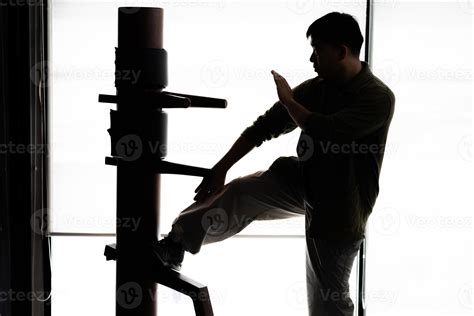
Wing Chun Kung Fu Dummy
Wing Chun
Wing Chun (Cantonese) or Yong Chun (Mandarin) is a concept-based martial art, a form of Southern Chinese kung fu, and a close-quarters system of self-defense. It is a martial arts style characterized by its focus on close-quarters hand-to-hand combat, rapid-fire punches, and straightforward efficiency. Wing Chun has a philosophy that emphasizes capturing and sticking to an opponent's centerline.
Origins and History
The origins of Wing Chun are uncertain, but it is generally attributed to the development of Southern Chinese martial arts. Complications in the history and documentation of Wing Chun are attributed to the art being passed from teacher to student orally, rather than in writing. There are at least eight different distinct lineages of Wing Chun, each having its own history of origin.
The martial art was brought to Hong Kong and then the rest of the world by Ip Man, with Bruce Lee being his most famous student. The Ving Tsun Athletic Association, founded in 1967 by Ip Man and his students, helped spread Wing Chun globally.
Read also: Individual Martial Arts Instruction
Techniques and Principles
Wing Chun puts emphasis on economic movement and encourages its practitioners to "feel" through their opponents' defenses and to utilize the incoming attacks with parrying, deflection, rapid punches, and finger pokes. Wing Chun favors a relatively high, narrow stance with the elbows close to the body. Within the stance, arms are generally positioned across the vital points of the centerline with hands in a vertical "wu sau" ("protecting hand" position). This puts the practitioner in a position to make readily placed blocks and fast-moving blows to vital striking points down the center of the body, i.e. the neck, chest, belly, and groin.
Forms
The first and most important form in Wing Chun, siu nim tau, is practiced throughout the practitioner's lifetime. It is the foundation or "seed" of the art, on which all succeeding forms and techniques are based. Fundamental rules of balance and body structure are developed here. The second form, chum kiu, focuses on coordinated movement of body mass and entry techniques to "bridge the gap" between practitioner and opponent, and move in to disrupt their structure and balance. The third and last form, biu jee, is composed of extreme short-range and extreme long-range techniques, low kicks and sweeps, and "emergency techniques" to counter-attack when structure and centerline have been seriously compromised, such as when the practitioner is seriously injured.
Wing Chun's Deeper Meaning (True Purpose, Spiritual Journey)
Cultural Impact
Wing Chun gained popularity in the 2010s due to the Ip Man film series starring Donnie Yen and has been featured in video games like Tekken 7. Donnie Yen played the role of Wing Chun Grandmaster Ip Man in the 2008 movie Ip Man, and in its sequels Ip Man 2, Ip Man 3, and Ip Man 4. Ip Man was Bruce Lee's master, which made the trilogy so popular.
Shaolin Kempo
Professor Rudy Duncan began training in the martial arts in 1961, studying Tae Kwon Do in Syracuse, New York. In 1969, Professor Duncan switched styles, studying Shorin-Goju karate until 1978. At this time, he began training in Shaolin Kempo, first under the Fred Villari system and eventually with Nick Cerio's organization.
As with many martial arts systems, the five animals (Tiger, Leopard, Snake, Crane, Dragon) are an important part of the program of study at Duncan's Martial Arts Academy. Students not only learn why we study the movements of these animals, but also many techniques which utilize each animals strengths.
Read also: The Jade Fortress Martial Arts System
- Tiger: We study the Tiger to gain insight into the awesome strength and tenacity of this great cat. Strength can be defined as the ability to endure great hardship.
- Leopard: We study the Leopard in an attempt to possess its incredible speed. The Leopard uses its speed and agility to totally devastate its opponent before their defenses have the opportunity to be deployed.
- Crane: The Crane is nature's graceful ambassador of flight. To be so awkwardly built, yet appear so smooth in movement requires balance beyond belief.
- Snake: We study the Snake because of its uncanny ability to fight from the ground. The Snake is an excellent example of turning one's weakness into strength.
- Dragon: We study the Dragon to better understand its legendary spirit. Mythical battles between super human knights and fierce Dragons often speak of the Dragon's steadfast refusal to give up.
Karazenpo Go Shinjutsu
Professor Duncan's instructor was 8th degree black belt, Professor James Bryant of Masters Self Defense Centers. He teaches Karazenpo Go Shinjutsu Shaolin Kempo in Syracuse, New York. Professor Duncan continues to train with many of the martial artists in the Central New York area.
Professor Duncan recently presented his own concepts and curriculum for a system of his own called, Kemchido Combat Arts. Using his knowledge of the arts he has studied along with the strong base of movement principles found in Grandmaster Gascon's Karazenpo Go Shinjutsu, his art has been recognized by the several multi-disciplined martial arts organizations.
Weapons studied by Karazenpo Go Shinjutsu schools tend to vary slightly. Typically, the study of weapons is reserved for advanced ranks. At Duncan's Martial Arts Academy, we study the Fillipino art of escrima, the Chinese broadsword and bo, the Okinawan kama, sai, and bo,and the Japanese sword.
Martial Arts Styles Comparison
Here is a table comparing the key features of the martial arts styles discussed in this article:
| Martial Art Style | Origin | Focus | Key Techniques |
|---|---|---|---|
| Wing Chun | Southern China | Close-quarters combat, self-defense | Rapid punches, centerline control, trapping |
| Shaolin Kempo | Shaolin Temple, China | Striking, grappling, self-defense | Five Animal techniques, diverse strikes and blocks |
| Karazenpo Go Shinjutsu | Mixed martial arts | Practical self-defense | Weapons training, joint locks, throws |
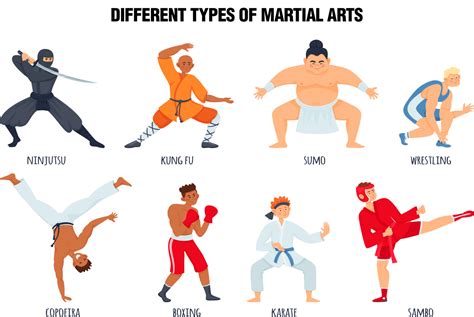
Martial Arts Styles
Read also: Deep Dive into Court Martial Films