When it comes to fitness routines that check multiple boxes at once - building strength, improving endurance, enhancing coordination, and managing stress - punching bag workouts stand out. Incorporating a heavy bag into your exercise plan isn’t just for boxers or martial artists. A punching bag workout at home offers the perfect balance of intensity and accessibility for busy professionals looking to break through fitness plateaus.
Whether you're a complete beginner or have some boxing experience, the heavy bag provides scalable resistance and immediate feedback. Punching bag workouts are one of the most well-rounded forms of fitness training available today. If you’re interested in learning the correct techniques or want a private, judgment-free space to work on your skills, New Mind & Body Personal Training Center offers customized programs that can seamlessly integrate punching bag workouts into your overall fitness journey.
Why Punch the Bag? 8 Science-Backed Benefits
The heavy bag isn't just a piece of equipment-it's your all-in-one fitness companion with serious scientific backing. Here's why science supports making the heavy bag a centerpiece of your home workout space:
- Metabolic Awakening: Your body experiences a true metabolic awakening with bag work. That satisfying thud of glove against bag triggers what exercise physiologists call the "afterburn effect"-your metabolism stays lifted for hours after you've showered and moved on with your day.
- Improved Coordination: The rhythmic dance of throwing combinations doesn't just feel good-it rewires your brain. Your hand-eye coordination improves as neural pathways strengthen with each jab-cross combo you throw. Meanwhile, the constant weight shifting between punches builds those often-neglected stabilizing muscles, dramatically improving balance and proprioception.
- Power Development: Power development happens naturally as you push against the bag's resistance. Unlike air punching, the feedback from hitting something solid builds those fast-twitch muscle fibers that make everyday movements more explosive and athletic.
- Mental Health Boost: The mental health benefits might be my favorite to witness in clients. There's something uniquely therapeutic about physically releasing tension through controlled punching, combined with the natural endorphin flood that follows. I've had members tell me their anxiety noticeably decreases after just one solid bag session.
- Bone Health: Bone health often gets overlooked in fitness conversations, but it shouldn't. Research published in the Canadian Journal of Applied Physiology found female boxers display impressively high bone mineral density despite low body fat-strong evidence that impact training like bag work builds stronger bones.
- Fat-Burning Potential: The fat-burning potential is remarkable too. The high-intensity nature of bag work creates ideal conditions for fat oxidation, especially when structured as intervals.
- Time Efficiency: You simply can't beat a complete full-body workout in under 30 minutes.
- Stress Relief: Hitting a punching bag provides an outlet for everyday stress in a way few exercises can match. High-intensity movements combined with the satisfying impact against the bag help release built-up tension. Studies have shown that physical activities involving powerful, repetitive motion can significantly lower cortisol levels, the hormone associated with stress.
"Heavy bag workouts are one of the most efficient forms of exercise," explains Coach Mike from our Legends Boxing Sandy UT location. "In just 20-30 minutes, you're getting what might take an hour with traditional cardio and strength training separated."
How To Wrap Your Hands For Boxing/MMA Taught By Michael Chandler
Calorie-Torching Cardio & Strength In One
The magic of an at home boxing workout with bag is how it seamlessly blends cardiovascular conditioning with resistance training. This dual-nature creates the perfect calorie-burning storm.
Read also: Mike Tyson and Jake Paul Face Off
A typical half-hour session torches between 300-500 calories, depending on your intensity and body weight. The natural HIIT structure quickly lifts your heart rate and keeps it dancing in that optimal fat-burning zone. Unlike mindlessly pedaling on a stationary bike, bag work demands full-body engagement. Each punch activates your shoulders, chest, and arms, while proper technique recruits your core, hips, and legs to generate power. That multi-muscle recruitment significantly increases your energy expenditure.
"What makes bag work unique is that you're constantly engaging your core as you rotate and transfer power from your lower body through your midsection and into your punches," says our head trainer at Legends Boxing Riverton UT. "It's like doing planks and rotational exercises while also getting your heart rate up."
The resistance of a heavy bag-typically weighing between 50-150 pounds-creates natural strength training with every impact. Your body adapts to this resistance by building lean muscle, which further improves your resting metabolic rate.
Stress & Confidence Booster
There's something uniquely satisfying about hitting a heavy bag that traditional workouts simply can't match. The physical act of punching releases tension that accumulates in your body throughout the day.
With each impact, your brain releases endorphins-those feel-good chemicals that create a natural mood elevation. It's like pressing a reset button on your stress levels. Beyond the immediate stress relief, there's a profound confidence boost that comes from mastering boxing techniques. The progress is measurable and visible-you can literally feel yourself getting stronger, faster, and more coordinated with each session.
Read also: Home Boxing System Review
Many members at our Legends Boxing locations mention stress relief as their primary motivation for sticking with their boxing workouts. As one member from our Lehi UT location shared: "After a tough day at work, 20 minutes on the heavy bag does more for my mental health than an hour of therapy."
There's also an empowering aspect to developing self-defense skills, even if you never intend to use them outside your home gym. Simply knowing you could protect yourself if needed creates a subtle but powerful shift in how you carry yourself in the world.
Gear Up: Choosing & Setting Up Your Home Bag Station
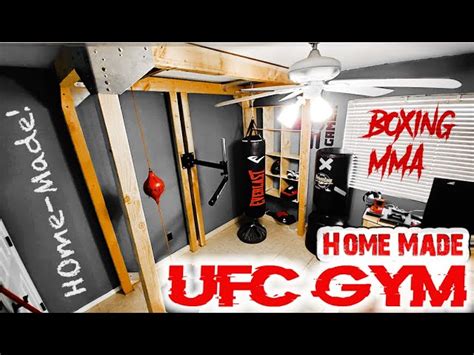
Setting up your home boxing station doesn't need to be complicated or expensive, but making smart choices will improve your experience and results.
Picking the Right Punching Bag
The foundation of any at home boxing workout with bag is, of course, the bag itself. Here's what to consider:
Bag Types:
- Heavy Bags: Traditional cylindrical bags (70-150 lbs) for all-purpose training
- Speed Bags: Small, air-filled bags for improving hand speed and coordination
- Double-End Bags: Attached to floor and ceiling, these move when struck to simulate an opponent
- Freestanding Bags: Stand on their own base without ceiling mounting
Weight Considerations:
As a general rule, your heavy bag should weigh approximately half your body weight. For example:
Read also: Fitness Through Punch Bag Training
- 130-150 lb person: 70-80 lb bag
- 160-180 lb person: 80-100 lb bag
- 180+ lb person: 100-150 lb bag
Hanging vs. Freestanding Comparison:
| Feature | Hanging Bag | Freestanding Bag |
|---|---|---|
| Installation | Requires ceiling mount or stand | Simple setup, no mounting needed |
| Movement | Natural swing simulates opponent | Less movement, stays in place |
| Space Required | More clearance needed | Compact footprint |
| Stability | Very stable when properly mounted | Can tip with powerful strikes |
| Durability | Typically lasts longer | Base may wear out over time |
| Cost | $80-300 | $150-400 |
Fill Material:
- Water-filled bases: Provide good stability for freestanding bags and can be emptied for relocation
- Sand-filled bags: Offer more resistance and realistic feel
- Foam core bags: More forgiving for beginners and easier on joints
"For home users just starting out, I typically recommend a freestanding bag with a water-filled base," explains our equipment specialist at Legends Boxing Salt Lake City. "They're easier to set up, can be moved when needed, and still provide an excellent workout platform."
Essential Accessories Checklist
While the bag is your primary tool, these accessories will improve safety, effectiveness, and enjoyment:
- Hand Wraps ($5-15): Absolutely essential for protecting your wrists and knuckles. Learn to wrap properly before your first session.
- Boxing Gloves ($40-100): For beginners, 14oz or 16oz gloves provide good protection. Look for genuine leather or quality synthetic options with proper wrist support.
- Timer App: A boxing-specific interval timer app helps structure your rounds and rest periods.
- Jump Rope ($10-30): Perfect for warming up and improving footwork between bag rounds.
- Workout Mat ($20-50): Provides cushioning for floor exercises and protects flooring from sweat.
- Towel: Keep one handy to wipe down equipment and yourself.
- Bluetooth Speaker: Music can help maintain energy and rhythm during workouts.
Space requirements for a basic home setup should include:
- 6' × 6' clear area minimum
- 8' ceiling height for hanging bags
- Non-slippery, stable flooring (mats recommended)
Safety First & Smart Warm-Up
The excitement of throwing your first punch can be hard to resist, but taking a few minutes to prepare properly will keep you safe and dramatically improve your workout quality.
When I coach new members at Legends Boxing, I always emphasize that safety isn't just about avoiding injury-it's about creating the foundation for better performance and faster progress.
Must-Do Injury-Prevention Tips
Your hands and wrists weren't naturally designed for the impact of hitting a heavy bag, which is why proper technique is non-negotiable. Keep your thumb positioned outside your fist, never tucked inside, to prevent serious breaks when you make contact with the bag.
Pay close attention to your wrist alignment too. Maintaining a straight line from your knuckles through your forearm creates a strong structural position that protects those delicate wrist joints from buckling on impact.
"I can always spot a beginner by how they breathe-or don't breathe," says our head coach at Legends Boxing Bountiful UT. Remember to exhale sharply on impact with each punch. This natural breathing rhythm not only engages your core but prevents that dangerous tendency to hold your breath during exertion.
Speaking of core engagement, always brace your abdominal muscles before throwing combinations. This simple habit creates a protective shield for your lower back and transfers power more efficiently from your legs through your torso.
Even experienced boxers start their at home boxing workout with bag sessions at about 70% power. Give your body time to warm up those joints and muscles before going full force-your shoulders will thank you later.
Hydration matters more than you think. Many workout-related injuries happen when muscles and connective tissues are dehydrated, so drink water before, during, and after your session. Keep a water bottle within arm's reach of your bag setup.
Perhaps most importantly, learn to listen to your body's signals. That burning sensation in your muscles? That's progress happening. Sharp pain in your joints? That's a warning sign to adjust your technique or take a break.
"The most common injuries we see with new boxers are wrist sprains and shoulder strains, almost always from improper technique or insufficient warm-up," notes our injury prevention specialist. "Taking five minutes to warm up properly can save you weeks of recovery time."
Your dynamic warm-up should take about 5-10 minutes and flow naturally from one movement to the next:
- Begin with jogging in place for a minute to gradually increase your heart rate.
- Move to arm circles in both directions for 30 seconds each to mobilize those shoulder joints that will be working hard soon.
- Add some torso twists for a minute to activate the rotational muscles in your core that power your punches.
- A minute of jumping jacks engages your whole body and continues building that heart rate.
- Transition to shadowboxing for 2-3 minutes at low intensity to rehearse your movements before adding the resistance of the bag.
- Finish with 10 repetitions of plank to downward dog to prepare your core and shoulders for the work ahead.
This deliberate preparation might feel like it's delaying the "real workout," but trust me-these few minutes of mindful movement create the perfect foundation for a safer, more effective at home boxing workout with bag experience.
The Ultimate at home boxing workout with bag
Now that you're warmed up and ready, it's time to dive into a structured workout. This framework can be adjusted for different fitness levels and time constraints.
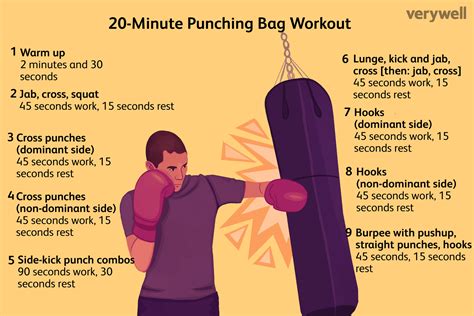
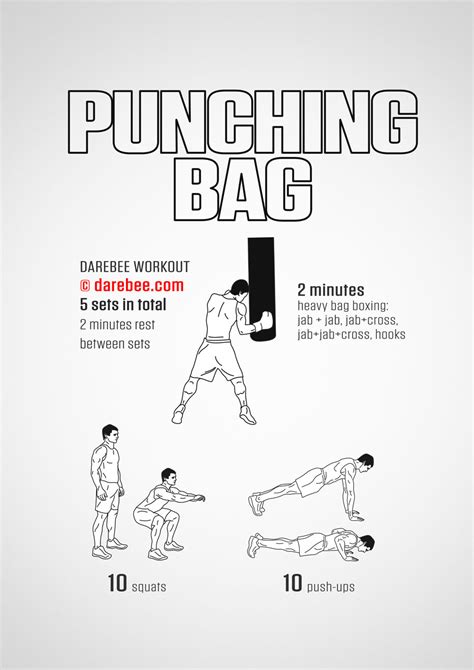
Beginner Routine: at home boxing workout with bag - 20 Minutes
This beginner-friendly routine follows a 3-minute round/1-minute rest structure, mimicking a traditional boxing match pace:
Round 1: Fundamentals (3 minutes)
- Jab-Cross (1-2) combination: 45 seconds
- Rest: 15 seconds
- 1-2-3 (Jab-Cross-Hook) combination: 45 seconds
- Rest: 15 seconds
- 1-2-Body Shot: 45 seconds
- Rest: 15 seconds
Round 2: Movement (3 minutes)
- Circle left while jabbing: 45 seconds
- Rest: 15 seconds
- Circle right while throwing crosses: 45 seconds
- Rest: 15 seconds
- Forward-backward movement with 1-2 combinations: 45 seconds
- Rest: 15 seconds
Round 3: Power Focus (3 minutes)
- Power jabs (focus on pushing through the bag): 45 seconds
- Rest: 15 seconds
- Power crosses (rotate hips fully): 45 seconds
- Rest: 15 seconds
- Power hooks (pivot on ball of foot): 45 seconds
- Rest: 15 seconds
Round 4: Conditioning Blend (3 minutes)
- 10 seconds of fast punches + 5 squats, repeat for 45 seconds
- Rest: 15 seconds
- 10 seconds of power punches + 5 push-ups, repeat for 45 seconds
- Rest: 15 seconds
- Plank position punches (alternating arms): 45 seconds
- Rest: 15 seconds
Round 5: Burnout (3 minutes)
- 30 seconds all-out punching
- 30 seconds active recovery (light movement)
- 30 seconds all-out punching
- 30 seconds active recovery
- 30 seconds final push (maximum effort)
- 30 seconds cool-down
One of our Legends Boxing members from Cache Valley UT shared: "When I first started this 20-minute routine, I could barely finish. Three weeks later, I was adding extra rounds and increasing intensity. The progress happens quickly!"
Structuring Rounds for Max Cardio & Strength
To maximize both cardiovascular and strength benefits in your at home boxing workout with bag, consider these structuring principles:
Work-to-Rest Ratios:
- Beginner: 30 seconds work / 30 seconds rest (1:1 ratio)
- Intermediate: 45 seconds work / 15 seconds rest (3:1 ratio)
- Advanced: 60 seconds work / 15 seconds rest (4:1 ratio)
Heart Rate Zone Training:
- Zone 2 (60-70% max HR): Focus on technique, longer rounds, shorter rest
- Zone 3 (70-80% max HR): Standard training, balanced work/rest
- Zone 4 (80-90% max HR): HIIT style, shorter intense work, longer recovery
Punch Count Goals:
Setting targets for punch volume can drive intensity and provide measurable progress:
- Beginner: 100-150 punches per 3-minute round
- Intermediate: 150-200 punches per 3-minute round
- Advanced: 200+ punches per 3-minute round
"I tell my students to focus on quality over quantity when they're starting out," says a trainer from Legends Boxing Draper UT. "Perfect the technique first, then gradually increase the speed and power."