Mike Tyson, a name synonymous with boxing prowess and personal turmoil, has captivated audiences for decades. His autobiography, "Undisputed Truth," co-authored by Larry Sloman, offers a raw and unfiltered look into the life of this complex figure. This review delves into the book's compelling narrative, exploring Tyson's tumultuous journey from a troubled youth to a world-renowned athlete and beyond.
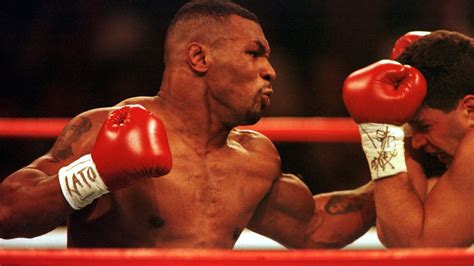
Mike Tyson in 2019
From Brooklyn's Ghetto to Boxing Glory
Undisputed Truth begins with Mike’s life as a poor and troubled child growing up in Brooklyn. The book starts out with him talking about his tough upbringing in the ghetto of Brooklyn living in poverty, his mother becoming a drunk his father not there, being bullied and robbed and him committing crime and robberies from a very young age. The book charts his rise and training to become the youngest heavyweight champion in the history of boxing. Due to his life of crime he was in and out of different juvenile detention centers. One particular one he went to which was the last, there was an ex boxing champion their teaching the young boys how to box. Mike got involved and the trainer thought he was talented and that he could do something with him. He was introduced to the legendary boxing trainer Cus D’Amto, this would ever forever change his life. Cus believed he could be the best boxer in the world and believed in him whole heartedly. Their relationship was one of Mikes most profound and he talks about it very interestingly in the book. The book documents the rise of his boxing career and his physical and psychological prowess as a boxer.
As a kid growing up in Brooklyn during the 1990s, Mike Tyson was the man. Before Undisputed Truth, I knew that Tyson had grown up in Brownsville before he relocated to Catskills but I didn’t know that he’d spent his early years in Bedford-Stuyvesant. Tyson’s troubles seemed to begin with his move to Brownsville but there was already some dysfunction in the home before the relocation. From the start, there seemed to be a degree of distance between Tyson and his mother despite him being her youngest child. So it was interesting to have him speak quite fondly about his older sister. The two sounded as though they were quite close as kids and that intimacy went beyond just being siblings. They were friends who enjoyed each other’s company and spent a lot of time playing together.
The family began receiving welfare but it wasn’t enough to replace her lost income and adequately provide shelter and food for the four of them. Not excusing her actions but I think Mrs. Tyson was in a difficult situation and did what she felt she had to to get by. Unfortunately, this seemed to include dating and sleeping with men that she didn’t necessarily like for money. Her distance and coldness towards Tyson seemed to intensify around that time though it’s unclear if she treated the other two kids in the same manner as well. Some of these early experiences between Tyson and his mom as well as the interactions he witnessed between the men and women around him played a role in his later dysfunctional relationships with women. There were also violent fights between Mrs. Tyson and her boyfriend where they would curse at and physically attack each other. All of these factors combined with the aggression, hostility, and vulgarity that he was now witnessing in his neighborhood were frightening for the seven-year-old.
Read also: Mike Tyson vs. Brock Lesnar?
One day of his mom passed out drunk and unable to walk him to school led to several run-ins with bullies. The events of that one day led to him meeting some unsavory characters, deciding to permanently ditch school, becoming involved with pigeons, and beginning a life of crime. Tyson was eight years old when he started rolling around with this crew of older kids and playing with pigeons. Here are these kids who are poor but desire nice clothes, jewelry, and other material possessions. Lacking financial stability and having low self-esteem, they try to build themselves up with material possessions. An older kid who was more knowledgeable about street life rescued him after he committed an especially embarrassing faux pas. This kid took him under his wing and in addition to pointers on hygiene also introduced him to buying clothes and burglaries. The opportunity to make money, although illegally, allowed him to buy clothes, food, and other things that boosted his ego and gave him some sense of self-esteem.
Over three or four years, he got into all kinds of criminal mischief and ended up with a lengthy rap sheet. But he was still being bullied due to his fear and unwillingness to fight. That all changed when he stood up to a bully who ripped the head off of one of his pigeons and a crowd formed around them. Whether positive or negative, the people that gathered gave him the attention and acceptance that he’d been craving. Their reaction helped to normalize his behavior and things only got worse when he started being sent to juvenile correction facilities. Yet, it was during a stint at Spofford that he saw a film about and met Muhammad Ali which sparked his aspirations to be like Ali. And it was during a stint at another facility that he met a counselor, Bobby Stewart, who would formally introduce him to boxing and Cus D’Amato. You might say it was destiny and his time in juvenile halls rescued him from Brownsville.
Someone to provide a positive example of possibilities for what he could be. He was still quite young so it wasn’t too late for him as he eventually turned his life around or rather found direction and a sense of purpose. Tyson needed discipline at that point in his life but not in the form that his mom was administering. As a large person beating a small child, you teach them intimidation and domination rather than discipline. In the case of Mrs. Tyson, she began physically disciplining him as a small child and it continued as he got older. Those beatings escalated over time and became just as much about his mom venting her frustration as it was about her trying to correct him. A lot of Tyson’s delinquent behavior was a cry for help and attention.
The Cus D'Amato Era
Cus D'Amato, Tyson's mentor, played a pivotal role in shaping his boxing career and instilling in him a sense of discipline. D'Amato might have been able to restrain some of the later excesses, would have stopped him getting cheated, but he helped incubate the toxins that coursed freely through Tyson's system and world after he became champion. Cus died before Mike achieved the championship at a young age, which contributes to the unravelling of him over time.
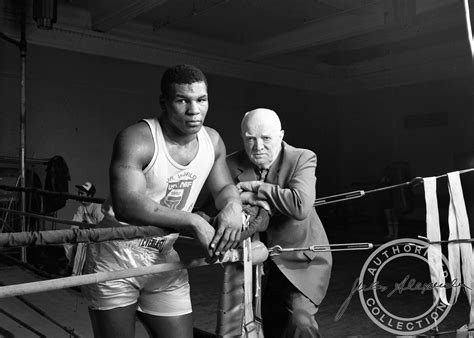
Mike Tyson and Cus D'Amato
Read also: Mike Tyson vs. Jake Paul
Fame, Fortune, and Downfall
Tyson became notoriously famous and all the trappings that came with that. He made a minimum of £300 million in his boxing career and there were people after his money left and right, from Don King to what he would call ambulance chasers, (he could walk into someone by accident and they said he physically assaulted them and take legal action and sue for money) to a number of false rape claims. His life turned into parties, women and drugs, he didn’t care about boxing without Cus and people didn’t really care about him, just his money. He lived a reckless life not really caring about dying and he always seemed like he was so close to death from boxing to crime and having people shooting at him to the amount of drugs he did.
Throw in an annual income that was often in excess of $50m (enough to ensure that, like the former champions he idolised, he'd wind up flat broke), a titanic coke habit (he'd wander round with his stash in a big bag, "a straw coming out of it like it was a milkshake") and you have a young man in the unusual position of being both gladiator and emperor, "a sewage rat with delusions of grandeur", a ghetto kid with zero self-esteem and an ego borne of the knowledge that, in a fair fight, he could beat everyone on the planet to a pulp.
After that, victories and defeats in the ring become almost irrelevant in the chaos and swirling mania that surround and consume him. He burns his way through an unbelievable fortune and never, not once in almost 600 pages, expresses any regret on that score.
Training for the Lewis fight in Hawaii - "epicentre of some of the baddest weed in the world" - was not a great idea, boxing-wise, but just as all that "Maui Wowie made for some interesting press conferences" so his "stupid un-fucking-legible English" makes for some surprising prose. There's a moment of flat-out brilliance when he gets the Maori tattoo on his face: "I hated my face and I literally wanted to deface myself."
The Rape Conviction
Having encouraged Tyson to ramble through his past, Sloman shaped the mass of material into a narrative that opens with the most vehemently disputed part of the story: the conviction for raping Desiree Washington in 1991. Adamant that he did no such thing, Tyson goes into graphic detail, later, to explain how he didn't (he went down on her while she was menstruating, apparently unaware that he was "gargling blood"). The conviction might have been shaky but so is the defence that it's impossible to "rape someone when they come to your hotel at two in the morning. There's nothing open that late but legs." But remember, also, that his capacity for brute intimidation did nothing to staunch the flow of women eager to have sex with him, not just after the conviction but while he was in prison.
Read also: A Look at Tyson Sausage Patties' Nutritional Value
The Holyfield Fight
As for the boxing, Tyson was a great fighter who never fought any great fights. Either because he beat his opponents too easily - he was too good - or, with the possible exception of the first, toothless encounter with Evander Holyfield, because he was beaten too easily (as a result of failing to prepare properly, of losing his earlier hunger). He never went toe-to-toe with greatness, as Ali and Frazier did repeatedly, was never fully tested while fully committed to passing that test. As Cus intended, many of Tyson's opponents were out on their feet before a punch was thrown. The fights rarely lasted long and, in keeping with this, the era of Tyson's indomitability - brought to an end when journeyman Buster Douglas floored him in Tokyo in 1990 - flashes quickly past in the book.
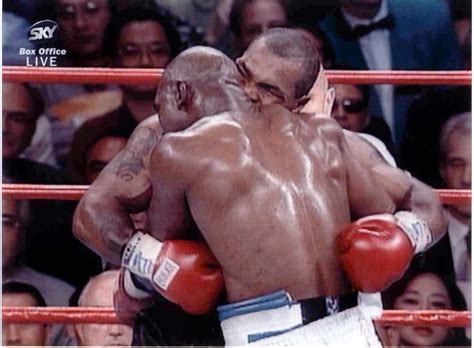
Mike Tyson biting Evander Holyfield
Redemption and Self-Reflection
The later journey to sobriety sees him leaning harder on cliche - he's particularly fond of the idea that relapse is part of recovery - but the sense of threat, to himself and others, is constant. The book sums up with him documenting the end of his boxing career and him making positive changes to get away from all these evil vices, counselling, drug rehab and his next chapter in his career, acting.
Undisputed Truth is an in-depth autobiography that tells the story of Mike “Iron Mike” Tyson.
Tyson's Voice
As will be clear by now, Sloman brings Tyson's voice springing off the page with its often hilarious combo of street and shrink, pimp profanity and the "prisony pseudo-intellectual modern mack rap" of the autodidact. His life has been turbulent from the get go, he’s an interesting man who is actually very learned in the history of boxing he mastered it, he had ridiculous work ethic for it from psychology to manipulation to persona to hours and hours of gruelling training.
I find the book deeply honest and he’s known to be refreshingly honest about himself and his life. The things that pained him, traumatized him, humiliated him, how he was portraying himself due to negative experiences, his depression, at the same time there are some parts which are laugh out loud funny. All in all I found the book very enjoyable and fascinating on my favourite boxer of all time.
Holdengräber begins his interviews by asking guests to define themselves in seven words. Tyson's were "Came, saw, conquered, got conquered, bounced back." The ungodly twist is all in the last two. And so, after being a god, Tyson has ended up like thousands of other literary contenders: on the promo circuit with product to hustle.
Undisputed Truth is the latest and biggest bounce in a bills-to-pay comeback that began with James Toback's intimate documentary, Tyson, and continued with an acting role in The Hangover. Tyson played himself, naturally, a role he reprised for a one-man Broadway show that was then filmed by Spike Lee. The autobiography grew directly out of that show and even if it is not, as Holdengräber claimed, up there with St Augustine's Confessions, it's got a lot more fighting.
Tyson claims he "inherited Cus's ability to tell stories" but as he regaled the audience with lispy anecdotes - growing up in Brooklyn, breaking into houses and being on the roof with his pigeons - it rapidly became as interesting as hearing a celebrity recount a dream. Tyson is a history nut, and a prompted digression on the Visigoths was as dull as - if slightly more confusing than - a lecture by a Cambridge don. Things only really got going when he burst into invective and profanity.
Apparently Sloman's opening move in tempting Tyson into this collaboration was to send a copy of Nietzsche's Ecce Homo to him while he was in prison. Nietzsche's notion of greatness was the capacity to embrace your fate wholesale: if you enjoy one divine moment then you say yes to all others, however hellish. Tyson, with his jailed grasp of momentary immortality, got this right away, probably knew it already: "Just to have one year of living Mike Tyson, the champ's life, I would be a bum sucking rat piss in the gutter.
Among the living only Diego Maradona has risen to comparable heights from such depths - and then plummeted back down again. Paul Gascoigne was an amazing footballer and Ben Johnson ran extremely fast but Maradona's and Tyson's life stories place them in a different realm. In Naples there are still shrines to Diego. When Tyson, at the library, said that he had been a god this seemed a self-definition that even Richard Dawkins might allow.
Having said all of this, it is also worth noting that Tyson has an incredibly powerful stage presence. Nothing in his subsequent exchanges with Paul Holdengräber could quite live up to the moment when Mike Tyson took to the stage last month at Madison Square Garden - sorry, I mean the New York Public Library. His mentor, Cus D'Amato, had assured the 15-year-old Tyson that one day, when he entered a room, "people will stand up and give you an ovation". That's how it was here. A collective gasp and we were on our feet - not as an expression of admiration, more a recoil from sheer physical and psychic proximity. This would never happen with the writers and intellectuals who usually grace this august stage. They are interesting, admired or even loved on the basis of stuff they have created, that is external to them. But everything that had made Tyson famous and infamous - the fact of his body and its capacity for violence - was there in the room.
Mike Tyson SAVAGE Moments!
Table: Key Moments in Mike Tyson's Life
| Period | Events |
|---|---|
| Early Life | Poverty in Brooklyn, petty crime, introduction to boxing |
| D'Amato Era | Training with Cus D'Amato, rise to heavyweight champion |
| Peak of Career | Became youngest heavyweight champion in the history of boxing |
| Decline | Controversies, rape conviction, financial issues, drug abuse |
| Later Years | Sobriety, acting, self-reflection |
tags: #tyson #undisputed #truth #book