Have you ever wondered which martial art stands at the pinnacle of global popularity? Today, martial arts is more than just mastering a craft; it’s a practical way to ensure self-defense and personal safety. In an unpredictable world, mastering martial arts can empower individuals to protect themselves and gain confidence. People are increasingly turning to different disciplines that offer effective techniques for real-life situations.
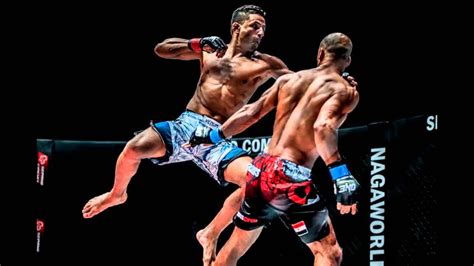
Mixed Martial Arts
For anyone curious about the best martial arts for self defense, here’s a straightforward answer. When it comes to the best martial arts for self defense, Krav Maga often tops the list. Let’s explore some of the best martial arts for self defense: Krav Maga, Brazilian Jiu-Jitsu, Muay Thai, Boxing, and Mixed Martial Arts (MMA).
Krav Maga: The Art of Instinctive Self-Defense
Originally developed for the Israeli military, Krav Maga is renowned for its practical approach to self-defense. Krav Maga is a self-defense system originally developed for the Israeli military. It focuses on instinctive movements and quick responses, making it highly effective in unpredictable situations. Krav Maga focuses on instinctive movements and quick responses, making it effective for neutralizing threats swiftly.
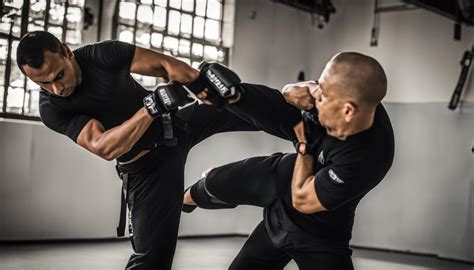
Krav Maga
Read also: Individual Martial Arts Instruction
A key feature of Krav Maga is its reliance on natural reactions. The techniques are built around how a person naturally moves under stress, making them easy to remember and perform even when adrenaline is pumping. Krav Maga places significant emphasis on disarming attackers. Whether facing a knife or a gun, Krav Maga trains you to neutralize the threat swiftly. The techniques focus on exploiting an attacker’s vulnerabilities and using quick, decisive actions to gain control. Krav Maga practitioners train in environments that mimic real-life situations. Classes often involve practicing in street clothes and simulating chaotic conditions to prepare you for potential threats.
In summary, Krav Maga’s focus on practical and instinctive techniques, along with its ability to teach effective weapon disarming, makes it a top choice for anyone looking to improve their self-defense skills.
Brazilian Jiu-Jitsu (BJJ): Mastering Ground Control
Brazilian Jiu-Jitsu (BJJ) techniques revolve around the principle of controlling an opponent through skillful grappling and submissions. Brazilian Jiu-Jitsu (BJJ) is a martial art that focuses on ground-fighting. This is crucial because many real-world altercations end up on the ground. BJJ teaches you how to control an opponent from various positions, making it a key component of self-defense. You’ll focus on ground control, ensuring you’re always in a dominant position.
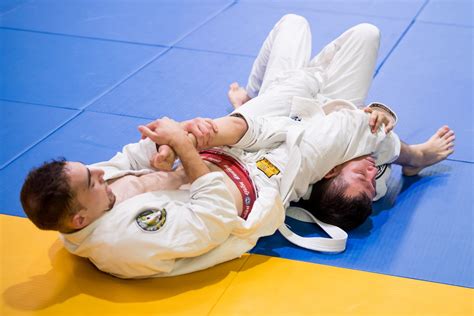
Brazilian Jiu-Jitsu
One of the standout features of BJJ is its use of leverage. The art of BJJ is not about overpowering your opponent with brute strength. By understanding body mechanics, a smaller person can effectively neutralize a larger opponent. This is achieved by using techniques that maximize your force while minimizing the opponent’s. The principle of leverage allows practitioners to control and submit opponents, regardless of size differences. With submission strategies, you’ll learn to apply holds that can force an opponent to tap out.
Read also: The Jade Fortress Martial Arts System
Submission holds are a vital part of BJJ. These are techniques designed to force an opponent to surrender by applying pressure to joints or chokes. The beauty of BJJ lies in its ability to end a confrontation without causing significant harm. BJJ’s effectiveness in self-defense is well-documented. It’s not just about learning moves in a controlled environment; practitioners often participate in live sparring, which simulates real-life situations.
In conclusion, Brazilian Jiu-Jitsu offers a comprehensive approach to self-defense, focusing on ground-fighting, leverage, and submission holds.
Muay Thai: The Art of Eight Limbs
Muaythai self defense ep.1
Muay Thai is celebrated for its dynamic striking techniques, employing fists, feet, elbows, and knees. Muay Thai, often called the “art of eight limbs,” is celebrated for its dynamic striking techniques. Unlike other martial arts that rely solely on punches and kicks, Muay Thai incorporates punches, kicks, elbows, and knees. This makes it one of the most comprehensive striking arts. Known as “The Art of Eight Limbs,” it offers a comprehensive approach to stand-up fighting.
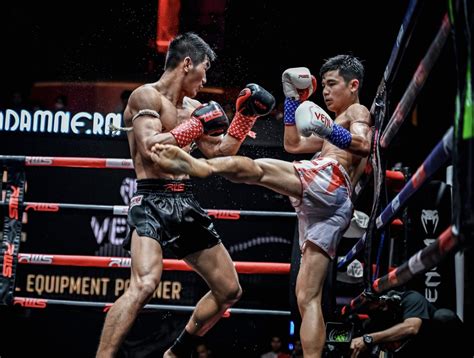
Muay Thai
Elbows and knees are considered some of the strongest and most devastating tools in Muay Thai. Elbows can be used in close-range combat, delivering sharp, cutting blows that can incapacitate an opponent quickly. Knees are equally effective, particularly in clinch situations, where they can target an opponent’s midsection or head with powerful upward thrusts. The clinch is a unique aspect of Muay Thai that sets it apart from other striking martial arts. In a clinch, fighters can control their opponents by grabbing them around the neck or shoulders. This position allows for a variety of attacks, including knees and elbows, and can be used to off-balance or tire an opponent. Clinch work is particularly valuable in confined spaces where traditional striking may be limited.
Read also: Deep Dive into Court Martial Films
Muay Thai’s effectiveness in real-world self-defense situations is well-documented. Its emphasis on powerful strikes and close-quarters combat makes it a practical choice for personal protection. Practitioners are trained to react instinctively, using their entire body as a weapon.
In summary, Muay Thai offers a well-rounded approach to self-defense, focusing on dynamic striking, the use of elbows and knees, and the clinch.
Boxing: Precision, Footwork, and Endurance
Boxing is not just about punching; it’s about precision, footwork, and conditioning. Boxing is often seen as a sport of finesse and strategy, but at its core, it’s about releaseing full force. Every punch is delivered with intent and power, aimed at wearing down the opponent. Boxers develop the ability to strike with power and accuracy while maintaining endurance.

Boxing
Footwork is the unsung hero of boxing. It’s what allows a boxer to dance around the ring, evade attacks, and find the perfect moment to strike. In real-life self-defense scenarios, being light on your feet can be your greatest asset. Quick, agile movements help you avoid threats and position yourself advantageously. Boxing is not just about throwing punches; it’s about having the stamina to keep going when the going gets tough. Boxing champions often win by outlasting their opponents, and this endurance is a critical component of self-defense. Real-life confrontations can be unpredictable and exhausting, and having the conditioning to maintain your energy levels is key. Boxing’s rigorous training regimen, which includes sparring, bag work, and cardiovascular exercises, prepares practitioners for the physical demands of a real confrontation.
The combination of power, footwork, and endurance makes boxing a formidable choice for self-defense. Boxing provides a robust foundation for self-defense by combining powerful strikes, agile footwork, and unparalleled conditioning.
Mixed Martial Arts (MMA): The Fusion of Combat Disciplines
Diving into Mixed Martial Arts (MMA), you’ll discover a combat sport that epitomizes the fusion of various martial art disciplines, challenging practitioners to master a diverse range of fighting techniques. MMA is a blend of various martial arts, including striking and struggling techniques from disciplines like Muay Thai, Boxing, and Brazilian Jiu-Jitsu. This makes MMA practitioners well-rounded fighters, capable of handling both stand-up and ground confrontations.
Mixed Martial Arts
Within the octagon, fighters release brutal strikes-punches, kicks, elbows, and knees-designed to incapacitate opponents swiftly and efficiently. But the art of MMA doesn’t stop at striking; it seamlessly integrates effective grappling techniques. Grappling involves takedowns, submissions, and ground control, demanding a combination of strength, agility, and strategic planning. Injury statistics reveal that MMA fighters face a greater likelihood of concussions, fractures, and lacerations compared to other martial arts. However, safety measures are continually evolving to mitigate these dangers. Despite these efforts, the inherent unpredictability of full-contact combat persists.
Other Martial Arts Styles
While Muay Thai offers a robust stand-up fighting style, Kung Fu introduces a more fluid and artistic approach to martial arts, emphasizing graceful movements and internal energy. You’ll find the essence of Kung Fu in the harmonious flow of motion, much like a dance with deadly intent. Imagine the Dragon style, one of Kung Fu’s many forms, where you embody the mythical creature’s power and wisdom. Your body moves in sinuous patterns, with each technique flowing seamlessly into the next. Kung Fu’s grace is steeped in history, with Shaolin monks practicing these arts for centuries. Their dedication to perfecting Kung Fu’s fluid movements is more than a martial practice-it’s a spiritual journey.
Karate harnesses the power of precise, explosive strikes to subdue opponents with a blend of artistry and force. As you delve into its history, you’ll discover karate’s origins on the Ryukyu Islands, now part of Japan, where it developed as a weaponless system of self-defense. When you perform a kata, you’re not just executing a series of movements; you’re expressing a story of combat, embodying both the attacker and the defender. Each kata is a showcase, a detailed pattern of movements that trains you to transition smoothly between offensive and defensive techniques. As you practice, remember that karate is steeped in tradition. The katas you learn have been passed down through generations, and they’re as much about preserving history as they’re about personal development.
Harnessing the explosive energy of its hallmark dynamic kicks, Taekwondo offers a riveting display of acrobatic prowess and precision that can captivate any martial arts enthusiast. With its Korean origins, this martial art has risen to global prominence, not only as a self-defense system but also as a celebrated Olympic sport. Every time you step onto the mat, you’re not just working out; you’re honing a craft that’s steeped in history and refined through competition. While Taekwondo emphasizes striking with the feet, Judo offers a contrasting martial arts experience focused on grappling and efficient use of force. Born in Japan in the late 19th century, Judo’s origins trace back to Jigoro Kano. He envisioned a martial art that not only fostered physical prowess but also personal growth and mental discipline. You’ll find that Judo, which means ‘the gentle way,’ lives up to its name. You might be intrigued to know that Judo isn’t just a self-defense system; it’s also an Olympic sport. Since its debut at the Tokyo games in 1964, Olympic Judo has gained a global following. It’s a testament to Judo’s widespread appeal and recognition as a competitive and respected sport.
The Global Impact of Martial Arts
You’re seeing martial arts’ global economic impact grow, with market trends favoring equipment sales and sponsorship deals fueling professional competitions and instructional schools. Practicing martial arts bolsters your mental resilience and emotional balance, helping you manage stress more effectively. You’ll find each martial art reflects cultural preservation, embodying historical origins that span centuries.
Spark Membership: Optimizing Your Martial Arts Business
In martial arts, finding the best martial arts for self defense is just one part of the equation. Equally important is how you manage and improve your fitness business to engage clients effectively. Spark Membership offers comprehensive management software solutions custom specifically for fitness businesses. Our tools are designed to optimize operations and improve client engagement, making it easier for martial arts studios to thrive. One of the standout features of Spark Membership is its ability to optimize Google Business Profiles. This boosts local visibility, helping martial arts schools attract new clients by standing out in search results. Choosing the right martial art is essential for effective self-defense, but managing your business efficiently is crucial for long-term success.
You’ve explored the top martial arts, each with its unique flair. Now, it’s your turn to step onto the mat, glove up, or bow into the dojo.
tags: #relentless #martial #arts