The story of Sardinha Brazilian Jiu-Jitsu (BJJ) is deeply intertwined with the evolution of combat sports in Brazil, particularly in Rio de Janeiro. This unique style has roots in capoeira and other martial arts.
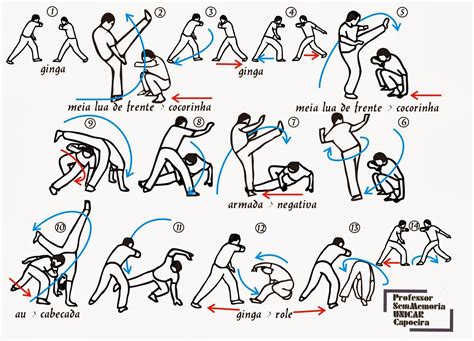
Capoeira moves
Mestre Sinhozinho and Capoeira Carioca
Agenor Moreira Sampaio (1891-1962), most commonly known as Mestre Sinhozinho, was a mestre or master practitioner of capoeira. He was the main exponent of the fighting-oriented style known as CAPOEIRA CARIOCA. Some sources name his second surname as Ferreira, but the rest of his life is well documented.
Mestre Sinhozinho was one of the eight children of Brazilian military officer and politician José Moreira, who descended from Francisco Manoel da Silva. An avid athlete, Agenor trained formally in BOXING, SAVATE, GRECO-ROMAN WRESTLING and ARM WRESTLING since his childhood, and also learned capoeira in the docks of Santos. When his family moved to Rio de Janeiro in 1908, he became a neighbor to fighter José Floriano “Zeca” Peixoto, son of politician Floriano Peixoto, who trained him further in capoeira.
He had his first national exposure as a fighter in 1917, when he accepted a challenge by wrestling champion João Baldi to avoid being taken down for five minutes. Sinhozinho passed the challenge with shocking ease, lasting an impressive total of 40 minutes against the champion, although the money prize was revealed to be non-existent because the promoter did not expect the challenge to be broken. He also worked as a teacher, being present in Mario Aleixo’s capoeira school in 1920.
Read also: From Sitcom Star to BJJ Master
Like Mestre Bimba, Sinhozinho opened a school in 1930 to teach capoeira carioca to wealthy middle class citizens. His school was not based on a single place, as Sinhozinho taught in several sport clubs and terrains borrowed from his benefactors, usually around the rich neighborhood of Ipanema. Unlike most capoeira mestres, Sinhozinho favored combat effectiveness over artistic expression, ditching the art’s music and rituals and mixing it with wrestling and other fighting styles.
It has been proposed that Mestre Bimba decided to emphasize the most traditional aspects of capoeira as an answer to pragmatic, combative variations like those taught by Sinhozinho and Anibal “Zuma” Burlamaqui, though I personally disagree. Nevertheless, he is credited with developing the practice of capoeira in Rio de Janeiro.
Unique Aspects of Capoeira Carioca
Sinhozinho approached capoeira in a scientific way, tailoring his training methods individually for every apprentice. He would even build his own training gear and tools to drill the art’s movements, and subjected his students to heavy weight training. He also modified the traditional ginga, making it more similar to boxing footwork, and introduced techniques from wrestling and judo.
Finally, capoeira carioca also taught the use of weapons like the sardinha or santo christo (razors) and the petropolis (canes, sometimes tricked), and among the few traditions it preserved there might be an ancient combat game similar to batuque named roda de pernada.
Sinhozinho was known himself as an excellent athlete and fighter, and upon witnessing a donkey being run over, he put the animal out of his misery with a single move. As he continued to train and teach capoeira, his influence on the art and the martial arts community continued to grow, leaving a lasting legacy that is still recognized today.
Read also: The Art of Brazilian Jiu-Jitsu
The Challenge to Mestre Bimba
In February 1949, Sinhozinho launched a challenge to the rival capoeira regional school led by Mestre Bimba, who was touring Sao Paulo. Bimba and his students had been forced to work only exhibition matches and were eager for real fighting (pra valer), so they quickly accepted to travel to Rio de Janeiro to answer the challenge.
Two bouts were fought between the two capoeira schools. In the first match, Sinhozinho’s apprentice Luiz “Cirandinha” Pereira Aguiar fought Bimba’s student Jurandir, knocking him out in the first round with a body kick. In the second match, 17-year-old Carioca fighter Rudolf Hermanny defeated Regional student Fernando Rodrigues Perez in two minutes, dominating the bout and eventually injuring Perez’s arm with a kick.
In June 1953, Sinhozinho’s school was challenged by Artur Emídio de Oliveira, Capoeirista Regional from Bahia and a popular vale tudo fighter himself. A bout between Emídio and usual Carioca fighter Hermanny was fought on June 29 in the Palácio de Aluminio. It was disputed under Burlamaqui’s capoeira rules, only including a modification that allowed groundwork, and it featured Carlos and Hélio Gracie as spectators. Hermanny controlled the first round, landing roundhouse kicks and palm strikes while defending with a boxing guard, which forced Emídio to take refuge on the ground.
Legacy
Sinhozinho ended up being more influential as a physical education teacher whose training methods benefited many Brazilian athletes, musicians, and future Olympic Committee president Sylvio de Magalhães Padilha. Sinhozinho died in 1962 and has been considered in modern times the mainstay of capoeira in Rio de Janeiro. However, as he never created a standardized way of teaching, his fighting style died with him.
Read also: Jiu Jitsu Classes