The practice of shaving the head, known as tonsure, carries significant religious and cultural meaning across various traditions. From the Shaolin monks to ancient clerical practices, the act of cutting or shaving hair symbolizes devotion, humility, and a transition into a new spiritual state.
Let's delve into the origins, symbolism, and cultural significance of different haircuts, including the Shaolin monk haircut and the historical queue hairstyle.
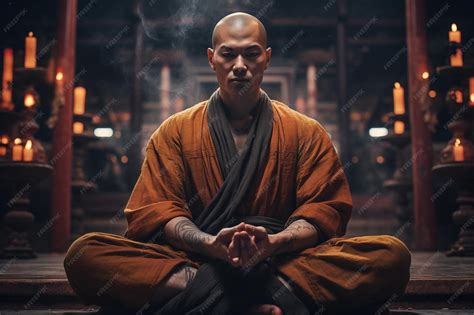
The Shaolin Monk Haircut
Why do Shaolin monks shave their heads? The answer lies in the story of Siddhartha Gautama, who left his palace to seek a way beyond aging, sickness, and death. It is said that one of the first things he did was shave off his hair and beard and don the yellow cloth.
Buddhist monks always completely shave their head and beard, showing their commitment to the Holy Life (Brahmacariya) of one gone forth into the homeless life. A rule states that a bhikkhu should not allow his hair to grow beyond a certain length or time, so he will shave usually at least once a fortnight or month, sometimes more frequently. To do this, he uses his razor, which is also one of his requisites.
‘Hair-of-the-head’ (kesa) is one of the five parts of the body mentioned in the ordination ceremony and is used to recollect the true nature of the body. The bhikkhu is also not allowed to dye or pluck out any gray hairs, for they are useful reminders of old age and impermanence.
Read also: Learn Shaolin Self-Defense
In summary, shaving our head symbolizes cutting off confusion, hostility, and attachment.
Some female Shaolin monks are allowed to keep their hair as long as they want, but they are prohibited from making any attachments/relationships/bonds to any men or women.
Tonsure in Various Religions and Cultures
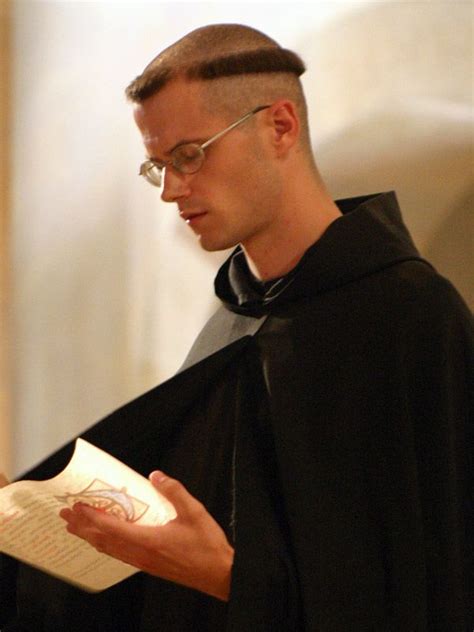
Tonsure is a ceremony of initiation in which hair is clipped from the head as part of the ritual marking one’s entrance into a new stage of religious development or activity. Tonsure has been used in both the Roman Catholic and the Eastern Orthodox churches on occasions of solemn personal dedication to God.
Three tonsures have been more or less in use in the Christian churches. The Roman, or St. Peter’s, tonsure involved the shaving either of the whole head, with the exception of a fringe of hair supposed to symbolize the crown of thorns, or of a small round area at the crown of the head. In the Greek (Eastern, or St. Paul’s) tonsure the whole head was shaved, but the more recent practice in the Eastern church has considered the tonsure adequate when the hair is merely shorn close. In the Celtic tonsure (tonsure of St. John, or, in contempt, of Simon Magus) all the hair in front of a line drawn over the top of the head from ear to ear was shaved.
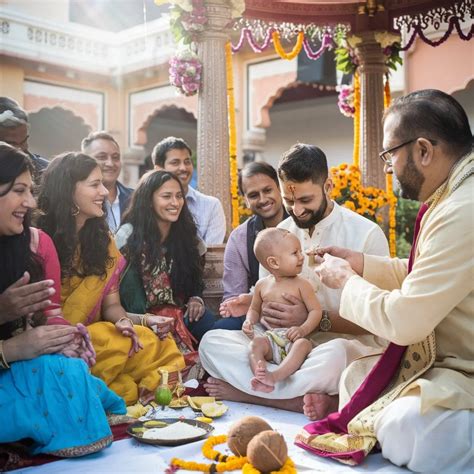
Tonsure in Hinduism
In Hinduism, the first tonsure undergone by a young boy (the ceremony of cūḍākaraṇa) is one of the saṃskāras, or personal sacraments, that mark the boy’s transition from an infant to a child. It is usually performed when the boy is about two years old. The Hindu tonsure leaves a tuft of hair (the cūḍa) at the crown of the head.
Read also: Martial arts meets comedy in Shaolin Soccer
Full tonsure is performed as part of the initiation rite into most Hindu ascetic orders.
Tonsure in Buddhism
In Buddhism, tonsure is performed as a part of the ceremony of ordination as a novice (pravrajyā ceremony) and as a monk (upasaṃpadā ceremony). Thereafter, the monk keeps his head and face clean-shaven. In Myanmar (Burma) and Thailand most male children undergo the pravrajyā ceremony at about the age of eight or older and spend a few days or months in a monastery; the rite of tonsure is a principal part of the ceremony.
Jaina monks also cut their hair as a sign of renouncing the worldly life and entering the monkhood, traditionally, by plucking out the hairs one by one. Both Jaina and Buddhist customs are theoretically in imitation of the act performed by their teachers Mahāvīra and Gautama, who cut off their hair upon leaving their households to embark on the spiritual life.
The Queue Hairstyle
A queue or cue is a hairstyle historically worn by the Jurchen and Manchu peoples of Manchuria, and was later required to be worn by male subjects of Qing China. The top of the scalp is shaved and the back portion of hair on the head is often grown long and is braided.
The edict that Han Chinese men and others under Manchu rule give up their traditional hairstyles and wear the queue, the Tifayifu, was met with resistance, although opinions about the queue did change over time.
Read also: A Historical Look at Northern Shaolin
After overthrowing the Mongol Yuan dynasty, Zhu Yuanzhang, the first Ming emperor passed a law on mandatory hairstyle on 24 September 1392 mandating that all males grow their hair long and making it illegal for them to shave part of their foreheads while leaving strands of hair, which was the Mongol hairstyle. The penalty for both the barber and the person who was shaved and his sons was castration if they cut their hair and their families were to be sent to the borders for exile.
The Tangut people of the Western Xia may have inherited hairstyle influences from the Tuoba. It resembled a monk's hairstyle but was not exactly like their tonsure, it left the face to be framed on the sides and forehead by a fringe of hair by shaving the head top and leaving it bald. This made sure the Tibetans and Song Chinese could be told apart from shaved Tanguts. It was imposed by the Tangut emperor, Jingzong, threatening that their throats would be cut if they did not shave within three days. The emperor was the first one to shave.
Unlike the tonsure of the Tangut Western Xia, the Jurchen hairstyle of wearing the queue combined with shaving the crown was not the invention of an emperor of the dynasty but was an established Jurchen hairstyle which showed who submitted to Jin rule. This Jurchen queue and shaving hairstyle was not enforced on the Han Chinese in the Jin after an initial attempt to do so which was a rebuke to Jurchen values.
The Manchu hairstyle was forcefully introduced to Han Chinese and other ethnicities like the Nanai in the early 17th century during the transition from Ming to Qing. The hairstyle was compulsory for all males and the penalty for non-compliance was execution for treason. After the fall of the Qing dynasty in 1912, the Chinese no longer had to wear the Manchu queue.
Traditionally, adult Han Chinese did not cut their hair for philosophical and cultural reasons. According to the Classic of Filial Piety, Confucius said: We are given our body, skin and hair from our parents; which we ought not to damage.
The slogan adopted by the Qing was "Cut the hair and keep the head, (or) keep the hair and cut the head". People who resisted the order were met with deadly force.
The queue became a symbol of the Qing dynasty and a custom except among Buddhist monastics.
The Xinhai Revolution in 1911 led to a complete change in hairstyle almost overnight.