Sumo wrestling, Japan's official sport, is a world of tradition, rigorous training, and unique dietary practices. This article delves into the specifics of sumo wrestler training, diet, and the inspiring story of Takanoyama Shuntaro, a "skinny" sumo wrestler who defied expectations.
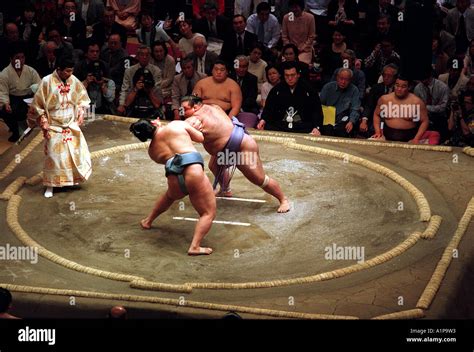
Sumo wrestling takes place in a ring called a dohyō. Image: wikipedia.org
Takanoyama Shuntaro: The Skinny Sumo Wrestler
Pavel Bojar, better known as Takanoyama Shuntaro, is a unique figure in the world of sumo. He is a skinny sumo wrestler, and his light weight is what makes his victories so special and inspirational. Takanoyama's real name is Pavel Bojar. Born 21 February 1983, Pavel is originally from the Czech Republic and is also the first man from his country to join professional Sumo in Japan.
Takanoyama is Pavel's shikona, a sumo wrestler's ring name, meaning "noble mountain". At first, Pavel was a judo practitioner, and interest in sumo came into his life later. Apparently, there's a big interest in sumo in the Czech Republic, making it Europe's number one country where sumo is popular. After achieving a Bronze medal in the 2000 Junior World Sumo Championship, Pavel was accepted by Naruto Stable. He made his official debut back in 2001 just after successfully passing his physical exam.
He retired in 2014 after losing his first match. Such loss would guarantee him a big fall down the makushita division. Since he could no longer win, he decided not to pursue and to return back to his country.
Read also: Sumo Wrestling and WWE Compared
Takanoyama's Technique: Overcoming Weight Disadvantage
What I found so inspirational about Takanoyama's style of execution is how much his technique and timing can overcome his opponent's weight. Weight is a big factor when it comes to martial arts and combat sports. In fact, weight is the factor upon which divisions are made.
However, did you know that in professional Sumo there are no weight divisions? This means that one can face an opponent double his weight. Given Pavel's height (185 cm or 6 feet 1 inch) and weight (98 kilos or 200 lbs), we can agree that he makes a very skinny opponent in sumo wrestling. Observing his moves, one can truly appreciate how Pavel uses his opponent's strength and bigger weight to his advantage.
Creating favorable levers, he succeeds to throw a much bigger opponent to the ground. He also uses the opponent's speed to his favor. When he's faced with a massive bull-like wrestler who attacks him, he uses his opponent's speed combined with weight in order to unbalance his posture. In conclusion, Takanoyama is a great example of how much good knowledge and understanding of the technique can give you new persepctives and opportunities against much bigger opponents.
How a Lightweight Beat Sumo GIANTS And Became In a Legend
The Rigorous Training of Sumo Wrestlers
Days start early at the heya. A heya is a training centre, or stable, where aspiring sumo wrestlers train and live. A wrestler is expected to stay with the heya from the time he joins - usually around the age of 15 - until the end of his career. Young men who aspire for sumo greatness need to wake up early. Few succeed in becoming great. Regardless, they have dreams they want fulfilled, their heads crowned with top knots, their mawashi (belt) wrapped around their bodies, their stomachs growling.
The training is several hours long. “We start with one hour straight of leg lifts called shiko,” Yama says. They do about 500 of these in an hour. Each time they lift a leg up in the air to shoulder height in slow motion. They hold it there and then slowly bring it back down. “Most normal people are wiped out trying to do it a few times. We do it 500 times in a row.”
Read also: Tradition and Performance in Sumo
After that, they do calisthenics, stretching, and other warm ups, before sparring sessions (sometimes 50 matches against one person) and then hitting practice. With butsukari, one wrestler takes on the role of a football “sled” and gets pushed repeatedly by another wrestler. “This helps with our defence and offensive training,” Yama says. This grueling training hungers big athletes and makes them thirsty, too. A sumo wrestler can lose ten to 15 pounds of sweat alone in one morning’s workout.
The Sumo Diet: Fueling a Giant
The average sumo wrestler is around 6’1” and 325 pounds. To fuel a body that size, doing the workout that his body can do, is no small feat.
Enter a steaming pot of chanko-nabe. There is no established set of ingredients. It’s just a copious amount of food, with as much nutrition as possible in it. “On its own, chanko-nabe is very nutritious,” Traill says. “Contrary to popular belief, chanko isn’t intrinsically fattening as it only contains extremely healthy ingredients. Any fat that rises to the top of the broth is quickly skimmed off.” Each sumo stable has their own signature recipe which takes advantage of the freshest local and seasonal produce.
Typically, the dish contains dashi or chicken broth as a base with sake or mirin added for flavour. Immense amounts of protein are also added; beef, chicken, fish, and tofu are staples, to go with vegetables including cabbage, bok choy, daikon radish, and more. “What puts on the weight,” Traill says, “are all the accompanying side dishes with large bowls of rice.” This is all usually washed down with sake or quite a lot of beer. All that, Traill says, “is followed by a long nap to store up what I affectionately refer to as ‘potential muscle.’”
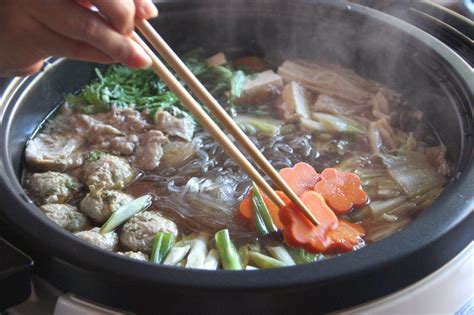
Chanko-nabe is a staple food for sumo wrestlers. Image: i.ytimg.com
Read also: History of Japan's Sumo Wrestling
Make no mistake, sumo wrestlers eat a lot. Legendary wrestler Masashiimaru Koyo, who won more than 700 wrestling matches in a 14-year career, would eat meals that included more than four pounds of beef. “We eat bowls and bowls of this stew,” Yama says. Sometimes as many as ten bowls. The wrestler Takamisugi, a former wrestler who is now a head coach at the Tokiwayama stable, is a chanko-nabe eating legend. He once ate 65 bowls of sumo stew (consuming approximately 29 pounds of beef) in one sitting.
Elite sumo wrestlers have immense power, speed, balance, and flexibility, from hours of daily training. How do they support their intense athletic workouts? This sumo stew is teeming with nutrient-dense proteins and vegetables. After hours of training, pro sumo wrestlers down bowls of chanko, to replenish energy lost from practice. The warm broth and fresh vegetables aid in assimilation and absorption of nutrients, and the high protein content rebuilds worn-down muscles. In addition, the warm stew promotes blood circulation and boosts metabolism.
Chanko-nabe dishes consist of a rich broth, flavored with fish stock, miso, soy sauce, or other condiments. Protein comes from meat, chicken, fish, or tofu. Almost any vegetable works well in chanko-nabe - popular choices including napa cabbage, green onions, carrots, shiitake mushrooms, daikon radish, burdock root, and more! Chanko is always made from very fresh ingredients.
Rule Changes and the Future of Sumo
The Japan Sumo Association recently announced that potential sumo wrestlers will no longer have to meet minimum height and weight requirements. These rule changes come as the sport is seeing a precipitous drop in the number of sumo wrestler recruits. Only 34 men applied to become sumo wrestlers this year, reported Japanese newspaper The Asahi Shimbun. This figure is tied for the lowest number ever.
Previously, wannabe sumo wrestlers who did not quite reach the height or weight minimums were known to take extreme measures, reported the U.K.-based newspaper The Times. This included drinking large amounts of water in an attempt to add weight, and one wrestler even underwent a surgery to install a piece of silicone on top of his head to (quite literally) bump himself up to the minimum height, said The Times.
The reason for the fewer number of recruits is twofold, The Times also noted. Japan's birthrates have been in decline for years, and hit the lowest figure ever in 2023, Fox News Digital previously reported. This means that there's simply a lack of numbers of potential recruits, and parents may be more hesitant to let their only child or only son leave home to live in a heya, or "training stable." Authorities suspect the shrinking number of recruits is linked to Japan's dropping birthrate and recent scandals in the sport.
Unlike other combat sports, sumo wrestling does not have weight classes. Competitors wrestle each other in a dohyō, or ring, regardless of their size differences. The rule change comes after another year of a record-low number of sumo recruits.
Table: Key Facts About Sumo Wrestling
| Fact | Description |
|---|---|
| Origin | Ancient Japan, with roots in religious rituals |
| Objective | Force opponent out of the ring or make them touch the ground with any body part other than their feet |
| Kimarite | Pro sumo currently recognizes 82 “kimarite” (winning techniques) |
| Diet | High-calorie diet focused on chanko-nabe |
| Training | Rigorous daily training including shiko (leg lifts) and sparring |
| Governing Body | The Japan Sumo Association |