In Brazilian Jiu-Jitsu (BJJ), “passing the guard” refers to maneuvering around an opponent’s legs and hips to establish a dominant position from which you can either control or submit your opponent. When someone says “pass the guard” in BJJ, they typically refer to various techniques and strategies used to navigate through or around the legs of the opponent to achieve a position, such as side control, mount, or back control. Guard passing is a fundamental transition in Brazilian Jiu-Jitsu, and failure to learn how to pass the guard will severely limit your progress as a fighter. There are numerous guard-passing techniques in BJJ, including pressure passing, leg drags, knee cuts, and torreando passes.
At the heart of this martial art lies the guard, a defensive position wielded by practitioners to thwart opponents and launch counterattacks. This guide delves into the strategies, techniques, and principles that empower practitioners to achieve positional control. Join us as we explore the various guard-passing techniques, from classic pressure passes to dynamic leg drags, unveiling the intricacies that make each approach unique.
This technique requires overcoming your opponent’s guard and establishing a more dominant position. Guard passing is important because it lets you take the initiative and dictate the match’s pace. Guard passing becomes more important as you progress in Brazilian Jiu-Jitsu because you will face opponents with more advanced guard retention capabilities. You will inevitably need more strategic and tactical expertise to get past your opponent’s guard.
Successful passing can neutralize an opponent’s defensive capabilities and set the stage for positional control or submission attempts. Conversely, a skilled guard player can use their legs and hips to defend against guard passes and potentially sweep or submit the passer. It’s important to note that passing the guard requires technical skill and an understanding of timing and leverage.
In the tapestry of BJJ, the ability to pass the guard unlocks a vault of strategic prowess and technical finesse. This skill is not merely a means to an end but a continuous journey of growth and refinement on the mat.
Read also: From Sitcom Star to BJJ Master
Let's delve into one of the most effective methods of guard passing: the Smash Pass.
What is the Smash Pass?
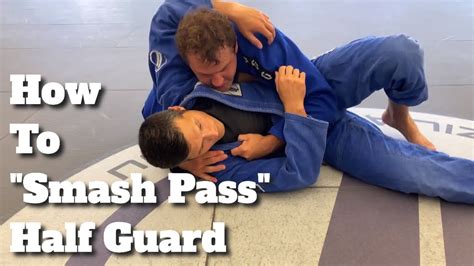
The smash pass is a technique where you force your opponent’s legs to stack on top of the other as they lay on their side. Smashing their legs in this configuration makes their guard incredibly weak.
The central theme of passing the guard is to bypass the opponent’s legs. All you have to do is find a way to pass the opponent’s legs. But the actual techniques that encompass guard passing are very vast. You can pass using either speed or pressure.
Now let’s discuss the smash pass. In this video, ADCC bronze medalist Lachlan Giles demonstrates two ways to pass the guard using the smash pass.
Benefits of the Smash Pass
When we look at some of the absolute best ways to pass an opponent’s guard in Brazilian Jiu Jitsu we must always stop and pay tribute to the effective method of the smash pass. What are the actual benefits of passing using smashing?
Read also: The Art of Brazilian Jiu-Jitsu
- Control the Pace: Smash passing can slow down, and even dictate the pace of a match.
- Neutralize Flexible Guards: It will eliminate the movement demonstrated by a flexible guard player, and allow you to pass complicated guards.
- Conserve Energy: A hidden benefit to this jiu jitsu technique is a fundamental way to conserve energy.
- Immobilize an Attacker: The smash pass, is a vital way to immobilize an attacker or anyone throwing strikes at you.
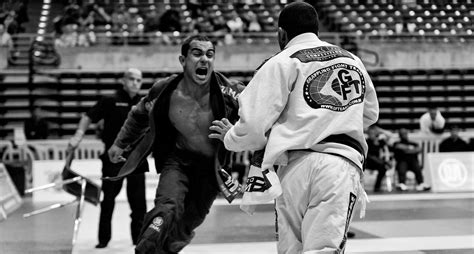
There is an art to smash passing and one of the best smash passers or pressure guard passers in the world in Bernardo Faria. Bernardo is infamous for his over / under pass that he has utilized countless times at the highest levels.
Detailed Benefits
- Control the Pace of a Match:
As we already discussed, smash passing is one of the most ultimate ways that a jiu jitsu practitioner will use to control the pace of a match. You can slow down the pace of a match using smash passing when you are in a high pace match with a really good jiu jitsu guard player. It might even be the only way to do so.
What I mean when I say a “high pace” match with a really good BJJ guard player is one who is always moving, always attacking, and always trying to break down your pressure leaving you constantly defending. Stall them out and punish them for their behavior with a brutal smash and pass.
There is a good way to apply smash passing and it’s by passing with your knees to get into a more secure and controlling single or double under hook. Check out Rodolfo Viera’s infamous strategical smash pass.
- Neutralize Flexible Guards:
Let us assume that you are going against a guy who is super, super flexible. Extremely flexible. Their jiu jitsu guard retention is probably amazing, which means you are going to have to have a much more methodical approach to passing their elite guard. Enter the smash and pass. Isn’t it great?
Read also: Jiu Jitsu Classes
The smash and pass is an absolutely great way to pass such an opponent in a brutal fashion. With the smash and pass you will be able to prevent inversions, legs that come out of nowhere and more!
- Effective Against Common Guards:
It is very common knowledge amongst high level BJJ practitioners that De La Riva, Reverse De La Riva, Spider Guard and even Lasso Guard can be passed effectively using smash and pass techniques. If you can manage to get double under hooks and stack your opponent, you will be able to brutalize them which will allow you to beat their guard. Like I said, smash passing can be BRUTAL!
- Conserve Energy:
Much like dictating the pass of a match by smash passing your opponent, a hidden benefit to this jiu jitsu technique is a fundamental way to conserve energy. Let’s face it, not all of us are super athletic, or even remotely young.
- Self-Defense Applications:
The god of passing, the smash pass, is a vital way to immobilize an attacker or anyone throwing strikes at you.
Key Elements of a Good Guard Pass
- Posture: Posture is the most essential element of a good guard pass.
- Control: Control of your opponent (especially the legs and hips) is another essential component of a good pass.
- Grips: Grips are the third fundamental aspect of a good guard pass. You need to hold on tight to prevent your opponent from escaping or countering with a sweep.
Smash Pass Techniques and Variations
The first technique is the smash pass from the seated guard to side control. Lachlan mentions that it is easier to redirect a person’s position when almost tilted over. The key detail here is not to rely too much on your arms to push the legs to the side. You can position your body at an angle where your chest can block the leg.
Once you smash the legs, it is now time to pass the guard. Note that your weight should be on the opponent’s legs as you work on the pass. If you place your weight on their hip, they can always threaten to push you away or use their hooks to sweep you over. Your legs should also cover your opponent’s to keep you stable on top.
The second option is the smash pass straight to mount. Starting from the smash pass, use your near side leg to block near the opponent’s knee. Once you block the knee, switch your head position from near the opponent’s chest to facing the opponent’s back. The movement of the leg and head prepares your body to move to the other side.
Switch your hips and scoop the opponent’s legs using your far leg and lock the triangle. This option is admittedly more nuanced than the first one, but the threat of going straight to the top makes it a highly valuable technique for those who love the full mount.
Going back to what we mentioned about working on systems, these two techniques are guaranteed to work if you use them in combination. Remember to always stay tight and keep the opponent’s elbow trapped as you move up. Use the concept of dilemmas to force your opponent to choose between two bad options. If he blocks the pass to side control, transition to the mount and vice versa.
If the smash pass is new to you, it is best to drill the technique as consistently as you can. It is recommended that you drill with zero resistance in the beginning and slowly add common defenses as you improve. Talk to your instructor and express your interest in the technique. It is always a good idea to seek the assistance of an expert in learning new techniques. The smash pass is just one of the many passing techniques available in BJJ.
Let’s see how some of the best players in the game approach this monster of a pass. We’ll take a look at three different variations of the smash pass and break them down to see what the inner workings look like. Hopefully we’ll all get a little more clarity and get a look at how to make this pass stick a little better in our own passing endeavors.
Craig Jones' Smash Pass
This first one is brought to us by Craig Jones. Beginning in a common passing position with his right knee up the middle, Jones initiates a knee cut by pinching his knees and juking to his left. This cause his partner to give some resistance in the opposite direction. This is the perfect time for Jones to begin the sequence. He acquires an under hook and begins to sprawl out to his right, folding his partners hips and smashing the legs together.
Jones stays tight on the hips and heavy on the legs as to not allow any movement or hip escaping. To begin flattening his partner, Jones secures the bottom elbow and begins to lift it upward. The path to the mount is a bit obstructed by the top knee, so this next detail is critical. With his partner’s legs split, Jones is able to walk his leg using his knee and foot in combination to push the bottom leg over. This movement will eventually cause the top leg to move as well.
Once the top leg has been removed, Jones can bring his shin tight to his partners rib cage and step his opposite leg over his partner’s body unobstructed. Having the under hook in place allows Jones to achieve a high mount position, which will always be favorable if its available.
If time is of the essence and the pass needs to be expedited a bit, Jones can place his right instep in front of his partners top leg, stretching him a bit. He then replaces his instep with his hand, acquires a grip on the shoulder, and makes a swift movement to the opposite side of the body for a quick guard pass. This also opens up a pathway to the back, which is never a bad thing.
As Craig initiates the guard pass, his partner may choose to immediately turn away. This quickly puts the back within reach.
Cyborg's Smash Pass
In this next segment on the smash pass we find ourselves being treated to some instruction from the legend himself, Cyborg. At the onset of the technique, Cyborg addresses two very important key elements of passing the guard. This is great lesson in itself. Controlling the posture, and controlling the distance will always be relevant to guard passing in any setting. In this case the posture is being controlled by a grip on the collar, and the distance is being managed by his partner’s foot, opposite of the DLR hook. He then trades his sleeve grip for one at the collar.
Cyborg will now backstep to remove the hip from his foot, and then return, now squatting down on the foot. After he sits, he uses a quick pushing motion to make his partner’s knee travel to the other side of his arm that’s gripping the collar. This captures the knee in between his ribcage, elbow, and thigh. With an under hook acquired, a post on the mat with his head and hand, and a kickstand with his right leg, Cyborg now looks to slide his back knee forward and then backstep with his front leg. There’s some great movement at work here.
Cyborg is not a small guy, but he’s known for his ability to move like one. I love the change in position of the legs to complete the pass.
Lachlan Giles' Smash Pass
Lachlan Giles provides us with our next variation. In this video he shows us two different ways initiate the pass, as well as two different ways to finish it. Giles begins in an open guard scenario and initiates the first entry by dropping to his partner’s level. From here he begins driving his head forward in to his partner’s chest. As his partner begins to tilt, this is the perfect time for Giles to apply pressure with his right hand to the bottom knee and position his chest over his partners legs. As they descend, Giles lands in position, straddling his partners legs, and making sure his weight is positioned on top of the legs.
Giles now continues by posting his head on the floor and securing the bottom elbow. Acquiring the bottom elbow will keep his partner from getting up and also prevent him from pushing Giles away. Giles will now employ a very common movement in BJJ to finish the pass. He first uses a windshield wiper movement with his back leg to cover his partners legs. This is immediately followed by the same movement from his front leg. This pins the legs and keeps them in place while Giles makes his exit tot eh backside of his partner, completing the guard pass.
Giles will be working towards the mount in this particular scenario, and to do that there are a few more important details. Taking a small step forward with his top leg, Giles will point his knee towards the floor, blocking his partners knee. Immediately following this step, he transitions his head to the other side of his partner body. Giles rolls his hips to the right and then steps over his partners leg planting his foot behind the knees. He then bundles the knees using a triangle. If you can’t make a fully locked triangle, crossing your feet is ok, but be sure to do it at the knees and not the ankles for the best control.
The second entry deals with a partner that’s lying down. By taking control of the feet, Giles keeps his partners legs at bay while he steps his right leg up the middle and imposes himself on his partners guard. The goal of smashing legs here is the same, and to do that Giles takes a grip on his partner’s collar and begins to back up a bit. This causes his partner to rise off of the ground, and provides a moment of vulnerability where Giles can push the knee to the side using his forearm and enter the smash pass position.
Another advantage of this entry is that it pulls Giles’s partner’s knee away from his chest as the technique is performed. This will keep the knee from being a detriment later in the sequence. At this juncture, things look very similar tot eh first variation, but Giles finishes to the back side and establishes side control instead of traveling in to the mount.
Each one was unique, but there were definitely some common themes that these great teachers and athletes all shared. I hope this little study on the smash pass helped you to understand the technique better, and shed some new light on what makes it tick.
Craig Jones smash passing footage and other techniques