In Taekwondo, the uniform or gi is not just a practical attire for training and competition; it also carries significant meaning, especially when it comes to patch placements. The way patches are placed on your uniform can impact your appearance and how you represent the values of Taekwondo. Understanding the significance of taekwondo uniform patch placement can enhance your connection to the martial art, whether you're training or competing.
Martial arts have a rich history; the earliest evidence dates back over 2000 thousand years. Buddhist monks popularized it during the early fifth century CE as a means of self-defense. It is still trendy in the modern age, and people use it for sports, being fit, etc. A big part of modern martial arts like MMA, Judo, Brazilian Jiu-Jitsu, Karate, or Taekwondo is custom patches. They signify the ranks, tournaments you have participated in, which school you train with, etc.
Determination and discipline are two of the most critical traits for practicing martial arts. They help ordinary students become champions. We often use custom embroidered patches in martial arts facilities. People use them to welcome new members, improve participation, boost morale, develop competitive spirit, etc. They use the patches for martial arts uniforms, traditionally known as Gi.
Embroidered patches hold a special place in the world of martial arts, serving not just as decorative elements but as powerful symbols of identity, achievement, and tradition. From the earliest days of martial arts history, practitioners have worn patches on their uniforms to signify rank, represent their school or dojo, and display their connection to the broader martial arts community.
Embroidered patches in martial arts carry deep symbolism that connects to personal achievement, school affiliation, and cultural heritage. Each patch is more than just an aesthetic feature; it reflects an individual’s martial arts journey, their values, and the traditions of their practice.
Read also: Is the Century Taekwondo Uniform Worth It?
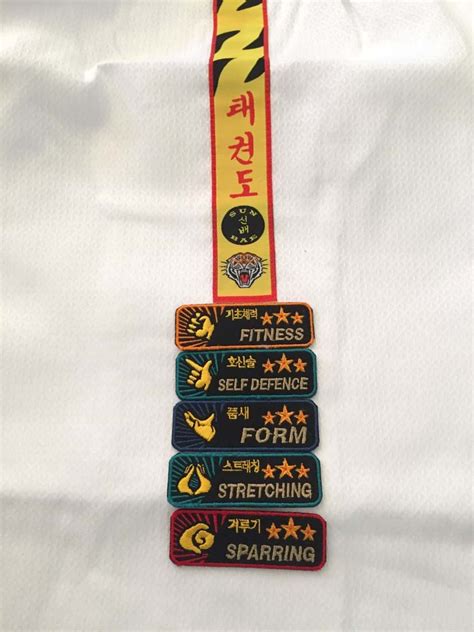
Significance of Patches
1. Indicating Rank and Achievement
One of the most significant roles of patches in martial arts is their function as indicators of rank, achievement, and progression. In many martial arts disciplines, a patch can be used alongside or instead of colored belts to signify a practitioner’s level of expertise. Patches also mark specific accomplishments, such as earning a black belt or achieving a notable tournament victory. Some schools issue custom patches to signify that a student has mastered a particular form, weapon, or kata. These patches, often worn with pride, serve as tangible milestones in a martial artist’s journey, motivating both the wearer and others to continue striving for excellence.
2. Symbolizing Affiliation
Beyond personal achievement, martial arts patches often symbolize affiliation with a specific dojo, gym, or organization. These patches are typically worn on the gi or uniform in a standardized location, such as on the chest, shoulder, or back. Affiliation patches also play a role in distinguishing regional or national pride. A martial artist may wear a patch with their country’s flag when representing their nation in competitions. In this way, the patch becomes more than a personal symbol, it also serves as a representation of one’s connection to a larger martial arts community, whether local, national, or international.
3. Cultural and Philosophical Symbolism
The designs found on martial arts patches are often rich with cultural and philosophical symbolism. Many schools and styles draw inspiration from their historical and cultural roots, incorporating national symbols, animals, or philosophical icons into their patches. For example, in traditional Chinese martial arts, patches may feature dragons or tigers, representing power, strength, and agility-traits highly valued in martial arts practice. The yin-yang symbol is a common feature in patches across martial arts styles that originated in East Asia, such as Kung Fu and Taekwondo. This symbol represents the balance of opposing forces, light and dark, hard and soft, offense and defense, which are core principles in many martial arts disciplines. Other patches may feature images of weapons (such as the sword in Kendo or the nunchaku in Kobudo), which represents the style of martial arts practiced.
Common Patches for Martial Arts
Martial arts patches come in a variety of styles, each with its own unique design elements that reflect the philosophy, tradition, and identity of the art or school. Here are the common patches for martial arts.
1. Discipline-Specific Designs
Each martial art discipline tends to have its own style of patch designs, with symbols and elements that are closely associated with its culture and techniques:
Read also: The Meaning Behind Taekwondo Belts
- Karate: In Karate, patches often feature traditional Japanese symbols, such as kanji (Japanese characters), animals, or natural elements like the sun. The imagery is often connected to the school's style of Karate, with some styles (such as Shotokan) using the tiger to represent power and precision.
- Brazilian Jiu-Jitsu (BJJ): Patches in BJJ typically feature the triangle, representing the three core principles of mind, body, and spirit, or balance, leverage, and technique. Many patches also display stripes, which symbolize belt promotions, achievements, or tournament success. BJJ patches often have a more modern aesthetic, with bold logos and graphics to reflect the sport's dynamic nature.
- Taekwondo: Taekwondo patches frequently highlight national symbols such as the Korean flag or characters written in Hangeul (the Korean alphabet). Many patches incorporate the yinyang (called the Taeguk in Korea) from the Korean flag, symbolizing balance and harmony.
- Judo: Judo patches are often simple and elegant, frequently featuring Japanese kanji, the school’s name, or logos associated with the International Judo Federation (IJF). Patches on the gi often serve as indicators of nationality during international competition, with many practitioners wearing their country’s flag patch.
- Kung Fu/Wushu: Patches in Chinese martial arts, such as Kung Fu or Wushu, tend to incorporate traditional Chinese symbols like the dragon or phoenix, representing wisdom, power, and resilience.
2. School and Organization Logos
Many martial arts schools and organizations develop their own logo or emblem patches to represent their identity, values, and affiliations:
- School Logos: Martial arts schools often create custom logos that serve as the foundation for their patches. These logos can include symbols that reflect the school's heritage, such as animals (e.g., eagles, tigers, or wolves), weapons (e.g., swords, bo staffs), or philosophical concepts (e.g., strength, wisdom, or courage).
- Federation or Organization Logos: Patches can also represent larger federations or governing bodies. For instance, practitioners of Taekwondo may wear patches from organizations like the World Taekwondo Federation (WTF) or Kukkiwon, the global governing body of Taekwondo.
3. Custom Martial Arts Patches
Custom martial arts patches are unique designs that go beyond traditional or standard logos, often created to commemorate special events, personal achievements, or significant milestones within a practitioner’s journey:
- Event Commemorative Patches: Martial arts schools frequently create custom patches for tournaments, seminars, or camps. These patches are designed specifically for that event and may include the event name, year, and location.
- Special Recognition Patches: Custom patches are also given as recognition for extraordinary accomplishments.
- Personalized Patches: Some martial artists choose to create their own patches that represent personal values, philosophies, or goals. These custom designs might include a favorite quote, meaningful symbol, or a reference to an important milestone in their martial arts journey.
Placement and Usage of Patches
The placement and usage of patches in martial arts carry significant meaning, which represent not only personal achievement but also adherence to tradition and respect for the art form. In martial arts, the uniform (or gi) is more than just a functional piece of clothing-it represents a martial artist’s discipline, training, and school affiliation. The placement of embroidered patches on the gi or other martial arts uniforms is often done with purpose and tradition.
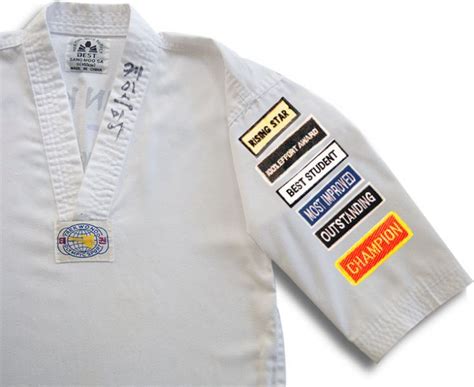
Traditional Patch Locations
- Chest/Heart Area: One of the most traditional and significant locations for patches is the left chest area-over the heart. This placement signifies a deep personal connection to the martial art and the practitioner’s loyalty to their dojo or school.
- Shoulder and Arm: The shoulder or upper arm is another common location for patches, especially those representing nationality or team affiliation. For example, in Brazilian Jiu-Jitsu (BJJ), the upper arm may feature a patch displaying the team logo or a representation of the practitioner’s nationality, which is particularly useful during international competitions.
- Back: Some schools, particularly in Brazilian Jiu-Jitsu, will have large patches on the back of the gi jacket. This is especially common in competition, where a large back patch prominently displays the practitioner’s team logo, giving them visibility during matches. In karate, the back may feature a simpler design, such as a kanji character representing the school’s name or a philosophical concept.
- Sleeves: Patches on the sleeves are another common sight, especially in Judo or Taekwondo, where smaller patches representing rank or federation membership may be placed.
- Pants: Although less common, some schools may allow patches to be placed on the pants of the gi. These patches are typically smaller and may represent personal achievements, such as tournament victories, or may be decorative patches added for personalization.
- Belt: In some martial arts, the belt itself can feature patches or stripes that indicate rank progression. For example, karate and BJJ often use belt stripes (small colored patches sewn onto the end of the belt) to signify levels within each belt color, providing a visual cue for the practitioner’s skill level.
Respect for Tradition and Etiquette
Respect for tradition and etiquette plays a crucial role in how patches are worn and displayed in martial arts.
- Adherence to School Guidelines: Most martial arts schools have strict guidelines on where and how patches should be placed on the gi or uniform. This includes not only the physical location of patches but also the number of patches that are allowed. For example, traditional schools of karate or judo often limit the number of patches a practitioner can wear to maintain a clean and professional appearance.
- Avoiding Overcrowding: Martial arts etiquette often discourages the excessive use of patches.
- Earning Your Patches: A key element of martial arts etiquette is that patches must be earned, not purchased or displayed without justification. For example, a black belt patch or rank-specific patch should only be worn by practitioners who have officially earned that rank. Similarly, patches that signify membership in a particular school or association should only be worn by those who are active members in good standing.
- Patches in Competition: In martial arts competitions, the placement of patches may be even more regulated. Many tournaments have rules that dictate where patches can be worn, especially if they represent sponsorships or schools.
While the gi and uniform are the most traditional places to display patches, martial artists often find creative ways to showcase their patches off the mat as well.
Read also: Excellence in Taekwondo
- Gym Bags and Equipment: One of the most popular non-traditional uses for martial arts patches is on gym bags or training equipment. Practitioners often sew patches onto their gear bags, allowing them to display their rank, school affiliation, and accomplishments even when they are not on the mat. This serves both as a personal decoration and a way to identify their belongings in a busy gym or dojo.
- Jackets and Hoodies: Outside of formal training, martial artists may choose to place patches on casual clothing, such as jackets, hoodies, or hats.
- Accessories: Some martial artists take patch placement a step further, applying them to accessories like hats, backpacks, or even keychains. These small items allow for an even more casual display of patches, making them part of a martial artist’s everyday style.
- Frames and Displays: Patches from special events, tournaments, or belt promotions are sometimes framed or placed in shadow boxes as keepsakes. Martial artists often display these patches in their homes, alongside certificates or belts, as a reminder of their journey and accomplishments.
Maintaining Your Patches
Maintaining martial arts patches is crucial for preserving their appearance and longevity. Proper care ensures that patches remain vibrant, intact, and securely attached to uniforms. Additionally, knowing how to replace or repair patches when they show signs of wear helps martial artists keep their uniforms looking professional.
- Gentle Washing: Although martial arts uniforms need regular cleaning, patches benefit from gentle washing methods to avoid damage to the embroidery and backing. Machine washing on a cold or warm delicate cycle with mild detergent is recommended to minimize stress on the fabric and stitching.
- Hand Washing for Delicate Patches: For uniforms with particularly detailed or delicate patches, hand washing is the best option.
- Turning the Uniform Inside Out: To protect patches from direct abrasion in the washing machine, it's a good idea to turn the uniform inside out before washing.
- Spot Cleaning: For small stains or dirt around the patch area, spot cleaning with a soft cloth and mild soap is recommended.
Specific Taekwondo Patch Placement
In Taekwondo, the placement of patches on your uniform is not just a matter of aesthetics; it's a representation of your achievements and respect for the martial art.
- The rank patch, indicating your current level, should be placed on the left shoulder of your uniform.
- Your school or club logo patch is typically placed on the right shoulder.
- If you are representing a country, the national flag patch is often sewn on the left chest area.
- Achievement patches, such as those earned from tournaments or special events, can be placed on the sleeves or below the main patches.
Proper placement of your Taekwondo patches is vital as it reflects respect for the traditions of the art and adherence to specific protocols.
New students will receive a light weight uniform, called a dobok when they join. Uniforms can feel stiff and boxy right out of their packaging, but once washed will become much softer and more relaxed. If your uniform is too long in the sleeves or pant legs, roll them under so that the roll is not visible. A few tack stitches to hold rolls in place is recommended, so they do not come undone during class. Tacking up the extra length also allows for it to be let back down as a student grows. Female students are required to wear a plain white t-shirt or tank top under their dobok top. The right side of the student's uniform top should be brought across the chest first, then the left side over top and then tied in place. Once students join the Black Belt Club and become a full member at our school, they will receive their uniform patches. Patches should be sewn on prior to the student's first Testing for new rank. Patches are NOT iron on and do require sewing. We highly recommend lining up the patches for placement while the student is wearing the uniform with tape or safety pins before sewing them in place.
How to Sew Your Gi Patch
Martial arts instructors and students are proud of their accomplishments and require high-quality patches to last long. You also want to ensure you have the precise design to help with promotions. It is possible with an expert and reliable manufacturer like EverLighten. The biggest basketball league in the world, the NBA, wanted to create custom patches for their team uniforms. Their artwork and requirements were pretty complex. After being disappointed with many manufacturers, they wanted to try us by looking at the positive customer reviews. It took several rounds of back-and-forth communications to understand every single detail. It satisfied them after seeing the samples.
Custom Patch Design Considerations
If you have a martial arts school or want to create martial arts custom patches, there are several design considerations to keep in mind:
- Keep the design fluid: You want custom patches to complement the uniform and not overpower them. When the patch design is too contrasting, people will find it hard to distinguish what is on the patches.
- Use bolder and larger fonts: Many people think they require smaller fonts for custom patches to make the most impression. Use a bold, large, and simple font.
- Choose colors carefully: Usually, martial arts uniforms have one solid color - white or black.
- Don’t be afraid to be creative: Now that you know about the colors and fonts, please don’t be fearful to experiment with the design. Every martial art school has some unique traits; you must include them in the patch design. E.g., if you teach martial arts to special needs people, include it while designing custom patches.
- Take size into account: In martial arts, people wear custom embroidered patches on their left chest, sleeve, and back. The size of the patches should accord with their placement. For wearing on the chest, please use a larger size; for the sleeve, it would be better to choose a smaller size.
- Use a hot cut to cut the patch without fraying: The biggest advantage is to make intricate designs without making the patches ragged.
- Specialty borders: Custom patches look exquisite on martial arts uniforms, and borders help achieve the look. The popular ones are straight, wavy, and diamond borders. Merrowed border is an option for martial art custom patches and looks lovely for circular, rectangular, triangular, or any other solid shape. It gives a professional and refined look worthy of respect. Satin stitch differs from the merrowed border and does not lock the patch edge.
Attachment Methods
Most martial arts uniforms are made of heavy cotton and used ruggedly; you need a sew-on or heat seal patch to be permanently attached. Both of the options will provide strong patches. For MMA or Muay Thai shorts, you will need backings to secure on microfiber or polyester. You can use professional help for sew-on patches and a heat press for heat-sealed patches.
In conclusion, embroidered patches in martial arts carry deep significance, serving as symbols of rank, achievement, school affiliation, and cultural heritage. Proper care and maintenance ensure these patches remain durable and vibrant, preserving their meaning and functionality for years to come. Whether worn on a uniform or displayed creatively on accessories, martial arts patches not only enhance the visual appeal of martial artists but also strengthen the bonds between practitioners and their art.