On paper, wrestling in 2024 feels like it is in a great place. We have tons of wrestling on national television each week, including a viable alternative to WWE’s hegemony. We have easy access to countless wrestling companies worldwide, including easy ways to watch nearly every show produced by NJPW, CMLL, NOAH, and countless indie promotions from around the globe. However, the wrestling community feels like it has never been worse.
This has bothered many fans lately, who have expressed how frustrated they are as wrestling fans and how they are just not feeling pro wrestling at the moment. The answer for this wrestling blues has less to do with the product and more to do with the fandom and how hardcore fans have constructed our relationships with pro wrestling.
The Rise of Online Engagement
When I was 14 years old, I was a freshman in high school. I was in a journalism class when our teacher showed us how to utilize RSS feeds to construct our own customized news feeds through Google. Our teacher told us to search for anything we were interested in, so I searched for wrestling. Wrestling went from being something I watched a couple of times a week to being something I was engaged in every day, from sun up to sun down.
Like so many people of my generation, a generation that was introduced to smartphones in the middle of our adolescence, whatever we were following on social media became something we were always attached to since we developed the habit of constantly looking at our phones. Wrestling became the first thing I did in the morning-even before I got out of bed, I was scouring my usual haunts on my phone to see what discussions had been happening overnight, and it became the last thing I did before I closed my eyes at night, as I made sure I wasn’t going to miss anything before I fell asleep.
Most of my time was spent not watching pro wrestling; I was engaged in an online community that discussed pro wrestling. The thing is-I wasn’t engaging with the pro wrestling product during that time period; I was instead engaging in people talking about pro wrestling. Oftentimes if I was frustrated about something, it had nothing to do with not enjoying a pro wrestling show or a particular match-instead it was being frustrated with what somebody I “knew” said about a show or match.
Read also: Biomechanics of Backward Head Movement
The Wasteland of AEW Discussion
If we go back to when AEW first started, the tone of discussion around the promotion was so much more positive. Even if the product had some obvious and clear weaknesses, fans were so grateful to have a major league product in the US that was not WWE that the shortcomings of the promotion were overlooked in favor of the joy of seeing non-WWE wrestling crack into the mainstream sport scene.
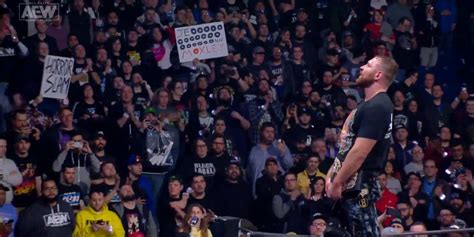
That optimism and joy that came from hardcore wrestling fans, the kinds of circles I was in, was much needed because AEW, much like TNA, NJPW, and indie wrestling before it, was facing an uphill battle in discussions elsewhere. Whether it was coming from hardcore WWE fans, whose ignorance of the outside wrestling world bred jealousy, or grifting ex-wrestling personalities who were looking to make a buck off of the hardcore WWE fans’ insecurities, AEW was introduced to the wrestling world as the most heavily critiqued product in the history of the industry.
Over time, though, probably dating back to the original decision for CM Punk to win the AEW World Championship from Adam Page in 2022, the hardcore wrestling fans’ trust and enthusiasm in AEW has been eroded. We can talk about why that happened and what was the cause for it all day, but the truth is that if you were to have a discussion online with someone about AEW, there is an enormous probability that discussion is going to be rooted in negativity.
By losing the hardcore, open-minded wrestling fan, AEW lost the key cornerstone of the fanbase that was pumping the company up. What’s left is just a series of jilted fans, to compliment the WWE bot accounts and long-running grifters who have been looking for any excuse to bash the company since it was founded.
While people can point to their favorite pet theories about AEW’s decline in the eyes of the vocal, online hardcore fans, a major factor is the honeymoon period wore off. Fans got used to AEW being on television every week, and for WWE no longer having a stranglehold on major league wrestling in the United States, and the company’s existence is now taken for granted. Merely providing another top-level outlet for pro wrestling was no longer enough, the company needed to earn its praise and enthusiasm from fans, and for a variety of reasons, it hasn’t been able to do that.
Read also: Rejecting Societal Norms: The 4B Movement
There is still a feedback loop though-with the tone around AEW discussion being so negative, at least from the places I have frequented, fans naturally feel more down on the product, even if there are still many positives to be taken away from it. The conversation has gotten more and more toxic as time has gone by, a fanbase seeping deeper and deeper into depression about the current state of wrestling.
The same conversation can be had about NJPW in a lot of ways. While the company itself is different from AEW and has a much longer history-the feedback loop feels the same. As the company has gone through some creative and talent struggles, the conversation around the promotion feels almost endlessly negative among hardcore fans, who seek to blame the booking, the lethargic post-COVID Japanese economy, AEW and WWE, and anything else to explain their frustrations with NJPW.
The Impact of Social Media on Wrestling
Taking a Breath
As I’ve gotten older and become more aware of how absurd these habits become, I’ve been aiming to scale them back. I’ve deleted almost all social media apps from my phone, stopped Tweeting, and cut back my podcast consumption. The truth is I do like engaging with the wrestling community, but it has to come in moderation, especially if I find that more and more of the discussion around pro wrestling has become so repetitive and boring.
The combination of growing increasingly frustrated with the reductive negativity my typical wrestling conversation spaces online were having, along with my awareness that I was spending way too much time reading and listening to what other people have to say about pro wrestling, led me to take a solid break from anything wrestling-discourse related for a week. I wanted to see if I was burned out on wrestling-or if I was burned out on people talking about wrestling.
So, I basically axed any of my typical online activities for the past week. No scrolling on social media, no reading content from the various Discords I would frequent, no listening to podcasts, and no reading opinion pieces written by others. I wanted to remove myself from other peoples’ opinions or evaluations and just focus on watching wrestling, the way I watched it when I first became a fan.
Read also: Profound Benefits Explained
I watched a lot of wrestling over that week-I watched all of Dynamite, Rampage, Collision, and the final of Dragongate King of Gate Tournament. I also watched an Australian indie show from February (which I even wrote a review for) and some select matches from the New Japan and All Japan respective tag league tournaments. I also wrote another column that was just my random thoughts about wrestling-thoughts that would have definitely just been dumped into a Discord server if I wasn’t focused on staying away from other people’s opinions.
The wrestling I watched I enjoyed greatly. Not everything was perfect, but it was refreshing to watch shows and reflect on them with just my own personal enjoyments as a wrestling fan to use as a standard. I still really like pro wrestling, but I’m tired of engaging in so much discourse around it, especially as negativity has taken over so much of it, for a variety of reasons.
Finding the Fun Again
Two things I’ve been thinking about a lot lately related to this are:
- WWE fans are having way more fun with their wrestling than non-WWE fans seem to be with theirs. As insulting as I personally find the WWE product to be, if you see any discussion of WWE anywhere, it’s mostly fans who ignore or gloss over all the stuff they don’t like and focus on how awesome the stuff that they do like is.
- Contrast that with AEW fans, or almost any other fanbase, and the discussion is almost always the opposite-glossing over the stuff that is good, which now gets taken for granted, and instead focusing interminably on the stuff they think is bad. If I was a neutral observer, it would be obvious that being a WWE fan seems way more enjoyable.
People can’t really change what they like-I’ll never be able to turn my wrestling brain off and just sit-back and enjoy WWE. I do, however, think we can assess the productivity of our habits and see if that is infringing on their ability to enjoy something, especially when it’s something like pro wrestling that they are supposed to enjoy. Cutting down the constant stream of negativity around some of these promotions has helped me focus much more on the things I do enjoy about them, and makes it feel like a worthwhile investment of my time to consume the product.
The second thing is that this is supposed to be fun. Pro wrestling shouldn’t make you upset. This is a hobby that we use to distract ourselves from the stresses that are taking place in our day-to-day lives. If something is turning you off, you should probably stop watching it. I certainly don’t need a stream-of-conscious series of posts every day from the same people, who are often saying the same thing every day. Even people that are generally like and agree with eventually come across as annoying if you see them posting the same complaints every day.
It seems very difficult, not just in wrestling fandom but across anything online, to cut off a lot of the negativity that is so pervasive on social media. It’s too beneficial for the companies that run the sites to foster discussion that caters towards the most extreme, outlandish pieces of content that generate the biggest reactions from the average user, for them to address the issue directly. The only solution seems to be for the individual user to cut out a lot of their social media use, but that is unlikely to be a decision most users will make.