The Wrestler, a 2008 sports drama directed by Darren Aronofsky, has captivated audiences for years with its raw portrayal of professional wrestling and the poignant journey of its main character, Randy "The Ram" Robinson. This article delves into the film's ambiguous ending, exploring its themes of addiction, redemption, and the tragic choices that define Randy's fate.
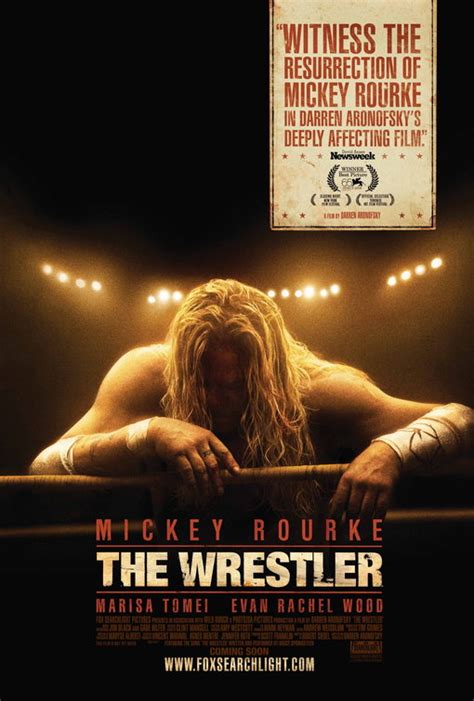
The final scene of The Wrestler is one of those endings where the viewer gets to interpret the fate of a character for themselves. Just before the movie fades to black, we witness Randy “The Ram” Robinson, played by Mickey Rourke, jumping off the padded turnbuckle, using his signature finishing move onto his opponent. As he jumps off, Randy leaps over the camera shot, leaving us with just the sound of him hitting the mat while the crowd goes nuts.
For anyone who hasn’t watched this film yet, you may think that the ending I described is an appropriate ending to a sports film (i.e. a boxer throws his final punch or a wide receiver catching the football during the final play). But what makes this ending different from most sports movies is that, in other films, you often see the athletes triumph in victory or suffer in defeat, whereas The Wrestler has no definite conclusion to the main character’s journey.
Randy's Struggles and the Seven Stages of Grief
Throughout the film, Randy, for lack of a better term, has gone through some tough times. We see him at his highs, his lows, and his lowest of lows. Personally it was hard for me to watch him drown himself in defeat, and I’m not talking about a wrestling match. Just to name a few difficulties, Randy struggles with paying rent, working at a crappy part-time job, damaging his relationships, competing in extreme hardcore matches, taking pain medications (illegal drugs), and having a heart attack. Randy just can’t seem to catch a break, no matter how hard he tries to do better.
The seven stages of grief is important to discuss in this film because the overall theme lies within the final stage. Randy accepts the fact that society is not meant for him to be a part of. In the outside world, he feels lonely and left to defend himself from his struggles. In the “wrestling world”, he feels respected, free, and alive.
Read also: Steve Keirn: Wrestling Icon
Addiction as a Haven
Darren Aronofsky’s message to the viewers is that addiction is difficult to overcome. Why dread over your faults in a world where you’re not accepted? Instead, you can go into a place where you’re beloved and feel happy. Aronofsky is not saying to just give up on overcoming your addiction, but see your addiction in another perspective as a haven for your happiness.
Keeping this controversial theme in mind, we contradict ourselves as an audience. In the final scene, we see an already damaged Randy enter the ring again while being aware of his health. Yet, after he cut a promo on the crowd thanking them for the support, I can’t help but root for the guy to give us one more great performance. In a twisted way, we are witnessing Randy at peace, approaching the devil’s hand as we cheer and clap, pushing him from behind to his downfall. What made it even more terrifying was that midway through the match, he started to feel heart attack-like symptoms.
Interpreting the Final Jump
His final jump off the top rope symbolizes many things.
- For starters, it could mean him entering the beginning of a new life; that life being an improved version of a world he craves, or just simply an afterlife.
- Secondly, we don’t know if he pinned his opponent or not. His fate in terms of winning or losing is up in the air.
- Thirdly, we see tears in his eyes. This could indicate that he is overwhelmed from the support of the cheering fans watching him, he is in pain from the heart attack-like symptoms, or he knows this could be his final moment in a wrestling ring.
The ending left me questioning many theories as to what happened to “The Ram” and also how addiction in itself can consume you. Hopefully, my addiction to watch wrestling will never lead me down that path.
Themes of Loneliness and Redemption
There are a lot of fascinating attributes to Darren Aronofsky’s 2008 film, The Wrestler. The brutality of the staged acts of professional wrestling is there for us all to see, and the loneliness that hits these performers once they walk back through the curtain to their dressing room. But what really has people hung up after 15 years past its release, is the film’s ending and the assumptions that come with it. We’ve all heard the stories of the aging wrestlers who fall to the indie circuit and live sad lives in their later years.
Read also: "Pretty Boy" Larry Sharpe's impact on wrestling
Not only is Randy the Ram a lonely character, but the other people in the film are as well. Rourke and Tomei have brilliant chemistry of two people in the same boat in life. Their connection carries most of the sentimentality in the film. They both have professions where they use their bodies for money at an age when maybe they shouldn’t: professional wrestling and exotic dancing. He can’t connect with anyone romantically; he can’t be a father. Randy takes an offer to be in the main event at an independent wrestling event.
Randy the Ram is full of contradictions. Warm and distant, kind and violent, and yet tender all at once. It’s the contradiction of his character that makes him such an engaging personality and all the more tragic. Randy the Ram isn’t primarily a bad or good man, he’s just human like all of us. The Wrestler is a heightened dramatization of our lives - all the beauty and tragedy at once - because when we see how beautiful human beings can be, it’s truly a tragedy when they become lost. That’s what The Wrestler is about - the tragedy of losing the self.
There’s a lot to explore in The Wrestler, but one can see the film as a continual downward spiral into tragedy; however, there are two offers of escape and redemption from the downward spiral. Redemption is the sub-theme of The Wrestler and is offered to Randy the Ram through romantic partnership and fatherhood - two central human “roles”. Randy has failed at both, but he’s offered redemption in the recovery of his role both as a partner (Cassidy) and as a father (Stephanie).
Stephanie is his first opportunity for redemption. Randy reaches out to her at the urging of Cassidy. After a failed attempt at connection, she agrees to walk along the boardwalk with him after he gives her a few birthday presents. It’s a bittersweet walk. Randy recalls memories of them together when she was young - memories she’s forgotten. Finally, with tears in his eyes, he tells her the truth.
As Randy confesses the failure of her fatherhood to Stephanie, she sees him - the deeper Randy. For the first time, Randy is beautiful - the broken father. It’s an emotional scene. We’ve seen Randy’s life and in a certain sense it’s a house built of straw falling apart, but in his confession, we get the truth; the truth of failure and the possibility of something new. Stephanie receives his confession and in a moment of braveness puts her arm around him. They enter an old abandoned hall and in a moment of surprising intimacy, they dance together. In a certain sense, it’s a surprising and symbolic act of reconciliation. It’s the only moment of true hope in the film, and however beautiful it is, it is short-lived.
Read also: The Story of Chris Melendez
Randy is offered a way out of the downward spiral of his life. His daughter’s acceptance of his confession is a turning point for him - all he has to do is change and show up and start to be the father he’s called to be. However, the offer of redemption is short-lived. Randy misses their evening engagement and settles for a night of drinking and sex. What feels like a moment of weakness for Randy is in reality the result of a life of misery and selfishness. As Stephanie waits and waits for her father to show up she realizes that he’s never going to show up fully - not now or ever. When he finally arrives she’s done, angry, confused, and hurt, screaming at him to leave and never come back.
The ending of the film brilliantly includes a second offer of redemption through Cassidy who, after saying no to a relationship, shows up at the last minute to the match. “I’m here, I’m really here. He walks out on stage and the crowd goes wild. An American flag falls behind him and he gives the speech of his life.
Triumph and tragedy - Randy revels in the moment. As the violence ensues it’s quickly apparent that he’s done, panting and needing to rest. With one last jump, he falls to his death as the crowd roars. Similar to Black Swan, The Wrestler ends with a white screen and thunderous applause which highlights Aronofsky’s theme of transcendence; man ultimately desires approval and applause. We will sacrifice everything for it.
It’s a fascinating ending because Randy chooses what he thinks he wants. He says no to Cassidy and chooses the crowd where he can’t get hurt, but the ending is seared with pain. It’s clear throughout the narrative that Randy desires relationship. He wants to become the father he should have been to Stephanie. We don’t know anything about Stephanie’s mother, but Cassidy symbolizes another chance at a romantic relationship - perhaps even a marriage.
The pain of this choice is both emotional and physical. We watch Randy scramble through his last match, panting, railing against the limitations of his body. It’s physically exhausting to watching but emotionally it’s devastating. In choosing the crowd he seals the fate of his own story and not only hurdles to his death but misses out on the most human of opportunities - love.
Randy’s choice to turn is back on Cassidy is a denial of the self. We live in a culture that says we get to choose who the self is. We are told we should dig deep into the recesses of our souls and choose the person we want to be, but The Wrestler flies in the face of this narrative. Randy thought his whole life he was choosing the right thing - fame, women, the applause of the crowd, but he ends up empty and alone.
The Wrestler compels us to reflect on our choices and what ultimately matters in our life because amidst the triumph of Randy the Ram’s life are tears and tragedy. The final moments of ecstasy can’t erase the screams of his daughter, yelling at him to get out and never come back, or, the look on Cassidy’s face when he hears the crowd and turns his back on her offer of love. Here, in the final moment, Aronofsky asks key questions about what matters most in life.
In what way are we all Randy the Ram? In what way are we hurtling towards death by settling for the applause of the crowd?
Production and Reception
The Wrestler was written by Robert D. Siegel, a former writer for The Onion, and entered development at director Darren Aronofsky's company Protozoa Pictures. Nicolas Cage entered talks to star in October 2007. He left the project a month later, with Mickey Rourke replacing him. According to Aronofsky, Cage pulled out of the movie because Aronofsky wanted Rourke as the lead character.
Rourke was initially reluctant when first approached for the lead role, later stating, "I didn't really care for the script, but I wanted to work with Darren and I kind of thought that whoever wrote the script hadn't spent as much time as I had around these kind of people and he wouldn't have spoken the way the dude was speaking. And so Darren let me rewrite all my parts and he put the periods in and crossed the T's.
Afa Anoa'i, a former professional wrestler, was hired to train Rourke for his role. The locker room scenes were improvised. Clint Mansell reprised his role as composer for The Wrestler. Slash played the guitars on the score. The Guns N' Roses song "Sweet Child o' Mine" is played during Randy's entrance at the end of the film.
WWE helped promote the film through an on-screen angle (a fictional storyline used in wrestling). The angle culminated the following night where Jericho faced Ricky Steamboat, Roddy Piper, and Jimmy Snuka in a handicap match. After his victory, Jericho dismantled Flair and challenged Rourke, who finally entered the ring and punched him out.
The Wrestler received universal acclaim. Rotten Tomatoes reported that 99% of critics gave the film positive reviews based upon a sample of 229 reviews, with an average rating of 8.5/10. Roger Ebert considered "The Wrestler" one of the year's best films.
Awards and Recognition
| Award | Category | Result |
|---|---|---|
| Venice International Film Festival | Golden Lion | Won |
| Golden Globe Award | Best Actor - Motion Picture Drama (Mickey Rourke) | Won |
| British Academy Film Award | Best Actor (Mickey Rourke) | Won |
| Independent Spirit Award | Best Actor (Mickey Rourke) | Won |
| Academy Award | Best Actor (Mickey Rourke) | Nominated |