The first clash between Evander Holyfield and Mike Tyson in November 1996 was more than just a boxing match; it was a defining moment for both fighters and a spectacle that captivated the world. Years in the making, the bout finally occurred five fights into Tyson’s comeback, after being delayed by Buster Douglas’s 1990 upset of Tyson and Tyson’s subsequent incarceration. This article delves into the key aspects of their first encounter, analyzing the strategies, defining moments, and the lasting impact on their careers.
The Stakes
Both Tyson and Holyfield had much to prove going into the fight.
- Mike Tyson: Tyson was looking to reassert himself with a definitive heavyweight-title triumph. After spending more than three years in prison, Tyson returned to the ring and fought four lackluster opponents. Those foes allowed Tyson to beef up his knockout reputation, but by finishing each of them before the end of the third round, he deprived himself of a real test.
- Evander Holyfield: Holyfield had beaten James “Buster” Douglas after that colossal upset of Tyson, but Holyfield had repeatedly heard, “You’re just holding Tyson’s belt” afterward. Following a trilogy with Riddick Bowe, Holyfield confronted a chance to tie Muhammad Ali by winning a heavyweight belt for the third time.
The fight was the answer to a question boxing fans had been pondering for more than half a decade. Both Tyson and Holyfield had proved themselves before their first fight - Tyson with his dominant rise through the heavyweight ranks in the late ‘80s, and Holyfield with his fights against Riddick Bowe and George Foreman, among others. Even before Tyson’s loss to Buster Douglas and the time he spent in federal prison for a 1992 rape conviction, Holyfield was considered a rising threat to Tyson’s throne.
Despite Tyson’s original schedule to fight Holyfield in June 1990 in Atlantic City, Buster Douglas canceled those plans in a monumental upset four months earlier. Again, they were set to meet, this time in November 1991 in Las Vegas. Tyson would be the challenger after Holyfield knocked out Douglas. Two months before they were set to step into the ring, Tyson was indicted on rape charges. Still, the fight was set to push forward. This is boxing after all. But when Tyson injured his ribs weeks away from fight night, it was postponed.
Even while facing long odds against Tyson, Holyfield was considered among the handful of fighters with hopes of beating “Iron Mike,” and Holyfield’s trilogy against Bowe and win over Foreman still meant zilch to the boxing world, which considered him a 25-1 underdog against Tyson when the fight was made and a 6-1 underdog on fight night.
Read also: Self-Defense: Karate or Taekwondo?
The Fight
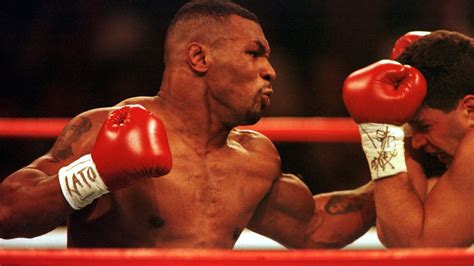
The capacity crowd assembled at the MGM Grand to witness the expected execution. When the bell rang and Tyson landed a right hand that sent Holyfield skittering across the ring, it looked like the fight might be over in the opening minute. But then a strange sight presented itself: Tyson’s appointed victim did not cave in and crumble and in fact, did not appear to be the least bit intimidated. Instead, to everyone’s shock, he was fighting back, scoring with quick left hooks to the body as Tyson bulled forward, and then hard right hands upstairs. In round two Holyfield did what no opponent had done to Tyson since his loss to Douglas almost seven years earlier: force him to the ropes and hit him with flush shots, including a powerful left that snapped Mike’s head back.
Holyfield was out-boxing and out-slugging Tyson in the early rounds, but the champion was still connecting on power shots and naturally, still plenty dangerous. In Round 5, Tyson finally staggered his foe with a right hand to the midsection followed by his patented right uppercut. A few more uppercuts followed. Holyfield took a step back, but he was clear-eyed. He absorbed Tyson’s best punch and the “Dynamite Kid” never found great success again in the bout. The following round, Holyfield dropped an off-balance Tyson with a body shot of his own. Holyfield was always known for his fighting heart and confidence, and he was able to display it again in his greatest victory.
As the rounds passed, Tyson was unable to adjust, and found himself being thoroughly outboxed. In the sixth round, Tyson was cut by a headbutt from Holyfield that Halpern judged to be accidental. Then, as the round progressed, Holyfield caught Tyson with a left that dropped him to the canvas. This was the first time Tyson had been knocked down since his lone defeat, and Holyfield continued parrying Tyson's charges and catching him with punches to the head.
With 15 seconds left in the seventh round, Tyson lunged at Holyfield as Holyfield came forward, resulting in a hard clash of heads. Tyson cried out in pain and his knees buckled, but again the referee judged the headbutt to be unintentional. Tyson was examined by the ring doctor, and tied Holyfield up for the rest of the round.
During the next two rounds, Tyson continued missing wild punches and absorbing counterpunches from Holyfield. At the end of the tenth round, a punch from Holyfield sent Tyson staggering across the ring. Holyfield chased him into the ropes and landed a series of devastating blows. By the sound of the bell, Tyson was out on his feet and defenseless, but his corner allowed him out for the eleventh.
Read also: Mike Tyson vs. Brock Lesnar?
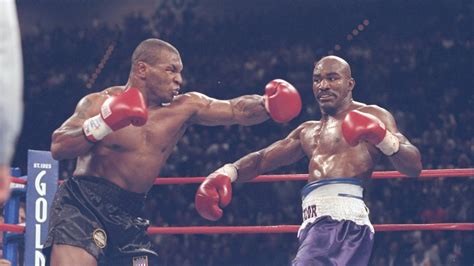
In the tenth the inevitable happened. Tyson had already been stung several times over the course of the battle, but with twenty seconds left in the round Holyfield inflicted truly serious damage with a perfectly placed counter right to the temple and the crowd instantly came to its feet as Tyson’s legs buckled. Instead of forcing a clinch, the dazed champion unwisely kept trading shots and the result was another huge right that sent him stumbling across the ring; only the ropes prevented a knockdown. Holyfield got home eight more clean punches before the bell and as the champion walked unsteadily back to his corner it was abundantly clear the fight was over.
Holyfield also became the first person since Muhammad Ali to win a heavyweight championship belt three times, although, unlike Ali, Holyfield's third championship win had not been for the lineal heavyweight title, which was at that time held by George Foreman.
Key Moments
Several moments defined the fight:
- The fighters’ exchange at the end of the first round when Holyfield kept punching after the bell with Tyson and made a point of showing everyone that he could handle Tyson’s fearsome power and speed and keep coming back.
- Any moment over the next three rounds, where Holyfield controlled the fight, outboxed Tyson and made it clear that, unlike previous opponents, he wasn’t afraid of Tyson.
- In Round 5 when Tyson hurt Holyfield to the body and rocked him with follow-up uppercuts to the chin, yet Holyfield stayed on his feet and only showed weakness by occasionally stepping back and bouncing on his toes.
- Holyfield starts jawing at Tyson after Holyfield blocks a pair of Tyson left hooks and ducks under a Tyson overhand right.
- After knocking down Tyson in the sixth, Holyfield battered the once-intimidating champion in the ninth with a barrage that sent Tyson wobbling to the ropes in the final seconds of the 10th. As the bell sounded, Holyfield cracked Tyson with a massive right, flush to the side of the head.
It was at that instant that Tyson’s air of superiority escaped for good. He took the punch, paused to even step forward and glanced at Holyfield wearing a distinct expression of resignation.
The Intimidation Factor
Arguably no boxer understood this better, or implemented fear tactics more effectively, than Mike Tyson. Tyson’s explosive power and rattlesnake quickness may have been the ostensible factors in his notching 26 stoppage wins in his first 28 bouts, but in fact his most lethal weapon was his unique talent, honed on the streets, for turning an opponent’s knees to water before the bell had even rung. When the bell rang and Tyson landed a right hand that sent Holyfield skittering across the ring, it looked like the fight might be over in the opening minute. But then a strange sight presented itself: Tyson’s appointed victim did not cave in and crumble and in fact, did not appear to be the least bit intimidated.
Read also: Mike Tyson vs. Jake Paul
Holyfield, like Buster Douglas before him, had refused to be intimidated and thus had revealed the truth: Tyson had devolved into a one-dimensional brawler with precious few resources beyond raw power and a unique talent for striking fear in an opponent’s heart.
The Aftermath and Legacies
The upset victory cemented Holyfield as an all-time great. He became a three-time heavyweight champion and was able to erase the ho-hum stretch he endured entering the fight. Tyson, meanwhile, would never call himself champion again. He showed plenty of heart in defeat, but the aura of invincibility was gone for good.
Here's a summary of the key outcomes for both fighters:
| Fighter | Outcome |
|---|---|
| Evander Holyfield | Cemented as an all-time great, three-time heavyweight champion |
| Mike Tyson | Lost the aura of invincibility, never regained championship status |
Seven months later, he bit off a piece of Holyfield’s ear and his legacy was forever tarnished. As dominant as Tyson was in his early years, he met his match in Holyfield in a bout unmistakably shaped by Tyson’s lengthy, self-induced absence from the ring. Losing to Holyfield was the end of that dream. Holyfield wound up being too tough for his own good by fighting on until 2011 at the age of 48, but his preparation and strength on this night was Exhibit A of why he deserved the nickname “Real Deal.” He absorbed a smashing Tyson greeting in the first round and worked through another vicious combination and uppercuts by Tyson in the fourth to assert his will in the most impressive way possible against “Iron Mike.”
No matter how many times we re-watch and praise Tyson-Holyfield 1 as the greater fight, it will never be more memorable than their 1997 rematch. Tyson clearly carried his anger over Holyfield’s head butts from the first bout into the rematch and bit off two chunks of Holyfield’s ear before being disqualified by referee Mills Lane in the third round. That clash was void of the superb back and forth between the champions in the first bout, so even if Tyson wanted his nasty behavior to prevail as the lasting takeaway from his two bouts with Holyfield, history will instead recall that Holyfield was the better man. Twice.