Wrestling shoes are quite versatile, and some lifters prefer to wear them when weightlifting over traditional lifting shoes. But are wrestling shoes good for lifting?
Yes, powerlifters frequently choose to lift while wearing wrestling shoes.
There are various benefits to wearing wrestling shoes for weightlifting.
If you've ever been to a major powerlifting or strength-focused gym, you may have noticed that many athletes are wearing shoes meant for a completely different sport. Many lifters like to wear wrestling shoes because they have a sleek, thin sole and a high top, which is great for squats and deadlifts. But is there really a performance edge, or is this just a trend?
This article will help you decide if wrestling shoes are right for you by listing their pros and cons for lifting. We’ll compare them to other popular lifting shoes and discuss their features that make them good for various motions.
Read also: Choosing Wide Wrestling Shoes for Youth
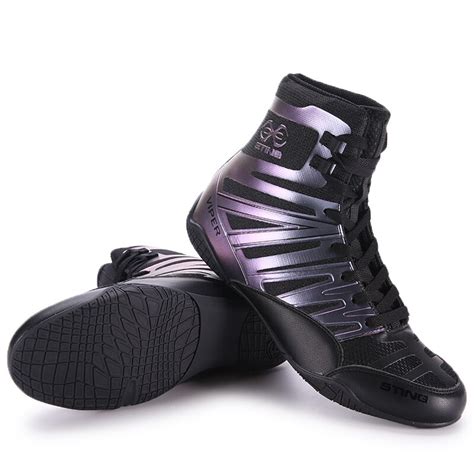
The Benefits: Why Lifters Love Wrestling Shoes
Wrestling shoes aren’t just for the mat; their design improves them for certain lifting moves.
1. Improves Grip and Balance
Due to their 0mm heel-to-toe drop, wrestling shoes are excellent for weightlifting by putting your feet into a flat position.
Heel-to-toe drop, for instance, may not be the biggest concern for most lifters and athletes taking on fitness exercises, and in this training environment, it’s more of a matter of personal preference. A drop of between 2 and 8 millimeters may be preferred because the exercises in this type of training are diverse.
On the other hand, a 0mm heel-to-toe drop can have a significant impact on performance for the powerlifter or barbell-focused athlete seeking to maximize a certain movement, such as their deadlift.
For instance, when performing a deadlift, it’s ideal to limit the range of motion and maximize foot stability and balance. Wearing a pair of wrestling shoes can essentially help you achieve these goals for a safer and stronger deadlift.
Read also: Discover the story of Casey Swiderski
The 0mm heel-to-toe drop assists in proper positioning and rooting of the feet to the ground. Wrestling shoes can assist your foot to achieve a flat position that will improve your ability to grip the floor and maintain balance throughout the deadlift.
The thin rubber sole of a wrestling shoe will also contribute to reducing the overall range of motion you need when you lift, which can be important for heavy deadlifts and competitive powerlifting.
The flat, thin sole is the most important part of a wrestling shoe. Wrestling shoes don’t feature a cushioned, raised heel or a rounded sole like running shoes do. Instead, they have a zero-millimeter heel-to-toe drop. This design creates a flat, steady base that feels similar to lifting without any shoes.
2. Provides Ankle Support
Wrestling shoes for powerlifting offer additional ankle support. Although this feature of the construction is not crucial to performance and is not as particular as heel-to-toe drop and sole construction, it nevertheless has the potential to be significant for some people.
You will enjoy the overall fit and feel of wrestling shoes if you prefer added ankle support as you work out.
Read also: Sectional Wrestling Tournament Details
The high-top design of the majority of wrestling shoes provides excellent ankle support. This is especially helpful for people who lift weights with a wider stance or who feel more steady with extra support around the ankle joint. The snug fit and lacing that goes up the ankle assist in keeping the foot in place, which makes you feel safe and solid, especially when carrying big things.
3. Improves Connection to the Ground
The thin rubber sole of a wrestling shoe can offer a decent level of ground feedback for a range of lifting movements.
More specifically, you want to make sure that your feet are firmly planted and that you can feel the ground beneath you when performing exercises like the squat and deadlift.
When you lift weights, the thin rubber soles wrestling shoes have can assist you to improve on different performance facets. A thinner sole will enable you to “feel” the floor better.
Your ability to engage with the ground and make use of the foot’s musculature to keep you upright and planted is improved when there is less material between the foot and the floor.
This may serve as a benefit for any movement involving the lower body in which you want to increase the amount of the foot’s surface area that is actually in contact with the ground.
It’s crucial to remember, however, that this does not imply that the thin rubber sole of a wrestling shoe is the only kind of shoe sole that is effective for working out.
For squats, some lifters prefer a shoe that is thinner and flatter, while others prefer a weightlifting shoe with a higher heel. It comes down to personal taste and an awareness of how different types of footwear will affect your biomechanics in various ways.
Moreover, a thinner sole will aid in reducing the range of motion required for exercises like deadlifts.
A thin sole can also help to guarantee that you aren’t exerting more range of motion than necessary during exercises like deadlifts, as we briefly covered in our heel-to-toe drop section.
A thin sole might not seem like a significant concern for a novice, but if you’re truly aiming to optimize your performance output, it could be more crucial to make sure that every skill-focused element of your lifting and training is perfect.
A thin sole lets you “feel” the ground better, which gives you a more direct and sturdy connection with the floor. This is critical for exercises like the squat and deadlift, where you need a strong base to transfer force and stay balanced.
The small sole makes it a little easier for the barbell to lock out a deadlift. This may not seem like much, but for a competitive powerlifter, every millimeter matters.
The flat, unpadded sole keeps your feet from wobbling or moving around like they do in shoes with soft, compressible midsoles. This helps you keep your posture steady and stay grounded during the lift.
4. Lightweight and Flexible Design
Wrestling shoes are made to be light and flexible so that you can move quickly and easily. This makes them great for the gym as well. They don’t get in the way of your movement and aren’t too big, which makes lifts seem more natural. Some lifters may like that the flexible sole lets their feet move more freely and engage more muscles.
5. Enhanced Sole Durability
Compared to other sports shoes, wrestling shoes feature much higher-quality soles. The explanation is that the sole is subjected to significant force from the wrestler’s foot and the sole must be able to absorb the shock.
Squats and virtually all other lifts are also believed to induce the same thing, making the wrestling shoes ideal for these exercises. Consequently, your feet won’t be as swollen following an exercise.
If you are a serious lifter, you may have noticed that after a workout, some parts of your foot just hurt and swell more.
Why Wrestling Shoes May Not Be the Best for Lifting?
Wrestling shoes have several fantastic benefits, but they aren’t the best choice for everyone. There are a few reasons why they might not be the best choice for every activity or lifter.
1. Does Not Support Poor Ankle Mobility
You need to have adequate ankle mobility to squat in a flat-soled shoe such as a wrestling shoe. This is the biggest factor to consider before trying out wrestling shoes.
Fortunately, there’s a quick and easy way to test this. You can tell whether you have enough ankle mobility for wrestling shoes if you can perform a full bodyweight squat barefoot with your heels staying completely flat on the ground the entire time. If not, this may lead to you falling out of balance.
Wearing wrestling shoes is still technically acceptable if your heels rise off the ground when you are squatting. However, you will need to perform some short-term ankle mobility exercises to increase your range of motion first. Otherwise, you may be better off using weightlifting shoes that offer an elevated heel to accommodate and support your limited ankle mobility.
To squat all the way down with good form, you need to be able to move your ankles a lot because the sole of a wrestling shoe is flat. A flat shoe may make your heels lift off the ground if your ankles aren’t very flexible. This may force you to lean forward and put too much stress on your lower back. In this scenario, a weightlifting shoe with a higher heel is frequently a superior choice since it helps you keep your body straight and reach depth more readily.
2. Limited Versatility
Wrestling shoes are excellent for squats and deadlifts, but they aren’t the finest shoes for every gym activity. The thin, minimal sole doesn’t give much cushioning, so they aren’t suitable for sprinting, box jumps, or other plyometric moves. A more flexible cross-trainer can be ideal for you if you do CrossFit or mix multiple types of exercise in one session.
3. May Increase Susceptibility to Low Back Pain
While the flat sole of the wrestling shoes will make you more aware of where your feet are in relation to one another and make you feel more in control overall, your technique may vary slightly.
People usually lean slightly forward with their chest to maintain stability, which puts stress on the lower back by increasing the shear force induced to the region. This is especially true when a substantial external load is involved, as it is when you lift. If you already have lower back problems, it may be best to use weightlifting shoes instead.
4. May Increase Susceptibility to Foot Pain
If you’re used to squatting with weightlifting shoes, the elevated heel provides an environment where your ankle may slack off. Now if you suddenly switch to wrestling shoes that offer no elevation, you may feel some pain or discomfort since your feet can’t relax as much. This usually applies to those who squat heavier weights.
A lot of the time, wrestling shoes have a tight toe box so they fit snugly on the mat. This can help with stability, but it can be uncomfortable or even painful for people with broader feet. Some people may also have foot pain or discomfort because there is little padding, especially while carrying big things.
Wrestling Shoes vs. Other Lifting Footwear
It’s helpful to compare wrestling shoes to other typical gym shoes to pick the best choice.
Wrestling Shoes vs. Weightlifting Shoes
Weightlifting shoes, which are sometimes called squat shoes, are made just for the Olympic lifts (snatch and clean and jerk) and squats. Their heel is elevated and rigid and can’t be compressed, which is important for a few reasons:
- Ankle Mobility: The higher heel lets the ankle dorsiflex more, which helps lifters who can’t move their ankles as much squat deeper with a straighter torso.
- Stability: The firm, elevated heel makes a strong, stable base that keeps energy from being lost to a soft midsole.
The Verdict: If your main goal is to get better at squatting, especially with a high-bar stance, and your ankles aren’t very flexible, a dedicated weightlifting shoe is probably the best choice. Wrestling shoes can be a terrific choice if you have excellent ankle mobility or like to do low-bar squats.
Wrestling Shoes vs. Flat-Soled Shoes (e.g., Chuck Taylors, Vans)
Many lifters also choose simple flat-soled sneakers like Vans or Converse Chuck Taylors. Because they have a flat, zero-drop profile like wrestling shoes, these shoes are ideal for deadlifts and squats.
The Verdict: Both are great for giving you a stable basis, but wrestling shoes have some advantages:
- Better hold: Wrestling shoes have a rubber sole that is made to hold the mat better, which can be helpful on a gym floor.
- Ankle Support: Most wrestling shoes have a high-top construction that gives your ankles more support than a regular low-top Chuck Taylor.
Wrestling Shoes vs. Barefoot Lifting
Some athletes like to lift without shoes on because they can feel the floor better.
The Verdict: Many gyms don’t allow barefoot lifting since it’s not safe or clean. Wrestling shoes are a perfect middle ground since they give you the feel of a barefoot lift while also giving you traction, ankle support, and following gym rules.
Best wrestling shoes for lifting
My personal favorite whenever I train is the Adidas HVC Wrestling Shoes. It’s the most lightweight I’ve tried without sacrificing longevity as I’ve had it for quite some time now with no issues. I also find having incredible grip with these and not to mention the extra support the ankle strap offers. If you’d like to have options, I have you covered.