The 1980s professional wrestling boom, more commonly referred to as the Golden Era or the Rock 'n' Wrestling Era, was a surge in the popularity of professional wrestling in the United States and elsewhere throughout the 1980s.
From roughly 1975 to 1985, pro wrestling had many fans hooked. It started with wrestling magazines and local channels broadcasting matches, attracting a wide audience.
Back then, the three most popular federations were the National Wrestling Alliance, which covered most of the Southern territory, The American Wrestling Association, which covered the Midwest, and the World Wide Wrestling Federation, which covered the area where I lived, the East Coast.
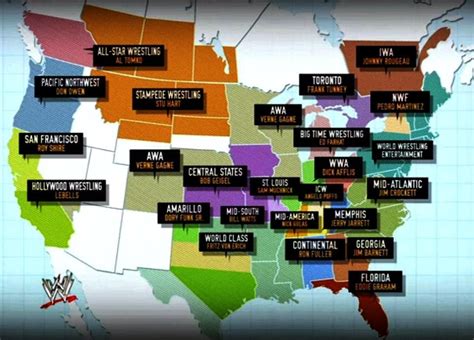
Wrestling territories in the 1980s
The Rise of National Promotions
The expansion of cable television and pay-per-view, coupled with the efforts of promoters such as Vince McMahon, saw wrestling shift from a system controlled by numerous regional companies to one dominated by two nationwide companies: McMahon's World Wrestling Federation (WWF, now WWE) and Ted Turner's World Championship Wrestling (WCW).
Read also: Discover the story of Casey Swiderski
Multiple NWA territories were very successful in the 1970s and continued that success in the early 1980s.
WTBS in Atlanta, Georgia, became a cable television superstation based on broadcasting Georgia Championship Wrestling (GCW), with both Mr. Wrestling II and Tommy Rich being the top headliners in the territory.
Key Figures in Regional Wrestling
- Ric Flair: Rose to prominence in Mid Atlantic Wrestling.
- Dusty Rhodes: Was the fan favorite in Championship Wrestling from Florida (CWF).
- Junkyard Dog: Mid-South Wrestling had the first significant African-American champion babyface.
- Jerry Lawler: The NWA's affiliate in Memphis, Tennessee, the Continental Wrestling Association (CWA), had Jerry Lawler, who rose to national prominence thanks to his "feud" with Andy Kaufman.
After Lawler piledrove the comedian during a 1982 match in Memphis, the two got into an altercation on NBC's Late Night with David Letterman, in which Lawler slapped Kaufman on-air and Kaufman responded by shouting profanities and throwing coffee at Lawler before storming out of the studio.
At the beginning of the 1980s, the AWA had the largest television presence, with distribution of their weekly broadcast in Chicago, Denver, Green Bay, Las Vegas, Milwaukee, Minneapolis, Omaha, Phoenix, Salt Lake City, San Francisco and Winnipeg.
The AWA had the talent that would ultimately lead Vince McMahon's WWF to pre-eminence in professional wrestling.
Read also: Sectional Wrestling Tournament Details
Gene Okerlund and Bobby Heenan were AWA's major on-air talent.
Hulk Hogan became the top babyface after Verne Gagne retired from full-time wrestling in 1981 and Nick Bockwinkel became the AWA World Heavyweight Champion.
Hogan faced Bockwinkel on April 18, 1982, and on April 24, 1983, with both matches being decided with "dusty finishes" where Hogan pinned Bockwinkel for a three count but was then stripped of the title.
Hogan said Gagne offered him the championship on the latter occasion in exchange for his merchandising rights and money from touring with other promotions, which would show that Gagne understood wrestling was becoming a bigger business in the 1980s; however, Hogan refused.
In 1982, Continental Productions, a subsidiary of Dallas independent station KXTX, began syndicating a one-hour show internationally from the Sportatorium of former NWA affiliate World Class Championship Wrestling (WCCW) run by Fritz Von Erich.
Read also: The story of Angelo Posada
The Von Erichs were the most recognizable babyfaces in wrestling in 1982 and 1983.
The Complicated Legacy of Hulk Hogan | Wrestling Documentary
Hulk Hogan and the WWF Boom
Hulk Hogan was the WWF's top star during the 1980s boom.
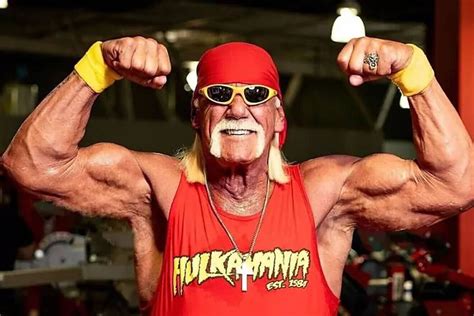
Hulk Hogan, a key figure of the wrestling boom in the 1980s.
In 1982, Vince McMahon purchased the WWF from his ailing father, Vincent J. McMahon.
On December 23, 1983, the younger McMahon signed AWA superstar Hulk Hogan, who previously wrestled with the WWF from 1979 to 1981, to return to the company in 1984.
To play Hogan's nemesis, he signed talents including Jim Crockett Promotions (JCP) babyface "Rowdy" Roddy Piper, turning him heel, and AWA manager Bobby "The Brain" Heenan.
McMahon later stated in the documentary The UnReal Story of Professional Wrestling that he did not think his father would have ever sold him the WWF if he knew what he was planning to do.
"He probably would have said, 'Vinny, what are you doing?
At the end of 1983, two major developments increased competition to be the premier professional wrestling promotion.
On November 24, 1983, Flair defeated Harley Race for the NWA World Heavyweight Championship at the pay-per-view wrestling event Starrcade, which inaugurated Flair's golden era and was credited with showing that a major event could earn significant income across many locations.
Fortune for the WWF came at the expense of the AWA and WCCW.
On January 23, 1984, Hogan defeated The Iron Sheik for the WWF World Heavyweight Championship at Madison Square Garden.
Outside the Northeast, which changed a long-standing non-aggression pact between the WWF and other wrestling promotions.
On February 10, David Von Erich died of reported acute enteritis in Japan.
Although there was a short-term boost culminating in Kerry Von Erich's victory over Flair for the NWA World title in front of a packed Texas Stadium crowd on May 6, both the death of Gino Hernandez and the suicide of Mike Von Erich placed a cloud over WCCW that became its legacy.
With competition from cable superstations broadcasting WCCW, AWA and NWA, McMahon syndicated WWF television shows outside the promotion's traditional Northeastern territory and began a home video distribution label called Coliseum Video.
McMahon would use the additional income generated by advertising, television deals and video sales and rentals to further his ambition to tour nationally.
McMahon did not meet immediate success.
In May 1984, in a failed attempt to garner a greater appeal in the Southeast, McMahon bought a controlling interest in GCW, an NWA member which held the lucrative Saturday timeslot on Atlanta-based independent station WTBS-known outside Atlanta as Superstation TBS.
On July 14, 1984-later dubbed "Black Saturday"-WWF programming began airing in the WTBS timeslot formerly occupied by GCW programming.
The WWF programming was not successful and viewed as comical compared to the NWA.
Due to low ratings and viewer protests, WTBS began airing wrestling by Ole Anderson's new promotion, Championship Wrestling from Georgia, as well as Bill Watts's Mid-South Wrestling, both of which garnered higher ratings than McMahon's WWF show.
Later, McMahon sold the WTBS timeslot to rival promoter Jim Crockett, Jr.
By the end of 1984, the regional territory system of the NWA was clearly in jeopardy.
In June 1984, Jack Tunney transferred his control in Maple Leaf Wrestling to the WWF.
Many fans, especially those in the Deep South, were angered by the collapse of their local wrestling promotions.
Some of the more well-known promotions, including JCP and Championship Wrestling from Florida, were affected.
These fans turned to WTBS, where station founder Ted Turner had launched World Championship Wrestling (WCW).
MTV broadcast the first live wrestling match on cable television as well as the first live women's professional wrestling match.
On September 14, 1985, Hulk Hogan's Rock 'n' Wrestling, an animated television series starring the character of Hulk Hogan, premiered on CBS.
WrestleMania and Mainstream Success
In 1985, to counter the AWA's Super Sunday, the NWA's Starrcade and WCCW's Star Wars, the WWF created its own flagship show, WrestleMania, held at Madison Square Garden and broadcast on 135 closed-circuit networks.
The future of not just the WWF's national experiment but the whole professional wrestling industry came down to the success or failure of this pay-per-view.
WrestleMania was an extravaganza marketed as "the Super Bowl of professional wrestling".
The concept of a wrestling supercard was nothing new in North America; the NWA had been running Starrcade a few years prior to WrestleMania, and even the elder McMahon had marketed large Shea Stadium cards viewable in closed-circuit locations.
However, Wrestlemania drew the interest of the mainstream media by including celebrities such as Lauper and Mr. T to participate in the event.
The show was a huge success.